Ohio Hate Murder Revisited After Six Years: Justice for Gregory Beauchamp
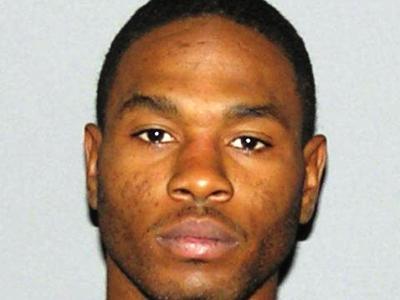
Jerry Jones, 28, indicted for 2002 New Year's Eve Murder of Gregory Beauchamp
On New Year’s Eve 2002, a dark blue Cadillac pulled up to the corner of West Liberty and Vine Streets in Cincinnati beside two cross-dressed friends as they walked to a party. Taunts erupted from the car at the two homosexual men, “Fuckin’ faggot-assed bitches!” Then somebody in the Caddy pulled a trigger, and Gregory Beauchamp, 21, fell fatally wounded in the chest. He was pronounced dead on the scene.

Hate Murder Victim Gregory Beauchamp, 21, wanted to be a fashion designer.
Now, thanks to the work of the Cincinnati Cold Case Unit, Jerry Jones, 28, has been indicted for Beauchamp’s murder. Jones was already in custody at a Dayton, Ohio detention facility on unrelated charges. In 2003, though he had been arrested for killing Beauchamp, the grand jury failed to indict him. The years have not dimmed the pain Beauchamp’s friends still feel for his loss. His friend Dontae refuses to forgive Jones: “This is so sad what they did to Gregory. I miss him so much! The guy who took his life don’t think how much he meant to us. He took my best friend [away from me] that night.”
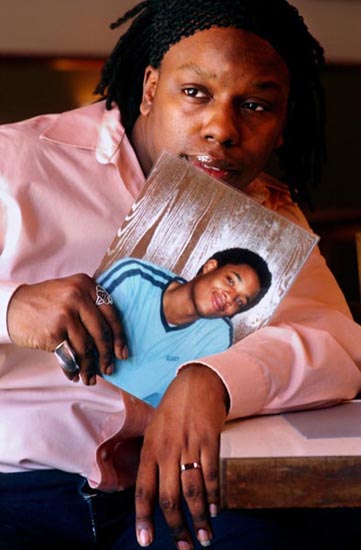
Curtis Johnson holds photo of his friend, Gregory Beauchamp. (Steven Heppich photo)
Gregory Beauchamp was the 65th homicide of the year in Cincinnati, and the last one for 2002. Curtis Johnson remembers the night as if it were yesterday. He told the Cincinnati Enquirer that he was on his way to meet Beauchamp at the party. “He just died in the street–it’s just terrible. I just want people to know he’s more than just the 65th victim. He loved clothes, music, he could sew. He was just a good person. Being black and gay in Cincinnati is tough.”
Beauchamp’s brutal murder sparked a movement in Cincinnati that culminated in the passage of a municipal hate crime statute. Now his friends may get to see justice done for the gentle man who loved to wear women’s clothing and dreamed of studying fashion design in California.
Mother of Sean Kennedy, Slain South Carolina Gay Man, Lobbies Congress for Matthew Shepard Act
Elke Kennedy, here with Unfinished Lives Project Director, Dr. Stephen Sprinkle, lobbies Congress for the passage of the Matthew Shepard Hate Crimes Act, May 5, 2009. For more information on the advocacy done in Sean’s name, be sure to visit Sean’s Last Wish on the web,http://www.seanslastwish.org/.
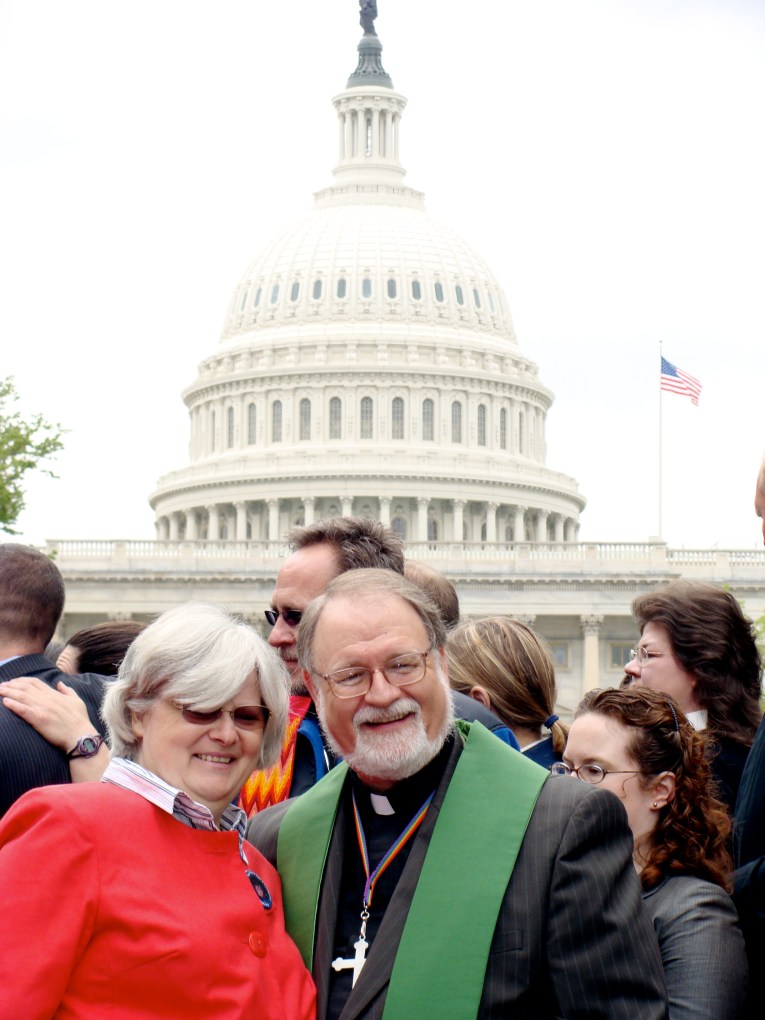
Elke Kennedy and Steve Sprinkle on Capitol Hill for HRC Clergy Call 2009
What the Matthew Shepard Act Does: Rachel Maddow Comments

Attacks against LGBT people in the U.S. are increasing alarmingly
Violent crimes against LGBT people have increased in the U.S. population in the last two years at an alarming rate, especially among Latino and Black racial/ethnic groups. The California Department of Justice, for example, noted 263 hate crimes based on sexual orientation in 2007. Commenting on these statistics, Jason Bartlett, a California-based spokesman for the National Black Justice Coalition, a lesbian, gay, bisexual and transgender (LGBT) rights advocacy group, said, “We have a disproportionate amount of African-Americans being targeted that are LGBT, and we have a huge disparity where transgender people are attacked due to gender expression. Within the Black or Latino community there is more stigma attached to being gay or lesbian or transgender. It’s not talked about as much and within our religious institutions. We have ministers that speak homophobia from the pulpit. Those kind of messages filter down.” The same is true throughout the country, as the brutal murders of Angie Zapata, Latina transgender woman from Greeley, CO, and Lateishia Green, African American transgender woman from Syracuse, NY, show.

Latiesha Green, transwoman murdered in Syracuse, NY
The Local Law Enforcement Hate Crimes Prevention Act of 2009, also known as the Matthew Shepard Act, would expand current hate-crimes laws and authorize the Attorney General “to provide technical, forensic, prosecutorial, or other assistance in the criminal investigation or prosecution” of any crime “motivated by prejudice based on the actual or perceived race, color, religion, national origin, gender, sexual orientation, gender identity, or disability of the victim, or is a violation of the state, local, or tribal hate crime laws.”

Misleading anti-Shepard Act flyer, aimed at U.S. Congress
Against critics, supporters of the Act note that this is not a “hate speech act,” or a “hate thought act,” as detractors have charged. This Act specifically preserves all First Amendment rights of speech and assembly. Instead, this Act targets crimes perpetrated against LGBT people because of bias motivation against their sexual orientation or gender expression and identity.
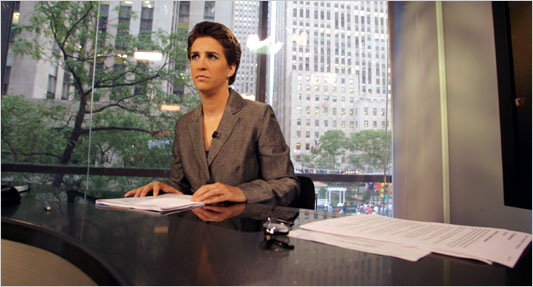
Rachel Maddow, MSNBC News Commentator
Nobody seems to have gotten the rationale for the Matthew Shepard Act more clearly than MSMBC’s commentator, Rachel Maddow. In her discussion of the controversy surrounding the Act since its passage in the U.S. House of Representatives, she put it this way on The Rachel Maddow Show of 4/30/09:
MADDOW: “The concept behind this kind of legislation is often misconstrued but here’s the deal as I understand it. The idea is that the federal Justice Department can get involved in a case to help local authorities or even to take the lead on a case if need be, in prosecuting individual serious violet crimes and murders in which the victim was selected on the basis of race, color, religion, national origin, sexual orientation, gender, gender identity, disability – the idea that crimes like that are intended not only to hurt or murder an individual, but to terrorize an entire community, and so there is a national interest in ensuring that those crimes are solved and prosecuted, particularly if local law enforcement doesn’t want to because they are blinkered by the same prejudice that led to the crime in the first place.”
About

If you are a first-time visitor to the Unfinished Lives Project website, we invite you to read A Welcome Message introducing you to our project. We are truly grateful for your visit.
The Unfinished Lives Project website is a place of public discourse which remembers and honors LGBTQ hate crime victims, while also revealing the reality of unseen violence perpetrated against people whose only “offense” is their sexual orientation, gender identity, or gender presentation. LGBTQ people in the United States are suffering a slow-rolling decimation of terror and murder all across the country. Every locale and demographic of society are affected: First Nations, Anglo, Black, Latino and Latina, South and Southeast Asian, Transgender, Bisexuals, Gay men, Lesbians, disabled, young, and mature. Homophobia has a long, crooked arm, and it is reaching out to snatch the life away from women and men whose tragic stories are under-reported to begin with, and whose memories are swiftly forgotten.
The horror of these killings transcends the shock and bereavement of loved ones and friends. These are not typical homicides; they are not killings for money or drugs, incidents of domestic strife, or crimes of passion. The vicious nature of hate crimes against LGBTQ persons is extremely brutal, grotesquely violent, and egregiously hateful.
Each murder serves the LGBTQ population as a sobering warning about the actual level of danger in our communities. The message these killings send is that freedom and open life for LGBTQ people is a cruel dream. Every time we remember one of these victims, however, the intentions of their killers are frustrated. To remember these women and men is to begin the process of changing the culture that killed them.
Our Project Director
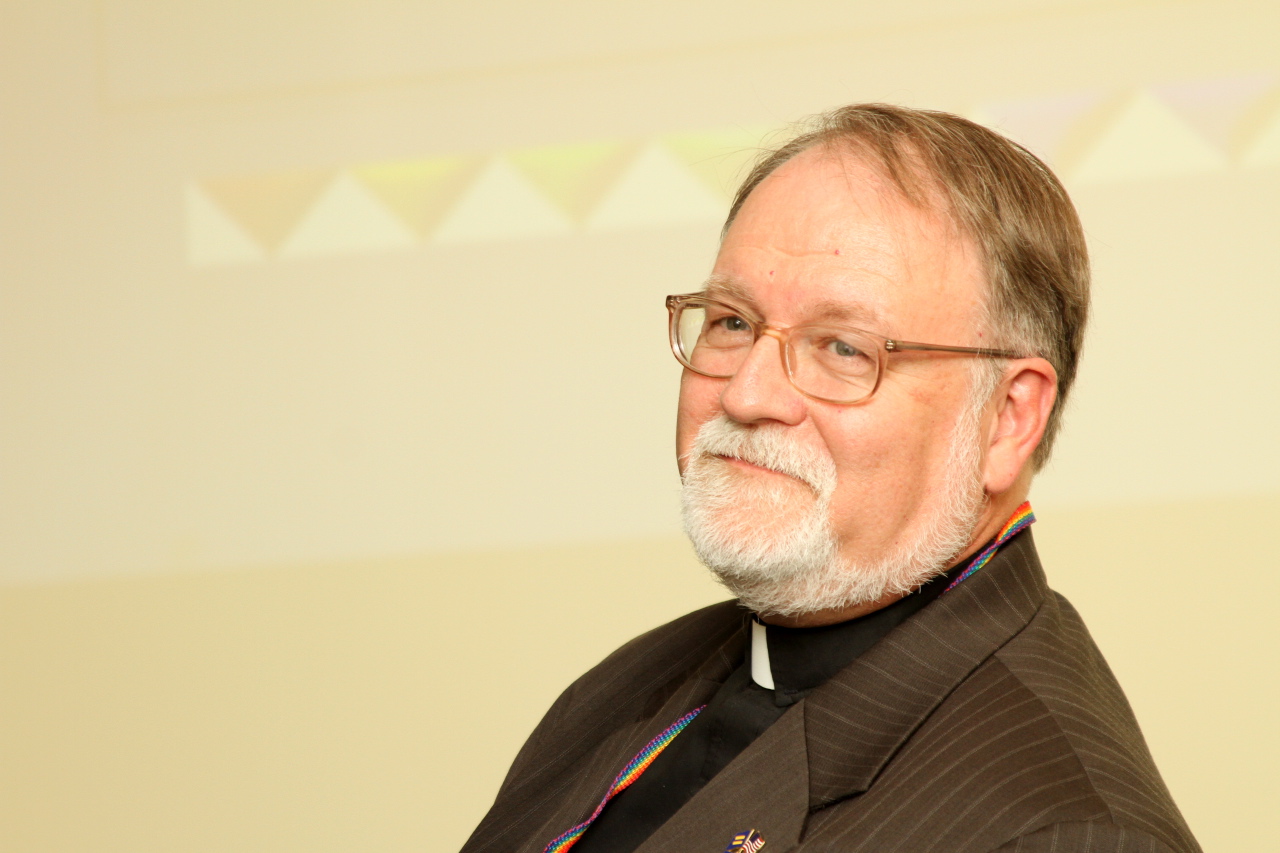
Dr. Stephen V. Sprinkle (Keith Tew photo).
Stephen V. Sprinkle is Director of Field Education and Supervised Ministry, and Professor of Practical Theology at Brite Divinity School, Fort Worth, Texas, a post he has held since 1994. An ordained Baptist minister, he is the first open and out Gay scholar in the history of the Divinity School, and the first open and out LGBTQ person to be tenured there. Read More…
Recent Social Justice Advocacy Activity By Dr. Sprinkle
 Summer 2009 – Dr. Sprinkle responded to the Fort Worth Police Department and Texas Alcoholic Beverage Commission Raid on the Rainbow Lounge, Fort Worth’s newest gay bar, on June 28, 2009, the exact 40th Anniversary of the Stonewall Rebellion. Dr. Sprinkle was invited to speak at three protest events sponsored by Queer LiberAction of Dallas. Here, he is keynoting the Rainbow Lounge Protest at the Tarrant County Courthouse on July 12, 2009. Read More…
Contact Us
Communicate with the Unfinished Lives project team:
info@unfinishedlivesblog.com


Schedule a Presentation
Dr. Sprinkle will gladly present his acclaimed presentation to your organization. To arrange an Unfinished Lives presentation for your organization or group, please contact us.
Dr. Sprinkle has given his Unfinished Lives presentation to these and other community groups and organizations. Read More…
-

Where are our readers?
Publisher: Steve Sprinkle (Project Director)
Steve Sprinkle
Unfinished Lives: Remembering LGBT Hate Crime VictimsBrite Divinity School/Texas Christian UniversityFort Worth TXprofessor, minister, author, blogger, LGBTQ advocate


Follow Unfinished Lives on Facebook
 Box Turtle Bulletin
- An error has occurred; the feed is probably down. Try again later.
- HRC Back Story
- Know About The Gender Identity Movement
- Why Is There A Need For Human Rights?
- Kinds Of Human Rights
- Human Rights Purposes And Violations
- Human Rights For Every Human Incident
- 8 Reasons Human Rights Are Important
- Everything About Human Rights
- Human Rights Issues Education & Law
- We Need To Stand Up For Our Rights And Those Of Others
- Coca-Cola Receives Perfect Score On Human Rights
- The Advocate: Daily News
- Trump halts Iran strikes ‘for two weeks’ at last minute, claims ceasefire
- Urgent 25th Amendment calls grow after Trump threatens mass destruction of Iran's civilization
- Trump’s gay ‘special envoy’ Ric Grenell eyes ambassador to Russia position
- Rachel Maddow warns U.S. is ‘breaking’ as Trump escalates Iran war
- Iowa can enforce previously blocked ‘don’t say gay’ law, appeals court rules
- Attacks on abortion and gender-affirming care are inextricably linked
- Donald Trump threatens genocide in Iran: ‘A whole civilization will die tonight’
- The Supreme Court’s conversion therapy ruling is being misunderstood
- Hegseth compares Iran rescue to resurrection as Trump threatens strikes on civilian infrastructure
- Trump administration undoes civil rights settlements that found discrimination against trans students
- Dallas Voice: Instant Tea
- An error has occurred; the feed is probably down. Try again later.

 Unfinished Lives