President Obama Keeps Promise, Signs Shepard/Byrd Hate Crimes Prevention Act
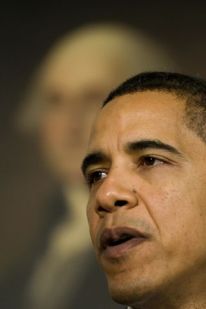 Washington, DC – 20 years of advocacy and struggle issued today in a powerful moment when President Barack Obama signed the Matthew Shepard and James Byrd, Jr. Hate Crimes Prevention Act into law. USA Today reported the comments of the President, both at the signing event, and at a later ceremony honoring the new law. “After more than a decade of opposition and delay, we’ve passed inclusive hate crimes legislation to help protect our citizens from violence based on what they look like, who they love, how they pray or who they are,” Obama said as he signed the Act. Commenting later in the day, he said to supporters of the new law, “No one in America should ever be afraid to walk down the street holding the hand of the person they love.” He then cited statistics that in these past 10 years since the hate crime murder of Matthew Shepard, there have been more than 12,000 hate crimes based on sexual orientation. “We will never know how many incidents were never reported at all,” the President concluded. Social justice advocates from all over the nation hailed the moment, as well. The Human Rights Campaign, the nation’s largest LGBT rights advocacy organization, reported that representatives of the Shepard family and the Byrd family were present at the signing event with the President. Judy Shepard remarked, “We are incredibly grateful to Congress and the president for taking this step forward on behalf of hate crime victims and their families, especially given the continuing attacks on people simply for living their lives openly and honestly. But each of us can and must do much more to ensure true equality for all Americans.” Stella Byrd, mother of straight African American hate crime victim, James Byrd, Jr., for whom the Act was also named, followed Mrs. Shepard with her remarks, “We appreciate everyone who worked so hard on this bill. My son was taken at such an early age and we hope this law will help prevent other families from going through what we experienced. Even though we’re different colors and different sexual orientations or gender identities, God made us all and he loves us all.” According to other reports, Damien Skipper, brother of slain gay Floridian Ryan Keith Skipper, and Elke Kennedy, mother of Sean Kennedy, murdered gay hate crimes victim from Greenville, South Carolina were among other bereaved family members present at the events. HRC President Joe Solmonese made these observations to the press: “This law honors our lesbian, gay, bisexual and transgender brothers and sisters whose lives were cut short because of hate. Today’s signing of the first major piece of civil rights legislation to protect LGBT Americans represents a historic milestone in the inevitable march towards equality. Although this is a major step in fighting the scourge of hate violence, it is not the end of the road. As a community, we will continue to dedicate ourselves to changing not only laws but also hearts and minds. We know that hate crimes not only harm individuals, but they terrorize entire communities. After more than a decade of advocacy, local police and sheriffs’ departments now have the full resources of the Justice Department available to them.” Solmonese concluded, “We applaud President Obama for signing this bill into law and thank the leadership and our allies in the House and Senate. We also will always remember the tireless efforts of Senator Edward Kennedy on this issue. Senator Kennedy once said that this legislation sends ‘a message about freedom and equality that will resonate around the world.’ This marks the first time that we as a nation have explicitly protected the LGBT community in the law. And this law sends a loud message that perpetrators of hate violence against anyone will be brought to justice.”
Not only was this an historic moment in the history of human rights advocacy in the United States. The action of President Obama marks a significant milestone in the relatively short history of his administration. The enactment of the Matthew Shepard and James Byrd, Jr. Hate Crimes Prevention Act is the first major promise to the LGBT community that the President has kept. During his campaign for the presidency, Obama repeatedly made promises to LGBT people that he would expand, protect, and defend their rights. Many LGBT activists have been critical of the seeming slowness of the President and the Congress to keep faith with homosexual and transgender Americans, who voted in record numbers to support the Democratic ticket this past year. Many other important promises remain unfulfilled by the Obama administration: enactment of the Employment Non-Discrimination Act (ENDA), repeal of Don’t Ask, Don’t tell (DADT) which the Secretary of the Army suggests is now doable, and repeal of the Defense of Marriage Act (DOMA). The enactment of the Shepard/Byrd Act, however, is a powerful indication the President will make his promises good to some of his most loyal supporters, and the significance of this day should not be lost on his LGBT critics.
For Courageous Mothers of LGBT Murder Victims, There is No Closure

Pat and Lynn Mulder at USF, Stephen Coddington photo for the Times
Families of LGBT hate crimes murder victims are on the front lines of grief and loss when a homophobic attack takes the life of someone they love. This is especially true of their mothers. That powerful truth was driven home for me again by learning of Pat and Lynn Mulder’s courageous appearance at the Hate Crimes Awareness Summit held this week at the University of South Florida. Pat shared the story of how her beloved son, Ryan Keith Skipper, lived and died at the hands of brutal, anti-gay attackers in rural Polk County Florida on March 14, 2007. The popular 25-year-old Skipper was stabbed over 19 times, and left to bleed out on a lonely dirt road in Wahneta, a rural town in the Winter Haven region. One of his murderers, Joseph “Smiley” Bearden has been sentenced to life without parole earlier this year, and a second alleged killer, William D. “Bill Bill” Brown is to stand trial on October 12. Reporting on the Summit, Alexandra Zayas of the St. Petersburg Times, relates how Pat had to overcome her reluctance and nervousness about speaking in front of crowds about the worst tragedy in her family’s history. “The worst thing in the world that can happen to you has already happened. There’s nothing else to be afraid of.” Speaking with passion and the conviction that no family should ever have to endure what hers has, Pat and her husband Lynn have tirelessly reached out to others bereaved by unreasoning hatred. Barely a year after her son’s murder, Pat traveled to Fort Lauderdale to see Denise King, mother of African American youth Simmie Williams, Jr., who was shot for being transgender by attackers who have not yet been identified or apprehended. At at town hall meeting dedicated to the memory of 17-year-old Williams, Pat introduced herself to Mrs. King as Ryan’s mother, and enfolded her in an embrace that King later said was deeply meaningful to her. Speaking to the Times about that moment, Pat said, “It’s beyond being women. It’s beyond being different races, different backgrounds. It has nothing to do with that. It’s the hearts of two mothers,” Pat said. “For a moment, there’s someone who’s helping you hold up your pain.” The real unsung heroes of the effort to win passage of the Matthew Shepard Hate Crimes Prevention Act are women like Pat Mulder and Denise King who became “accidental activists” for the sake of their children who died so senselessly. Elke Kennedy, mother of Greenville, SC victim, Sean William Kennedy, Pauline Mitchell, mother of Navajo two-spirit son, F.C. Martinez, Jr. of Cortez, CO, Pat Kuteles, mother of U.S. Army Pvt. Barry Winchell, murdered at Fort Campbell, KY, Kathy Jo Gaither, sister of Sylacauga, AL victim Bill Joe Gaither, and, certainly, Judy Shepard of Casper, WY who is currently touring the nation to promote passage of the LGBT hate crimes bill named for her son Matthew, are but a few outstanding examples of women whose love overcame untold obstacles to add their voices to the chorus of Americans, gay and straight, who want anti-queer violence to come to an end forever. These courageous women and many other family members around the nation have become the most effective spokespersons for human rights because of their unsought-for mission to stamp out hate from the American vocabulary for all people, especially LGBTQ folk who are so much at risk. How do mothers do it? Pat Mulder says that for parents of gay murder victims, there is no closure, only the determination to turn up the volume on what hate crimes do to families.
~ Stephen Sprinkle for the Unfinished Lives Project
Another “Beyoncé” Killing: New Orleans Trans Murder Hate Motivated?

Beyoncé Knowles
New Orleans, LA – The Times-Picayune and Advocate.com report the Sunday murder of a victim who presented femininely and referred to herself as “Beyoncé,” in tribute to the popular star of soul and pop/rock, Beyoncé Knowles. The victim, Eric Lee, 21, was stabbed repeatedly at an apartment complex in the Algiers neighborhood. Police found Lee’s slashed body inside a first-floor apartment. Witnesses say they heard Lee arguing heatedly with a group of women before the time of the murder. While police have not announced a suspected motive for the killing, the m.o. fits a transphobic hate crime pattern. Residents who knew her say that Lee, who was in transition from male to female, often dressed in women’s clothing, and drew ridicule from the neighborhood because of it. An unidentified source told the Times-Picayune that Lee “dressed to the nines.” Carl Adams, who claimed that he did not know the victim well, told reporters that he had often heard Lee arguing with neighbors. “Probably because they made fun of him,” he said. In recent years, other trans and non-gender conforming African Americans who have identified with the megastar Knowles have died at the hands of phobic killers. Simmie Lewis Williams, Jr., 17, who also called himself “Beyoncé,” died from gunshot wounds in 2007 in the 1000 block of Sistrunk Avenue in Fort Lauderdale, FL. Adolphus “Beyoncé” Simmons, 18, a talented female impersonator from North Charleston, South Carolina, similarly died outside his apartment while carrying out the trash to a bin, also in 2007. Much like queer southern whites have idolized Dolly Parton, dressing like her and lip-syncing her hits, Beyoncé has entranced young black cross dressers and transgender women, and has legions of gay and lesbian fans, both black and white. Yet she has not become the advocate for LGBT people that Ms. Parton has. Ms. Knowles has occasionally reached out to her LGBT fans, especially after an international flap over her comments concerning the onstage kiss between Madonna and Britney Spears at the MTV Awards in 2003. At the time, the British tabloid, The Sun, charged Knowles with homophobic statements based on her strict religious upbringing. On her website, she refuted the claims of the tabloid, writing, “I’d like to clarify any confusion over some quotes that were attributed to me totally out of context in a recent interview. I have never judged anyone based on his or her sexual orientation and have no intention of starting now. I have a lot of gay and lesbian fans and I love them no differently than my straight fans.” For an interview in Instinct reported on AfterElton.com, she revealed that she was raised by a gay uncle who died of AIDS-related complications. “He helped me buy my prom dress. He made my clothes with my mother. He was like my nanny. He was my favorite person in the whole world,” she said. To date, her love and respect for her uncle and her LGBT fans notwithstanding, she has not spoken out against the harm being perpetrated against queer fans who are suffering the ultimate price for paying her the ultimate tribute. The murder of Eric “Beyoncé” Lee, while outrageous in its own right, underlines the need from some statement on Ms. Knowles’ part, condemning such killings. Of course, Beyoncé Knowles is not responsible in any way for the killing of Lee, Williams, Simmons, or anyone who chooses to bear her name. But the number of those dying to emulate her suggest that statements from her and other influential black entertainers against homophobia and transphobia is at least urgent, if not overdue. ~ NB: Pronouns in this article reflect the usage of the source in quotations. Williams and Simmons referred to themselves using masculine pronouns. As is appropriate for an M to F transperson, Lee is referred to using feminine pronouns.
Gay Man Gunned Down in His Florida Driveway
 Mark Scott Harriss, 30, looked forward to moving to Canada to get married to his fiancé, Ross Salvosa. Instead, he was shot to death around 8:30 pm in his Delray Beach, Florida driveway on Monday, May 11, 2009. Was it a hate crime? He had multiple gunshot wounds, and there was no evidence of robbery, according to investigators. Though authorities have not yet made the determination that his murder was a hate crime, friends of Harriss think it was likely. Professor Earl Fox from the University of Miami School of Medicine knew him well, and the neighborhood where he lived. Fox noted to the Palm Beach Post that another friend of his who lives in the same area as Harriss had a Nazi swastika painted on her car earlier this year because she is Jewish. “If somebody is shot multiple times and nobody takes anything, that is just strange,” Fox told reporters.
Police told WPBF television, an ABC affiliate, that Harris was shot 12 times at close range in a manner resembling an “assassination.” Homophobia is under consideration as a motive for the murder, officers said.
Harriss grew up in Fredericksburg, Texas, in the Hill Country. He was an enthusiastic water skier, and loved gardening, according to his high school classmate, Theresa Valenzuela, of Austin. He had moved to Florida in 2007 to take a job with Best Western Motels. Salvosa, a classical piano student, lived with him until his student visa expired, at which time he returned to his native home in Vancouver, British Columbia. Harriss was tying up loose ends as quickly as he could in Delray Beach, so that he could find a job in Canada, go to live there in early summer, and marry his beloved.
Now Salvosa is returning to Florida to mourn Harriss and to oversee his memorial service. Harriss wished to be cremated, and to have his ashes interred back in New Braunfels, Texas, a city between Austin and San Antonio.
Investigations into Harriss’ savage murder continue, and the Delray Police Department vow to follow all leads until the tragic mystery of this killing is resolved.
Has the “War” Against LGBTs Ceased in Fort Lauderdale?

A kinder, gentler Ft. Lauderdale may be in the cards, as John P. “Jack” Seller takes over as Mayor after 18 years of an anti-gay administration. Ex-mayor Jim Naugle scapegoated the LGBT community for a non-existent sex and crime problem in public toilets along the city’s fabled gay-friendly beaches. Enraged at Naugle’s homophobic rhetoric and his enlistment of right wing church groups in a “war” against “immorality,” LGBT opponents of Naugle launched a “Flush Naugle” campaign, parodying the mayor’s effort to get $250k robo-toilets installed on the beaches.

Robo-Toilet Mayor Naugle Proposed to Address Non-Existent Gay Crime Wave on the Beaches
Naugle’s “war” claimed victims, most notably Simmie L. Williams, Jr., a 17-year-old trans person, known on the Sistrunk Avenue strip where he died as “Chris,” or “Beyoncé.” Two assailants shot him to death on the night of February 22, 2008, and as yet are not apprehended. Homophobia has a crooked arm. No straight line of cause and effect need link Naugle’s diatribes against the LGBT community to Simmie Williams’ murder, but the mayor’s irresponsible rhetoric set the stage for violence against queer folk in Broward County to escalate.

Simmie Williams died in the street wearing a dress, a casualty in a “war” he didn’t even know he was enlisted to fight. Mayor Seller, who has just taken office, has his work cut out for him. Shall it be, “Come Bask in the Sun,” in Fort Lauderdale, or “Come Bash in the Sun”? At the Unfinished Lives Project, we know which one we vote for.

~ Stephen V. Sprinkle, Director, The Unfinished Lives Project
Remembering Ryan Keith Skipper

Ryan Keith Skipper
April 28, 1981 – March 14, 2007
Wahneta, Florida
This is the second anniversary of Ryan’s murder. In the deep of night, as March 13 bled into March 14, two attackers savaged him as he sat in his car. The Polk Country Associate Medical Examiner testified that his autopsy revealed 19 stab and slash wounds, probably from two knives. The killing stroke was a 3.5-inch-deep cut into his neck, severing his jugular.
Though nothing can bring Ryan back to his family and friends, Joseph Eli “Smiley” Bearden, now 23, was found guilty on all counts. He is now serving a life sentence for Ryan’s murder. William David “Bill Bill” Brown, Jr., now 22, will stand trial for first degree murder in October of this year.
Sheriff Grady Judd has not yet apologized for filling the airwaves with misinformation about Ryan’s life, his character, and the events on the night of the murder. Every allegation he repeated to the press has been disproven. Judd should have been drummed out of office. Instead, he was re-elected by the citizens of Polk County this past November.
Ryan’s life is cherished, and his memory is a powerful force for winning equality for LGBT Americans. The manner of his death is a strong incentive for all people of good conscience to urge Congress and the President to enact the Matthew Shepard Act and the Transgender inclusive Employment Non-Discrimination Act into law, as well as abolish the military’s infamous Don’t Ask, Don’t Tell policy.
Project Activity — Summer of 2008
In the summer of 2008, Unfinished Lives project director Dr. Stephen V. Sprinkle researched the circumstances of several anti-gay hate crimes in America’s deep south. Sprinkle toured hate crime scenes, spoke with loved ones and friends of the victims, and preserved information about the lives and stories of LGBT persons killed only for their sexual orientation. Sprinkle’s research on behalf of the project took him to Texas’s Gulf Coast, Alabama, Florida, North Carolina and South Carolina.
June 2008 – Oklahoma City, Oklahoma – Unfinished Lives project director Stephen V. Sprinkle conducted research on Steven Domer.
June 2008 – Kansas City, Missouri – Unfinished Lives project director Stephen V. Sprinkle conducted research on Barry Winchell.
June 2008 – Houston, Texas – Project director Stephen Sprinkle traveled to Houston and the Gulf Coast region of Texas to investigate the Kenneth Cummings Jr. hate-crime murder. During that same trip, Dr. Sprinkle preached at Resurrection Metropolitan Community Church for its Pride Week observances.
After Sprinkle preached and presented “Unfinished Lives” at a special June 15 afternoon event, Senior Minister DeWayne Johnson led the congregation in prayer for the Unfinished Lives project, Dr. Sprinkle, and his summer research for the upcoming book.

For the next five days, Dr. Sprinkle traveled to sites relating to the murder of 46-year-old Southwest Airlines Flight Attendant, Kenneth Cummings, Jr.

Ken was a regular in the Montrose section of downtown Houston, the center of the metro area’s LGBT community. Here is EJ’s bar, a friendly, neighborhood gay pub where Ken first saw his murderer, Terry Mark Mangum:

This is the billiards area of EJ’s where Mangum, an ex-con, stalked his potential targets:

Ken and Mangum talked here and exchanged phone numbers. Ken had no idea Mangum was hunting a gay person to kill. On Sunday, June 4, 2007, Ken called friends saying that JR’s, another Montrose establishment, was “dead,” and suggested that he would just go home, since he had a flight early the next week.

Instead, he called Mangum, hooked up with him, and invited him to his home in suburban Pearland.

Mangum drove a 6-inch knife blade into Ken’s skull as he sat drinking a glass of wine. Mangum loaded Ken’s body in the trunk of Ken’s car, drove it to his grandfather’s ranch south of San Antonio, and tried to burn his remains in a shallow pit he dug in a dry stock tank. Ken’s body was burned beyond recognition, and could only be identified by dental records.
Dr. Sprinkle talked with co-workers, Houston Police officers, and Ken’s best friend of many years to gain insight into who this gentle, happy man really was. In August of 2008, a Brazoria County jury found Mangum, who claimed that God had called him to wipe out sexual perverts, guilty and sentenced him to life in prison.
June 2008 – Alabama, Part I – After leaving the Texas Gulf Coast, Unfinished Lives project director Dr. Stephen V. Sprinkle traveled to Alabama and performed research about the life and murder of Billy Jack Gaither. His work brought him to Tuscaloosa, Birmingham, Sylacauga and Montgomery. Sprinkle met with scholars, students, humanitarians, and members of the Gaither family.
In Tuscaloosa Sprinkle met Dr. Beverly Hawk, Ph.D., Director of the Crossroads Community Center at the University of Alabama at Tuscaloosa. Dr. Hawk is a noted scholar who studies diversity and hate crimes, and is a friend of the Gaither family. She worked to establish the Billy Jack Gaither Humanitarian Award, given annually on the anniversary of his death.

Sprinkle then traveled to Birmingham, where his host was David Gary, a bank officer and dedicated LGBT activist well-known throughout Alabama. Gary is a master networker, and a true humanitarian. He is one of the founders of Integrity Alabama, the LGBT Episcopal advocacy group.

One of the most significant moments of the summer came when Sprinkle met Kathy Joe Gaither, Billy Jack Gaither’s elder sister. Kathy Joe is the keeper of the flame of her brother’s memory.

Billy Jack had to travel up to Birmingham in order to experience freedom as a gay man. His favorite bar was the Toolbox, which is now named “Phoenix”

Sprinkle then traveled to Sylacauga, Billy Jack’s home town. On the night of his murder in February 1999, Billy Jack Gaither left his home on Pelham Avenue.

Gaither gave his two murderers a ride to The Tavern, Gaither’s local hangout.

His murderers later cut him severely, forced him into the trunk of his own car, and transported him to the kill-site on Peckerwood Creek, a virtually inaccessible spot these days. There they killed him with blows from a wooden ax handle, dragged his lifeless body to a pyre of kerosene soaked tires, and immolated him. Gaither’s killers have been convicted of murder.
Billy Jack Gaither has been laid to rest beside his father, Marion, at Evergreen Cemetery in Sylacauga.


Sprinkle also traveled to the National Civil Rights Memorial Center in Montgomery, a facility that preserves the memories of slain Civil Rights advocates and others. In the Plaza, beside the memorial fountain, he spoke to youth from New York State who were visiting the Center’s museum.

The Center educates and motivates visitors for the cause of civil rights and tolerance. Notably, the Center has memorialized Billy Jack, giving him a tablet in its hall of remembrance.


June 2008 – Alabama, Part II – After leaving Montgomery, Alabama, in late June 2008, Unfinished Lives project director Dr. Stephen V. Sprinkle continued his research, learning about the life and murder of Scotty Joe Weaver.
First, Sprinkle traveled to Bay Minette, Baldwin County, Alabama, 30 miles from Mobile. This was the home of 18-year-old Scotty Joe Weaver.


Scotty, who had been harassed for being gay until he dropped out of high school, went to work as a cook for the Bay Minette Waffle House. He earned pretty good money for the first time in his life, money that allowed him to pursue his avocation as a female impersonator who favored Dolly Parton, and to rent his own trailer in Dobbins Trailer Park with his mother’s help.


A truly generous person, Scotty Joe invited two unemployed former schoolmates to live in the trailer with him. The young woman was a person he had known since grade school. In short order, his trailer guests invited another young man to live with them. Tensions arose.
Scotty’s three guests ambushed him in his sleep, robbed him of around $65, strangled him, and cruelly tortured him for hours, mutilating him while he was still alive. After partially decapitating him, they hauled his body to a remote wooded area outside Bay Minette, urinated on his corpse, and burned his body beyond recognition. Dental records eventually identified him. A vigorous investigation, headed by Baldwin County District Attorney David Whetstone, led to the arrest of Scotty’s three killers. The two men have been sentenced to life, and the woman to 20 years in prison.

Vigils were held in nearby Mobile, led by Bay Area Inclusion founder Tony Thompson, local PFLAG founder Suzanne Cleveland, and LGBT activist Rev. Helene Loper from Tuscaloosa. Today, however, most of the story has been forgotten, an example of how swiftly LGBT hate crimes are swept away from view.


Here is the Bryars McGill Cemetery in far north Baldwin County where Scotty Joe has been laid to rest. His grave lies as far from the road as you can get. Scotty Joe’s tombstone shows the loving remembrance of a mother.


June and July 2008 – Florida – After leaving Bay Minette, Alabama, Unfinished Lives project director Dr. Stephen V. Sprinkle traveled to Florida and performed research about the life and murder of 26-year-old Ryan Keith Skipper. His research took him to Winter Haven, Auburndale, and Wahneta.
In Auburndale Dr. Sprinkle met Lynn Mulder, Ryan’s stepfather, and spoke about the Unfinished Lives Project to the Polk County PFLAG chapter. Pat and Lynn Mulder are both healthcare professionals, respected, long-time residents of Auburndale. Their open welcome and willingness to share Ryan’s story and his friends was the highlight of the summer for Dr. Sprinkle.


Lynn and Pat keep Ryan’s cat, Baby, who wanders through the house looking for him still. Lynn toured Dr. Sprinkle to the sights associated with his son: First Missionary Baptist Church, Auburndale, Ryan’s home church, Grace Lutheran School, Winter Haven, where Ryan attended, Winter Haven High School, where Ryan graduated in spite of being harassed virtually daily for being gay by students who yelled epithets and threw rotten oranges and even stones at his car and his person.


Dr. Sprinkle traveled to Wahneta, a small, rural community south of Auburndale where Ryan and two girlfriends rented a little red house, 211 Richburg.


His killers–Bearden, who lived in a trailer in Eloise, just north of Wahneta, and Brown, who lived in a disheveled trailer park within biking distance of Ryan and the girls–planned to kill him after he returned from work at the Sunglass Hut in the Lakeland Mall. They tricked him with the story that they needed a ride, and directed him to drive down a lonely road where they slashed him to death with knives, nearly decapitating him. They left him on the side of Morgan road. The local woman who discovered Ryan’s body reported that it looked like someone had turned on a sprinkler of blood.


Bearden and Brown unsuccessfully tried to fence Ryan’s car that night, after bragging to friends about what they had done. They drove it to this public boat ramp on Lake Pansy, and set the car afire. In short order, they were apprehended, charged with murder, and have yet to stand trial.

The Mulders and Ryan’s elder brother, Damien, carried out a vigil here in Auburndale’s city park where hundreds gathered to remember him. Vigils were carried out in many other cities and towns in Florida to express outrage at the brutality of his murder.

Here, in Auburndale, Ryan lies in peace, and is not forgotten.


Project Activity — 2004, 2005, and 2006
2004– Fort Lauderdale, Florida
June 2006– San Francisco Bay Area, California, to conduct research on Diane Whipple, Gwen Araujo, and Harvey Milk.
In the summer of 2006, Unfinished Lives project director Stephen V. Sprinkle visited the San Francisco Bay Area to conduct research about anti-LGBT hate crimes victims. His work included research about Harvey Milk. Sprinkle shares some of his recollections from the trip:
“On my first major trip to study LGBT hate crimes murder victims, I traveled to Gay Mecca, the Castro in San Francisco. Though this was one of several visits to Castro Street through the years, the summer of 2006 was different. It was the year I met Harvey.

“Gay life is as vibrant as those who live it, and the Castro is Ground Zero for all LGBT people thanks to Harvey, the ‘Mayor of Castro Street.’ On my way to the HRC Store, I had walked right by Harvey Milk’s camera shop without noticing it. A friendly clerk at the HRC named Fidel pointed me back there, and I walked back across the street and down the block until I stood facing the closed and vacant shop at 575 Castro Street. Down at my feet was a bronze plaque commemorating Harvey’s shop and home.

“I looked up and saw a mural of Harvey standing in the window, looking down from the second floor at the beloved community he represented as the first openly gay person elected to a major office in America. He and Mayor George Moscone were assassinated in City Hall by Dan White, a disgruntled former city supervisor, on November 27, 1978.”

July 2006 – Laramie, Wyoming
July 2006– Cortez, Colorado, to conduct research on F.C. Martinez.
2006– Fort Lauderdale and Miami, Florida
About
If you are a first-time visitor to the Unfinished Lives Project website, we invite you to read A Welcome Message introducing you to our project. We are truly grateful for your visit.
The Unfinished Lives Project website is a place of public discourse which remembers and honors LGBTQ hate crime victims, while also revealing the reality of unseen violence perpetrated against people whose only “offense” is their sexual orientation, gender identity, or gender presentation. LGBTQ people in the United States are suffering a slow-rolling decimation of terror and murder all across the country. Every locale and demographic of society are affected: First Nations, Anglo, Black, Latino and Latina, South and Southeast Asian, Transgender, Bisexuals, Gay men, Lesbians, disabled, young, and mature. Homophobia has a long, crooked arm, and it is reaching out to snatch the life away from women and men whose tragic stories are under-reported to begin with, and whose memories are swiftly forgotten.
The horror of these killings transcends the shock and bereavement of loved ones and friends. These are not typical homicides; they are not killings for money or drugs, incidents of domestic strife, or crimes of passion. The vicious nature of hate crimes against LGBTQ persons is extremely brutal, grotesquely violent, and egregiously hateful.
Each murder serves the LGBTQ population as a sobering warning about the actual level of danger in our communities. The message these killings send is that freedom and open life for LGBTQ people is a cruel dream. Every time we remember one of these victims, however, the intentions of their killers are frustrated. To remember these women and men is to begin the process of changing the culture that killed them.
Our Project Director
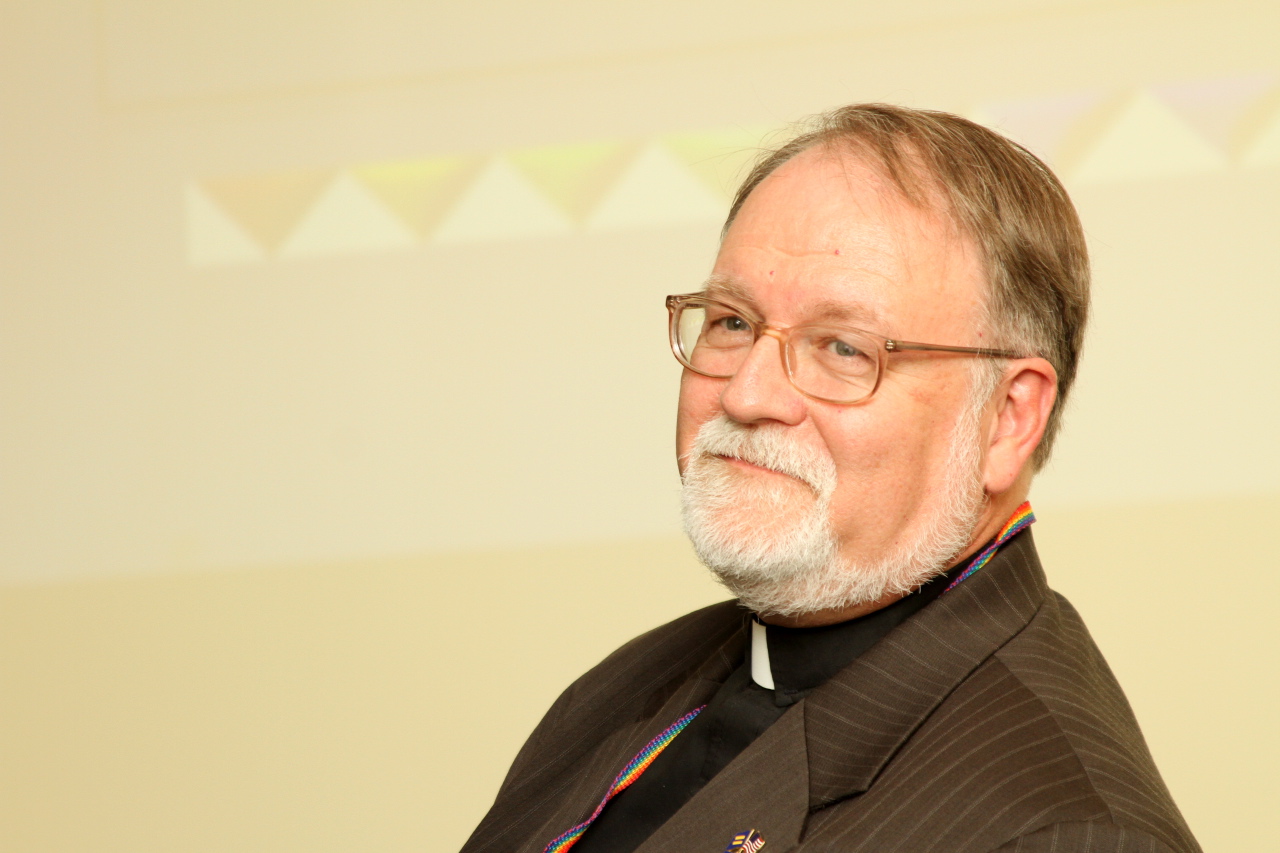
Dr. Stephen V. Sprinkle (Keith Tew photo).
Stephen V. Sprinkle is Director of Field Education and Supervised Ministry, and Professor of Practical Theology at Brite Divinity School, Fort Worth, Texas, a post he has held since 1994. An ordained Baptist minister, he is the first open and out Gay scholar in the history of the Divinity School, and the first open and out LGBTQ person to be tenured there. Read More…
Recent Social Justice Advocacy Activity By Dr. Sprinkle
 Summer 2009 – Dr. Sprinkle responded to the Fort Worth Police Department and Texas Alcoholic Beverage Commission Raid on the Rainbow Lounge, Fort Worth’s newest gay bar, on June 28, 2009, the exact 40th Anniversary of the Stonewall Rebellion. Dr. Sprinkle was invited to speak at three protest events sponsored by Queer LiberAction of Dallas. Here, he is keynoting the Rainbow Lounge Protest at the Tarrant County Courthouse on July 12, 2009. Read More…
Contact Us
Communicate with the Unfinished Lives project team:
info@unfinishedlivesblog.com


Schedule a Presentation
Dr. Sprinkle will gladly present his acclaimed presentation to your organization. To arrange an Unfinished Lives presentation for your organization or group, please contact us.
Dr. Sprinkle has given his Unfinished Lives presentation to these and other community groups and organizations. Read More…
-

Where are our readers?
Publisher: Steve Sprinkle (Project Director)
Steve Sprinkle
Unfinished Lives: Remembering LGBT Hate Crime VictimsBrite Divinity School/Texas Christian UniversityFort Worth TXprofessor, minister, author, blogger, LGBTQ advocate


Follow Unfinished Lives on Facebook
 Box Turtle Bulletin
- An error has occurred; the feed is probably down. Try again later.
- HRC Back Story
- Know About The Gender Identity Movement
- Why Is There A Need For Human Rights?
- Kinds Of Human Rights
- Human Rights Purposes And Violations
- Human Rights For Every Human Incident
- 8 Reasons Human Rights Are Important
- Everything About Human Rights
- Human Rights Issues Education & Law
- We Need To Stand Up For Our Rights And Those Of Others
- Coca-Cola Receives Perfect Score On Human Rights
- The Advocate: Daily News
- Eric Swalwell responds to sexual assault allegations in a to-camera video
- Eric Swalwell’s governor bid is collapsing as top Democrats turn on him
- What Melania Trump’s bizarre Jeffrey Epstein press event reveals about a White House in chaos
- New Bryon Noem bombshell puts Kristi Noem’s anti-trans politics under harsher spotlight
- Former Biden HHS leaders hail syphilis breakthrough as Trump dismantles the system behind it
- Advocate breaking news 4/10/26
- Pete Buttigieg hints at 2028 presidential run: ‘Save me a seat’
- Could Minneapolis welcome bathhouses back for the first time since the late 1980s?
- Donald Trump posts gruesome murder video to Truth Social
- Melania Trump blindsides White House aides with unexpected leap into Epstein scandal
- Dallas Voice: Instant Tea
- An error has occurred; the feed is probably down. Try again later.

 Unfinished Lives
Tampa Bay Gay Publisher Admits Neglecting Ryan Skipper’s Hate Crime Murder “A Big Mistake”
Share this:
August 5, 2009 Posted by unfinishedlives | Anglo Americans, anti-LGBT hate crime murder, Blame the victim, Florida, gay men, Hate Crimes, Heterosexism and homophobia, Law and Order, Media Issues, Perpetrators of Hate Crime, Social Justice Advocacy, stabbings | anti-LGBT hate crime murder, Blame the victim, Florida, gay men, Hate Crimes, Law and Order, Media Issues, Pensito Review, Special Comment, stabbings | 2 Comments