Ohio Hate Murder Revisited After Six Years: Justice for Gregory Beauchamp
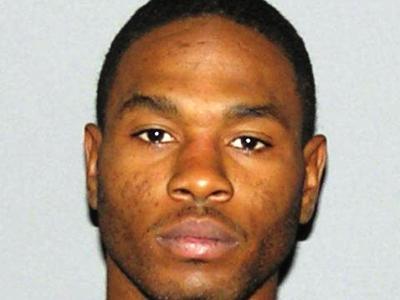
Jerry Jones, 28, indicted for 2002 New Year's Eve Murder of Gregory Beauchamp
On New Year’s Eve 2002, a dark blue Cadillac pulled up to the corner of West Liberty and Vine Streets in Cincinnati beside two cross-dressed friends as they walked to a party. Taunts erupted from the car at the two homosexual men, “Fuckin’ faggot-assed bitches!” Then somebody in the Caddy pulled a trigger, and Gregory Beauchamp, 21, fell fatally wounded in the chest. He was pronounced dead on the scene.

Hate Murder Victim Gregory Beauchamp, 21, wanted to be a fashion designer.
Now, thanks to the work of the Cincinnati Cold Case Unit, Jerry Jones, 28, has been indicted for Beauchamp’s murder. Jones was already in custody at a Dayton, Ohio detention facility on unrelated charges. In 2003, though he had been arrested for killing Beauchamp, the grand jury failed to indict him. The years have not dimmed the pain Beauchamp’s friends still feel for his loss. His friend Dontae refuses to forgive Jones: “This is so sad what they did to Gregory. I miss him so much! The guy who took his life don’t think how much he meant to us. He took my best friend [away from me] that night.”
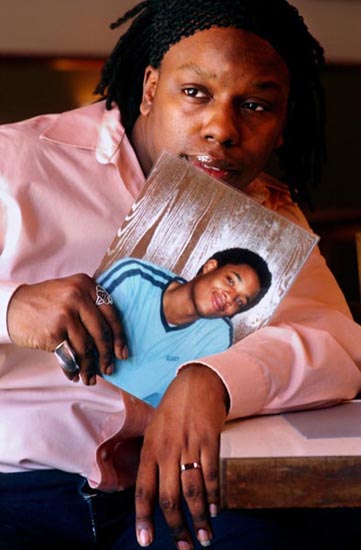
Curtis Johnson holds photo of his friend, Gregory Beauchamp. (Steven Heppich photo)
Gregory Beauchamp was the 65th homicide of the year in Cincinnati, and the last one for 2002. Curtis Johnson remembers the night as if it were yesterday. He told the Cincinnati Enquirer that he was on his way to meet Beauchamp at the party. “He just died in the street–it’s just terrible. I just want people to know he’s more than just the 65th victim. He loved clothes, music, he could sew. He was just a good person. Being black and gay in Cincinnati is tough.”
Beauchamp’s brutal murder sparked a movement in Cincinnati that culminated in the passage of a municipal hate crime statute. Now his friends may get to see justice done for the gentle man who loved to wear women’s clothing and dreamed of studying fashion design in California.
What the Matthew Shepard Act Does: Rachel Maddow Comments

Attacks against LGBT people in the U.S. are increasing alarmingly
Violent crimes against LGBT people have increased in the U.S. population in the last two years at an alarming rate, especially among Latino and Black racial/ethnic groups. The California Department of Justice, for example, noted 263 hate crimes based on sexual orientation in 2007. Commenting on these statistics, Jason Bartlett, a California-based spokesman for the National Black Justice Coalition, a lesbian, gay, bisexual and transgender (LGBT) rights advocacy group, said, “We have a disproportionate amount of African-Americans being targeted that are LGBT, and we have a huge disparity where transgender people are attacked due to gender expression. Within the Black or Latino community there is more stigma attached to being gay or lesbian or transgender. It’s not talked about as much and within our religious institutions. We have ministers that speak homophobia from the pulpit. Those kind of messages filter down.” The same is true throughout the country, as the brutal murders of Angie Zapata, Latina transgender woman from Greeley, CO, and Lateishia Green, African American transgender woman from Syracuse, NY, show.

Latiesha Green, transwoman murdered in Syracuse, NY
The Local Law Enforcement Hate Crimes Prevention Act of 2009, also known as the Matthew Shepard Act, would expand current hate-crimes laws and authorize the Attorney General “to provide technical, forensic, prosecutorial, or other assistance in the criminal investigation or prosecution” of any crime “motivated by prejudice based on the actual or perceived race, color, religion, national origin, gender, sexual orientation, gender identity, or disability of the victim, or is a violation of the state, local, or tribal hate crime laws.”

Misleading anti-Shepard Act flyer, aimed at U.S. Congress
Against critics, supporters of the Act note that this is not a “hate speech act,” or a “hate thought act,” as detractors have charged. This Act specifically preserves all First Amendment rights of speech and assembly. Instead, this Act targets crimes perpetrated against LGBT people because of bias motivation against their sexual orientation or gender expression and identity.
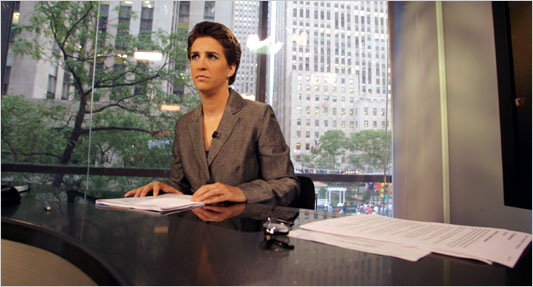
Rachel Maddow, MSNBC News Commentator
Nobody seems to have gotten the rationale for the Matthew Shepard Act more clearly than MSMBC’s commentator, Rachel Maddow. In her discussion of the controversy surrounding the Act since its passage in the U.S. House of Representatives, she put it this way on The Rachel Maddow Show of 4/30/09:
MADDOW: “The concept behind this kind of legislation is often misconstrued but here’s the deal as I understand it. The idea is that the federal Justice Department can get involved in a case to help local authorities or even to take the lead on a case if need be, in prosecuting individual serious violet crimes and murders in which the victim was selected on the basis of race, color, religion, national origin, sexual orientation, gender, gender identity, disability – the idea that crimes like that are intended not only to hurt or murder an individual, but to terrorize an entire community, and so there is a national interest in ensuring that those crimes are solved and prosecuted, particularly if local law enforcement doesn’t want to because they are blinkered by the same prejudice that led to the crime in the first place.”
Michael Scott Goucher and the Deadly Web of Homophobia

Michael Scott Goucher
Michael Scott Goucher, 21, thought he was meeting Shawn “Skippy” Freemore, 19, for a second tryst when he left his Stroudsburg, PA, apartment on the night of February 3, 2009 (see Towleroad, “Internet Tryst Leads to Murder of Pennsylvania Army Veteran, 2/13/2009”). Instead, Goucher was being set up for murder. Goucher met Freemore online. According to his MySpace page, Freemore identified as bisexual, but more interested in men. After the initial meet up in January, Freemore enlisted his friend, Ian Seagraves, 17, to ambush Goucher.
Goucher followed Freemore out of his car in a wooded area off of Snow Hill Road in Price Township. Seagraves, who was hiding under a nearby bridge, surprised Goucher, stabbing him in the neck. During the attack, his two assailants stabbed Goucher “45 to 50 times” according to police affadavits. They rifled his pockets, taking credit cards, his ID, and a cell phone. A DVD belonging to Goucher was later confiscated at Seagraves’ home. They covered his body with snow, and drove his car away.

Ian Seagraves & Shawn Freemore, courtesy of Pocono Record
When he was arrested, Freemore contended that he had acted alone and used the “gay panic” defense, saying that he resisted Goucher’s sexual advances in the car, and only after Goucher pursued him outside, stabbed him in the neck and stomach “about 20 times.” On February 11, 2009, Freemore showed police the location of Goucher’s body. Detectives secured a knife and a meat cleaver near the body, and a roll of duct tape with Seagraves’ fingerprint under the bridge. Seagraves, who apparently celebrated his part in the murder by changing his MySpace moniker to “ThrOwt Stabba,” was soon arrested, and the pair is now charged with premeditated murder.
This is one murder the FBI will surely miss in its Hate Crimes Statistics. The murky details of online hookups, closeted gayness, and bisexuality mingle with drug and alcohol addiction (on Freemore’s part at least), theft, and the involvement of the teenage men in a violence-exalting subculture called “the Juggaloes.” Anti-gay hate murder has been facilitated online before, as the story of Michael J. Sandy showed in 2006, as well as the role that homosexual self-loathing plays in the psychological makeup of some attackers. But this was a brutal, homophobia-instigated and motivated hate crime.

Michael Goucher at the Zion UCC organ
Goucher, a U.S. Army veteran, was a contributing member of his community. He worked for the local school system, and volunteered as the assistant organist of the Zion United Church of Christ in Stroudsburg, where he had impressed the pastor and the membership with his talent, sincerity, and friendliness. He was captain of the East Stroudsburg Crime Watch. He was a gay man. Though he came out to his family as early as 14, according to his uncle, William Searfoss, Goucher did keep his orientation from his Army superiors.
His killers will be judged according to the evidence. Allegedly, they own the guilt for this terrible crime. But Freemore and Seagraves are, in their own ways, victims of American-style homophobia, too. They were products of the same school system as Michael Goucher. They loathed gay men enough to turn a consensual sexual encounter into a bloodbath, with all the marks of homophobic overkill. They victimized Michael Goucher, giving way to their own self-loathing.
UPDATE: Following a Supreme Court ruling that juveniles cannot be sentenced to life without parole, Ian Seagraves was given a new hearing in hopes of securing a lesser sentence. His attorney filed a petition to the court based on the Supreme Court decision. But the judge was unmoved by the arguments, and after hearing the profanity laced lyrics of Seagraves’ song about the Goucher murder, reaffirmed the sentence Seagraves was serving. Goucher’s uncle, William Searfoss, said to PA Homepage, that the focus of the story can now return to Michael Goucher: “This isn’t about [Seagraves]. This is about Mike.”
Anti-LGBT Hate Crimes in California Increase Alarmingly
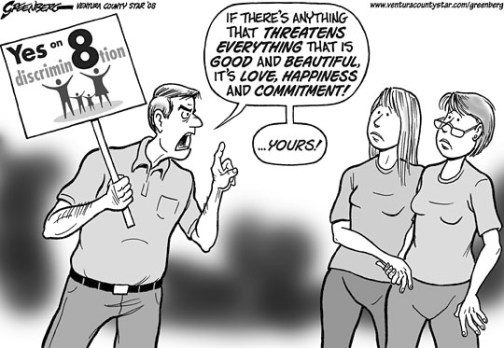
Ventura County Star Editorial Cartoon on Prop 8
365gay reports a 300% increase in homophobic hate crimes in Santa Clara County, California, just south of San Francisco. Two years ago, 15% of hate crimes were designated as anti-LGBT in nature. Last year’s statistics showed a dramatic increase to 56% of all hate crimes in the county.
An official for the District Attorney’s Office said to reporters for the Mercury News, “Marriage equality and Proposition 8 have been in the news, and we have seen an increase of gay bashing.” Stats for the rest of California’s counties will be released in the Attorney General’s annual report on hate crimes, due out in July.

In November, the “Yes on 8” campaign prevailed at the polls, 52% to 48%. The California Supreme Court has heard arguments on both sides of the question concerning a repeal of Proposition 8 on the grounds that it is unconstitutional. Also at stake are the 18,000 same-sex marriages carried already in the state. The judges have 90 days to issue a ruling.
In the meantime, the potential voting public in the Golden State remains sharply divided over the issue of same-sex marriage. A public opinion poll shows that 47% would now vote to maintain the ban. 48% report that they would vote to repeal Proposition 8.
Meanwhile, the bashings continue at a breathtaking rate. Stay tuned.
30-Year Sentence for Gay Bashing in Dallas

Jimmy Lee Dean After Near Fatal Assault (courtesy of Dallas Voice)
DallasVoice.com News Editor, John Wright reports that Jonathan Russell Gunther, 32, has been found guilty on March 4 of first-degree felony robbery and sentenced to 30 years for brutally attacking 43-year-old bisexual Jimmy Lee Dean on the night of July 17, 2008. Gunther and Bobby Jack Singleton, 29, both of Garland, Texas, beat and robbed Dean one block off the famous Cedar Springs Strip, the center of LGBT life in the DFW Metroplex. Singleton has yet to be tried for the crime.
The two assailants pistol-whipped Dean with a 9mm Glock handgun, rendering him unconscious, and then repeatedly kicked him in the head and body as he lay on the pavement. Their attack could have proved fatal, were it not for the intervention of Michael Robinson, a gay man who witnessed the crime in progress and called for help. Dean’s face is severely disfigured, he has lost his sense of smell, and suffers bouts of depression as a result of the incident. His eyelid still droops after two surgeries and may not be repairable. Before the sentencing, Dean spoke out about the crime, “I have never and could never see a reason to beat someone nearly to death just to have a good time…The only thing that will really make it easier is after the other trial. One down, one to go.”
Dallas-area LGBT folk and allies took to the streets in protest of the Dean attack, and the sluggish response of local officials to the rising anti-LGBT violence in the city. Dallas accounts for 34% of all the anti-gay hate violence in Texas.
The Year in Review
As 2008 draws to a close, hate crime statistics from 2007 are finally coming into clearer focus. Both the FBI and various anti-violence programs are verifying hate crime increases perpetrated against the LGBT community-at-large. Sadly, the findings from 2007 have been corroborated by ongoing violent acts in 2008.

FBI Hate Crimes Statistics for 2007: Sexual-orientation bias related crimes are up 18%.* National Coalition of Anti-Violence Programs disputes these statistics, claiming a 24% increase, at least. The official report says that in 2007, law enforcement agencies reported 1,460 hate crime offenses based on sexual-orientation bias to the FBI. Of these offenses:
- 59.2 percent were classified as anti-male homosexual bias.
- 24.8 percent were reported as anti-homosexual bias.
- 12.6 percent were prompted by an anti-female homosexual bias.
- 1.8 percent were the result of an anti-heterosexual bias.
- 1.6 percent were classified as anti-bisexual bias.
(*Note: Anti-transgender incidents are not reported in these statistics, since law-enforcement is not required by law to report them.)

Clarence Patton, Executive Director of the New York City Gay and Lesbian Anti-Violence Project (NYAVP), noted the “dramatic increase in the number of anti-lesbian, gay and bisexual incidents reported—though the overall number of reports captured by the FBI rose only 8%, the number of reports impacting our communities rose at more than twice that rate.”
The National Coalition of Anti-Violence Programs (NCAVP), a coalition of 30 member programs including the NYAVP, reported that gay bashing incidents actually rose 24% compared to 2006. 2007 also had the third-highest murder rate in a decade, more than doubling from 10 in 2006 to 21 in 2007.
Even these statistics hardly give the picture of the crisis of violence against LGBT people all across the United States. The true number of incidents perpetrated against queer folk is probably much higher, as Avy Skolnik, national programs co-ordinator of the NCAVP, reported:
“We know that the 2,430 people who called on our organizations in 2007 are only a small fraction of the actual number of LGBT people who experienced bias-motivated violence. Anecdotally, we constantly hear stories of LGBT people surviving abuse—sometimes multiple attacks per day when that violence comes from a fellow student, a neighbor, a co-worker, a landlord, or a boss.”
Richard Hernandez, butchered in his apartment bathroom
Dallas, Texas, boasting one of the largest LGBT populations in the country, saw LGBT people taking to the streets in protest of the alarming number of attacks. Two high-profile murders and several brutal assaults, including the “Silence of the Lambs style” dismemberment of gay man, Richard Hernandez, a 34-year-old citizen of Dallas, sparked street protests from United Community Against Gay Hate Crime to draw the attention of the public to the plight of LGBT citizens.

Gay Apartheid
Behind each number in these statistics are real people: victims, family, friends, bereaved lovers. This is the human cost of Gay Apartheid. The real target of these atrocities, however, is the idea of America, a country where all people may pursue their lives without fear of intimidation or violence. Until American laws and the attitudes behind them change to reflect the inclusion of all people in the constitutional rights and privileges afforded some, then this nation must be brought to face so-called “legal” acts of apartheid against the LGBT community.
Forty years after the Stonewall Uprising in New York, universally recognized as the birth of the LGBT Rights Movement, 29 states have constitutional amendments passed for the sole purpose of depriving LGBT citizens the same rights as heterosexuals. States have enacted bans against gay parenting and adoption. Not only has the Federal Government passed the “Defense of Marriage Act” (DOMA), and instituted the oppressive “Don’t Ask Don’t Tell” (DADT) policy for the U.S. Military, but 15 states have barred same-sex marriage, and 18 states have legislation limiting domestic partnerships and civil unions. The passage of Proposition 8 in California, repealing the right to marry given to its citizens earlier in the year, is just the latest act of apartheid in this country. Violence is following the law, not the other way around.
The definition of Apartheid is “a system of laws applied to one category of citizens in order to isolate them and keep them from having privileges and opportunities given to all others,” according to elder LGBT statesman, Herb Hamsher, writing for the Huffington Post. The Unfinished Lives Project cannot agree with Hamsher more when he says, “Our role is to hold a mirror up to the country and no longer allow it to shift the focus away from what we have become. We have become a nation increasingly devoted to an encroaching system of apartheid for a designated category of its citizens.”
When the tyranny of the majority goes unchecked, and the apartheid system apes the bias against LGBT people in communities and religious institutions, the American ideal of the protection of the minority from the excesses of their neighbors is exposed as a fantasy. An Apartheid America is not the nation of the free or the brave. Hate Crime murders and other violent crimes against LGBT people are hundreds and thousands of mirrors held up to the nation. We must continue to stand up, hold up these brutally frank mirrors to the disfigurement of America until our fellow citizens repudiate the travesty of the law these hate crime statistics represent.
NCAVP warns of national increase in anti-transgender violence
One day before the Transgender Day of Remembrance, a new NCAVP press release warns about a nationwide increase in severe violence perpetrated against transgender persons.

New York – As the Transgender Day of Remembrance approaches, a day when victims of anti-transgender bias are mourned around the globe, the National Coalition of Anti-Violence Programs (NCAVP) has documented increases in severe violence directed at transgender communities across the country, especially against transgender women of color.
- Latiesha Green, 22, was shot on November 14 in Syracuse, New York.
- Duanna Johnson, 43, was shot in Memphis, Tennessee, on November 8.
- Aimee Wilcoxson, 34, was found dead in her apartment on November 3 in Aurora, Colorado, just outside of Denver.
Some of these brutal acts of violence occurred in the same communities that continue to mourn the murders of two transgender people of color earlier this year: Ebony Whitaker, 20, murdered in June also in Tennessee and Angie Zapata, 18, murdered in July also in Colorado.
Organizations such as International Transgender Day of Remembrance and Remembering Our Dead that have helped to initiate Transgender Day of Remembrance (held this year on November 20) also track anti-trans murders. They documented 29 anti-trans murders in 2008, a 65% increase over 2007.
NCAVP wishes to express our sadness and outrage about this ongoing, horrific violence. We stand in solidarity with transgender communities in Tennessee, Syracuse, and Colorado, the victims and survivors, and their loved ones.
Mixed Criminal / Legal System Responses
Memphis
Ms. Johnson’s murder comes on the heels of Memphis Police Department’s brutal beating of Ms. Johnson in February 2008. The following Police security camera footage of the beating has been widely circulated since June (warning: clip contains disturbing material):
[YouTube=”http://www.youtube.com/watch?v=6N1Bvlbh_ws”%5D
The Memphis Police Department had been attempting to settle a law suit that Ms. Johnson had filed for the beating she endured while in custody. Former officers Bridges McRae and James Swain were fired only after the video was released, but it is not yet clear whether or not any criminal charges will be filed.
Local community members have speculated that anti-trans bias is likely a factor, not only in the beating itself but in the lack of criminal charges being filed. “This is not the first time the Shelby County District Attorney’s office has shown indifference to brutality against transgender people,” observed Dr. Marisa Richmond, the President of Tennessee Transgender Political Coalition. “When Tiffany Berry was murdered in 2006, her alleged perpetrator, D’Andre Blake, was released on only $20,000 bond.” Dr. Richmond noted that people charged with murder in Tennessee typically get a $100,000 bond.
The FBI is now assisting in the investigation of Ms. Johnson’s murder. NCAVP calls upon the FBI to bring its full resources to in the investigation of not only Ms. Johnson’s murder but also Ms. Ebony Whitaker’s. NCAVP also demands that District Attorney Gibbons bring appropriate charges against former officers McRae and Swain.
Aurora
In Colorado, the Aurora Sentinel reported that local police have speculated that Ms. Wilcoxson’s death was a suicide. But friends of hers insist that explanation is very unlikely given her life circumstances and also given the condition the body was in when it was discovered. NCAVP is hopeful that local police will conduct a thorough investigation that takes into account these statements from people who knew her.
Syracuse
In Syracuse, Sage Upstate and other local community members report that Syracuse City Police Department Chief Gary Miguel has responded to this crime with sensitivity. The family of Latiesha ‘Tiesh’ Green and LGBT advocates in the Syracuse community are hopeful that the Onondaga County District Attorney’s office will be able to include hate crime charges in the prosecution of this case.
NCAVP commends district attorneys and police who identify and appropriately categorize hate-motivated violence. We are hopeful that district attorneys and law enforcement in other jurisdictions will follow suit and NCAVP will continue to monitor the violence against transgender communities, as well as the police response.
Transgender and gender non-conforming people experience violence and harassment everyday and most of it never makes headlines. NCAVP encourages LGBT people experiencing any form of hate violence, harassment, vandalism, or bullying to contact NCAVP or one of our member programs by calling 212.714.1184 or emailing us at info@ncavp.org.
Special Comment: Living Hope

by Stephen V. Sprinkle
A paraphrase of Edwin Markham’s poem, “Victory in Defeat,” goes something like this: “Defeat as well as victory can shake the soul and let the glory out.” We are here tonight to tell the history of hope, not hate: hope born out of the hateful deaths of two men ten years ago, James Byrd, Jr. of Jasper, Texas, and Matthew Wayne Shepard of Laramie, Wyoming. Their stories brought us all together tonight. A decade ago, in the United States of America, they each died brutally at the hands of men who had learned to hate someone different.

Dragged behind a pickup truck in the Lone Star State of Texas for over three miles, James Byrd, Jr. died dismembered in a ditch in the wee hours of a June Sunday morning. People going to church found his body, minus his head and right arm, lying in the road in front of a little cemetery. They called the police, and as the police were speeding on their way to the crime scene, other citizens flagged them down because they had found James Byrd’s head in a drainage ditch.
Bludgeoned into a fatal coma with the butt of a .357 Magnum pistol, young Matthew Shepard was robbed of his shoes, his wallet, and ultimately his life in the Equality State of Wyoming on a cold October night. High in the desolate prairie, Matt’s bloody, broken body was trussed to a buck fence where he was abandoned to freezing wind and unforgiving sun for over 18 hours. When his near-lifeless body was found, the deputy sheriff who cut him free from that buck fence testified that he no longer looked like a human being, but more like a beaten Halloween scarecrow, limp on the ground. She said that his face was slathered with blood except for the tracks of his tears on his cheeks where the blood had been washed away. A few days later, Matt’s heart gave out, and he lost his fight for life in an Intensive Care unit.
Yes, defeat can shake the soul. That is what the poet, Edwin Markham said. Markham was a youth in the American Civil War, and the cataclysm of war ravaged the country in the years of the poet’s childhood. African Americans know the earthquakes of hatred and defeat. Long after that awful war was over, new battles faced African Americans, new defeats challenged hope with hate. Jim Crow, Separate But Equal, Strange Fruit with so many thousands lost to the rope that a sinister new term had to be invented to describe it: “lynching.” Hanging from the limbs of southern trees, shot and cut by the Ku Klux Klan, bombed in their Sunday School rooms, cut down by gunfire on the balcony of the Lorraine Motel… in the defeat of death they lay like rows of grain chopped down in a grisly harvest. We remember their names: Medgar Evers and Malcolm X, Martin Luther King, Jr. and Emmet Till, the four little girls in the 16th Street Baptist Church bombing in Birmingham: Addie May Collins, Carole Robertson, Cynthia Wesley, and Denise McNair. Their killings and the murders of too many others to recount tonight show us what hate crimes against a whole race of people can do to shake the soul.

Another slow-rolling holocaust swept the United States from the time in the late 19th century when the term “homosexual” was first coined by doctors who said it was a disease. Who someone loved had already been contested ground in America. In 1958, Mildred Jeter (a woman of white, African-American and Native American heritage) and Richard Loving (a white man) fell in love in the racially mixed, low-income farmland of Caroline County, Virginia. Because of Virginia’s Racial Integrity Act, they traveled to Washington, D. C. to get married. Shortly after their return to Virginia, police burst into their bedroom at 3 a.m., arrested husband and wife, and carried them away to jail. The Lovings pleaded guilty to being married; they were sentenced to one year in prison. Though the U.S. Supreme Court struck down the Virginia law against “miscegenation,” or interracial marriage, in 1967, there are haters who still believe loving someone is a crime worthy of death.
Though silent and hidden for much of the 20th Century, loving someone of the same gender, or seeking to live into a different gender than the one assigned at birth by a doctor, or even being perceived as belonging to such an orientation has often meant assassination and terror. The defeat of death has shaken the Lesbian, Gay, Bisexual, and Transgender community, with thousands of fatal attacks throughout this land of the free. Their homes have been desecrated, their bars bombed and burned. They are shot in their classrooms before the eyes of their fellow students, beaten to death with fists and clubs, mutilated with knives, and immolated on stacks of kerosene-soaked tires down lonely, desolate roads. Their lives were counted as less worthy than the lives of other citizens, and scriptures have been endlessly quoted to justify their extermination. We remember their names, tonight, too: Harvey Milk and Diane Whipple, Larry King and Simmie Williams, Billy Jack Gaither and Scotty Joe Weaver, Talana Quay Kreeger and Sakia LaTona Gunn, Paul Broussard, Nicolas West, and Kenneth Cummings, Jr., Fred C. Martinez, Jr., Amancio Corrales, and Gwen Amber Rose Araujo.
The ground of hope on which we stand tonight still shakes with the defeat death brings to African Americans and LGBT Americans. Too many times our respective communities have been shaken apart by differences. As the Dallas Voice has said, it would be hard to find lives of two men more different than the lives of James Byrd, Jr. and Matthew Shepard. James Byrd was a 49-year-old black man, a father and a grandfather, living in Southeast Texas. Matthew Shepard was a 21-year-old white man, a son of privilege going to school at the University of Wyoming.

One of them was a political science major, longing to advocate for the poor and oppressed, ready to launch out into life for the very first time. One of them was unemployed, living on disability checks, and like the Black Church tradition sometimes says, “tryin’ to make a way out of no way.”
But if they are indeed united in the defeat of death, the souls of the Byrd Family and the Shepard Family shaken by the earthquake of terror that only a hate crime can effect, we believe James Byrd and Matthew Shepard are united in something far wider and more vast than the shadow of death. They are forever united in the history of hope, a living hope, a hope worth living for.
James Byrd, Jr. and Matthew Shepard represent living hope. As Rev. Karen Thompson, Senior Pastor of MCC Austin at Freedom Oaks has said so well, “It is important that we not let our lasting images of these two men…be images of them as victims of hate. Rather,” she goes on to say, “we are called by their memories to do all we can to ensure that hate will not be the final word.” Ignorance and fear would have us accept defeat in the face of hate, but we cannot do that, because we cannot permit the killers to own the stories of James Byrd, Jr. and Matthew Shepard.

When the intense spotlight of publicity glared down on the families of these slain men, the Byrd Family and the Shepard Family showed the way to healing and not hate.
Ten years ago, Diane Hardy-Garcia, former executive director of the parent organization of what is now Equality Texas, approached Stella and James Byrd, Sr. to ask that a Hate Crimes act be named after their son. As she recounted recently to the Dallas Voice, “[James Byrd, Jr.’s] mother was so gracious to us. I explained the history [of the Hate Crimes Law in Texas] to them, and how it had failed before and how we wanted to present it this time as a whole package. And I told her, ‘I’ve got to tell you the truth. I think they will pass it if it is just about race. The hang up is including sexual orientation.’
“I had given [Mrs. Byrd] my card,” Hardy-Garcia remembered, “which clearly said Lesbian Gay Rights Lobby.” After about a minute of silence, Mrs. Byrd said, “Follow me,” and took Hardy-Garcia into a room filled with condolence gifts from all over the world. Then Mrs. Byrd said, “I sent Matthew Shepard’s mother a note. We don’t have a problem.” Though the James Byrd, Jr. Hate Crimes Act went down to defeat the first time, as Hardy-Garcia predicted it might because of the inclusion of sexual orientation, the Byrd Family never wavered in their steadfast support.
The Byrd Family kept on calling for healing, not hating, and went on to establish the James Byrd, Jr. Foundation for Racial Healing. Ross Byrd, James Byrd, Jr.’s son, has chosen to oppose the death penalty, and he has campaigned against executing the very men who bludgeoned, spray painted, and chained his father to the back end of a pickup truck, dragging him to his death—all because he and his family believe in hope, not hate.

Matthew Shepard’s parents, Judy and Dennis Shepard, chose hope, not hate, and spoke out against the execution of the two young men who killed their son. Along with Matt’s younger brother, Logan, the Shepards became active in educating against hate through the Matthew Shepard Foundation, an organization they founded to erase hatred through programs of diversity and education.
No one has been more courageously outspoken for the passage of state and federal hate crimes legislation than Judy Shepard, who has said to all who will hear her:
“Matt is no longer with us today because the men who killed him learned to hate. Somehow and somewhere they received the message that the lives of gay people are not as worthy of respect, dignity and honor as the lives of other people. They were given the impression that society condoned or at least was indifferent to violence against gay and lesbian Americans.”
She went on to say, “Today, we have it within our power to send a very different message than the one received by the people who killed my son. It is time to stop living in denial and to address a real problem that is destroying families like mine, James Byrd Jr.’s, and many others across America.”
If we are to rise to the challenge these two great families give us, to shake the soul of Texas and the nation, and to let the glory of a better, more just America shine through, then we have to get real about what it means to live out the hope we proclaim tonight.
- The real problem is that it is ten years since the murders of James Byrd, Jr. and Matthew Shepard, and the United States still does not have a federal hate crimes law that includes sexual orientation, gender identity, and gender expression. There is still no Matthew Shepard Act on the books ten years after—why not?
- The real problem is that even when the Lone Star State has a hate crimes law, the James Byrd, Jr. Hate Crimes Act, though there have been over 1800 hate crimes perpetrated in Texas since its passage, there have been only nine hate crimes cases tried under the provisions of this law. Ten years after, why only nine?
- The real problem is that hate crimes are real and are on the rise in America. Don’t let anyone tell you there are not such things as hate crimes, or that “all murders are alike, and we already have the laws to cover them.” Hate crimes are brutally real, targeting whole populations of people with acts of terror. Hate crimes are significantly more violent and brutal than any other forms of domestic crime. You see, every locale and demographic of American society are affected: First Nations, Anglo, Black, Latino/Latina, South and Southeast Asian, Transgender, Gay Men, Lesbians, Disabled, young and mature. Homophobia and racism have long, crooked arms, reaching out to snatch the life away from women and men whose murders are underreported to begin with, and whose memories vanish so quickly.

We can’t talk about crimes like these tonight in the abstract. What does hate crime look like in the year 2008? Here is what it looks like:
- February 14, 2008: the senseless shooting of Lawrence “Larry” King, 15 years old, who was targeted because of his sexual orientation and non-conformity with traditional gender roles, in Oxnard, CA.
- June 17, 2008: a hate crime attack perpetrated by 12 young men and women against Black teenager Tizaya Robinson, 17 years old, in Marshfield, MA.
- July 17, 2008: the brutal and tragic hate murder of male-to-female transgender Latina, Angie Zapata, 18 years old, in Greeley, CO.
- July 29, 2008: the killing of Luis Eduardo Ramirez Zavala, 25 years old, an undocumented Mexican immigrant of Shenandoah, PA who was fatally beaten at the hands of five white teenagers.
- September 4, 2008: openly gay man, Richard Hernandez, 34 years old, murdered and dismembered inside his apartment in Dallas, TX.
- October 6, 2008: Pvt. 2nd Class Michael Handman, 20 years old, a Jewish soldier in the US Army, was moved to a secure location at Fort Benning, GA far from the scene of an anti-Semitic assault by a fellow soldier that left him hospitalized with a concussion and other serious injuries.
What must we then do, if we are to move through the manifold defeats of hate crime violence in this land, to a land of hope, and not hate? Like you, I take courage from the leadership of the Byrd and Shepard Families. Like you, I need that courage tonight, to rededicate myself to healing and not hating, to hope, and not hate.
I believe we must first move past our personal feelings of powerlessness and denial, beyond the natural psychological barriers we all face when we stare into the mirror of such violence, and see our own part in it. Oh, yes, though it would be convenient to lay the blame exclusively somewhere else, we in the LGBT and Racial/Ethnic minority communities still have much understanding to learn, and much forgiveness to ask of each other, if we are ever to move beyond being defeated people ourselves, and find our way together into a better future for all our people. Sweet Honey in the Rock, an all-female Black a capella choir, say it this way in the lyrics of their song, “Rise in Love”:
We have much work to do if we are to live into the hope we long for and talk about. We must renew our efforts to name, claim and reject the racism that too many LGBT people harbor against people of color, and to name, claim and reject the homophobia and heterosexism that too many racial/ethnic communities still hold against gay folk. We have to get over it! In a paraphrase of the Good Book, how can we say that we love justice and harbor ill will against others of us? We have to get “shook up and shook a-loose” ourselves if we are ever to lead our nation to a better society.

And finally, we must move beyond just feeling bad about injustice. Americans are good about feeling bad. Perhaps we get angry, perhaps we get mad enough when we hear the outrageous stories of hate crimes in our community that we pay attention for a news cycle or two. Perhaps we attend a rally like this, and even write a little check to an advocacy group. And once we are past the first flush of emotion, then the economy gets our attention, or the fine Texas autumn, and we go dormant until hate strikes again, for hate surely will strike again if we do not act. Yes, Americans are good at feeling bad, until we start to feel better.
We cannot afford to let emotion alone motivate the work of justice. We who believe in justice cannot rest! We who believe in justice cannot rest until it comes! (An homage to “Ella’s Song,” by Sweet Honey in the Rock.) When memory shakes the soul like an earthquake, we have the obligation and opportunity to remember James Byrd, Jr., and refuse to rest until Texas perfects the hate crimes statutes it has, and applies them not just nine times, but all 1800 times.
We who believe in justice cannot rest! We who believe in justice cannot rest until it comes! When a mother like Judy Shepard challenges us to send a different message to America than the one delivered by the men who killed her son, we must embrace that memory with all its pain, and break out of defeat into action. We must join Judy Shepard in agitating our lawmakers and opinion-makers until the Matthew Shepard Act is passed in the new Congress, and signed into law by a new President of these United States.
We who believe in justice cannot rest! We who believe in justice cannot rest until it comes! Until Black folks and gay folks, women and men, Latinos and Latinas, and all the citizens of this nation can live free and love without fear of acts of violence, until hate is overcome by acts of love and forgiveness and hope, until the glory of this land of the free and this home of the brave shines on all people without distinction and without discrimination.
Not another ten years! Not another 12 months! This very night, each one here must find the courage and resolve to lift up Byrd and Shepard as signs of our hope, a hope worth working for, a hope worth agitating for, a hope worth staying shook up about…
For we who believe in justice cannot rest! We who believe in justice cannot rest until it comes!
Stephen V. Sprinkle
Director
The Unfinished Lives Project
Pattern of severe of anti-LGBT violence increases nationwide

The Hate Crimes Bill has provided an excellent summary of a new report by the National Coalition of Anti-Violence Programs showing anti-LGBT violence has been on the rise since the murder of Lawrence “Larry” King in Oxnard, California, at the beginning of this year.
“The National Coalition of Anti-Violence Programs (NCAVP) reports a recent rash of at least 13 brutal and violent hate crimes that have occurred throughout the country on the heels of the murder of 15 year-old Lawrence King in Los Angeles and the brutal beating of Duanna Johnson, both in February of 2008,” says the Hate Crimes Bill’s website. “NCAVP reports that these hate crimes may indicate a frightening trend of increases in both the number and severity of anti-LGBT violence.”
The NCAVP findings come after several anti-LGBT hate crimes, including the police beating of a transgender woman in Memphis, Tennessee; the harassment and beating of a gay man on a New York subway; the murder of a transgender woman in Memphis, Tennessee; the alleged police beating of a gay man in Greeley, Colorado; the beating of a priest in Queens, New York, for protecting a group of LGBT youth living at a shelter for homeless youth; the midnight home-invasion and arson, in Central New York, by a self-proclaimed Neo-Nazi, who targeted a sleeping 65-year-old gay man (the victim was able to flee the home, unhurt); the fatal bludgeoning of 18-year-old Angie Zapata, a transgender Latina woman in Greeley, Colorado; the beating of gay man Jimmy Lee Dean, in Dallas, Texas, whose injuries were so severe that he was in intensive care and could not be interviewed or identified until five days after the crime; the severe injury of a man in upstate New York, whose two assailants beat, kicked, and shouted anti-gay slurs until they had broken ten bones in their victim’s face; the attack against an 18-year-old living in St Helens, in the United Kingdom, who died a week later from his injuries; the (at least partially) anti-gay-motivated shooting rampage in a Knoxville, Tennessee, church that claimed two lives and wounded seven others; the mob-beating and stabbing of a man perceived to be gay in Staten Island, New York; the ongoing and escalating harassment (for nearly 8 years) of a gay male couple living in Cleveland, Ohio, by anti-gay neighbors; and the ongoing and escalating harassment (for nearly 20 years) of a gay male couple living in a rural Pennsylvania town, who have suffered incidents of gunfire, vandalism, stalking, acts of intimidation, and the indifference from local police.
In a grim coincidence, more than one anti-LGBT hate crime has occurred in both Memphis, Tennessee, and Greeley, Colorado, since the beginning of 2008.
Unfinished Lives also offers our own analysis of the significance of anti-LGBT hate-crime statistics in the United States. The NCAVP’s findings and the Hate Crimes Bill’s detailed summary confirm what has been a growing concern for LGBT persons living in the United States.
About
If you are a first-time visitor to the Unfinished Lives Project website, we invite you to read A Welcome Message introducing you to our project. We are truly grateful for your visit.
The Unfinished Lives Project website is a place of public discourse which remembers and honors LGBTQ hate crime victims, while also revealing the reality of unseen violence perpetrated against people whose only “offense” is their sexual orientation, gender identity, or gender presentation. LGBTQ people in the United States are suffering a slow-rolling decimation of terror and murder all across the country. Every locale and demographic of society are affected: First Nations, Anglo, Black, Latino and Latina, South and Southeast Asian, Transgender, Bisexuals, Gay men, Lesbians, disabled, young, and mature. Homophobia has a long, crooked arm, and it is reaching out to snatch the life away from women and men whose tragic stories are under-reported to begin with, and whose memories are swiftly forgotten.
The horror of these killings transcends the shock and bereavement of loved ones and friends. These are not typical homicides; they are not killings for money or drugs, incidents of domestic strife, or crimes of passion. The vicious nature of hate crimes against LGBTQ persons is extremely brutal, grotesquely violent, and egregiously hateful.
Each murder serves the LGBTQ population as a sobering warning about the actual level of danger in our communities. The message these killings send is that freedom and open life for LGBTQ people is a cruel dream. Every time we remember one of these victims, however, the intentions of their killers are frustrated. To remember these women and men is to begin the process of changing the culture that killed them.
Our Project Director
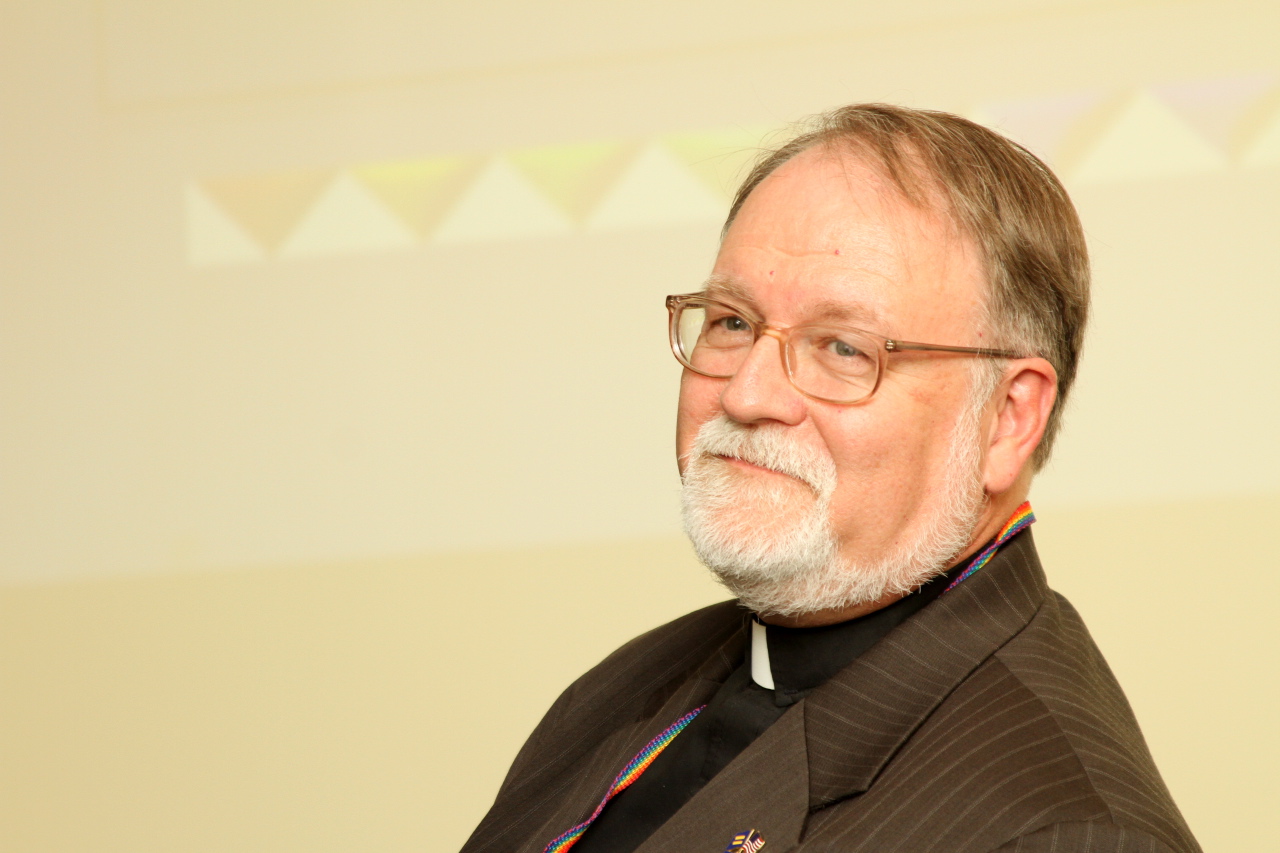
Dr. Stephen V. Sprinkle (Keith Tew photo).
Stephen V. Sprinkle is Director of Field Education and Supervised Ministry, and Professor of Practical Theology at Brite Divinity School, Fort Worth, Texas, a post he has held since 1994. An ordained Baptist minister, he is the first open and out Gay scholar in the history of the Divinity School, and the first open and out LGBTQ person to be tenured there. Read More…
Recent Social Justice Advocacy Activity By Dr. Sprinkle
 Summer 2009 – Dr. Sprinkle responded to the Fort Worth Police Department and Texas Alcoholic Beverage Commission Raid on the Rainbow Lounge, Fort Worth’s newest gay bar, on June 28, 2009, the exact 40th Anniversary of the Stonewall Rebellion. Dr. Sprinkle was invited to speak at three protest events sponsored by Queer LiberAction of Dallas. Here, he is keynoting the Rainbow Lounge Protest at the Tarrant County Courthouse on July 12, 2009. Read More…
Contact Us
Communicate with the Unfinished Lives project team:
info@unfinishedlivesblog.com


Schedule a Presentation
Dr. Sprinkle will gladly present his acclaimed presentation to your organization. To arrange an Unfinished Lives presentation for your organization or group, please contact us.
Dr. Sprinkle has given his Unfinished Lives presentation to these and other community groups and organizations. Read More…
-

Where are our readers?
Publisher: Steve Sprinkle (Project Director)
Steve Sprinkle
Unfinished Lives: Remembering LGBT Hate Crime VictimsBrite Divinity School/Texas Christian UniversityFort Worth TXprofessor, minister, author, blogger, LGBTQ advocate


Follow Unfinished Lives on Facebook
 Box Turtle Bulletin
- An error has occurred; the feed is probably down. Try again later.
- HRC Back Story
- Know About The Gender Identity Movement
- Why Is There A Need For Human Rights?
- Kinds Of Human Rights
- Human Rights Purposes And Violations
- Human Rights For Every Human Incident
- 8 Reasons Human Rights Are Important
- Everything About Human Rights
- Human Rights Issues Education & Law
- We Need To Stand Up For Our Rights And Those Of Others
- Coca-Cola Receives Perfect Score On Human Rights
- The Advocate: Daily News
- The Supreme Court’s conversion therapy ruling is being misunderstood
- Hegseth compares Iran rescue to resurrection as Trump threatens strikes on civilian infrastructure
- Trump administration undoes civil rights settlements that found discrimination against trans students
- Don't fall for WSJ's 'normal gay' whitewashing of queer life
- Federal judge rebuffs Trump administration push to restrict gender-affirming care for minors
- Donations surge for Tennessee librarian fired by conservative board over LGBTQ+ books
- South Carolina man faces hate crime charges after shooting into Myrtle Beach LGBTQ+ nightclub
- Journalist detained for booing Trump at Kennedy Center 'Chicago' performance
- Donald Trump telegraphs war crimes in profanity-filled Easter Sunday Iran threat
- NYC’s most powerful transgender official is fighting intensifying anti-LGBTQ+ federal pressure
- Dallas Voice: Instant Tea
- An error has occurred; the feed is probably down. Try again later.

 Unfinished Lives
Bullfrog in the Kettle: On Not Being Lulled into a False Sense of Security About Anti-LGBT Violence
How do you boil a bullfrog? Don’t try to plop it in a steaming kettle on the stove. Ease it into a nice warm bath in the pot, and let it swim around until it drops its guard. Nudge up the heat nice and slow. Caught unawares, the frog won’t wake up to its danger until it is too late and the water is about to boil.
Larry King Cover in The Advocate magazine
Last year saw a rash of murders of young, feminine-presenting men about this time. In January, Adophus Simmons of North Charleston, South Carolina was shot to death while carrying his trash out to the dumpster. In February, just after Valentine’s Day, Larry King was shot in the back of the head in his middle school computer class by his classmate in Oxnard, California. Then, near the end of February, Simmie Williams, Jr. was shot down in the street in Fort Lauderdale, Florida by two still-unapprehended murders. Simmons was 18, King was 15, and Williams was 17.
Simmie Williams' Mother Mourns his death
It took some weeks for the LGBT press to connect the dots and cry out that young, gender non-conforming men, especially young men of color, were in the crosshairs of deadly prejudice in the United States. King’s murder drew a cover story in The Advocate, and then the mainstream press picked up the theme with its flawed cover in Newsweek. The nation shrugged off the murders of the other two boys. Now, things have gone strangely silent about the morphing of murder against LGBT people, with minimal interest in the new outbreak of violence against African American transwomen in Memphis, Tennessee. Queer folk are still being killed, but in the glow of President Obama’s first 100 Days, with all eyes turned to the beautiful First Couple and the stumbling U.S. economy, even the LGBT press is falling to sleep again, lulling the LGBT population who are still at risk everywhere into a false sense of security. The bullfrog is doing the backstroke in the kettle, and the heat is rising oh-so-slowly.
Joan Crawford, LGBT Icon, in Johnny Guitar
Just like queer folk used to sit through whole tiresome movies like Johnny Guitar just to see Joan Crawford descend the stairs wearing a butch shirt waving a gun, the LGBT and progressive press are hanging onto every hint of “gay” in President Obama’s speeches and press releases. He said “gay and lesbian” in Chicago on Election Night! He didn’t mention us in the Inaugural Address at all, but has our issues on the White House web site! His team invited Rick Warren (who opposes us 100%) to pray, but Joseph Lowery (who kinda likes us), too! The Inaugural Committee chose Bishop Gene Robinson to pray at the Lincoln Memorial (but then botched its broadcast, and somebody cut off his mic), and at the last minute invited him to the platform for the Inauguration! Please!
Here is what we know for sure:
1) Queer folk are still being killed and attacked in heightened numbers throughout the United States, especially in the Heartland of the Upper Midwest, the Left Coast, and the South, as NCAVP and FBI statistics demonstrate.
2) Even the presumption that someone is gay is deadly, as was the case of José O. Sucuzhañay, a straight man attacked while walking arm-in-arm with his brother in Brooklyn just before Christmas.
3) Transgender women and men, especially if they are of color, are dying in our streets in alarming numbers, as the Memphis attacks testify.
4) A gay man’s life is worth less than an animal’s in some states, as the imminent early release of Sean William Kennedy’s convicted murderer shows in Greenville, South Carolina.
5) Silence-of-the-Lambs style murders apparently cannot shake urban governments awake to the peril of their LGBT citizens, as the gruesome dismemberment of Richard Hernandez and the subsequent veil of silence surrounding it in Dallas, TX points out.
6) Most LGBT people would rather not read about this right now, with Spring Break coming up, and Easter, and the next Circuit Party, and all.
Who wouldn’t rather ignore the reality of violence and neglect that makes LGBT jobs, loves and our very lives so fragile in March 2009, the Obama Administration notwithstanding? Please don’t “let Barack do it” and abdicate responsibility for acting for and end to anti-LGBT violence in this country. Barack Obama needs all of us who feel the heat to make him keep his promises to enact the Matthew Shepard Act, ENDA, and to repeal DADT.
Don’t be fooled. Don’t be lulled. The kettle is on to boil.
~ Stephen V. Sprinkle, Director
The Unfinished Lives Project
Share this:
March 11, 2009 Posted by unfinishedlives | African Americans, Anglo Americans, gay men, gun violence, harassment, Hate Crime Statistics, Hate Crimes, Heterosexism and homophobia, Legislation, Mistaken as LGBT, Politics, Racism, School and church shootings, Special Comments | Comments Off on Bullfrog in the Kettle: On Not Being Lulled into a False Sense of Security About Anti-LGBT Violence