Guilty!: Second Defendant in Ryan Skipper Hate Murder Case
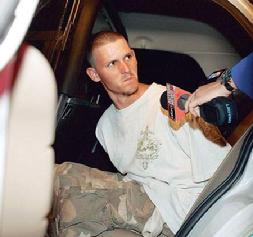
William D. Brown on the way to jail
Bartow, FL – William D. “Bill Bill” Brown has been found guilty of first degree murder and burglary with a deadly weapon today by a jury in the Polk County, FL, county seat. Skipper was slashed and stabbed to death in March of 2007 on a lonely, rural road in Wahneta, FL. A woman who discovered his body beside the road ditch said that it seemed to her that someone had turned on “a sprinkler of blood.” The 25-year-old college student had been stabbed with knives 19 times, according to the Polk County Medical Examiners Office, causing him to die of blood loss and trauma. His murderers attempted to fence his automobile after trying in vain to remove blood from the interior of the vehicle. Unable to find a buyer, they set the car afire at a boat ramp in Auburndale, but frustrated their own attempt by shutting the doors after kindling the blaze. In a personal communication Lynn Mulder, Ryan Skipper’s step father, said, “William Brown was convicted today of first degree murder, burglary with a deadly weapon and he confessed his guilt in arson and tampering with evidence. Responsibility and accountability has been established and protection for society will occur on 1 Dec when he will be sentenced to life in prison without parole.” More will be forthcoming from Ryan’s parents and friends as statements to the press outside the Bartow Courthouse become public. Brown, who elected not to testify in the trial, contended in a pre-trial confession in 2007 that he had “blacked out” and could not remember if or how Ryan Skipper died. Witnesses reported that he and his accomplice, Joseph “Smiley” Bearden, said they wanted “to rid the world of one more faggot.” The Skipper case suffered in the media because of the irresponsibility of Polk County Sheriff Grady Judd, who merely repeated the defendants’ unsupported allegations concerning Skipper’s character and activities. Judd prejudiced the media against Skipper, painting the victim as a person who in some way deserved his fate. Though each unsupported claim made by the Sheriff’s Department has been systematically debunked, and the public communications director for the county has declared Skipper guiltless of any wrongdoing in any of these particulars, Sheriff Judd himself has never explained or apologized to the public or to Skipper’s parents and friends. In February of this year, Bearden was found guilty on all counts, and was sentenced to life without parole. As Mulder has suggested, Brown’s sentence is expected to be similar. For further information and developments in this case, see the Ryan Skipper Documentary web site, and One Orlando.
Georgetown U’s Second Bias-Related Attack

Washington, D.C. – According to Vox Populi, Georgetown’s most widely read blog, in the wee hours of November 1, a second anti-LGBT assault took place near the Georgetown University campus. The university’s Department of Public Safety issued this Public Service Announcement concerning the attack: “Incident summary: On November 1, 2009 at 1:32 a.m., witnesses reported to DPS an assault on a student by an unknown male in the area of 36th & N Streets, NW. Prior to the physical assault, the suspect asked the victim several times, “Are you a homo?” On November 1, 2009 at approximately 1:32 a.m., witnesses reported to DPS that a student walking in the area of 36th & N Streets, NW was assaulted by an unknown male. Immediately prior to the assault, the suspect asked the victim several times, “Are you a homo?” The suspect fled the scene after physically assaulting the victim. DPS and GERMS responded to the scene. GERMS transported the victim to Georgetown University Hospital for treatment of the injuries sustained in the assault. DPS gathered information from witnesses and notified MPD. The investigation is ongoing. Victim(s):The victim suffered injuries in the assault that were treated by GERMS and in the hospital emergency room. Victim(s) status:GERMS responded to the scene and transported the victim to Georgetown University Hospital where the victim was treated and released. Appropriate University resources are being offered to the victim. Witness description of suspect(s):The suspect is described as a white male, 6’2″ tall, with red and white face paint, wearing a black leather jacket. (This description was updated on November 2, 2009 at 1:00 p.m. to reflect a witnesses description that included an estimated height.)” End of PSA. Last week’s assault involved a woman perceived to be lesbian by her assailants on October 27. This second assault on a student assumed to be LGBT took place in spite of a rally decrying anti-gay violence on the campus by the LGBTQ Center and GU Pride, the LGBTQ advocacy organization, on Friday of last week.
Student at Georgetown U Attacked Because of Sexual Orientation
 Washington, D.C. – The Washington Post reports that a female student was assaulted and robbed allegedly because of her sexual orientation on Tuesday, October 27 while she was walking near the entrance to Georgetown University on Canal Road. Her assailants yelled anti-gay slurs as they beat her, knocked her down, and robbed her of her book bag. At the time of the attack, she was wearing a T-shirt bearing a gay rights slogan. Reaction at GU was swift. By Friday, 50 students protested the assault, showing their support for the woman who was targeted because of her perceived sexual orientation. JM Alatis, a freshman who serves as historian and secretary of GU Pride, the campus LGBT rights organization, condemned the violence, “We should not have to fear for our lives when we walk down the street.” The rally had been set in motion by Facebook and Twitter contacts in less than 24 hours, demonstrating the speed with which the linked-in community can respond to anti-LGBT violence. Students say that intimidation and attacks like this are common in the GU neighborhood, on and off campus. Speaking to WaPo reporters, sophomore Marcus Brazill said, “This stuff happens all the time, but a lot of us are afraid of reporting it.” A Georgetown Med student was intimidated by homophobes with a broken glass bottle last fall, and in September 2007, a sophomore student was arrested in an incident that was considered a possible anti-LGBT hate crime. The case was subsequently dropped according the WaPo, but the controversy led to the establishment of the first LGBTQ Resource Center on the campus of a Roman Catholic/Jesuit university in the nation. Rev. Kelly O’Brien, S.J., Executive Director of Campus Ministry, commenting on the significance of the LGBTQ Center, said, “Campus Ministry is pleased to collaborate with the LGBTQ Resource Center to learn from and support Georgetown’s LGBTQ community. The Center helps us understand the issues, struggles, concerns, and hopes of the LGBTQ community so that we can better minister to those seeking our care.” As of Friday, the assailants in this latest anti-LGBT attack were still at large.
Sean Kennedy: Travesty of Justice Could Have Come Out Differently If Shepard Act Had Been In Place

Sean William Kennedy, 20
Washington, DC – Elke Kennedy and her husband, James Parker, were invited by the Human Rights Campaign to represent their slain gay son, Sean William Kennedy, at the ceremonies marking the enactment of the Matthew Shepard and James Byrd, Jr. Hate Crimes Prevention Law at the White House. In a statement issued on Sean’s Last Wish, web site for the foundation established following the brutal murder of their son, the Greenville, South Carolina couple issued this statement: “Elke and Jim are honored to represent the LGBT community in memory of their son Sean Kennedy, who was the victim of a hate crime on May 16, 2007 in Greenville, SC. Sean’s Last Wish foundation considers this a privilege to be the voice and represent the LGBT community as we continue to fight against hatred, bullying, violence and religious bigotry.” In one of the most egregious abuses of justice in recent years, Sean Kennedy’s murderer, Stephen Moller, was indicted only for involuntary manslaughter and sentenced on June 11 2008 to a 5 year sentence suspended to three years, and received credit for the 199 days he served in county lock-up. He was supposed to stay in prison till September 7, 2009, but received 2 month credit for good behaviour by getting his GED while in prison. The court was sympathetic to Moller because he had fathered a child who was born while he was serving his shortened sentence, and released him a week earlier than his abridged sentence even called for. Had there been a Matthew Shepard Act on the books at the time of the Moller trial, federal officials could have intervened, investigated the murder as the anti-LGBT hate crime it was, and tried the defendant under a hate crime charge of murder. South Carolina, however, never has enacted an anti-LGBT hate crimes prevention law, which coupled with local anti-gay attitudes, caused the breach of justice in the Sean Kennedy case. Now, thanks to the lobbying of bereaved families like Sean’s, hate crimes against gay people have a fighting chance of being tried and punished in their true context.
Second Alleged Killer of Ryan Keith Skipper on Trial in Florida

William D. "Bill Bill" Brown on trial
Bartow, FL – Entering its third day, the felony murder trial of William D. “Bill Bill” Brown, 23, is underway in the Polk County, Florida Courthouse. Brown is the second alleged murderer of Ryan Keith Skipper, a 25-year-old gay college student, who died of 19 stab and slash wounds on a desolate road in Wahneta, Florida in March 2007. The first trial, that is Joseph “Smiley” Bearden, in February of this year ended with his conviction on all counts and a life sentence in state prison. Ironically, Skipper’s murder is not being tried as a hate crime, though many including his parents, Lynn and Pat Mulder of Auburndale, contend that their son’s assailants chose him because he was a gay man. The same judge and prosecutor who tried the Bearden case are trying the Brown case, as well. In a surprise move by the defense on October 26, Brown pleaded guilty to arson (setting fire to Skipper’s car to destroy evidence), and evidence tampering, which could earn him a total of 20 years at sentencing. He is still on trial for robbery and first degree murder, which could sentence him to life in prison, just like his accomplice. The Mulders came to Bartow to attend the Brown trial two days after the wedding of Ryan’s older brother, Damien. Though they were personally invited to attend the October 28 signing of the Matthew Shepard and James Byrd, Jr. Hate Crimes Prevention Act by President Obama in Washington, DC, a law they had vigorously lobbied to see enacted, the Mulders declined the invitation in order to be present for the trial in Polk County. Their son Damien and his wife attended the ceremony at the White House in their stead, and were greeted by President Obama, along with Matthew Shepard’s parents, Judy and Dennis, and William Sean Kennedy’s mother, Elke Kennedy. In communication with the Unfinished Lives Project, Lynn Mulder said that during the first days of the trial, Cass Casstillo, the prosecuting attorney, presented evidence conclusively linking Brown to the murder, including finger prints, shoe impressions, and testimony from others who heard him admit to “stabbing someone.” Brown has contended that Skipper, whom he knew was gay, touched his “private parts,” irritating him, but denied that he killed his 25-year-old neighbor, who lived barely two blocks from his trailer home in rural Wahneta. On Wednesday, the prosecution rested. The Judge gave the jury the next two days off, telling them according to Mulder that the defense would present a short case with one or no witnesses on Monday, such that closing arguments would probably be offered then, and the case would go to the jury on Tuesday, November 3. Vicki Nantz, lesbian activist from Orlando, and director/co-producer of the acclaimed Ryan Skipper Documentary, Accessory to Murder: Our Culture’s Complicity in the Death of Ryan Skipper, noted to reporters that had there been a Matthew Shepard Law on the books, Skipper’s murder could have been tried as the anti-gay hate crime it was, instead of burying the true motive of the slaying. Nantz and others have provided a detailed trial summary day-bay-day with links to media reports at the Ryan Skipper Documentary site. Speaking to the press, Ryan’s mother, Pat, said she wanted it known that her son “was killed by hate.” She urged the public to help end such lethal hate, because if it were not ended, hatred would kill others. His father, Lynn, said that Ryan would have approved of the new law protecting LGBT people from hate crimes. “He would see the value in that,” Mulder said,”that everybody was protected equally under the law, and he would be very proud that the bill was signed into law.”

Ryan and his brother, Damien Skipper
President Obama Keeps Promise, Signs Shepard/Byrd Hate Crimes Prevention Act
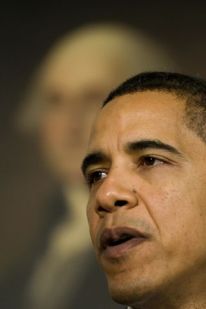 Washington, DC – 20 years of advocacy and struggle issued today in a powerful moment when President Barack Obama signed the Matthew Shepard and James Byrd, Jr. Hate Crimes Prevention Act into law. USA Today reported the comments of the President, both at the signing event, and at a later ceremony honoring the new law. “After more than a decade of opposition and delay, we’ve passed inclusive hate crimes legislation to help protect our citizens from violence based on what they look like, who they love, how they pray or who they are,” Obama said as he signed the Act. Commenting later in the day, he said to supporters of the new law, “No one in America should ever be afraid to walk down the street holding the hand of the person they love.” He then cited statistics that in these past 10 years since the hate crime murder of Matthew Shepard, there have been more than 12,000 hate crimes based on sexual orientation. “We will never know how many incidents were never reported at all,” the President concluded. Social justice advocates from all over the nation hailed the moment, as well. The Human Rights Campaign, the nation’s largest LGBT rights advocacy organization, reported that representatives of the Shepard family and the Byrd family were present at the signing event with the President. Judy Shepard remarked, “We are incredibly grateful to Congress and the president for taking this step forward on behalf of hate crime victims and their families, especially given the continuing attacks on people simply for living their lives openly and honestly. But each of us can and must do much more to ensure true equality for all Americans.” Stella Byrd, mother of straight African American hate crime victim, James Byrd, Jr., for whom the Act was also named, followed Mrs. Shepard with her remarks, “We appreciate everyone who worked so hard on this bill. My son was taken at such an early age and we hope this law will help prevent other families from going through what we experienced. Even though we’re different colors and different sexual orientations or gender identities, God made us all and he loves us all.” According to other reports, Damien Skipper, brother of slain gay Floridian Ryan Keith Skipper, and Elke Kennedy, mother of Sean Kennedy, murdered gay hate crimes victim from Greenville, South Carolina were among other bereaved family members present at the events. HRC President Joe Solmonese made these observations to the press: “This law honors our lesbian, gay, bisexual and transgender brothers and sisters whose lives were cut short because of hate. Today’s signing of the first major piece of civil rights legislation to protect LGBT Americans represents a historic milestone in the inevitable march towards equality. Although this is a major step in fighting the scourge of hate violence, it is not the end of the road. As a community, we will continue to dedicate ourselves to changing not only laws but also hearts and minds. We know that hate crimes not only harm individuals, but they terrorize entire communities. After more than a decade of advocacy, local police and sheriffs’ departments now have the full resources of the Justice Department available to them.” Solmonese concluded, “We applaud President Obama for signing this bill into law and thank the leadership and our allies in the House and Senate. We also will always remember the tireless efforts of Senator Edward Kennedy on this issue. Senator Kennedy once said that this legislation sends ‘a message about freedom and equality that will resonate around the world.’ This marks the first time that we as a nation have explicitly protected the LGBT community in the law. And this law sends a loud message that perpetrators of hate violence against anyone will be brought to justice.”
Not only was this an historic moment in the history of human rights advocacy in the United States. The action of President Obama marks a significant milestone in the relatively short history of his administration. The enactment of the Matthew Shepard and James Byrd, Jr. Hate Crimes Prevention Act is the first major promise to the LGBT community that the President has kept. During his campaign for the presidency, Obama repeatedly made promises to LGBT people that he would expand, protect, and defend their rights. Many LGBT activists have been critical of the seeming slowness of the President and the Congress to keep faith with homosexual and transgender Americans, who voted in record numbers to support the Democratic ticket this past year. Many other important promises remain unfulfilled by the Obama administration: enactment of the Employment Non-Discrimination Act (ENDA), repeal of Don’t Ask, Don’t tell (DADT) which the Secretary of the Army suggests is now doable, and repeal of the Defense of Marriage Act (DOMA). The enactment of the Shepard/Byrd Act, however, is a powerful indication the President will make his promises good to some of his most loyal supporters, and the significance of this day should not be lost on his LGBT critics.
20 Years of Effort Led to the Matthew Shepard and James Byrd, Jr. Act of 2009

Matthew Shepard and James Byrd, Jr.
When President Obama signs the Matthew Shepard and James Byrd, Jr. Act of 2009 into law sometime next week, that moment will be the culmination of two decades of tireless work at the federal level to protect Lesbian, Gay, Bisexual and Transgender people from violent, bias-motivated crimes. The term “hate crime” did not enter the American lexicon until the 1980s, though crimes of violence against minorities that caused whole groups to live in fear. First introduced in 1989, Congress passed the Hate Crime Statistics Act (HCSA) of 1990 which mandated the that U.S. Department of Justice collect statistics on crimes that “manifest prejudice based on race, religion, sexual orientation, or ethnicity” from law enforcement agencies across the country and to publish an annual summary of the findings. In the Violent Crime Control and Law Enforcement Act of 1994, Congress expanded coverage of the HCSA to require FBI reporting on crimes based on “disability.” Pursuant to the passage of the HCSA of 1990 and at the request of the Attorney General of the United States, the FBI first gathered and published this data in 1992, and has done so every year since. The collection and publication of data supporting the claims of the LGBT community, that they were indeed being targeted by terror-attacks, set the stage for all subsequent federal legislation relating to the protection of people who were being physically harmed because of actual or perceived sexual orientation. Transgender persons have been left out of any data gathering done by the federal government right up until the present, as if there were no violent crimes perpetrated against this important population of gender non-conformists. The FBI Sexual Orientation Hate Crimes Statistics for 2007, published in October 2008, recorded 1,512 persons or 11% of the total of the 9,535 persons victimized in physical attacks classified as hate crimes. This number of individual victims was the third highest of all victims of hate crimes, after race and religion bias crimes. Further, the 2007 figures show that two and a half times more Lesbians, Gay men, and Bisexual persons were victimized by murder or non-negligent manslaughter than any other group on whom the FBI kept statistics that year. Though flawed and under-counted according to the National Coalition of Anti-Violence Programs, the incidence of violent crime against the LGBT community recorded by the FBI established something of the magnitude of the national crisis brought on by homophobia and heterosexism. In 1993, the Hate Crimes Sentencing Enhancement Act was enacted into law, allowing judges to impose harsher penalties for hate crimes, including hate crimes based on gender, disability and sexual orientation that occur in national parks and on other federal property. According to the Human Rights Campaign, the Hate Crimes Prevention Act, predecessor of the Matthew Shepard Act, was first introduced in the 105th Congress. At that time, 1997-1999, both houses of the federal legislature had Republican majorities. Successive attempts to pass federal hate crimes legislation covering LGBT people were frustrated until the 111th Congress. First named the Local Law Enforcement Enhancement Act, then the Matthew Shepard Hate Crimes Prevention Act, and finally the Matthew Shepard and James Byrd, Jr. Hate Crimes Prevention Act (in memory of Shepard, a gay 21-year-old student murdered in Wyoming and Byrd, a 49-year-old African American dragged to death in Texas), the legislation moved steadily through Houses of Congress. The vote in the United States Senate on October 22, 2009 was the “14th and final time” this legislation faced a vote on the floor in either the House or the Senate.
Senate Acts on Matthew Shepard Act: Bill Goes to Obama’s Desk
 Washington, DC – In a historic vote Thursday, the United States Senate voted 68-29 to approve the Matthew Shepard Act, broadening federal protection from hate crimes to LGBT people. The Shepard Act, which had already passed in the United States House of Representatives two weeks ago by a similarly wide margin, was approved by the upper house as a part of a mammoth Defense Appropriations Bill. President Obama has repeatedly signaled that he favored extending hate crimes protections to LGBT people, and is expected to sign the bill as early as next week. Senator Patrick Leahy, (D) Vermont, a sponsor of the bill, said to the New York Times “Hate crimes instill fear in those who have no connection to the victim other than a shared characteristic such as race or sexual orientation. For nearly 150 years, we have responded as a nation to deter and to punish violent denials of civil rights by enacting federal laws to protect the civil rights of all of our citizens.” Leahy also noted how appropriate a tribute the passage of the Shepard Act is to the late Senator Edward M. Kennedy, who championed the cause of equality for LGBT Americans for many years. Ten Republicans voted with the Democratic majority for the passage of this historic legislation. The lone Democratic Senator to vote against passage was Russ Feingold, (D) Wisconsin, who favored the Shepard Act, but opposed the increased funding of the military action in Afghanistan. The Shepard Act commits $5 million annually to the Justice Department to assist local communities in investigating hate crimes, and it allows the agency to assist in investigations and prosecutions if local agencies request help. It also permits the Justice Department to carry out hate crimes investigations in localities where law enforcement neglects or stymies such action for prejudicial reasons. Judy Shepard, the mother of Matthew Shepard, the 21-year-old University of Wyoming student for whom the Act was named, has been a tireless advocate for the passage of hate crimes protections for LGBT people since Matthew was slain by two young men in Laramie in 1998. Speaking to the press, she said, “Dennis and I are extremely proud of the Senate for once again passing this historic measure of protection for victims of these brutal crimes. Knowing that the president will sign it, unlike his predecessor, has made all the hard work this year to pass it worthwhile. Hate crimes continue to affect far too many Americans who are simply trying to live their lives honestly, and they need to know that their government will protect them from violence, and provide appropriate justice for victims and their families.” All eyes now turn to President Obama for his signature that will enact the Matthew Shepard Act into law, the most significant lift to the LGBT community in the United States in forty years.
U.S. House Approves Matthew Shepard Act
 Washington, DC – In a vote that marks the first major expansion of protection under the law in 40 years, the House of Representatives voted to approve the Matthew Shepard Act on Thursday. The Shepard Act, attached as an amendment to a Defense Appropriations Bill, extends protection to LGBT people from bias-related physical violence. A similar provision faced the threat of a veto from President Bush in a recent Congress, even though it passed the House by a comfortable majority. This time around, President Obama has signaled his eagerness to sign the Shepard Amendment into law, as soon as it receives a favorable vote in the U.S. Senate. That vote is expect soon. Protections from hate violence for LGBT Americans have been opposed by congressional Republicans and their allies, usually on the pretext that the addition of the Shepard Act to a defense bill is inappropriate “social engineering,” a “poison pill,” and that the provisions of the Act would serve as a sort of Trojan Horse, making LGBT behaviors “normative.” Some religious critics have argued that the Shepard Act would gag ministers and priests who oppose homosexuality on moral or doctrinal grounds, abrogating their First Amendment right to freedom of speech and to the free exercise of religion, making vocal opposition to LGBT behaviors criminal. Proponents of the legislation counter that the language of the Shepard Act has been carefully crafted to criminalize only acts of physical violence, leaving all First Amendment rights fully intact. The Los Angeles Times reported Thursday that House Speaker Nancy Pelosi (D-California) and openly gay Congressman Jared Polis (D-Colorado) hailed the passage of the Act in the House. Pelosi said, “It’s a very exciting day for us here in the Capitol,” noting that attempts to pass such a law had gone on for her 22-year tenure in the House of Representatives. Polis argued that critics of the Shepard Act seem not to understand the impact of anti-LGBT hate violence beyond the individual victims. “What makes these crimes so bad is they are not just crimes against individuals; they are crimes against entire communities,” he said during the debate on the defense bill. The measure passed the House by a vote of 281 to 146. 237 Democrats and 44 Republicans voted in the affirmative. 131 Republicans and 15 Democrats opposed the bill. “We are closer than ever before to protecting Americans from hate violence thanks to today’s action by the House,” said Joe Solmonese, head of the Washington, D.C.-based LGBT advocacy group, the Human Rights Campaign. “The day is within sight when lesbian, gay, bisexual and transgender people will benefit from updating our nation’s hate crimes laws.”
Anti-Transgender Violence Hot Topic for LGBT Community
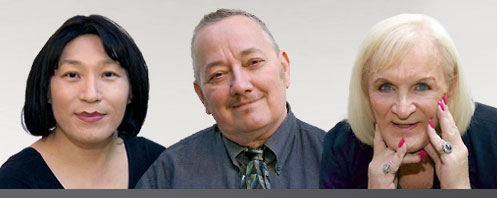 New York City – The Associate Press reports that a major anti-transgender violence forum slated for October 7 will address the rising incidence of attacks against transgender New Yorkers. Brooklyn Law School is hosting the forum,which will be attended by the family of Lateisha Green, transwoman of color, who was murdered in Syracuse last year. Her convicted killer, Dwight DeLee, was convicted of manslaughter in her shooting death three months ago. The conviction was the first under New York State’s hate crimes law, sending a message to perpetrators of violence against transgender people that transphobic attacks will no longer be tolerated in the Empire State. The Transgender Legal Defense and Education Fund, organizers of the Brooklyn forum, point out that transgender people face increasing degrees of “pervasive discrimination, harassment and violence.” Statistics gathered by transgender advocacy groups note that 12% of all violent attacks against LGBT people in 2008 were perpetrated against transgender people. As Joseph Erbentraut, Great Lakes Regional Editor for EDGE reported earlier this week, Lesbians, Gay Men, and Bisexuals are complicit in these crimes of violence because of prejudices they hold against gender non-conforming people. Activists agree that lesbians, gay men, and bisexuals are hardly immune from the prejudice vented against transpeople by the society. Each group too easily absolutizes the gender presentation they are familiar and comfortable with. Jokes and slurs aimed by LGB people against transgender people, calling them “trannies” or “drag queens” differ little from the epithets cast at them by straight haters. While actual instances of anti-trans violence by LGB people are rare, the bias is symptomatic of a tragic lack of awareness that all prejudice against members of the sexual minority is interconnected. The Lateisha Green case, however, is a source of hope in New York. While the conviction of DeLee was based on anti-gay epithets he used while murdering Green rather than transphobic ones, the severity of the first-degree manslaughter sentence woke the Empire State legal community up, and began a movement to add transphobic language to the hate crimes penal code as well as homophobic speech. The precedent-setting case sends a message that attacks against transgender New Yorkers will no longer be tolerated. Erbentraut reports that all sources he contacted agreed that the most effective way to blunt anti-transgender violence would be the swift passage of comprehensive hate crimes protections and employment security legislation at the federal level, such as the Matthew Shepard Act, now in the House-Senate conference process, and the recently introduced Employment Non-Discrimination Act.
About

If you are a first-time visitor to the Unfinished Lives Project website, we invite you to read A Welcome Message introducing you to our project. We are truly grateful for your visit.
The Unfinished Lives Project website is a place of public discourse which remembers and honors LGBTQ hate crime victims, while also revealing the reality of unseen violence perpetrated against people whose only “offense” is their sexual orientation, gender identity, or gender presentation. LGBTQ people in the United States are suffering a slow-rolling decimation of terror and murder all across the country. Every locale and demographic of society are affected: First Nations, Anglo, Black, Latino and Latina, South and Southeast Asian, Transgender, Bisexuals, Gay men, Lesbians, disabled, young, and mature. Homophobia has a long, crooked arm, and it is reaching out to snatch the life away from women and men whose tragic stories are under-reported to begin with, and whose memories are swiftly forgotten.
The horror of these killings transcends the shock and bereavement of loved ones and friends. These are not typical homicides; they are not killings for money or drugs, incidents of domestic strife, or crimes of passion. The vicious nature of hate crimes against LGBTQ persons is extremely brutal, grotesquely violent, and egregiously hateful.
Each murder serves the LGBTQ population as a sobering warning about the actual level of danger in our communities. The message these killings send is that freedom and open life for LGBTQ people is a cruel dream. Every time we remember one of these victims, however, the intentions of their killers are frustrated. To remember these women and men is to begin the process of changing the culture that killed them.
Our Project Director
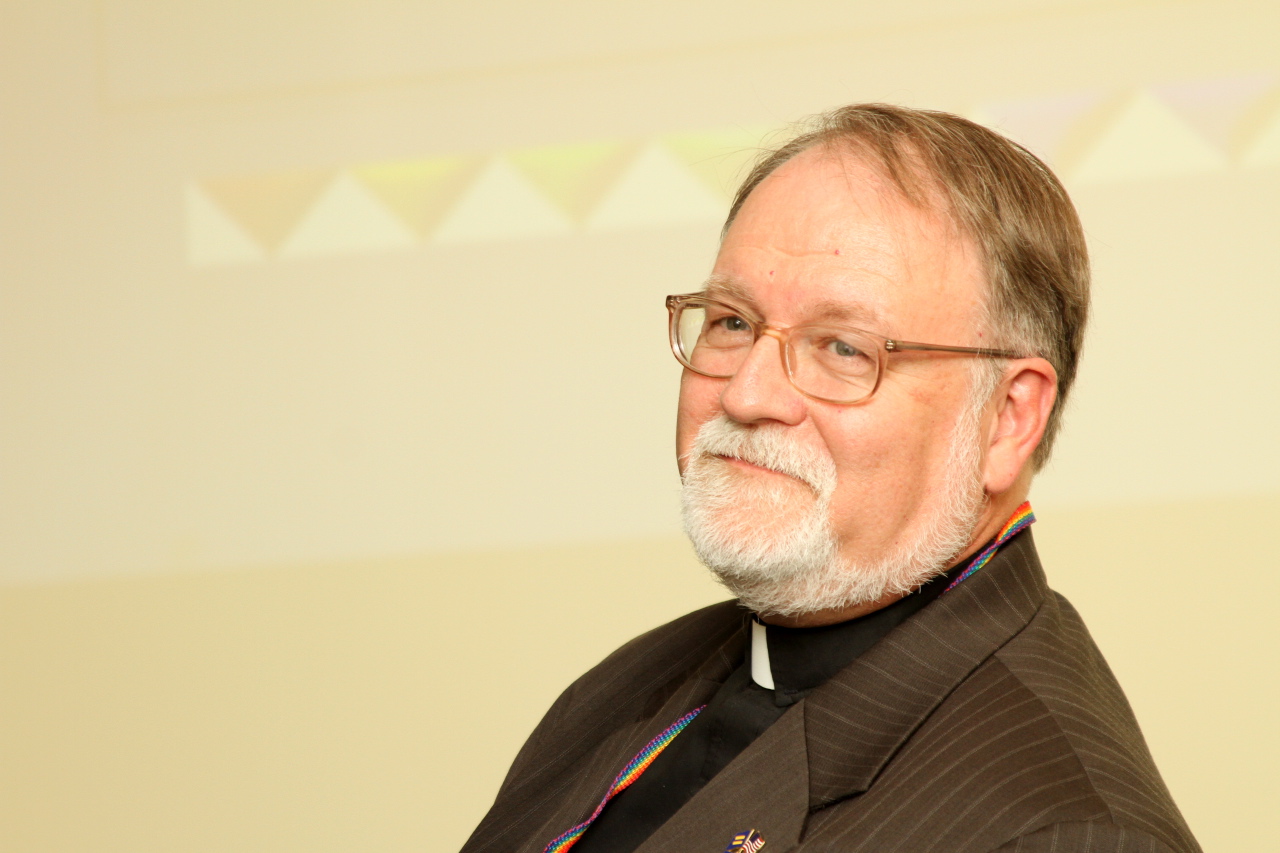
Dr. Stephen V. Sprinkle (Keith Tew photo).
Stephen V. Sprinkle is Director of Field Education and Supervised Ministry, and Professor of Practical Theology at Brite Divinity School, Fort Worth, Texas, a post he has held since 1994. An ordained Baptist minister, he is the first open and out Gay scholar in the history of the Divinity School, and the first open and out LGBTQ person to be tenured there. Read More…
Recent Social Justice Advocacy Activity By Dr. Sprinkle
 Summer 2009 – Dr. Sprinkle responded to the Fort Worth Police Department and Texas Alcoholic Beverage Commission Raid on the Rainbow Lounge, Fort Worth’s newest gay bar, on June 28, 2009, the exact 40th Anniversary of the Stonewall Rebellion. Dr. Sprinkle was invited to speak at three protest events sponsored by Queer LiberAction of Dallas. Here, he is keynoting the Rainbow Lounge Protest at the Tarrant County Courthouse on July 12, 2009. Read More…
Contact Us
Communicate with the Unfinished Lives project team:
info@unfinishedlivesblog.com


Schedule a Presentation
Dr. Sprinkle will gladly present his acclaimed presentation to your organization. To arrange an Unfinished Lives presentation for your organization or group, please contact us.
Dr. Sprinkle has given his Unfinished Lives presentation to these and other community groups and organizations. Read More…
-

Where are our readers?
Publisher: Steve Sprinkle (Project Director)
Steve Sprinkle
Unfinished Lives: Remembering LGBT Hate Crime VictimsBrite Divinity School/Texas Christian UniversityFort Worth TXprofessor, minister, author, blogger, LGBTQ advocate


Follow Unfinished Lives on Facebook
 Box Turtle Bulletin
- An error has occurred; the feed is probably down. Try again later.
- HRC Back Story
- Know About The Gender Identity Movement
- Why Is There A Need For Human Rights?
- Kinds Of Human Rights
- Human Rights Purposes And Violations
- Human Rights For Every Human Incident
- 8 Reasons Human Rights Are Important
- Everything About Human Rights
- Human Rights Issues Education & Law
- We Need To Stand Up For Our Rights And Those Of Others
- Coca-Cola Receives Perfect Score On Human Rights
- The Advocate: Daily News
- Gay man gunned down outside popular Orlando LGBTQ+ nightclub
- Mount Sinai Hospital drops gender-affirming care for trans teens, leaving New York families worried
- How the SAVE America Act Republicans are touting will disenfranchise married & LGBTQ+ Americans
- NHL player hurls antigay slur during Olympics hockey match
- U.S. deports gay asylum seeker to country where homosexuality is illegal
- Puerto Vallarta felt like ‘The Purge,' American says of unrest in Mexican tourist destination
- 21 states now limit transgender people’s bathroom use, with criminal penalties in two
- Demi Lovato & Jonathan Bennett will headline a star-studded lineup for the 37th GLAAD Media Awards
- Neutrality is complicity when trans lives are on the line
- NYU Langone Hospital ends gender-affirming care program for trans teens after Trump funding threats
- Dallas Voice: Instant Tea
- An error has occurred; the feed is probably down. Try again later.

 Unfinished Lives