U.S. House of Representatives Passes Fully Inclusive Hate Crimes Act
The Matthew Shepard Act, fully inclusive of sexual orientation and gender identity, passed the House of Representatives April 29 by a large majority, 249-175. Judy Shepard, mother of slain University of Wyoming student, Matthew Shepard, lobbied hard today for passage. Now, on to the U.S. Senate where the measure needs a super majority of 60 to get it to President Obama’s desk.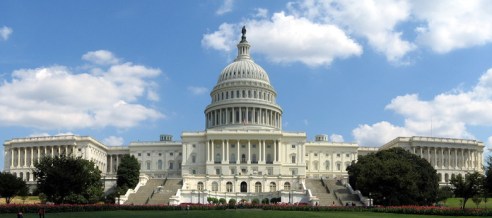
Project Activity — Fall of 2008
In the fall of 2008, the Unfinished Lives Project agreed to participate in community events in Texas and North Carolina remembering victims of anti-LGBT hate crimes. In September, our project director traveled to Wilmington, North Carolina, where he served as a panelist at the Park View Project’s documentary film premier dedicated to the life of Talana Quay Kreeger. While there, Dr. Sprinkle also gave an Unfinished Lives presentation to St. Jude’s Metropolitan Community Church. October marked the 10th anniversary of Matthew Shepard’s murder in Laramie, Wyoming. Our project joined a Matthew Shepard remembrance held at Texas Christian University in Fort Worth, Texas, and then participated in the “Hope, Not Hate” remembrance at the University of Texas in Austin. These and other project activities are included below.
September 2008 – Wilmington, North Carolina – From September 26-29, Dr. Sprinkle was the guest of Family Tree Productions, independent filmmakers creating a documentary about the life and death of Talana Quay Kreeger, 32, savagely disemboweled by long haul trucker Ronald Thomas in Wilmington, North Carolina in 1990.


Dr. Sprinkle keynoted the premier of the trailer of “Park View,” the film documenting Talana’s death in this North Carolina port city. Tab Ballis is the Producer/Director of “Park View,” and Linda Warden is Associate Producer/Editor.


St. Jude’s Metropolitan Community Church, pastored by Rev. Amanda McCullough, hosted the event. St. Jude’s was founded soon after Talana’s murder because LGBT people had been turned away by all but one church in Wilmington as a site for her memorial service. Gay people vowed never to be in that situation again.


Talana was a carpenter, and a regular at the Lesbian bar, the Park View Grill, on Carolina Beach Road. She was remodeling the bar, drinking beer, and playing pool on the night of February 22, 1990 when Alabamian Ronald Thomas offered her a ride after closing hour to Hardee’s just a mile up the road to get some late night breakfast. Thomas was to drop off a load of oranges at Hoggard High next morning. Instead, he pulled his rig off the road to a remote dead end, and assaulted and raped Talana, smashing her dentures, and manually disemboweling her.


October 2008 – Austin, Texas – On Sunday, October 12, a coalition of Austin’s LGBTs and African Americans sponsored “Hope, Not Hate,” a public remembrance and vigil marking the 10th Anniversary of the hate killings of James Byrd, Jr. and Matthew Shepard. Our director, Dr. Sprinkle, keynoted the event at University Baptist Church exactly ten years after Byrd’s and Shepard’s hate crime murders in Jasper, Texas, and Laramie, Wyoming, respectively.


Among the committee organizers for the “Hope, Not Hate” event were Rev. Karen Thompson, of Metropolitan Community Church in Austin; Colonel Paul Dodd, U.S. Army (ret.), of the Servicemembers’ Legal Defense Network; and Paul Scott, Executive Director of Equality Texas.


Todd Harvey, a graduate student at the University of Texas at Austin, has been deeply involved in the Unfinished Lives Project, and was also present for the event.

Better than 150 people participated in the vigil and candlelight ceremony. Together with Dr. Sprinkle, Austin Police Chief Art Acevedo also made remarks at the event.

October 2008 – Fort Worth, Texas – Rev. Harry Knox, Director of the Human Rights Campaign’s Religion and Faith Program, spoke at Brite Divinity School and TCU for the “Erase the Hate Campaign,” remembering the 10th Anniversary of Matthew Shepard’s death.

Harry made a wonderful, powerful contribution to the equality movement on TCU’s campuses. Dr. Sprinkle served as Harry’s host and participated throughout the events of the week.


November 2008 – Austin, Texas – Dr. Sprinkle was a presenter at the Open Circle GLBT Retreat held at University Baptist Church in Austin, Texas, on November 15, 2008. His presentation was “Journey of Reconciliation: Soul-Weariness.”

November 2008 – Fort Worth, Texas – Unfinished Lives project director Stephen Sprinkle spoke at the Transgender Day of Remembrance held at Agapé Metropolitan Community Church in Fort Worth, Texas, on November 20, and gave a presentation entitled “Innocent Blood: Guarding the Memories of Our Slain Transgender Sisters and Brothers.” The title and subject of the presentation was inspired by an Icon written by Fr. William Hart McNichols, entitled Jesus Christ: the Seraphic Guardian of the Blood, and dedicated to Petty Officer Allen Schindler and the Thousands of Victims of anti-LGBT Hate Crimes.

Unfinished Lives thanks the HRC’s Religion and Faith Program

The Unfinished Lives Project offers our sincere appreciation to the Human Rights Campaign’s Religion and Faith Program for highlighting our work in this week’s e-mail edition of “Religion and Faith News.”
The Human Rights Campaign’s Religion and Faith Program mobilizes people of faith to advocate for gay, lesbian, bisexual and transgender people. The program offers online preaching and devotional resources, works with state clergy coalitions to spread equality at the state and local level, and brings its affirming message to colleges and seminaries across America.
The program’s message of equality even reaches to the halls of Congress where religious leaders speak out on such critical justice issues facing the GLBT community as the Federal Marriage Amendment, Hate Crimes legislation and the Employment Non-Discrimination Act. In countless and meaningful ways, the Religion and Faith program spreads the good news that transformation is truly happening one community at a time.
The Unfinished Lives Project is proud to stand beside the Human Rights Campaign’s Religion and Faith Program, working to eliminate hate crimes and embracing “a culture of welcome, compassion, and hospitality, values that are at the heart of all our faith traditions.”
Visit the Religion and Faith Program, or its newsletter archive, to learn more about their extraordinary work.
Special Comment: Newsweek magazine and the Re-victimization of Larry King

by Stephen V. Sprinkle
If only journalists and their editors had a Hippocratic Oath to hold them responsible for the stories they tell about the dead. Medical doctors pledge, “First, do no harm.” If doctors proceed to do harm to their patients, then there is a professional society to hold them accountable. The editor of Newsweek, and the team who wrote the Cover Story on Larry King, “Young, Gay and Murdered,” for the July 28, 2008 issue have exercised no constraints on themselves, and unlike the backlash against Dan Rather’s reportage on President Bush’s military service record, there appears to be no one in the journalistic community willing to call their hand for re-victimizing an infamously murdered 15-year-old boy, Larry King. King, you will recall, was shot twice in the head by his alleged killer, 14-year-old classmate, Brandon McInerney.
I want to disclose fully. I am an out gay man who has been studying and writing on the stories of LGBT hate crimes murder victims. I am director of the Unfinished Lives Project that seeks to remember and honor the lives and deaths of women and men who have died violently because of whom others perceived them to be. Further, I am writing a book that will tell the stories of over twenty such LGBT people, and Larry King is one of them. I have spoken publicly at the Vigil for Larry King held in my hometown, Dallas, Texas. That is my “agenda”: to see that stories such as Larry’s are told in such a way that the society may encounter these murdered women, men and youths as human beings who are basically unremarkable from the rest of America, with the difference that as LGBT people, they belong to the last great group in our country it is still permissible to abuse.
Editor Daniel Klaidman, lead reporter Ramin Setoodeh, and team members Andrew Murr and Jennifer Ordoñez do not spell out their sexual orientations or their agendas for us to examine so that we can more fully evaluate how they tell Larry’s and Brandon’s stories. We are left only with their silence on these matters, antiseptic silence that suggests an objectivity that no one ever has when it comes to issues of society and morality. Journalists may have “trained subjectivities” they can bring to their tasks, but that is all they have, and to pretend anything else is dishonest. They do indeed have their agendas, and these agendas serve some end, but we are only left to speculate about what they may be.
The article is written from the angle that Larry’s story, being less “clear cut” because it is “more complicated than it had first appeared,” needs to be rescued from the LGBT people who are, in the words Setoodeh quotes from Larry’s father, using his son’s death as “a gay-rights issue, because it makes a poster child out of my son.” In brief, Setoodeh and his team write about Larry as “troubled,” “disturbed,” and quite possibly “a danger to himself.” The accounts of what growing up as a femininely-presenting boy of mixed race is like in grade and middle school are touched lightly, and the authors then go for their real goal: to pathologize Larry medically, suggesting that there was something sick about him. His diagnosis as ADHD is given, his history of therapy, and an assertion that runs throughout the article that Larry yearned for attention and didn’t know his own mind when it came to being LGBT. The authority for these statements is his father’s quotation of an anonymous “therapist” whose credentials to evaluate a gay youth are never given, and teachers most of whom by the authors’ own admission believed Larry to be a big problem. In contrast to the column space given to Brandon whose peccadilloes and flaws are presented minimally as the outworking of a troubled home, the dark star of the article is Larry who dressed provocatively, who cannot walk well in his heels, who sported glitter, spoke in a “roar,” was a “bully,” and sexually harassed Brandon and others in school. Setoodeh and his associates indict Larry without the benefit of dissenting voices. There is one mention of his being “gentle,” a gay stereotype. The accounts of classmates who claimed he was brave, unique, and nice are perfunctorily mentioned in the context of a school memorial service, leaving the unspoken assumption with us that memorials by grieving students are well meaning but shallow. The overwhelming assessment of the authors of the article is that Larry was a boy too hard for any parent or school to handle, who needed protection from others and himself like Britney Spears, and whose terrorizing behavior made teachers and students “not unsympathetic” to his killer.
The second irresponsible feature of the article is the way Joy Epstein, a lesbian, is put on trial as the alleged instigator of Larry’s outrages. She has an “agenda” of “gay rights.” Greg King, Larry’s adoptive father, is set over and against her, alleging that Epstein confused “her role as a junior-high principal,…asserting her beliefs for gay rights” in her dealings with his son. Even Epstein’s promotion to principal at another school because of her qualifications is portrayed as an attack on the King family. The lesbian school administrator is painted with a rather broad brush as a manipulating authority figure who is somehow the wicked puppet-master behind Larry’s excessive, needy narcissism.
The third and fourth irresponsible aspects of this article are the use of parentheses to soften the way Larry is indicted for his own demise, and the refusal to quote anyone who liked, taught or counseled him for Casa Pacifica. Editor Klaidman parenthetically whispers in his Editor’s Desk introduction to the Cover Story that, even though Larry’s behavior may have led to his death (nothing warrants his murder). The use of parentheses downplays the information encased in them. It is like an aside, and here it is used essentially to set aside the truth that should have been at the core of this article, not secreted away in punctuation: There is never an excuse for murder. Ever.
The absence of any voices from Casa Pacifica with the exception of a hearsay quote from Vicki Murphy is a failure of journalism on the part of the authors. Casa voices were not omitted in the cover story on the King murder published by The Advocate in its April 8, 2008 issue, and their omission in the Newsweek story raises the question of whether those people who knew Larry best in his last months have been silenced by attorneys, or were thought to have nothing to contribute that the authors wished to quote. The silence is provocative, and no reason for it is given. If Setoodeh spent five months rooting around Oxnard and environs, he surely could have written more than the scant, spare paragraph on Casa Pacifica in the article. If Casa Pacifica was the place where Larry was best able to explore his budding gay identity in security and acceptance, if indeed it was a time for him that “was the happiest of his life,” why leave it out? Why deal with the Ventura gay youth group meetings that were important during Larry’s residence at Casa in a single sentence? The interaction of the two main institutions in Larry’s life, Casa Pacifica and E.O. Green Middle School, is entirely left out, along with any insight on how this institutional interplay shaped the context of the murder.
The emotional impact of this irresponsible storytelling is that Larry King, the primary victim, the person who died with two bullets in his head, is actually the heavy in the Newsweek article. His killer, McInerney, who is undoubtedly the secondary victim in this tragic chain of events, is portrayed as confused and understandably violent toward this dangerous wild child. LGBT people are portrayed as agenda-driven and manipulative. Teachers, the superintendent, and the school board are treated sympathetically, and Casa Pacifica is essentially written out of the equation, along with the Ventura gay youth group Larry attended.
It is no surprise that Larry had his faults. LGBT hate crime murder victims are as noble and as ordinary as every one else. Even if the “pathology report” given about him was 100% true and accurate, what in any of this rises to the level of murder by two bullets in the back of the head in plain sight of all the youth in the classroom? Nothing. What is going on here is common in the treatment of the murders of LGBT people: discredit the humanity and character of the victim. Make bizarre behavior or drugs or a criminal record the lens through which the murderer is seen. Muffle the moral impact of the crime, downplay the hate crime aspect, and re-victimize the victim. After Satoodeh and his associates got done with Larry King, there was little left to mourn.
The Newsweek journalists and editors behind the “Young, Gay, and Murdered” story framed their article and selected their sources carefully to make a point about the equation of sexual harassment with male feminine-presentation and gender-variance in middle schools. This is not a neutral or objective piece, and it was not ultimately about Larry King at all. It was about changing the subject from a brutal school murder to “the limits of tolerance.”
When major articles invoke an inquiry into “the limits of tolerance” as the reason to publish them, we must ask whose sense of tolerance and which accounts of the range of acceptable expression dominate the story. The “tolerant” mercies of heterosexists are cruel to gay folk. California is stereotypically presented as the liberal incubator of gay rights by the authors of the Newsweek article. No one has paused long enough to ask how many murders and gay bashings lie behind these policies and laws in the Golden State. There have been so many, in fact, these laws were crafted and enacted to protect a vulnerable population from physical harm and a whole catalogue of discrimination. People are still being killed for being gay in the Bay Area, in Sacramento and environs, and in L.A. The report of the National Coalition of Anti-Violence Programs for 2007 showed that one of the most alarming increases in anti-LGBT violence in the country took place in Los Angeles—100% in one year. The point is that limits of tolerance cannot be invoked if there is no place in America where tolerance is a leading virtue. However that may sound, it is true. LGBT people are treated as second-class Americans, and it is somehow permissible in this country for the sexual majority to impose “acceptable limits of tolerance” upon people whose lives they do not understand.
Larry King was a boy whose life is held up to a level of scrutiny his journalistic judges could not withstand themselves. If the “gay activists” are guilty of using Larry as a justification for their purposes, the Newsweek team is no better. The context in which to understand Larry King’s murder is not just the school culture of blue-collar Oxnard. It is the nationwide context of violence against teenage boys who present femininely in a dangerous world of fragile, macho egos. 15-year-old Larry King died brutally in the same two-month period of 2008 during which 18-year-old Adolphus “Beyoncé” Simmons in North Charleston, South Carolina was shot by a teenage assailant as he carried out his trash, and 17-year-old Simmie Williams, Jr. was gunned down by unknown assailants in Fort Lauderdale, Florida while he was wearing a dress.
Setoodeh and his team are irresponsible for a more basic reason than framing their story with too narrow a context. They took their eyes off of the two points of reference essential for telling a true story about what happened that morning in E.O. Green Middle School’s computer class. They took their eyes off of the back of Larry’s head, and off of Brandon’s hand wrapped around his pistol.
Larry King brought a Valentine card to school. Brandon McInerney brought a loaded pistol. After all the whys and wherefores of the case are debated, these are the undisputed facts, and no responsible journalist may ever forget them.
Stephen V. Sprinkle
Director
The Unfinished Lives Project
Read this response by Alex Blaze, or this Box Turtle Bulletin article by Timothy Kincaid, which also question Newsweek’s journalistic approach. For another perspective, read this Bilerico post by Cathy Renna that provides a different opinion about the Newsweek article.
Project Activity — Winter and Spring of 2008
2008 – Dallas, Texas, to participate in a Vigil for Lawrence “Larry” King.
2008 – Birmingham, Alabama, to give an Unfinished Lives presentation to Alabama Against Hate.
May 2008 – Austin, Texas, presentation given at University Baptist Church.
May 2008 – Austin, Texas, participation in Equality Texas and the State of the State Conference.
Project Activity — 2007
April 2007 – Washington D.C., to participate in the Human Rights Campaign’s clergy call conference and lobby day for The Matthew Shepard Hate Crimes Act and the Employment non-Discrimination Act.
June 2007 – Dallas, Texas, where Unfinished Lives project director Stephen V. Sprinkle served as moderator for the Human Rights Campaign Faith and Fairness Town Hall Meeting.
Summer 2007 – Met with supporters to discuss next steps for Unfinished Lives.
Summer 2007 – Dallas, Texas, to conduct research on Than Nguyen.
About
If you are a first-time visitor to the Unfinished Lives Project website, we invite you to read A Welcome Message introducing you to our project. We are truly grateful for your visit.
The Unfinished Lives Project website is a place of public discourse which remembers and honors LGBTQ hate crime victims, while also revealing the reality of unseen violence perpetrated against people whose only “offense” is their sexual orientation, gender identity, or gender presentation. LGBTQ people in the United States are suffering a slow-rolling decimation of terror and murder all across the country. Every locale and demographic of society are affected: First Nations, Anglo, Black, Latino and Latina, South and Southeast Asian, Transgender, Bisexuals, Gay men, Lesbians, disabled, young, and mature. Homophobia has a long, crooked arm, and it is reaching out to snatch the life away from women and men whose tragic stories are under-reported to begin with, and whose memories are swiftly forgotten.
The horror of these killings transcends the shock and bereavement of loved ones and friends. These are not typical homicides; they are not killings for money or drugs, incidents of domestic strife, or crimes of passion. The vicious nature of hate crimes against LGBTQ persons is extremely brutal, grotesquely violent, and egregiously hateful.
Each murder serves the LGBTQ population as a sobering warning about the actual level of danger in our communities. The message these killings send is that freedom and open life for LGBTQ people is a cruel dream. Every time we remember one of these victims, however, the intentions of their killers are frustrated. To remember these women and men is to begin the process of changing the culture that killed them.
Our Project Director
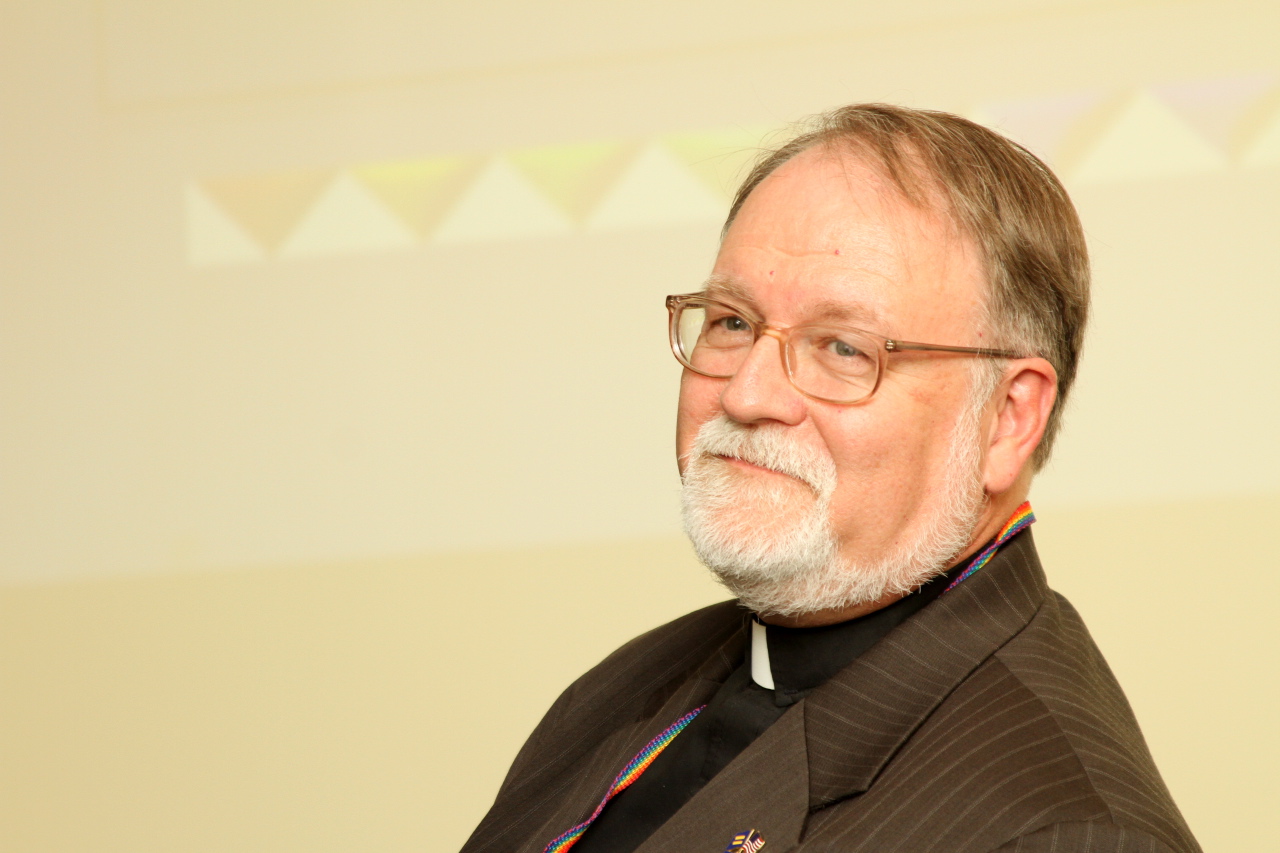
Dr. Stephen V. Sprinkle (Keith Tew photo).
Stephen V. Sprinkle is Director of Field Education and Supervised Ministry, and Professor of Practical Theology at Brite Divinity School, Fort Worth, Texas, a post he has held since 1994. An ordained Baptist minister, he is the first open and out Gay scholar in the history of the Divinity School, and the first open and out LGBTQ person to be tenured there. Read More…
Recent Social Justice Advocacy Activity By Dr. Sprinkle
 Summer 2009 – Dr. Sprinkle responded to the Fort Worth Police Department and Texas Alcoholic Beverage Commission Raid on the Rainbow Lounge, Fort Worth’s newest gay bar, on June 28, 2009, the exact 40th Anniversary of the Stonewall Rebellion. Dr. Sprinkle was invited to speak at three protest events sponsored by Queer LiberAction of Dallas. Here, he is keynoting the Rainbow Lounge Protest at the Tarrant County Courthouse on July 12, 2009. Read More…
Contact Us
Communicate with the Unfinished Lives project team:
info@unfinishedlivesblog.com


Schedule a Presentation
Dr. Sprinkle will gladly present his acclaimed presentation to your organization. To arrange an Unfinished Lives presentation for your organization or group, please contact us.
Dr. Sprinkle has given his Unfinished Lives presentation to these and other community groups and organizations. Read More…
-

Where are our readers?
Publisher: Steve Sprinkle (Project Director)
Steve Sprinkle
Unfinished Lives: Remembering LGBT Hate Crime VictimsBrite Divinity School/Texas Christian UniversityFort Worth TXprofessor, minister, author, blogger, LGBTQ advocate


Follow Unfinished Lives on Facebook
 Box Turtle Bulletin
- An error has occurred; the feed is probably down. Try again later.
- HRC Back Story
- Know About The Gender Identity Movement
- Why Is There A Need For Human Rights?
- Kinds Of Human Rights
- Human Rights Purposes And Violations
- Human Rights For Every Human Incident
- 8 Reasons Human Rights Are Important
- Everything About Human Rights
- Human Rights Issues Education & Law
- We Need To Stand Up For Our Rights And Those Of Others
- Coca-Cola Receives Perfect Score On Human Rights
- The Advocate: Daily News
- Eric Swalwell responds to sexual assault allegations in a to-camera video
- Eric Swalwell’s governor bid is collapsing as top Democrats turn on him
- What Melania Trump’s bizarre Jeffrey Epstein press event reveals about a White House in chaos
- New Bryon Noem bombshell puts Kristi Noem’s anti-trans politics under harsher spotlight
- Former Biden HHS leaders hail syphilis breakthrough as Trump dismantles the system behind it
- Advocate breaking news 4/10/26
- Pete Buttigieg hints at 2028 presidential run: ‘Save me a seat’
- Could Minneapolis welcome bathhouses back for the first time since the late 1980s?
- Donald Trump posts gruesome murder video to Truth Social
- Melania Trump blindsides White House aides with unexpected leap into Epstein scandal
- Dallas Voice: Instant Tea
- An error has occurred; the feed is probably down. Try again later.

 Unfinished Lives
Special Comment on the Proposition 8 Protest Movement: “Now is Our Time”
by Stephen V. Sprinkle
One step too far: that is the step opponents of civil rights for LGBT people, the LDS Church and the Knights of Columbus, took in their all-out effort to repeal same-sex marriage in California. I do not contest the freedom of church organizations to voice their opinions about court decisions in America. But the desperate over-reach of Mormons and Roman Catholics to strip same-sex couples of the right of civil marriage the California Supreme Court had vouchsafed to them has awakened millions of LGBT people and allies to the power of a movement whose time has come. Pouring millions of church dollars and thousands of radio/TV advertisements into the struggle over Prop 8 has rebounded upon those who briefly celebrated beating back the high court’s decision on same-sex marriage. The agents of heterosexist theocracy may have won a single battle at the ballot box, but in doing so they have set in motion a war for public opinion they cannot win.
Our opponents managed one thing by their desperation and arrogance: they have galvanized the grassroots power of the millions of LGBT folk and allies who surged to the polls on November 4 to elect Barack Obama president. With the internet as the vehicle for equality, 300 protest events sprang up in less than twelve days. No other civil rights movement in American history has been launched in cyberspace before, and as the presidential campaign of 2008 demonstrated, the internet has vast potential to rally millions and to fund a national movement. As a witness to the No On 8 Protest at the Austin, Texas Town Hall, I can report the zeal and determination of 3,000 mostly first-time protesters to seize this time as our time, the long-deferred time for a true LGBT Civil Rights moment. As a marcher myself, I can testify to the thrill of taking it to the streets as a 50-something gay man in a new way. I was too closeted and too far removed from the Stonewall Uprising of 1969 to take to the streets then. But this is today, and Prop 8, no matter what LGBT people may privately think of marriage for ourselves, is a thumb in our eye. Myriads of young Lesbian, Gay, Bi and Transgender people built up their electoral muscle in Obama Pride, and now are ready to infuse new life, energy and possibility into the struggle for sexual and gender expression equality. The rally organizers did a fine job at the Austin Town Hall Plaza for the thousands who came out. All the usual advocacy groups were there, lending leadership and direction to the surging crowds of neophytes straining at the bit to do their part for justice. But closing the proceedings and urging protesters to sign up on contact lists or to buy tee shirts could not shut off the electricity generated by restless youth. When a movement goes viral, it cannot be shut down with the flip of a switch.
Perhaps the organizers of the Austin No On 8 Protest tried to get a march permit, but couldn’t. Whatever the story, hundreds of fired up queers and allies took their signs and passion into the streets, and marched up to the Texas State Capital, where we demonstrated outside the gates in the shadow of the tallest governmental dome in America. “What do we want?” “Equality!” “When do we want it?” “Now!” ricocheted up and down Austin streets as dozens of cars and pickups sped by blaring horns and shouting encouragement. The citizens of Austin stepped back, some smiling, some scowling at the surging rainbow line marching up Congress Avenue. Two descriptors came to my mind as I marched along chanting with the others: Power and Peace. This was no flash-in-the pan afternoon protest, no lark by first-timers seeking to get their pictures in the paper. Others have seized their moments: the anti-war movement, African Americans, the Moral Majority, women. But this has the feel of our time, the time when the issue of same-sex wedlock changed from a political hot potato into a viral movement elevating marriage to the status of a civil right for all Americans.
There are serious problems to work out. Before the rift with people of color tears any further, African Americans and Latinas/Latinos must be appealed to directly. LGBT people and straight people of color have a stake in the fight for justice together, not apart, and LGBT people of color must lead white queer folk to avoid driving a wedge between natural allies and us. That is where LGBT people of faith and progressive religious leaders have a major role to play by giving a faith rationale for the marriage equality movement. One of the lessons of the defeat in California is that when church bigotry waves crosses and distorts the issues for the voting public, the most potent antidote is the public witness of queer and progressive faith leaders wearing all their ecclesiastical regalia. God must not be hijacked any longer by the radical right in the fight for equality. Further, from what I saw and heard, LGBT rallies need media savvy and speakers need coaching on how to call out the passion and motivation that will translate into effective action for change. It was clear that we haven’t learned how to do this ‘thing,’ yet. But we must learn how, and quickly, if we are to ride the tide of commitment building in our queer communities.
My work on LGBT hate crimes murder victims teaches me that our movement already has its martyrs. I cannot help thinking of Harvey Milk, wondering if after 30 years since his assassination in San Francisco we have finally become ready to realize his vision and to vindicate his death and the deaths of so many hundreds of others. As we march and protest, their stories can give us the drive to confront a society yet unwilling to see us as equals. Never again must LGBT people stay silent when some of us are killed for simply being who we are. And never again may we sit idle on the sidelines while others struggle to win our freedom and equality. I saw and felt a justice movement building in the capital of the Lone Star State this past Saturday. As one sign in the Austin No on 8 Protest proclaimed, “Our Love Will Outlast Their H8!” We who believe in justice cannot rest! We who believe in justice cannot rest until it comes!
Stephen V. Sprinkle
Director
The Unfinished Lives Project
Share this:
November 20, 2008 Posted by unfinishedlives | California, Heterosexism and homophobia, Legislation, Marriage Equality, Politics, Protests and Demonstrations, religious intolerance, Social Justice Advocacy, Special Comments, Texas | Comments Off on Special Comment on the Proposition 8 Protest Movement: “Now is Our Time”