Transgender Woman Murdered in Queens
 Queens, NY – The last images we have of Amanda Gonzalez-Andujar are on a video capture at the entrance to her apartment building in the Ridgewood neighborhood of Queens with a tall man wearing a dark hoodie. Sometime late on Friday, March 26 or very early on Saturday, March 27, Ms. Gonzalez-Andujar, 29, was strangled to death in her home. Her body was not discovered until March 30, stripped of all her clothing except for her bra, lying across the bed in her ransacked apartment. Her Marilyn Monroe photos, part of a collection of Marilyn memorabilia her friends said was precious to her, were destroyed, frames smashed and images defaced. Police are continuing to investigate the apparent homicide, and have not yet issued a statement about the possible hate crime aspect of the case. It is difficult to believe that some form of transphobia or gender hatred did not motivate the murder to some degree, given the destruction of the Monroe photographs. The search is still on for the tall man who accompanied her into her home, a person authorities and friends presume to be Ms. Gonzalez-Andujar’s boyfriend. The New York Daily News, which broke the story, reports that a neighbor called police after becoming alarmed the evening of the 26th about the sound of a loud argument in the apartment. When the landlord beat loudly on the door, however, no one answered. One of the problems attendant to translife is a subtle form of isolation separating a transperson from getting to know neighbors in the usual way people relate in communities. This isolation probably contributed to the lag time between Ms. Gonzalez-Andujoar’s disappearance and the discovery of her body in a fully occupied apartment building. A laptop with potential evidence of the identity of her murderer was missing, perhaps stolen in an attempt to slow law enforcement from tracking him down. EDGE Boston reports that the Queens Pride House and the Transgender Legal Defense and Education Fund are expressing alarm at the continuing violence against transfolk in New York’s five boroughs. In a joint statement to the press, Pride House and TLDEF said, “As organizations serving the transgender community, we are very concerned about the safety of transgender women within our community. We condemn the violence against Amanda Gonzalez-Andujar and encourage swift action by law enforcement to apprehend suspects, and to fully investigate this brutal crime and bring all appropriate charges.” Commenting on the difficulty transgender women face in the United States, MtoF transwoman from Queens, Justine Valinotti writes in her blog, transwomantimes, “If we–that is to say, our souls–go anywhere after this life, I hope Amanda finds love and acceptance there.”
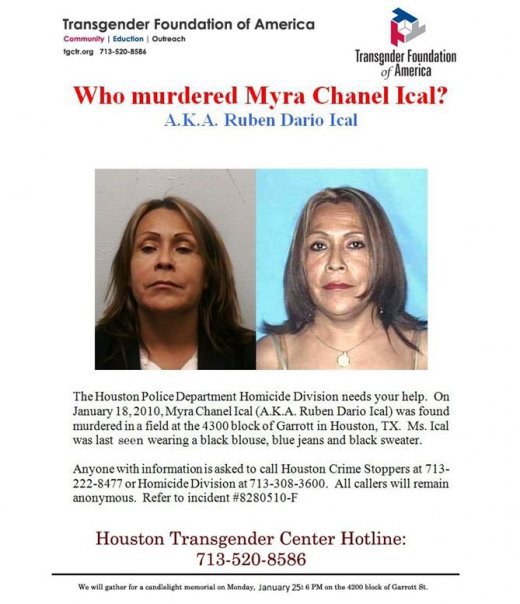
Trans Community Demands Justice for Myra Ical
Houston, TX – Cristan Williams, Executive Director of the Transgender Foundation of America, takes the murder of Myra Ical personally. “She died struggling for her life…She went down fighting and she was literally beaten to death,” she said to reporters for KHOU 11 News. “It’s personal. I feel it on a personal level.” Hundreds agree with Williams. Myra Chanel Ical, 51, died in a Montrose area field a week ago, and Houston’s transgender community has rallied to her memory. Seven members of the transgender community have died violently in Houston in the last eleven years, and now the vigil organized to remember Ms. Ical on Monday night is being billed as the largest transgender event in Houston’s history. The vigil’s organizers intend to focus attention on the plight of transgender people in Harris County and Houston as they honor Ms. Ical’s memory and call for neighbors in Montrose to share any leads they may have on the unsolved murder with police investigators. While her slaying is not yet designated as a hate crime, police are certainly not ruling anything out. Sgt. Bobby Roberts, spokesperson for the Houston Police Department, told reporters, “It could have been anything at this point. We just don’t have any motive whatsoever on this case.” ABC News 13 reports that Ms. Ical’s body was covered in bruises and bore several defensive-type wounds that showed she was fighting back against her attacker(s). Harris County’s Medical Examiner ruled that she died from strangulation by some sort of ligature. Cristan Williams cannot get the horror of how Ms. Ical died out of her mind. “That in and of itself was just a horrific way to die. Her last moments of life were sheer terror.” Williams asks why none of the seven murders of Houston transgender people have been solved. Police told her they have no evidence in any of the cases, something Williams attributes to the way anti-transgender crimes went largely unreported in the recent past. Until the passage of the Matthew Shepard and James Byrd, Jr. Hate Crimes Prevention Act this past October, local and federal law enforcement agencies were not mandated to keep statistics on transgender hate crimes. Like the transgender population, these crimes were largely ignored. Human rights advocates for the LGBT community are watching closely to see if the election of Annise Parker, an open and out lesbian, as Mayor of Houston will make a difference in how law enforcement and the media approach violence against some of the most vulnerable citizens of America’s 4th largest city.
Indiana University Breaks Silence on Black Gay Professor’s Murder
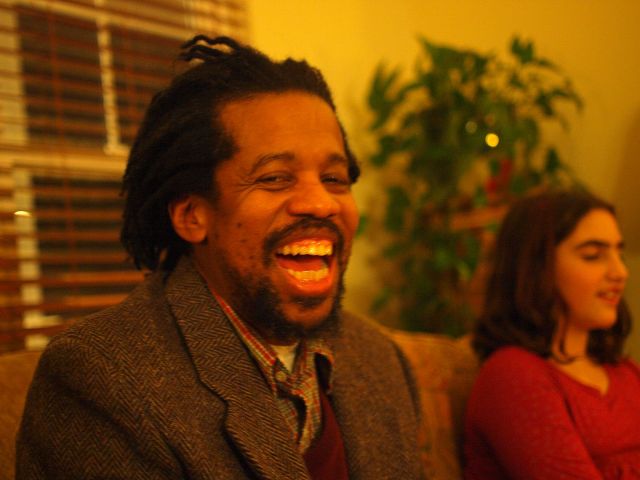 Bloomington, IN – After a long silence, the Provost of Indiana University at Bloomington issued an official statement January 11 on the suspected hate killing of black gay professor, Dr. Don Belton, whose body was found stabbed multiple times in the kitchen of his home on December 27. Critics of the university administration suggested that stony silence about the circumstances of Dr. Belton’s murder was damaging his reputation in an already sensationalized media atmosphere. An ex-Marine, Michael J. Griffin, 25, has confessed to the crime as revenge for two sexual assaults allegedly perpetrated on him by the 53-year-old African American professor at a Christmas party. Friends and colleagues of Dr. Belton are working diligently to overthrow this suspicious “gay panic” motive on the grounds that Dr. Belton was never the sort of man to assault anyone. Griffin is being held without bail in the Monroe County jail awaiting trial. Dr. Belton’s murder is part of an emerging pattern of hate killings of black gay academics in the United States. Dr. Lindon Barrett, 46-year-old professor of English and African American Studies at the University of California – Irvine, was strangled to death in 2008. Dr. Barrett’s alleged killer, Marlon Martinez, 22, was to stand trial in early 2010 for the murder, but was found dead in his Los Angeles County jail cell on Christmas Day. The Long Beach Press Telegram reports that the cause of Martinez’s death is as yet undetermined. The statement of the provost of IUB is printed here in full:
Dear Faculty, Staff, and Students,
As the campus begins the new semester, we must acknowledge a terrible loss. Some of you may just now be returning to campus after the holidays, and I am very sad to inform you that the Indiana University community lost a dear colleague during the semester break.
Don Belton, a faculty member in the English Department, was slain at his home in Bloomington on December 27. (An arrest has been made in the case.)
In his relatively brief time at IUB, Professor Belton earned the admiration and affection of his colleagues and students.
He was a gifted writer and a highly-valued member of the faculty of our distinguished Creative Writing Program, in the Department of English. He was very well liked and very well-respected. His death is a loss not just to his family and friends, and our academic community, but also to the extended world of arts and letters and to all who value the humanistic traditions. His absence will be profoundly felt.
The murder of Professor Belton has evoked strong emotions throughout the community and indeed the nation. I trust that all members of our community will exhibit tolerance, compassion, and respect in the wake of the loss of a valued
colleague. Let us also show respect for one another and for the many and varied ways in which we express our grief over such a tragedy.
A memorial service to celebrate the life of Professor Belton will take place on Friday January 15, at 5 p.m. at the Unitarian Universalist Church on Fee Lane in Bloomington.
Our heartfelt sympathies go out to Professor Belton’s family, friends, and colleagues.
Karen Hanson
Provost and Executive Vice President
African American Gay Teen Slaughtered in Baltimore
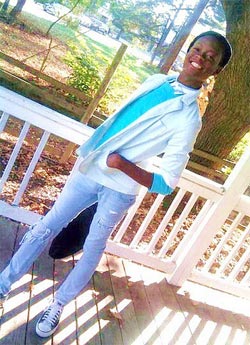 Baltimore, MD – A 15-year-old African American sophomore who was open to his classmates about his sexual orientation was found Tuesday, November 10 stuffed in a closet in his aunt’s house, raped, gagged with a pillowcase, and stabbed multiple times in the head and throat. The Baltimore Sun reports that Dante Parrish, 35, a convicted felon who knew Jason Mattison, Jr. and his family, was arrested on November 12 at a convenience store, and charged with first-degree murder. After release from prison, Parrish roomed in Mattison’s aunt’s home on Llewellyn Avenue, where Jason was also living at the time. Reports speculate that Parrish had forced a sexual relationship on the teenager. A spokesman from the Baltimore Police Department said that Parrish, who is being held in custody without bond, confessed to the murder. Jason was a joyous non-conformist, known at West Baltimore’s Vivian T. Thomas Medical Arts Academy where he attended high school as a witty, chatty young gay man who lived out his sexual orientation without apology. When other boys harassed him for his tight jeans and feminine-looking sweaters, he always seemed to have a quick answer, and would walk away from the encounter smiling. He had planned to become a pediatrician according to his teachers, who believed that no matter how cheery he appeared to be, the slurs hurled at him still hurt. When he came out to his family, there was some friction, but gradually they accepted him, according to his paternal grandmother, Mrs. Wanda Williams. Williams was among the earliest members of his family to whom he came out, and she admitted to reporters that his revelations caught her off-guard. She was worried about her grandson. “I accepted his sexual preferences,” she said. “But I told him, ‘You’re young and don’t understand life.’ I told him, ‘Plenty of young women would love to be with you.’ He said he likes boys. Young people don’t like to listen to adults, but I told him I’m not going to push him away.” Jason’s murder has devastated his grandmother. “I haven’t cried so much this entire life,” Williams said to The Sun. “My grandson hollering for help and there is nobody there to help him.” Many unanswered questions remain for family, classmates and friends. Why would his relatives allow Parrish to stay in the same house as Jason, given Parrish’s violent past? Were the reports of a sexual relationship with Parrish true, or fabricated by a man facing the worst criminal charges of his life? What were the circumstances that led up to one of the most gruesome anti-gay murders in the history of Baltimore? Jason’s funeral was held this Wednesday at Unity United Methodist Church. His cousin, Laquanna Couplin, who was also living in the house on Llewellyn where Jason was killed, told reporters, “He was a terrific boy, and we miss him very much. We’re hoping that justice is served and that the person who is responsible for this goes to prison and doesn’t get out.” She spoke lovingly of her young cousin, “He was a sweet young man. He wasn’t afraid of who he was. He had a life ahead of him. I just wish he could’ve had a chance to live it.” A candlelight vigil is planned Sunday, November 22 in Dallas, Texas to call for justice for Jason.
Murdered Trans-teen Gwen Araujo Vindicated by CA Appeal Court Ruling
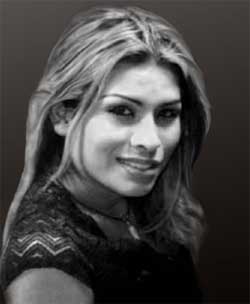 Newark, CA, May 13, 2009 – A California state court of appeal upheld the second degree murder convictions of two young East Bay men for their part in the strangling, beating, and murder of 17 year old male-to-female transgender Latina Gwen Amber Rose Araujo in 2002. Jose Merel and Michael Magidson had appealed their convictions on the grounds that the Alameda County trial judge had not defined the crimes properly to the jury at the time of the original trial in 2005, and that there had not been sufficient evidence for second degree murder convictions. The appeal court ruled 3-0 against the petition of the defendants, who will continue to serve out their 15-year sentences for the grisly murder.
The 2002 Araujo case drew national attention to the plight of transgender people in the United States, especially transgender people of color. Araujo, born biologically male and originally known as Eddie, had transitioned to being female by the time of the assault. After she died, her mother legally changed her name to Gwen as a sign of love and respect. Her killers, who knew her as “Lida” had known her for months, and Gwen believed they were fast friends. Both Merel and Magidson had sex with Araujo orally and anally. According to their defense, she had not revealed her biological identity to them. When her biological maleness was discovered, the defense went on to contend, the men attacked Araujo “in the heat of the moment,” and therefore deserved convictions for a lesser charge of manslaughter instead of murder. The prosecution successfully argued against this version of the “trans-panic defense,” and secured the murder convictions against them. Two other defendants in the case, Jaron Nabors and Jason Cazares pled guilty to manslaughter and were sentenced to 11 and 6 years respectively. They have not sought to challenge their convictions.
The Araujo case sharpened the national debate on the trans-panic defense. The outcome of the 2002 trial went a long way toward refuting the once widely held notion that trans people somehow brought on attacks against themselves. As Masen Davis, executive director of the Transgender Law Center noted to reporters,the ruling of the court of appeal definitively rejected the claim that the murder of a young woman like Gwen should be reduced to a lesser charge just because she was transgender. “We are thankful that the Court of Appeal saw through this blatant prejudice, and upheld the convictions of Gwen’s killers,” she said.
Project Activity — Summer of 2008
In the summer of 2008, Unfinished Lives project director Dr. Stephen V. Sprinkle researched the circumstances of several anti-gay hate crimes in America’s deep south. Sprinkle toured hate crime scenes, spoke with loved ones and friends of the victims, and preserved information about the lives and stories of LGBT persons killed only for their sexual orientation. Sprinkle’s research on behalf of the project took him to Texas’s Gulf Coast, Alabama, Florida, North Carolina and South Carolina.
June 2008 – Oklahoma City, Oklahoma – Unfinished Lives project director Stephen V. Sprinkle conducted research on Steven Domer.
June 2008 – Kansas City, Missouri – Unfinished Lives project director Stephen V. Sprinkle conducted research on Barry Winchell.
June 2008 – Houston, Texas – Project director Stephen Sprinkle traveled to Houston and the Gulf Coast region of Texas to investigate the Kenneth Cummings Jr. hate-crime murder. During that same trip, Dr. Sprinkle preached at Resurrection Metropolitan Community Church for its Pride Week observances.
After Sprinkle preached and presented “Unfinished Lives” at a special June 15 afternoon event, Senior Minister DeWayne Johnson led the congregation in prayer for the Unfinished Lives project, Dr. Sprinkle, and his summer research for the upcoming book.

For the next five days, Dr. Sprinkle traveled to sites relating to the murder of 46-year-old Southwest Airlines Flight Attendant, Kenneth Cummings, Jr.

Ken was a regular in the Montrose section of downtown Houston, the center of the metro area’s LGBT community. Here is EJ’s bar, a friendly, neighborhood gay pub where Ken first saw his murderer, Terry Mark Mangum:

This is the billiards area of EJ’s where Mangum, an ex-con, stalked his potential targets:

Ken and Mangum talked here and exchanged phone numbers. Ken had no idea Mangum was hunting a gay person to kill. On Sunday, June 4, 2007, Ken called friends saying that JR’s, another Montrose establishment, was “dead,” and suggested that he would just go home, since he had a flight early the next week.

Instead, he called Mangum, hooked up with him, and invited him to his home in suburban Pearland.

Mangum drove a 6-inch knife blade into Ken’s skull as he sat drinking a glass of wine. Mangum loaded Ken’s body in the trunk of Ken’s car, drove it to his grandfather’s ranch south of San Antonio, and tried to burn his remains in a shallow pit he dug in a dry stock tank. Ken’s body was burned beyond recognition, and could only be identified by dental records.
Dr. Sprinkle talked with co-workers, Houston Police officers, and Ken’s best friend of many years to gain insight into who this gentle, happy man really was. In August of 2008, a Brazoria County jury found Mangum, who claimed that God had called him to wipe out sexual perverts, guilty and sentenced him to life in prison.
June 2008 – Alabama, Part I – After leaving the Texas Gulf Coast, Unfinished Lives project director Dr. Stephen V. Sprinkle traveled to Alabama and performed research about the life and murder of Billy Jack Gaither. His work brought him to Tuscaloosa, Birmingham, Sylacauga and Montgomery. Sprinkle met with scholars, students, humanitarians, and members of the Gaither family.
In Tuscaloosa Sprinkle met Dr. Beverly Hawk, Ph.D., Director of the Crossroads Community Center at the University of Alabama at Tuscaloosa. Dr. Hawk is a noted scholar who studies diversity and hate crimes, and is a friend of the Gaither family. She worked to establish the Billy Jack Gaither Humanitarian Award, given annually on the anniversary of his death.

Sprinkle then traveled to Birmingham, where his host was David Gary, a bank officer and dedicated LGBT activist well-known throughout Alabama. Gary is a master networker, and a true humanitarian. He is one of the founders of Integrity Alabama, the LGBT Episcopal advocacy group.

One of the most significant moments of the summer came when Sprinkle met Kathy Joe Gaither, Billy Jack Gaither’s elder sister. Kathy Joe is the keeper of the flame of her brother’s memory.

Billy Jack had to travel up to Birmingham in order to experience freedom as a gay man. His favorite bar was the Toolbox, which is now named “Phoenix”

Sprinkle then traveled to Sylacauga, Billy Jack’s home town. On the night of his murder in February 1999, Billy Jack Gaither left his home on Pelham Avenue.

Gaither gave his two murderers a ride to The Tavern, Gaither’s local hangout.

His murderers later cut him severely, forced him into the trunk of his own car, and transported him to the kill-site on Peckerwood Creek, a virtually inaccessible spot these days. There they killed him with blows from a wooden ax handle, dragged his lifeless body to a pyre of kerosene soaked tires, and immolated him. Gaither’s killers have been convicted of murder.
Billy Jack Gaither has been laid to rest beside his father, Marion, at Evergreen Cemetery in Sylacauga.


Sprinkle also traveled to the National Civil Rights Memorial Center in Montgomery, a facility that preserves the memories of slain Civil Rights advocates and others. In the Plaza, beside the memorial fountain, he spoke to youth from New York State who were visiting the Center’s museum.

The Center educates and motivates visitors for the cause of civil rights and tolerance. Notably, the Center has memorialized Billy Jack, giving him a tablet in its hall of remembrance.


June 2008 – Alabama, Part II – After leaving Montgomery, Alabama, in late June 2008, Unfinished Lives project director Dr. Stephen V. Sprinkle continued his research, learning about the life and murder of Scotty Joe Weaver.
First, Sprinkle traveled to Bay Minette, Baldwin County, Alabama, 30 miles from Mobile. This was the home of 18-year-old Scotty Joe Weaver.


Scotty, who had been harassed for being gay until he dropped out of high school, went to work as a cook for the Bay Minette Waffle House. He earned pretty good money for the first time in his life, money that allowed him to pursue his avocation as a female impersonator who favored Dolly Parton, and to rent his own trailer in Dobbins Trailer Park with his mother’s help.


A truly generous person, Scotty Joe invited two unemployed former schoolmates to live in the trailer with him. The young woman was a person he had known since grade school. In short order, his trailer guests invited another young man to live with them. Tensions arose.
Scotty’s three guests ambushed him in his sleep, robbed him of around $65, strangled him, and cruelly tortured him for hours, mutilating him while he was still alive. After partially decapitating him, they hauled his body to a remote wooded area outside Bay Minette, urinated on his corpse, and burned his body beyond recognition. Dental records eventually identified him. A vigorous investigation, headed by Baldwin County District Attorney David Whetstone, led to the arrest of Scotty’s three killers. The two men have been sentenced to life, and the woman to 20 years in prison.

Vigils were held in nearby Mobile, led by Bay Area Inclusion founder Tony Thompson, local PFLAG founder Suzanne Cleveland, and LGBT activist Rev. Helene Loper from Tuscaloosa. Today, however, most of the story has been forgotten, an example of how swiftly LGBT hate crimes are swept away from view.


Here is the Bryars McGill Cemetery in far north Baldwin County where Scotty Joe has been laid to rest. His grave lies as far from the road as you can get. Scotty Joe’s tombstone shows the loving remembrance of a mother.


June and July 2008 – Florida – After leaving Bay Minette, Alabama, Unfinished Lives project director Dr. Stephen V. Sprinkle traveled to Florida and performed research about the life and murder of 26-year-old Ryan Keith Skipper. His research took him to Winter Haven, Auburndale, and Wahneta.
In Auburndale Dr. Sprinkle met Lynn Mulder, Ryan’s stepfather, and spoke about the Unfinished Lives Project to the Polk County PFLAG chapter. Pat and Lynn Mulder are both healthcare professionals, respected, long-time residents of Auburndale. Their open welcome and willingness to share Ryan’s story and his friends was the highlight of the summer for Dr. Sprinkle.


Lynn and Pat keep Ryan’s cat, Baby, who wanders through the house looking for him still. Lynn toured Dr. Sprinkle to the sights associated with his son: First Missionary Baptist Church, Auburndale, Ryan’s home church, Grace Lutheran School, Winter Haven, where Ryan attended, Winter Haven High School, where Ryan graduated in spite of being harassed virtually daily for being gay by students who yelled epithets and threw rotten oranges and even stones at his car and his person.


Dr. Sprinkle traveled to Wahneta, a small, rural community south of Auburndale where Ryan and two girlfriends rented a little red house, 211 Richburg.


His killers–Bearden, who lived in a trailer in Eloise, just north of Wahneta, and Brown, who lived in a disheveled trailer park within biking distance of Ryan and the girls–planned to kill him after he returned from work at the Sunglass Hut in the Lakeland Mall. They tricked him with the story that they needed a ride, and directed him to drive down a lonely road where they slashed him to death with knives, nearly decapitating him. They left him on the side of Morgan road. The local woman who discovered Ryan’s body reported that it looked like someone had turned on a sprinkler of blood.


Bearden and Brown unsuccessfully tried to fence Ryan’s car that night, after bragging to friends about what they had done. They drove it to this public boat ramp on Lake Pansy, and set the car afire. In short order, they were apprehended, charged with murder, and have yet to stand trial.

The Mulders and Ryan’s elder brother, Damien, carried out a vigil here in Auburndale’s city park where hundreds gathered to remember him. Vigils were carried out in many other cities and towns in Florida to express outrage at the brutality of his murder.

Here, in Auburndale, Ryan lies in peace, and is not forgotten.


About

If you are a first-time visitor to the Unfinished Lives Project website, we invite you to read A Welcome Message introducing you to our project. We are truly grateful for your visit.
The Unfinished Lives Project website is a place of public discourse which remembers and honors LGBTQ hate crime victims, while also revealing the reality of unseen violence perpetrated against people whose only “offense” is their sexual orientation, gender identity, or gender presentation. LGBTQ people in the United States are suffering a slow-rolling decimation of terror and murder all across the country. Every locale and demographic of society are affected: First Nations, Anglo, Black, Latino and Latina, South and Southeast Asian, Transgender, Bisexuals, Gay men, Lesbians, disabled, young, and mature. Homophobia has a long, crooked arm, and it is reaching out to snatch the life away from women and men whose tragic stories are under-reported to begin with, and whose memories are swiftly forgotten.
The horror of these killings transcends the shock and bereavement of loved ones and friends. These are not typical homicides; they are not killings for money or drugs, incidents of domestic strife, or crimes of passion. The vicious nature of hate crimes against LGBTQ persons is extremely brutal, grotesquely violent, and egregiously hateful.
Each murder serves the LGBTQ population as a sobering warning about the actual level of danger in our communities. The message these killings send is that freedom and open life for LGBTQ people is a cruel dream. Every time we remember one of these victims, however, the intentions of their killers are frustrated. To remember these women and men is to begin the process of changing the culture that killed them.
Our Project Director
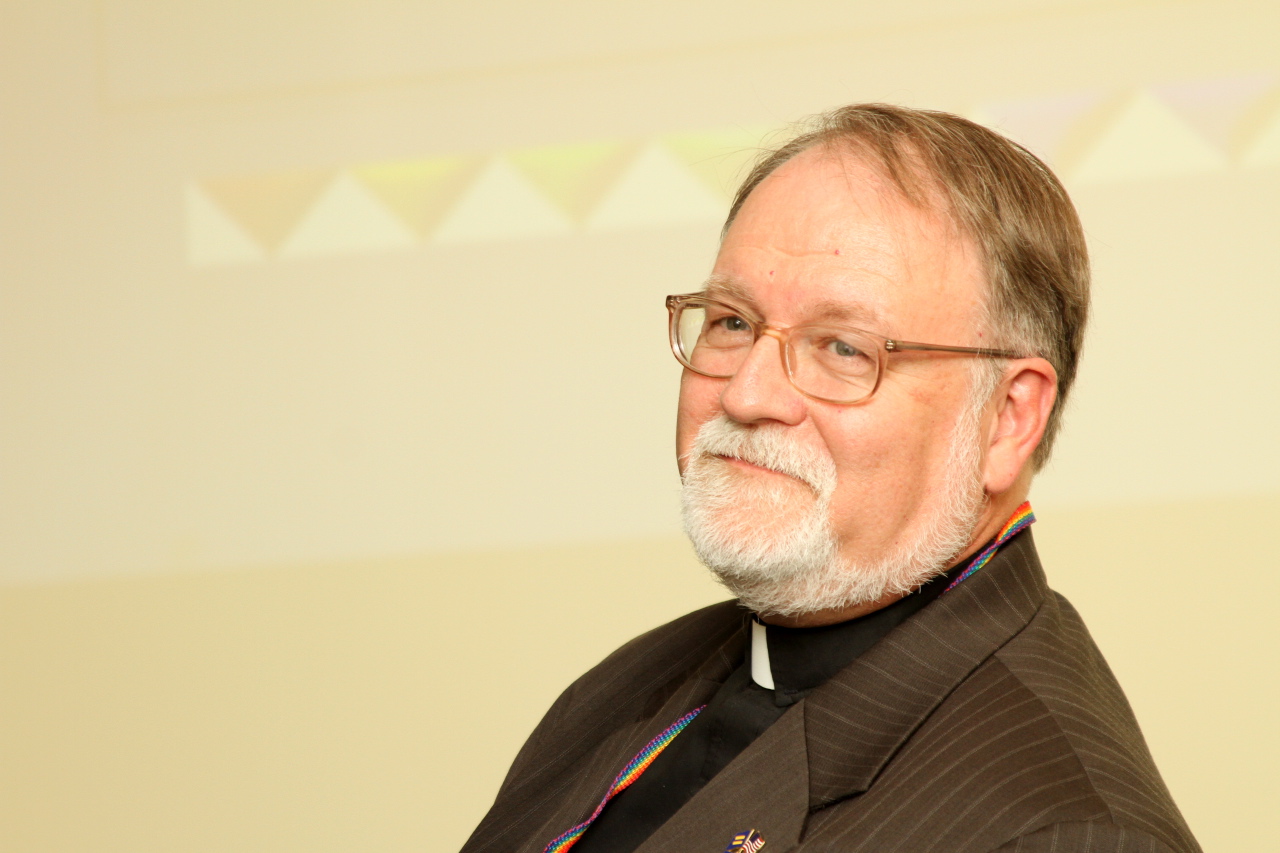
Dr. Stephen V. Sprinkle (Keith Tew photo).
Stephen V. Sprinkle is Director of Field Education and Supervised Ministry, and Professor of Practical Theology at Brite Divinity School, Fort Worth, Texas, a post he has held since 1994. An ordained Baptist minister, he is the first open and out Gay scholar in the history of the Divinity School, and the first open and out LGBTQ person to be tenured there. Read More…
Recent Social Justice Advocacy Activity By Dr. Sprinkle
 Summer 2009 – Dr. Sprinkle responded to the Fort Worth Police Department and Texas Alcoholic Beverage Commission Raid on the Rainbow Lounge, Fort Worth’s newest gay bar, on June 28, 2009, the exact 40th Anniversary of the Stonewall Rebellion. Dr. Sprinkle was invited to speak at three protest events sponsored by Queer LiberAction of Dallas. Here, he is keynoting the Rainbow Lounge Protest at the Tarrant County Courthouse on July 12, 2009. Read More…
Contact Us
Communicate with the Unfinished Lives project team:
info@unfinishedlivesblog.com


Schedule a Presentation
Dr. Sprinkle will gladly present his acclaimed presentation to your organization. To arrange an Unfinished Lives presentation for your organization or group, please contact us.
Dr. Sprinkle has given his Unfinished Lives presentation to these and other community groups and organizations. Read More…
-

Where are our readers?
Publisher: Steve Sprinkle (Project Director)
Steve Sprinkle
Unfinished Lives: Remembering LGBT Hate Crime VictimsBrite Divinity School/Texas Christian UniversityFort Worth TXprofessor, minister, author, blogger, LGBTQ advocate


Follow Unfinished Lives on Facebook
 Box Turtle Bulletin
- An error has occurred; the feed is probably down. Try again later.
- HRC Back Story
- Know About The Gender Identity Movement
- Why Is There A Need For Human Rights?
- Kinds Of Human Rights
- Human Rights Purposes And Violations
- Human Rights For Every Human Incident
- 8 Reasons Human Rights Are Important
- Everything About Human Rights
- Human Rights Issues Education & Law
- We Need To Stand Up For Our Rights And Those Of Others
- Coca-Cola Receives Perfect Score On Human Rights
- The Advocate: Daily News
- Journalist detained for booing Trump at Kennedy Center 'Chicago' performance
- Donald Trump telegraphs war crimes in profanity-filled Easter Sunday Iran threat
- NYC’s most powerful transgender official is fighting intensifying anti-LGBTQ+ federal pressure
- Maryland lawmakers advance broad school protections, including for trans students
- Fired for refusing to remove LGBTQ+ books, Tennessee librarian says she’d do it again
- Lawyers alarmed by immigration judge's 'atrocious' questions for gay asylum seekers
- What is the trans gaze? It's relief and recognition between strangers on a train
- Same-sex couples thrive in U.S. even as GOP support for marriage equality falls
- Did the FBI just post this propaganda video to save Kash Patel’s job?
- Over her short tenure as Trump’s attorney general, Pam Bondi terrorized LGBTQ+ Americans
- Dallas Voice: Instant Tea
- An error has occurred; the feed is probably down. Try again later.

 Unfinished Lives
Triangle of Terror: Gays On Their Guard
Police in body armor outside US Holocaust Museum (Shawn Thew/European Pressphoto)
Steven Domer murdered by white supremacist
Steven Domer of Edmonton, Oklahoma, was brutally murdered in October 2007 by Darrell Madden, a white supremacist recently released from prison. Madden, a member of the Aryan Brotherhood, garroted Domer with a wire clothes hanger after binding him with duct tape. Domer’s body was found in a ravine in McClain County. Investigators believe that Madden’s motive was to earn his “patch” from the Aryan Brotherhood, a sign of distinction awarded to a member who murders a Jew, a black, a homosexual, or anyone deemed to be an “enemy” by the group. In October 2008, Madden was found guilty of first degree murder and abduction, and sentenced to four consecutive life terms. The Domer murder and others like it offer a warning to the LGBT community in a time when hostility is clearly on the rise against same-sex marriage, the Matthew Shepard Act, ENDA, and the proposed repeal of both DOMA and DADT. Hate crime statistics demonstrate an upward spiral of violence in Michigan, Tennessee, Minnesota, and California. LGBT Americans share the vulnerability of other targeted groups, and decry the violence perpetrated by religious bigotry, misguided nationalism, racial hatred, and misogyny. The need for the passage of a sexual orientation, gender identity and gender expression hate crimes law has never been greater, given the rising tide of bias-related hate crimes chilling whole segments of the American population. Fear may isolate and paralyze people. Resolve to face hate and fear with justice and hope can unite people, as well. Now is the time for coalition building, rejection of irrational hatred wherever it arises, and a mutual commitment to the health and safety of all Americans. Gays, lesbians, bisexuals and transgender people already know how important vigilance and solidarity in the face of terror are. So do women, Jews, and Blacks, all of whom have been affected by these deplorable killings in recent weeks. Perhaps this time those targeted by the radical right will learn how to stand together, and rally the country to repudiate these senseless acts of violence. We at The Unfinished Lives Project devoutly hope so.
Share this:
June 11, 2009 Posted by unfinishedlives | anti-LGBT hate crime murder, Anti-Semitism, Arkansas, California, Kansas, Racism, religious intolerance, Social Justice Advocacy, Special Comments, Strangulation, Tennessee, Washington, D.C. | African Americans, Anglo Americans, Don't Ask Don't Tell (DADT), gay men, gun violence, Hate Crimes, hate crimes legislation, Matthew Shepard Act, military, Neo-Nazis and White Supremacy | 3 Comments