Hate Murder Victim Charlie Howard’s Memorial Desecrated, Rededicated
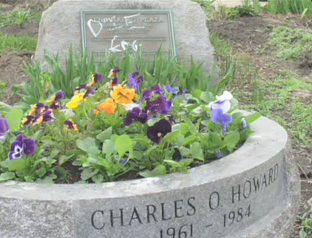
Charlie Howard Memorial desecration, prior to refurbishment
Bangor, Maine – Two weeks ago, unknown vandals spray-painted “Die Fag” on a memorial to hate crime murder victim Charles O. “Charlie” Howard. On Saturday, 75 people gathered to rededicate the newly cleaned and restored memorial beside the State Street Bridge in downtown Bangor, the site where 23-year-old Charlie was thrown to his death into the Kenduskeag Stream below. Howard’s death by drowning at the hands of three youths from respected Bangor families shocked the town in July 1984. For twenty years controversy raged over whether and how to memorialize the young gay man’s death. Finally, in 2009, a tasteful, unassuming granite memorial was erected at the State Street Bridge site. The Howard Memorial is the focal point of a small ornamental garden featuring tulips, hollyhocks, magnolia bushes, lilacs, cosmos and crabapple trees. Local and state social justice advocates made the murder of Charlie Howard a celebrated cause, bringing about the forerunner organization to today’s Equality Maine, and giving impetus to the drive for marriage equality for same-sex couples in recent years. His death pricked the conscience of Mainers in a way that has proved more productive for practical human rights advances in New England than the more well-known story of Matthew Shepard’s murder has ever effected in Wyoming and the Mountain West. The Bangor Daily News reports that local residents were repulsed by the recent act of hate and vandalism. Margaret “Miki” Macdonald, who lives in the neighborhood of the memorial, had gone to care for the flowers and weed the plot around the Howard Memorial as she had often done in the last two years, when she saw the angry words painted across the dedicatory plaque. As Macdonald told the Daily News, “At first I couldn’t even read what it said. I wasn’t sure if it was writing or just some random lines. Then when I saw what it said, I said, ‘God, that’s pathetic. How ridiculous for someone to do this.’ Just seeing that was disgusting.” The act of desecration spurred local and state church and advocacy groups to action. If the perpetrators, who are still at large, intended to scare the local populace and the LGBTQ community, they failed miserably. Now, in light of the community energy to remember and honor Charlie Howard, Macdonald says she can see something good coming out of the ugliness. “Actually, having something so offensive like that happen to the memorial made all these people regroup, and I think it’s rekindled our intention to encourage tolerance in our community,” she explained to Daily News staff reporter, Andrew Neff. “So in a way, it’s a good thing.” Diversity Day, observed annually in Bangor on Charlie Howard’s birthday, July 7, was established to promote acceptance of a whole range of human differences. This year, the words carved into the stone of his memorial will take on refreshed meaning: “May we, the citizens of Bangor, continue to change the world around us until hatred becomes peacemaking and ignorance becomes understanding.”
Conversion of a Cop: How Matt Shepard’s Murder Convinced a Policeman to Change

Sheriff Dave O'Malley (News 5 photo)
Cleveland, Ohio – In a startlingly frank address to police and federal agents, Sheriff Dave O’Malley challenged law enforcement officers to change their anti-gay attitudes towards hate crimes victims. O’Malley, who was Chief of Police of Laramie, Wyoming in October 1998 when University of Wyoming student Matthew Shepard was murdered, confessed he harbored serious homophobic feelings against LGBTQ people at one time, feelings that changed as a consequence of what he learned in the course of his investigation into the hate crime that took Shepard’s life. The Cleveland Plain Dealer reports that O’Malley admitted to telling gay jokes and having serious prejudice against queer folk before the infamous murder of the 21-year-old gay man by two local Laramie men. Speaking to a packed house of 250 law men and women, prosecuting attorneys, and federal agents in Cleveland on November 15, O’Malley said that back in 1998, “I was fully homophobic. Mean-spirited. ‘Faggot’ came out of my mouth as easily as ‘I love you’ to my children.” The gruesome nature of the attack on Matthew Shepard, solely because he was gay, by Aaron McKinney and Russell Henderson shocked the hard-bitten Wyoming lawman. Shepard suffered “injuries like I had never seen before,” O’Malley told the rapt audience at what has come to be known in Ohio as the annual “hate crimes conference,” sponsored by the Northern District of the U.S. Attorney’s Office and the local branch of the FBI. He also saw the anguish of Shepard’s parents, Dennis and Judy Shepard, as they had to face the worst thing that ever could happen to a child–the brutal killing of their son because of homophobia. Now, O’Malley says he thinks of the Shepards every time he hugs his own son, thankful for the life of his child, but sorrowing for the senseless loss they suffered. Matthew Shepard’s murder shocked the conscience of the nation in 1998, leading to the eventual passage of the Matthew Shepard and James Byrd Jr. Hate Crimes Prevention Act by the United States Congress in 2009. McKinney and Henderson were convicted of the murder, and are serving life sentences. Through the years, there have been various attempts to rewrite the story of Matthew Shepard’s murder, including an exposé by ABC News 20/20 that suggested “new evidence”–that young Shepard was killed inadvertently in a drug purchase gone sour, rather than as an anti-gay hate crime. O’Malley rejects the 20/20 thesis, and from first-hand investigative experience declares that the chief motive for the killing was prejudice against Shepard because he was gay. WEWS News 5, the local ABC affiliate, reports O’Malley urged law enforcement officers to set aside their prejudices against LGBTQ people, remembering that all people are fully human and have human rights. The chief way to combat hate crimes of all kinds is to change the hearts and minds of investigators and prosecutors, O’Malley told the crowd; and then the effort must be made to stop the purveyors of hate. “If somebody could cure the hate-teachers, you could make a dent” in the problem, said O’Malley. Now O’Malley is Sheriff of Albany County, where Laramie is the county seat. Federal hate crimes law has become one of his top concerns, he explained to the Cleveland Plain Dealer. “Why is this legislation important?” O’Malley asked. “Because there are places in our country where, if you’re queer, you deserve what you get. If you happen to be gay, we may not investigate as well. We may not prosecute. I’m hoping that stops.” Attendees say that because of O’Malley’s powerful, graphic speech, they will have to re-examine their attitudes toward minorities like LGBTQ people. Sheriff O’Malley changed from a homophobe to an advocate for human rights for all people. That would be the ultimate good outcome from the outrageous murder of a young gay man whose only offense was living as the person he truly was.
Remembering Charlie Howard: Murdered 26 Years Ago
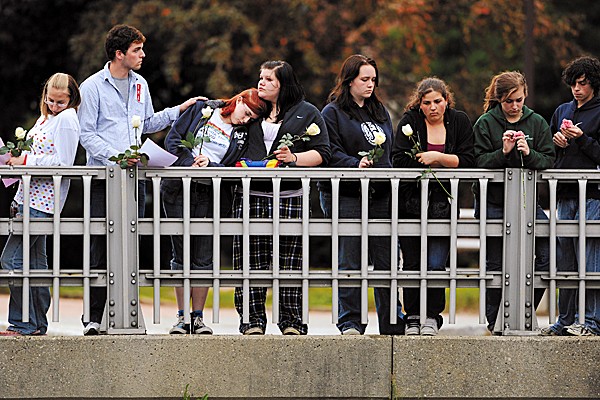
Remembering Charlie Howard on State Street Bridge, Bangor Daily News Photo
Bangor, ME – Charles O. “Charlie” Howard was drowned to death by three young men at 10 p.m. on July 7, 1984. His murder was the first full-blown hate crime murder against a gay person to be recognized as such in all of New England, if not the whole United States. The young men, Shawn Mabry, 16, Jim Baines, 15, and Daniel Ness, 17, ran him down on the State Street Bridge in the heart of downtown Bangor, beat and kicked him brutally, and then heaved him over the the railing into the Kenduskeag Stream below. Charlie screamed that he didn’t know how to swim. At 12:10 a.m. the next morning, police rescuers found his drowned body a few hundred feet from the bridge. A large eel had wrapped itself around his lifeless neck. An autopsy confirmed that he died of drowning, most probably hastened by a severe attack of asthma, a disease that had plagued Charlie all his life. He was 23 years old. The young attackers spent one night in jail, and then were released without bond into the custody of their parents. LGBT folk and their allies were galvanized by the murder of one of their own, and a fledgling equality organization started in the state in Charlie’s memory. Mabry, Baines and Ness were tried as juveniles, and sentenced to an “indeterminate term” in Maine Youth facilities in South Portland. Because of the nature of the law for juveniles, the convicts had to be released by their 21st birthdays. Mabry and Ness served 21 months apiece. Baines, the youngest, served two years. Fourteen years later, in 1998, Matthew Shepard was murdered on a ridge overlooking Laramie, WY, also because he was gay. Without what had been learned so painfully in the loss of Charlie Howard, there might very well have been no frame of reference for what happened to Matt. Echoes of Charlie Howard still reverberate in Maine. Bangor voted a non-discrimination ordinance protecting LGBT people. Laramie has not done so yet. Maine has a state hate crime law on the books, and the government is fairly scrupulous in enforcing it. Wyoming has never passed such a law protecting its LGBT citizens. Supporters finally won permission to erect a monument to Charlie near the bridge where he died. There is no such monument remembering Matt in Laramie. Matthew Shepard’s story is know around the world. Charlie Howard’s has remained pretty much a New England story. But Charlie’s story has changed lives for the better. And in sheer effect, his supporters have won more respect and practical protection for LGBT people in Maine and New England than Matt’s has yet to achieve in the nation as a whole. We at the Unfinished Lives Project remember lovely, goofy, maddening, flaming, edgy, and graciously generous Charlie Howard today. He did not die in vain. We must work to see to that, for him and for all the sons and daughters of America who died just because of who they were and whom they loved. Rest well, sweet brother. We have not forgotten you.
Second Alleged Killer of Ryan Keith Skipper on Trial in Florida

William D. "Bill Bill" Brown on trial
Bartow, FL – Entering its third day, the felony murder trial of William D. “Bill Bill” Brown, 23, is underway in the Polk County, Florida Courthouse. Brown is the second alleged murderer of Ryan Keith Skipper, a 25-year-old gay college student, who died of 19 stab and slash wounds on a desolate road in Wahneta, Florida in March 2007. The first trial, that is Joseph “Smiley” Bearden, in February of this year ended with his conviction on all counts and a life sentence in state prison. Ironically, Skipper’s murder is not being tried as a hate crime, though many including his parents, Lynn and Pat Mulder of Auburndale, contend that their son’s assailants chose him because he was a gay man. The same judge and prosecutor who tried the Bearden case are trying the Brown case, as well. In a surprise move by the defense on October 26, Brown pleaded guilty to arson (setting fire to Skipper’s car to destroy evidence), and evidence tampering, which could earn him a total of 20 years at sentencing. He is still on trial for robbery and first degree murder, which could sentence him to life in prison, just like his accomplice. The Mulders came to Bartow to attend the Brown trial two days after the wedding of Ryan’s older brother, Damien. Though they were personally invited to attend the October 28 signing of the Matthew Shepard and James Byrd, Jr. Hate Crimes Prevention Act by President Obama in Washington, DC, a law they had vigorously lobbied to see enacted, the Mulders declined the invitation in order to be present for the trial in Polk County. Their son Damien and his wife attended the ceremony at the White House in their stead, and were greeted by President Obama, along with Matthew Shepard’s parents, Judy and Dennis, and William Sean Kennedy’s mother, Elke Kennedy. In communication with the Unfinished Lives Project, Lynn Mulder said that during the first days of the trial, Cass Casstillo, the prosecuting attorney, presented evidence conclusively linking Brown to the murder, including finger prints, shoe impressions, and testimony from others who heard him admit to “stabbing someone.” Brown has contended that Skipper, whom he knew was gay, touched his “private parts,” irritating him, but denied that he killed his 25-year-old neighbor, who lived barely two blocks from his trailer home in rural Wahneta. On Wednesday, the prosecution rested. The Judge gave the jury the next two days off, telling them according to Mulder that the defense would present a short case with one or no witnesses on Monday, such that closing arguments would probably be offered then, and the case would go to the jury on Tuesday, November 3. Vicki Nantz, lesbian activist from Orlando, and director/co-producer of the acclaimed Ryan Skipper Documentary, Accessory to Murder: Our Culture’s Complicity in the Death of Ryan Skipper, noted to reporters that had there been a Matthew Shepard Law on the books, Skipper’s murder could have been tried as the anti-gay hate crime it was, instead of burying the true motive of the slaying. Nantz and others have provided a detailed trial summary day-bay-day with links to media reports at the Ryan Skipper Documentary site. Speaking to the press, Ryan’s mother, Pat, said she wanted it known that her son “was killed by hate.” She urged the public to help end such lethal hate, because if it were not ended, hatred would kill others. His father, Lynn, said that Ryan would have approved of the new law protecting LGBT people from hate crimes. “He would see the value in that,” Mulder said,”that everybody was protected equally under the law, and he would be very proud that the bill was signed into law.”

Ryan and his brother, Damien Skipper
President Obama Keeps Promise, Signs Shepard/Byrd Hate Crimes Prevention Act
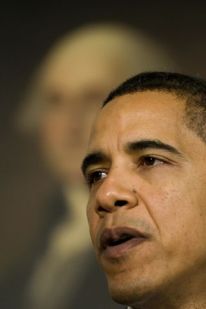 Washington, DC – 20 years of advocacy and struggle issued today in a powerful moment when President Barack Obama signed the Matthew Shepard and James Byrd, Jr. Hate Crimes Prevention Act into law. USA Today reported the comments of the President, both at the signing event, and at a later ceremony honoring the new law. “After more than a decade of opposition and delay, we’ve passed inclusive hate crimes legislation to help protect our citizens from violence based on what they look like, who they love, how they pray or who they are,” Obama said as he signed the Act. Commenting later in the day, he said to supporters of the new law, “No one in America should ever be afraid to walk down the street holding the hand of the person they love.” He then cited statistics that in these past 10 years since the hate crime murder of Matthew Shepard, there have been more than 12,000 hate crimes based on sexual orientation. “We will never know how many incidents were never reported at all,” the President concluded. Social justice advocates from all over the nation hailed the moment, as well. The Human Rights Campaign, the nation’s largest LGBT rights advocacy organization, reported that representatives of the Shepard family and the Byrd family were present at the signing event with the President. Judy Shepard remarked, “We are incredibly grateful to Congress and the president for taking this step forward on behalf of hate crime victims and their families, especially given the continuing attacks on people simply for living their lives openly and honestly. But each of us can and must do much more to ensure true equality for all Americans.” Stella Byrd, mother of straight African American hate crime victim, James Byrd, Jr., for whom the Act was also named, followed Mrs. Shepard with her remarks, “We appreciate everyone who worked so hard on this bill. My son was taken at such an early age and we hope this law will help prevent other families from going through what we experienced. Even though we’re different colors and different sexual orientations or gender identities, God made us all and he loves us all.” According to other reports, Damien Skipper, brother of slain gay Floridian Ryan Keith Skipper, and Elke Kennedy, mother of Sean Kennedy, murdered gay hate crimes victim from Greenville, South Carolina were among other bereaved family members present at the events. HRC President Joe Solmonese made these observations to the press: “This law honors our lesbian, gay, bisexual and transgender brothers and sisters whose lives were cut short because of hate. Today’s signing of the first major piece of civil rights legislation to protect LGBT Americans represents a historic milestone in the inevitable march towards equality. Although this is a major step in fighting the scourge of hate violence, it is not the end of the road. As a community, we will continue to dedicate ourselves to changing not only laws but also hearts and minds. We know that hate crimes not only harm individuals, but they terrorize entire communities. After more than a decade of advocacy, local police and sheriffs’ departments now have the full resources of the Justice Department available to them.” Solmonese concluded, “We applaud President Obama for signing this bill into law and thank the leadership and our allies in the House and Senate. We also will always remember the tireless efforts of Senator Edward Kennedy on this issue. Senator Kennedy once said that this legislation sends ‘a message about freedom and equality that will resonate around the world.’ This marks the first time that we as a nation have explicitly protected the LGBT community in the law. And this law sends a loud message that perpetrators of hate violence against anyone will be brought to justice.”
Not only was this an historic moment in the history of human rights advocacy in the United States. The action of President Obama marks a significant milestone in the relatively short history of his administration. The enactment of the Matthew Shepard and James Byrd, Jr. Hate Crimes Prevention Act is the first major promise to the LGBT community that the President has kept. During his campaign for the presidency, Obama repeatedly made promises to LGBT people that he would expand, protect, and defend their rights. Many LGBT activists have been critical of the seeming slowness of the President and the Congress to keep faith with homosexual and transgender Americans, who voted in record numbers to support the Democratic ticket this past year. Many other important promises remain unfulfilled by the Obama administration: enactment of the Employment Non-Discrimination Act (ENDA), repeal of Don’t Ask, Don’t tell (DADT) which the Secretary of the Army suggests is now doable, and repeal of the Defense of Marriage Act (DOMA). The enactment of the Shepard/Byrd Act, however, is a powerful indication the President will make his promises good to some of his most loyal supporters, and the significance of this day should not be lost on his LGBT critics.
20 Years of Effort Led to the Matthew Shepard and James Byrd, Jr. Act of 2009

Matthew Shepard and James Byrd, Jr.
When President Obama signs the Matthew Shepard and James Byrd, Jr. Act of 2009 into law sometime next week, that moment will be the culmination of two decades of tireless work at the federal level to protect Lesbian, Gay, Bisexual and Transgender people from violent, bias-motivated crimes. The term “hate crime” did not enter the American lexicon until the 1980s, though crimes of violence against minorities that caused whole groups to live in fear. First introduced in 1989, Congress passed the Hate Crime Statistics Act (HCSA) of 1990 which mandated the that U.S. Department of Justice collect statistics on crimes that “manifest prejudice based on race, religion, sexual orientation, or ethnicity” from law enforcement agencies across the country and to publish an annual summary of the findings. In the Violent Crime Control and Law Enforcement Act of 1994, Congress expanded coverage of the HCSA to require FBI reporting on crimes based on “disability.” Pursuant to the passage of the HCSA of 1990 and at the request of the Attorney General of the United States, the FBI first gathered and published this data in 1992, and has done so every year since. The collection and publication of data supporting the claims of the LGBT community, that they were indeed being targeted by terror-attacks, set the stage for all subsequent federal legislation relating to the protection of people who were being physically harmed because of actual or perceived sexual orientation. Transgender persons have been left out of any data gathering done by the federal government right up until the present, as if there were no violent crimes perpetrated against this important population of gender non-conformists. The FBI Sexual Orientation Hate Crimes Statistics for 2007, published in October 2008, recorded 1,512 persons or 11% of the total of the 9,535 persons victimized in physical attacks classified as hate crimes. This number of individual victims was the third highest of all victims of hate crimes, after race and religion bias crimes. Further, the 2007 figures show that two and a half times more Lesbians, Gay men, and Bisexual persons were victimized by murder or non-negligent manslaughter than any other group on whom the FBI kept statistics that year. Though flawed and under-counted according to the National Coalition of Anti-Violence Programs, the incidence of violent crime against the LGBT community recorded by the FBI established something of the magnitude of the national crisis brought on by homophobia and heterosexism. In 1993, the Hate Crimes Sentencing Enhancement Act was enacted into law, allowing judges to impose harsher penalties for hate crimes, including hate crimes based on gender, disability and sexual orientation that occur in national parks and on other federal property. According to the Human Rights Campaign, the Hate Crimes Prevention Act, predecessor of the Matthew Shepard Act, was first introduced in the 105th Congress. At that time, 1997-1999, both houses of the federal legislature had Republican majorities. Successive attempts to pass federal hate crimes legislation covering LGBT people were frustrated until the 111th Congress. First named the Local Law Enforcement Enhancement Act, then the Matthew Shepard Hate Crimes Prevention Act, and finally the Matthew Shepard and James Byrd, Jr. Hate Crimes Prevention Act (in memory of Shepard, a gay 21-year-old student murdered in Wyoming and Byrd, a 49-year-old African American dragged to death in Texas), the legislation moved steadily through Houses of Congress. The vote in the United States Senate on October 22, 2009 was the “14th and final time” this legislation faced a vote on the floor in either the House or the Senate.
Senate Acts on Matthew Shepard Act: Bill Goes to Obama’s Desk
 Washington, DC – In a historic vote Thursday, the United States Senate voted 68-29 to approve the Matthew Shepard Act, broadening federal protection from hate crimes to LGBT people. The Shepard Act, which had already passed in the United States House of Representatives two weeks ago by a similarly wide margin, was approved by the upper house as a part of a mammoth Defense Appropriations Bill. President Obama has repeatedly signaled that he favored extending hate crimes protections to LGBT people, and is expected to sign the bill as early as next week. Senator Patrick Leahy, (D) Vermont, a sponsor of the bill, said to the New York Times “Hate crimes instill fear in those who have no connection to the victim other than a shared characteristic such as race or sexual orientation. For nearly 150 years, we have responded as a nation to deter and to punish violent denials of civil rights by enacting federal laws to protect the civil rights of all of our citizens.” Leahy also noted how appropriate a tribute the passage of the Shepard Act is to the late Senator Edward M. Kennedy, who championed the cause of equality for LGBT Americans for many years. Ten Republicans voted with the Democratic majority for the passage of this historic legislation. The lone Democratic Senator to vote against passage was Russ Feingold, (D) Wisconsin, who favored the Shepard Act, but opposed the increased funding of the military action in Afghanistan. The Shepard Act commits $5 million annually to the Justice Department to assist local communities in investigating hate crimes, and it allows the agency to assist in investigations and prosecutions if local agencies request help. It also permits the Justice Department to carry out hate crimes investigations in localities where law enforcement neglects or stymies such action for prejudicial reasons. Judy Shepard, the mother of Matthew Shepard, the 21-year-old University of Wyoming student for whom the Act was named, has been a tireless advocate for the passage of hate crimes protections for LGBT people since Matthew was slain by two young men in Laramie in 1998. Speaking to the press, she said, “Dennis and I are extremely proud of the Senate for once again passing this historic measure of protection for victims of these brutal crimes. Knowing that the president will sign it, unlike his predecessor, has made all the hard work this year to pass it worthwhile. Hate crimes continue to affect far too many Americans who are simply trying to live their lives honestly, and they need to know that their government will protect them from violence, and provide appropriate justice for victims and their families.” All eyes now turn to President Obama for his signature that will enact the Matthew Shepard Act into law, the most significant lift to the LGBT community in the United States in forty years.
For Courageous Mothers of LGBT Murder Victims, There is No Closure

Pat and Lynn Mulder at USF, Stephen Coddington photo for the Times
Families of LGBT hate crimes murder victims are on the front lines of grief and loss when a homophobic attack takes the life of someone they love. This is especially true of their mothers. That powerful truth was driven home for me again by learning of Pat and Lynn Mulder’s courageous appearance at the Hate Crimes Awareness Summit held this week at the University of South Florida. Pat shared the story of how her beloved son, Ryan Keith Skipper, lived and died at the hands of brutal, anti-gay attackers in rural Polk County Florida on March 14, 2007. The popular 25-year-old Skipper was stabbed over 19 times, and left to bleed out on a lonely dirt road in Wahneta, a rural town in the Winter Haven region. One of his murderers, Joseph “Smiley” Bearden has been sentenced to life without parole earlier this year, and a second alleged killer, William D. “Bill Bill” Brown is to stand trial on October 12. Reporting on the Summit, Alexandra Zayas of the St. Petersburg Times, relates how Pat had to overcome her reluctance and nervousness about speaking in front of crowds about the worst tragedy in her family’s history. “The worst thing in the world that can happen to you has already happened. There’s nothing else to be afraid of.” Speaking with passion and the conviction that no family should ever have to endure what hers has, Pat and her husband Lynn have tirelessly reached out to others bereaved by unreasoning hatred. Barely a year after her son’s murder, Pat traveled to Fort Lauderdale to see Denise King, mother of African American youth Simmie Williams, Jr., who was shot for being transgender by attackers who have not yet been identified or apprehended. At at town hall meeting dedicated to the memory of 17-year-old Williams, Pat introduced herself to Mrs. King as Ryan’s mother, and enfolded her in an embrace that King later said was deeply meaningful to her. Speaking to the Times about that moment, Pat said, “It’s beyond being women. It’s beyond being different races, different backgrounds. It has nothing to do with that. It’s the hearts of two mothers,” Pat said. “For a moment, there’s someone who’s helping you hold up your pain.” The real unsung heroes of the effort to win passage of the Matthew Shepard Hate Crimes Prevention Act are women like Pat Mulder and Denise King who became “accidental activists” for the sake of their children who died so senselessly. Elke Kennedy, mother of Greenville, SC victim, Sean William Kennedy, Pauline Mitchell, mother of Navajo two-spirit son, F.C. Martinez, Jr. of Cortez, CO, Pat Kuteles, mother of U.S. Army Pvt. Barry Winchell, murdered at Fort Campbell, KY, Kathy Jo Gaither, sister of Sylacauga, AL victim Bill Joe Gaither, and, certainly, Judy Shepard of Casper, WY who is currently touring the nation to promote passage of the LGBT hate crimes bill named for her son Matthew, are but a few outstanding examples of women whose love overcame untold obstacles to add their voices to the chorus of Americans, gay and straight, who want anti-queer violence to come to an end forever. These courageous women and many other family members around the nation have become the most effective spokespersons for human rights because of their unsought-for mission to stamp out hate from the American vocabulary for all people, especially LGBTQ folk who are so much at risk. How do mothers do it? Pat Mulder says that for parents of gay murder victims, there is no closure, only the determination to turn up the volume on what hate crimes do to families.

~ Stephen Sprinkle for the Unfinished Lives Project
New Book Announcement: “The Meaning of Matthew” by Judy Shepard
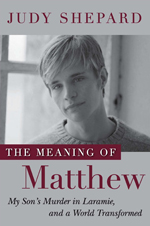 The Matthew Shepard Foundation, http://www.matthewshepard.org, announces the publication of a new book on Matthew Shepard authored by his mother, Judy Shepard: The Meaning of Matthew: My Son’s Murder in Laramie, and a World Transformed. From the book announcement letter:
“Today, the name Matthew Shepard is synonymous with gay rights, but before his grisly murder in 1998, Matthew was simply Judy Shepard’s son. For the first time in book form, Judy Shepard speaks about her loss, sharing memories of Matthew, their life as a typical American family, and the pivotal event in the small college town that changed everything.
“The Meaning of Matthew follows the Shepard family in the days immediately after the crime, when Judy and her husband traveled to see their incapacitated son, kept alive by life support machines; how the Shepards learned of the incredible response from strangers all across America who held candlelit vigils and memorial services for their child; and finally, how they struggled to navigate the legal system as Matthew’s murderers were on trial. Heart-wrenchingly honest, Judy Shepard confides with readers about how she handled the crippling loss of her child, why she became a gay rights activist, and the challenges and rewards of raising a gay child in America today.
“The Meaning of Matthew not only captures the historical significance and complicated civil rights issues surrounding one young man’s life and death, but it also chronicles one ordinary woman’s struggle to cope with the unthinkable.”
All proceeds from the sale of the book will go to support the work of the Matthew Shepard Foundation. This is a landmark book not to be missed by supporters of the Unfinished Lives Project.
About

If you are a first-time visitor to the Unfinished Lives Project website, we invite you to read A Welcome Message introducing you to our project. We are truly grateful for your visit.
The Unfinished Lives Project website is a place of public discourse which remembers and honors LGBTQ hate crime victims, while also revealing the reality of unseen violence perpetrated against people whose only “offense” is their sexual orientation, gender identity, or gender presentation. LGBTQ people in the United States are suffering a slow-rolling decimation of terror and murder all across the country. Every locale and demographic of society are affected: First Nations, Anglo, Black, Latino and Latina, South and Southeast Asian, Transgender, Bisexuals, Gay men, Lesbians, disabled, young, and mature. Homophobia has a long, crooked arm, and it is reaching out to snatch the life away from women and men whose tragic stories are under-reported to begin with, and whose memories are swiftly forgotten.
The horror of these killings transcends the shock and bereavement of loved ones and friends. These are not typical homicides; they are not killings for money or drugs, incidents of domestic strife, or crimes of passion. The vicious nature of hate crimes against LGBTQ persons is extremely brutal, grotesquely violent, and egregiously hateful.
Each murder serves the LGBTQ population as a sobering warning about the actual level of danger in our communities. The message these killings send is that freedom and open life for LGBTQ people is a cruel dream. Every time we remember one of these victims, however, the intentions of their killers are frustrated. To remember these women and men is to begin the process of changing the culture that killed them.
Our Project Director
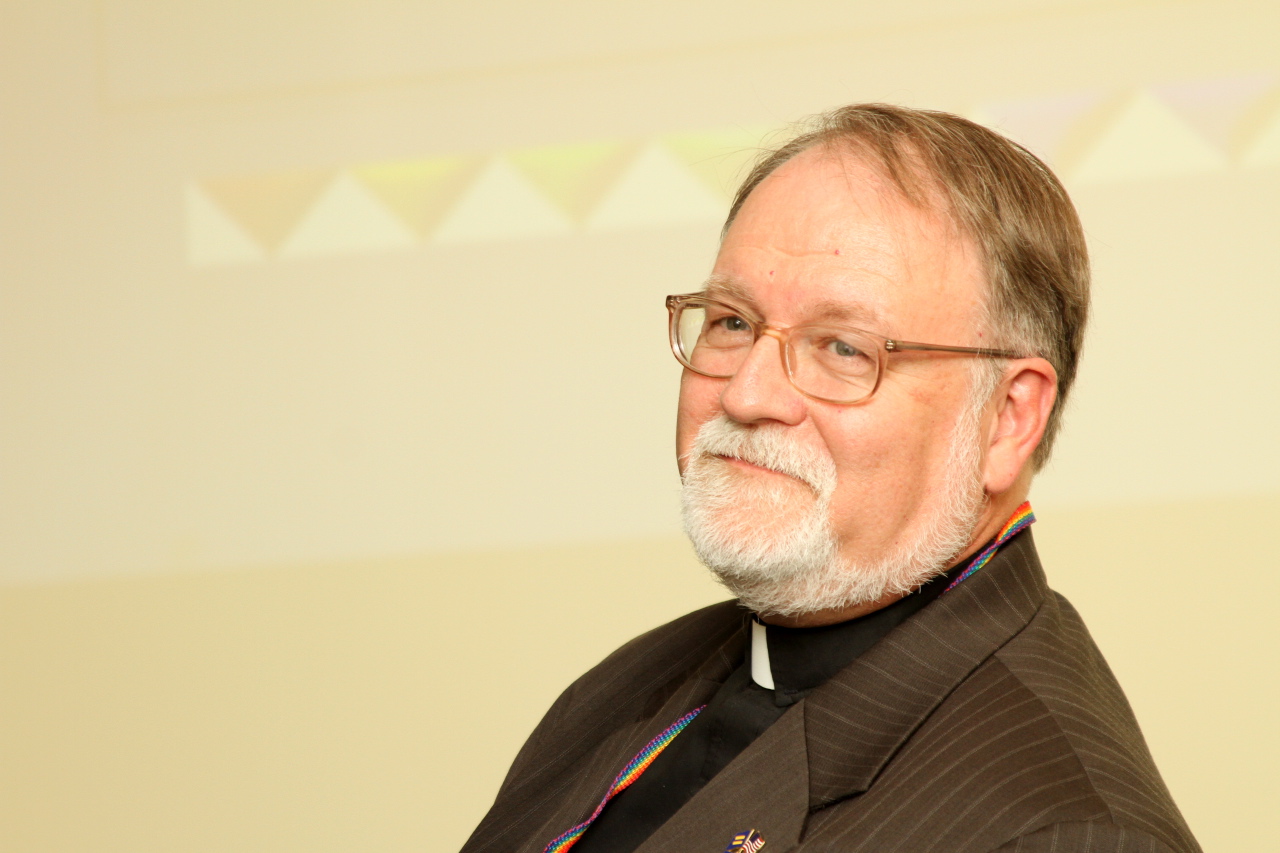
Dr. Stephen V. Sprinkle (Keith Tew photo).
Stephen V. Sprinkle is Director of Field Education and Supervised Ministry, and Professor of Practical Theology at Brite Divinity School, Fort Worth, Texas, a post he has held since 1994. An ordained Baptist minister, he is the first open and out Gay scholar in the history of the Divinity School, and the first open and out LGBTQ person to be tenured there. Read More…
Recent Social Justice Advocacy Activity By Dr. Sprinkle
 Summer 2009 – Dr. Sprinkle responded to the Fort Worth Police Department and Texas Alcoholic Beverage Commission Raid on the Rainbow Lounge, Fort Worth’s newest gay bar, on June 28, 2009, the exact 40th Anniversary of the Stonewall Rebellion. Dr. Sprinkle was invited to speak at three protest events sponsored by Queer LiberAction of Dallas. Here, he is keynoting the Rainbow Lounge Protest at the Tarrant County Courthouse on July 12, 2009. Read More…
Contact Us
Communicate with the Unfinished Lives project team:
info@unfinishedlivesblog.com


Schedule a Presentation
Dr. Sprinkle will gladly present his acclaimed presentation to your organization. To arrange an Unfinished Lives presentation for your organization or group, please contact us.
Dr. Sprinkle has given his Unfinished Lives presentation to these and other community groups and organizations. Read More…
-

Where are our readers?
Publisher: Steve Sprinkle (Project Director)
Steve Sprinkle
Unfinished Lives: Remembering LGBT Hate Crime VictimsBrite Divinity School/Texas Christian UniversityFort Worth TXprofessor, minister, author, blogger, LGBTQ advocate


Follow Unfinished Lives on Facebook
 Box Turtle Bulletin
- An error has occurred; the feed is probably down. Try again later.
- HRC Back Story
- Know About The Gender Identity Movement
- Why Is There A Need For Human Rights?
- Kinds Of Human Rights
- Human Rights Purposes And Violations
- Human Rights For Every Human Incident
- 8 Reasons Human Rights Are Important
- Everything About Human Rights
- Human Rights Issues Education & Law
- We Need To Stand Up For Our Rights And Those Of Others
- Coca-Cola Receives Perfect Score On Human Rights
- The Advocate: Daily News
- Remorseless Seattle man sentenced in hate crime beating of trans woman
- State Department visa rule sets stage for ICE scrutiny of transgender immigrants
- About four in ten Americans still view homosexuality as immoral, survey finds
- Donald Trump attacks trans women in Women’s History Month proclamation
- Ric Grenell to step down as Kennedy Center president after controversial tenure
- Los Angeles Marathon nonbinary champion receives no prize money
- The rainbow Pride pin James Talarico encouraged me to wear
- Gay asylum seeker files claim for damages over Trump deportations to CECOT torture prison
- Breaking newsletter: NYC office 3/13/26
- Iowa bans cities and towns from protecting transgender citizens’ civil rights
- Dallas Voice: Instant Tea
- An error has occurred; the feed is probably down. Try again later.

 Unfinished Lives
Remembering Matthew Shepard on the 12th Anniversary of His Murder
~ Stephen V. Sprinkle, Director of the Unfinished Lives Project
Share this:
October 12, 2010 Posted by unfinishedlives | anti-LGBT hate crime murder, Bisexual persons, Bullying in schools, Colorado, gay men, gay teens, Gender Variant Youth, harassment, Hate Crimes, hate crimes prevention, Heterosexism and homophobia, Law and Order, Legislation, Lesbian women, LGBT teen suicide prevention, LGBTQ suicide, Matthew Shepard, Matthew Shepard Act, Matthew Shepard Foundation, Media Issues, Remembrances, Sakia Gunn Film Project, Social Justice Advocacy, Special Comments, transgender persons, transphobia, Wyoming | anti-LGBT hate crime murder, Bisexual persons, Bullying in schools, Colorado, gay men, gay teens, Gender Variant Youth, harassment, Hate Crimes, hate crimes legislation, Law and Order, Lesbians, LGBTQ suicide, LGBTQ suicide prevention, LGBTQ teen suicide, Matthew Shepard, Matthew Shepard Act, Matthew Shepard Foundation, Media Issues, Remembrances, Sakia Gunn Film Project, Social Justice Advocacy, transgender persons, transphobia, Wyoming | 1 Comment