20 Years of Effort Led to the Matthew Shepard and James Byrd, Jr. Act of 2009

Matthew Shepard and James Byrd, Jr.
When President Obama signs the Matthew Shepard and James Byrd, Jr. Act of 2009 into law sometime next week, that moment will be the culmination of two decades of tireless work at the federal level to protect Lesbian, Gay, Bisexual and Transgender people from violent, bias-motivated crimes. The term “hate crime” did not enter the American lexicon until the 1980s, though crimes of violence against minorities that caused whole groups to live in fear. First introduced in 1989, Congress passed the Hate Crime Statistics Act (HCSA) of 1990 which mandated the that U.S. Department of Justice collect statistics on crimes that “manifest prejudice based on race, religion, sexual orientation, or ethnicity” from law enforcement agencies across the country and to publish an annual summary of the findings. In the Violent Crime Control and Law Enforcement Act of 1994, Congress expanded coverage of the HCSA to require FBI reporting on crimes based on “disability.” Pursuant to the passage of the HCSA of 1990 and at the request of the Attorney General of the United States, the FBI first gathered and published this data in 1992, and has done so every year since. The collection and publication of data supporting the claims of the LGBT community, that they were indeed being targeted by terror-attacks, set the stage for all subsequent federal legislation relating to the protection of people who were being physically harmed because of actual or perceived sexual orientation. Transgender persons have been left out of any data gathering done by the federal government right up until the present, as if there were no violent crimes perpetrated against this important population of gender non-conformists. The FBI Sexual Orientation Hate Crimes Statistics for 2007, published in October 2008, recorded 1,512 persons or 11% of the total of the 9,535 persons victimized in physical attacks classified as hate crimes. This number of individual victims was the third highest of all victims of hate crimes, after race and religion bias crimes. Further, the 2007 figures show that two and a half times more Lesbians, Gay men, and Bisexual persons were victimized by murder or non-negligent manslaughter than any other group on whom the FBI kept statistics that year. Though flawed and under-counted according to the National Coalition of Anti-Violence Programs, the incidence of violent crime against the LGBT community recorded by the FBI established something of the magnitude of the national crisis brought on by homophobia and heterosexism. In 1993, the Hate Crimes Sentencing Enhancement Act was enacted into law, allowing judges to impose harsher penalties for hate crimes, including hate crimes based on gender, disability and sexual orientation that occur in national parks and on other federal property. According to the Human Rights Campaign, the Hate Crimes Prevention Act, predecessor of the Matthew Shepard Act, was first introduced in the 105th Congress. At that time, 1997-1999, both houses of the federal legislature had Republican majorities. Successive attempts to pass federal hate crimes legislation covering LGBT people were frustrated until the 111th Congress. First named the Local Law Enforcement Enhancement Act, then the Matthew Shepard Hate Crimes Prevention Act, and finally the Matthew Shepard and James Byrd, Jr. Hate Crimes Prevention Act (in memory of Shepard, a gay 21-year-old student murdered in Wyoming and Byrd, a 49-year-old African American dragged to death in Texas), the legislation moved steadily through Houses of Congress. The vote in the United States Senate on October 22, 2009 was the “14th and final time” this legislation faced a vote on the floor in either the House or the Senate.
See How Your Senators Voted on the Matthew Shepard Act
Visit http://www.govtrack.us/congress/vote.xpd?vote=s2009-327 for more information.

Standard projection from GovTrack
Vicious Queens, NY Attack Highlights Need for a Federal Hate Crimes Law
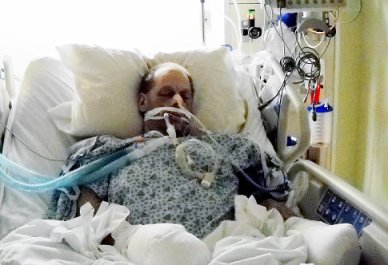
Jack Price speaks from his hospital bed (NY Daily News photo).
Queens, NY – Two attackers beat a 49-year-old gay man within an inch of his life in the early morning hours of Friday October 8 near a 24-hour delicatessen where he had stopped to buy a pack of cigarettes. Jack Price, described by friends as a likable man who went out of his way to help members of the community, was assaulted in the middle of the street in full view of the deli’s surveillance camera. Two neighborhood men who allegedly carried out what authorities are calling a hate crime attack, Daniel Rodriguez, 21, and Daniel Aleman, 26, were identified by investigators from a close review of the surveillance video, punching, stomping, kicking, and slapping the victim. Aleman was taken into custody and arraigned on October 11, and Rodriguez, who fled the state, was arrested in Norfolk, VA on October 13. Both men are charged with felony hate crime assault. The victim, who fought for his life in ICU at New York Queens Hospital, suffered a broken jaw, fractured ribs, a lacerated spleen and a collapsed lung in the beating. He recovered enough to describe the crime scenario to reporters for the New York Daily News from his hospital bed. As he was on his way home, Price said, he saw Rodriguez and Aleman, both of whom he recognized from the College Point Queens neighborhood, approaching him. In Spanish, the two men called Price “a stupid f_____” and “a dumb f_____,” not realizing that Price spoke Spanish and could understand them. Price stepped into the deli to buy cigarettes, thinking that his two assailants would leave, but they were waiting for him in the street when he came out of the shop, and reignited the confrontation. Price recalled that one of the men threatened him, “I know where you live, f_____.” The second man added, “You better run away before he kills you.” Then the physical attack commenced. Miraculously, he somehow survived the savage beating and managed to get home before losing consciousness. Though Price says he does not remember very much about the beating, he says that when he regained consciousness in the hospital, he was surprised and relieved to be alive. As for his alleged attackers, Price told the Daily News, “I hope they rot in jail…I don’t understand how someone can do this to somebody. They almost killed another human being.” City officials immediately decried the attack as an anti-gay hate crime, including City Council Speaker Christine Quinn, NY City Police Commissioner Raymond Kelly, and City Councilmember John Liu.
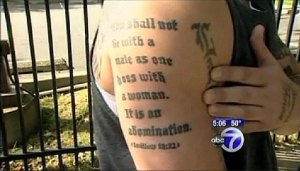
Leviticus 18:22 tattoo (News 7 photo).
They are calling for the full penalty appropriate to a hate crime assault to be applied to the attackers, if proven guilty. Hundreds of local citizens marched in protest of the attack, calling for an end to anti-LGBT violence in New York City on October 17. Supporters of Rodriguez and Aleman have mounted their own rally, denying that the “incident” was a bias-motivated crime, according to yournabe.com. Both the father and sister of Rodriguez have denied that he is anti-gay. One of Rodriguez’s chief supporters proudly sported a tattoo on his forearm bearing a quotation from the Hebrew Scriptures, Leviticus 18:22, “You shall not lie with a male as one does a woman. It is an abomination.” While the tattooed supporter denied that homophobia was a motivation in the assault, he said he has no problem with punishing gay people for their behavior.
Senate Acts on Matthew Shepard Act: Bill Goes to Obama’s Desk
 Washington, DC – In a historic vote Thursday, the United States Senate voted 68-29 to approve the Matthew Shepard Act, broadening federal protection from hate crimes to LGBT people. The Shepard Act, which had already passed in the United States House of Representatives two weeks ago by a similarly wide margin, was approved by the upper house as a part of a mammoth Defense Appropriations Bill. President Obama has repeatedly signaled that he favored extending hate crimes protections to LGBT people, and is expected to sign the bill as early as next week. Senator Patrick Leahy, (D) Vermont, a sponsor of the bill, said to the New York Times “Hate crimes instill fear in those who have no connection to the victim other than a shared characteristic such as race or sexual orientation. For nearly 150 years, we have responded as a nation to deter and to punish violent denials of civil rights by enacting federal laws to protect the civil rights of all of our citizens.” Leahy also noted how appropriate a tribute the passage of the Shepard Act is to the late Senator Edward M. Kennedy, who championed the cause of equality for LGBT Americans for many years. Ten Republicans voted with the Democratic majority for the passage of this historic legislation. The lone Democratic Senator to vote against passage was Russ Feingold, (D) Wisconsin, who favored the Shepard Act, but opposed the increased funding of the military action in Afghanistan. The Shepard Act commits $5 million annually to the Justice Department to assist local communities in investigating hate crimes, and it allows the agency to assist in investigations and prosecutions if local agencies request help. It also permits the Justice Department to carry out hate crimes investigations in localities where law enforcement neglects or stymies such action for prejudicial reasons. Judy Shepard, the mother of Matthew Shepard, the 21-year-old University of Wyoming student for whom the Act was named, has been a tireless advocate for the passage of hate crimes protections for LGBT people since Matthew was slain by two young men in Laramie in 1998. Speaking to the press, she said, “Dennis and I are extremely proud of the Senate for once again passing this historic measure of protection for victims of these brutal crimes. Knowing that the president will sign it, unlike his predecessor, has made all the hard work this year to pass it worthwhile. Hate crimes continue to affect far too many Americans who are simply trying to live their lives honestly, and they need to know that their government will protect them from violence, and provide appropriate justice for victims and their families.” All eyes now turn to President Obama for his signature that will enact the Matthew Shepard Act into law, the most significant lift to the LGBT community in the United States in forty years.
U.S. House Approves Matthew Shepard Act
 Washington, DC – In a vote that marks the first major expansion of protection under the law in 40 years, the House of Representatives voted to approve the Matthew Shepard Act on Thursday. The Shepard Act, attached as an amendment to a Defense Appropriations Bill, extends protection to LGBT people from bias-related physical violence. A similar provision faced the threat of a veto from President Bush in a recent Congress, even though it passed the House by a comfortable majority. This time around, President Obama has signaled his eagerness to sign the Shepard Amendment into law, as soon as it receives a favorable vote in the U.S. Senate. That vote is expect soon. Protections from hate violence for LGBT Americans have been opposed by congressional Republicans and their allies, usually on the pretext that the addition of the Shepard Act to a defense bill is inappropriate “social engineering,” a “poison pill,” and that the provisions of the Act would serve as a sort of Trojan Horse, making LGBT behaviors “normative.” Some religious critics have argued that the Shepard Act would gag ministers and priests who oppose homosexuality on moral or doctrinal grounds, abrogating their First Amendment right to freedom of speech and to the free exercise of religion, making vocal opposition to LGBT behaviors criminal. Proponents of the legislation counter that the language of the Shepard Act has been carefully crafted to criminalize only acts of physical violence, leaving all First Amendment rights fully intact. The Los Angeles Times reported Thursday that House Speaker Nancy Pelosi (D-California) and openly gay Congressman Jared Polis (D-Colorado) hailed the passage of the Act in the House. Pelosi said, “It’s a very exciting day for us here in the Capitol,” noting that attempts to pass such a law had gone on for her 22-year tenure in the House of Representatives. Polis argued that critics of the Shepard Act seem not to understand the impact of anti-LGBT hate violence beyond the individual victims. “What makes these crimes so bad is they are not just crimes against individuals; they are crimes against entire communities,” he said during the debate on the defense bill. The measure passed the House by a vote of 281 to 146. 237 Democrats and 44 Republicans voted in the affirmative. 131 Republicans and 15 Democrats opposed the bill. “We are closer than ever before to protecting Americans from hate violence thanks to today’s action by the House,” said Joe Solmonese, head of the Washington, D.C.-based LGBT advocacy group, the Human Rights Campaign. “The day is within sight when lesbian, gay, bisexual and transgender people will benefit from updating our nation’s hate crimes laws.”
Anti-Transgender Violence Hot Topic for LGBT Community
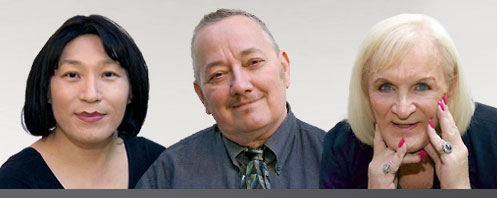 New York City – The Associate Press reports that a major anti-transgender violence forum slated for October 7 will address the rising incidence of attacks against transgender New Yorkers. Brooklyn Law School is hosting the forum,which will be attended by the family of Lateisha Green, transwoman of color, who was murdered in Syracuse last year. Her convicted killer, Dwight DeLee, was convicted of manslaughter in her shooting death three months ago. The conviction was the first under New York State’s hate crimes law, sending a message to perpetrators of violence against transgender people that transphobic attacks will no longer be tolerated in the Empire State. The Transgender Legal Defense and Education Fund, organizers of the Brooklyn forum, point out that transgender people face increasing degrees of “pervasive discrimination, harassment and violence.” Statistics gathered by transgender advocacy groups note that 12% of all violent attacks against LGBT people in 2008 were perpetrated against transgender people. As Joseph Erbentraut, Great Lakes Regional Editor for EDGE reported earlier this week, Lesbians, Gay Men, and Bisexuals are complicit in these crimes of violence because of prejudices they hold against gender non-conforming people. Activists agree that lesbians, gay men, and bisexuals are hardly immune from the prejudice vented against transpeople by the society. Each group too easily absolutizes the gender presentation they are familiar and comfortable with. Jokes and slurs aimed by LGB people against transgender people, calling them “trannies” or “drag queens” differ little from the epithets cast at them by straight haters. While actual instances of anti-trans violence by LGB people are rare, the bias is symptomatic of a tragic lack of awareness that all prejudice against members of the sexual minority is interconnected. The Lateisha Green case, however, is a source of hope in New York. While the conviction of DeLee was based on anti-gay epithets he used while murdering Green rather than transphobic ones, the severity of the first-degree manslaughter sentence woke the Empire State legal community up, and began a movement to add transphobic language to the hate crimes penal code as well as homophobic speech. The precedent-setting case sends a message that attacks against transgender New Yorkers will no longer be tolerated. Erbentraut reports that all sources he contacted agreed that the most effective way to blunt anti-transgender violence would be the swift passage of comprehensive hate crimes protections and employment security legislation at the federal level, such as the Matthew Shepard Act, now in the House-Senate conference process, and the recently introduced Employment Non-Discrimination Act.
Protecting Wretches: Why Freedom of Speech Belongs to Fred Phelps, Too
 Richmond, VA – The 4th U.S. Circuit Court of Appeals threw out a $5 million verdict Thursday against protesters from Fred Phelps’ Westboro Baptist Church who picketed the Maryland funeral of a U.S. Marine who was killed in Iraq with signs bearing messages like “Thank God for IED’s,” and “Priests Rape Boys.” Surely the most offensive sign carried by the protesters at the funeral of Marine Lance Corporal Matthew Snyder of Westminster, MD, was “Thank God for Dead Soldiers.” A Baltimore jury had awarded Snyder’s father $5 million in damages from the Topeka, Kansas-based church for the emotional stress and invasion of privacy visited on the family by the protestors. The three-judge panel of the court of appeals ruled that the language employed by Phelps’ church members, equating the death of Lance Corporal Snyder with God’s judgement against the United States for laxity on homosexuality was “imaginative and hyperbolic rhetoric” that was protected by the First Amendment as freedom of speech. The messages the church group issued were meant to ignite debate and could not be understood as personally pertaining to the deceased, reasoned the court. Supporters of the family decried the decision, and predictably, the Phelps Clan at Westboro Baptist Church applauded it. Sean E. Summers, attorney for Mr. Snyder, vowed to appeal the decision to the U.S. Supreme Court. Shirley Phelps-Roper, daughter of Fred Phelps, welcomed the ruling. Speaking to the Associated Press, Phelps-Roper, who was one of the protestors named in the lawsuit, said, “They had no case but they were hoping the appellate court would not do their duty to follow the rule of law and the appellate court would not do that. They didn’t change God and they didn’t stop us. What they managed to do was give us a huge door, a global door of utterance. Our doctrine is all over the world because of what they did.” The Supreme Court will or will not hear the appeal the Snyder family says it will bring them, as the high court pleases. But the guarantee of freedom of speech belongs to wretches as well as the righteous, and as hard as it is to admit its protections for grave errors in judgment, taste, good order, and belief, such protection ensures that truth remains free to combat error in the marketplace of ideas, morals, and customs. As bitter as it sounds, the court of appeals decision was correct, both for the country, and for LGBT people and their supporters, in the end. No outfit in America has said more inflammatory things about LGBT people than Phelps and his church, comprised of mostly family members. The 1998 protest of Matthew Shepard’s funeral in Casper, WY, declaring that “Matt is in Hell!” and that when “Fags Die, God Laughs” is one of the more notorious examples of how wretched hate speech can be in the case of victims of anti-LGBT prejudice. Finding that their virulent anti-gay rhetoric was losing its public shock value, Phelps’ hate mongers moved on to besmirching the memories of American military servicemembers who had died in Iraq and Afghanistan. Phelps has not won at every turn. A public monument proclaiming Matthew Shepard’s damnation, to be put in a Kansas municipal park, was blocked by city officials. In the end, the defeat of anti-LGBT hate speech is the responsibility of everyone, gay and straight, who know that the Phelps message is morally, spiritually, and patriotically bankrupt. In Pompeii, buried by volcanic ash in CE 79, graffiti scrawled on a wall proclaims, “Samius to Cornelius: go hang yourself!” It is all but forgotten, as are Samius and Cornelius, and so will Phelps’ baseless rantings, as LGBT people and their allies continue to show themselves to be greater in character than their adversaries. Hate speech does incite some people to violence against queer folk. Too many cases exist of hateful, religious rhetoric being used to justify torture and murder of LGBT victims to ignore how wretches use God’s warrant to harm others. Any case of bias-generated violence against LGBT people must be prosecuted swiftly to the full extent of the law, and passage of the Matthew Shepard Act is necessary so that these prosecutions may be pursued vigorously and successfully. But freedom of speech means more to truth than it does to error. At every turn, LGBT folk and their allies may and must immediately and non-violently refute the falsehoods of bad religion so that justice may win out in American life, so that the better angels of the American spirit may rouse themselves to make protests like these seem as petty as scrawlings on an outhouse wall.
For Courageous Mothers of LGBT Murder Victims, There is No Closure

Pat and Lynn Mulder at USF, Stephen Coddington photo for the Times
Families of LGBT hate crimes murder victims are on the front lines of grief and loss when a homophobic attack takes the life of someone they love. This is especially true of their mothers. That powerful truth was driven home for me again by learning of Pat and Lynn Mulder’s courageous appearance at the Hate Crimes Awareness Summit held this week at the University of South Florida. Pat shared the story of how her beloved son, Ryan Keith Skipper, lived and died at the hands of brutal, anti-gay attackers in rural Polk County Florida on March 14, 2007. The popular 25-year-old Skipper was stabbed over 19 times, and left to bleed out on a lonely dirt road in Wahneta, a rural town in the Winter Haven region. One of his murderers, Joseph “Smiley” Bearden has been sentenced to life without parole earlier this year, and a second alleged killer, William D. “Bill Bill” Brown is to stand trial on October 12. Reporting on the Summit, Alexandra Zayas of the St. Petersburg Times, relates how Pat had to overcome her reluctance and nervousness about speaking in front of crowds about the worst tragedy in her family’s history. “The worst thing in the world that can happen to you has already happened. There’s nothing else to be afraid of.” Speaking with passion and the conviction that no family should ever have to endure what hers has, Pat and her husband Lynn have tirelessly reached out to others bereaved by unreasoning hatred. Barely a year after her son’s murder, Pat traveled to Fort Lauderdale to see Denise King, mother of African American youth Simmie Williams, Jr., who was shot for being transgender by attackers who have not yet been identified or apprehended. At at town hall meeting dedicated to the memory of 17-year-old Williams, Pat introduced herself to Mrs. King as Ryan’s mother, and enfolded her in an embrace that King later said was deeply meaningful to her. Speaking to the Times about that moment, Pat said, “It’s beyond being women. It’s beyond being different races, different backgrounds. It has nothing to do with that. It’s the hearts of two mothers,” Pat said. “For a moment, there’s someone who’s helping you hold up your pain.” The real unsung heroes of the effort to win passage of the Matthew Shepard Hate Crimes Prevention Act are women like Pat Mulder and Denise King who became “accidental activists” for the sake of their children who died so senselessly. Elke Kennedy, mother of Greenville, SC victim, Sean William Kennedy, Pauline Mitchell, mother of Navajo two-spirit son, F.C. Martinez, Jr. of Cortez, CO, Pat Kuteles, mother of U.S. Army Pvt. Barry Winchell, murdered at Fort Campbell, KY, Kathy Jo Gaither, sister of Sylacauga, AL victim Bill Joe Gaither, and, certainly, Judy Shepard of Casper, WY who is currently touring the nation to promote passage of the LGBT hate crimes bill named for her son Matthew, are but a few outstanding examples of women whose love overcame untold obstacles to add their voices to the chorus of Americans, gay and straight, who want anti-queer violence to come to an end forever. These courageous women and many other family members around the nation have become the most effective spokespersons for human rights because of their unsought-for mission to stamp out hate from the American vocabulary for all people, especially LGBTQ folk who are so much at risk. How do mothers do it? Pat Mulder says that for parents of gay murder victims, there is no closure, only the determination to turn up the volume on what hate crimes do to families.

~ Stephen Sprinkle for the Unfinished Lives Project
Justice for Jimmy Lee Dean: Both Attackers Now Sentenced
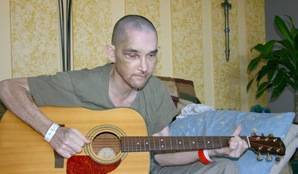
Jimmy Lee Dean, Victim of Brutal Attack
Dallas, TX – The second man who nearly beat Jimmy Lee Dean to death in July 2008 has been sentenced to 75 years in prison. Bobby Jack Singleton, 30, faced his fate August 27 in Dallas County’s 194th District Court. The co-defendant in the case, Jonathan Russell Gunter, 33, received a 30-year sentence for the crime in March of this year. The Singleton sentence means that the jury understood the severity of the crime against Mr. Dean, who has been permanently disfigured and lost his entire sense of smell due to the attack. The earliest Singleton can be paroled is 37 1/2 years under Texas law. There is no penalty attached to an LGBT hate crime in Texas, though the Dallas Police who investigated the attack, which occurred just a block off the major LGBT entertainment strip in the city, treated the crime as anti-gay from the beginning. Had the Matthew Shepard Act been law at the time of the case, there would have been another recourse for law enforcement to take. Dean said that he was satisfied by the sentence. Testimony in the trial revealed that the co-defendants had drunk five pitchers of beer at a North Dallas bar before getting up the courage to travel to the Oaklawn/Cedar Springs area to rob gay people because the perpetrators were “low on cash” and believed gay men could be more easily robbed. Gunter took a gun with him and brandished it at Dean, a 17-year resident of the Oaklawn neighborhood, on a darkened section of Dickason Street. Singleton, however, did most of the severe damage to Dean as he lay unconscious on the sidewalk,
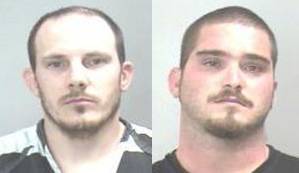
Gunter (l), Singleton (r)
kneeing him, kicking him, and stomping on his face with his boots while yelling anti-gay slurs at his helpless victim. The jury heard taped phone conversations between Singleton and his half-sister while he was in jail awaiting trial, in which he laughed about Dean’s nose hanging on by a flap of skin, and claimed that he was going to pretend he was gay so that the punishment might be lighter on him. “All I got to do is fill out one of them homosexual cards and prove that I’m a faggot, too,” he said. He went on to his half-sister that if he were sentenced to prison, he could just tell the corrections officers that he was “not really a fucking faggot” so that he could skip being housed in protective custody. Dean said to Dallas Voice reporter John Wright, “This [sentence] sets a precedent for anything like this that happens. He also said that no one should be a target of violence for any reason, including one’s sexual orientation. What now remains to be done is support for Mr. Dean in the months and years that follow this trial. LGBT presence at both the Gunter trial and the Singleton trial was sparse. Dean and his longtime roommate, Thomas Bergh, are contemplating moving to Oklahoma, away from the scene of the attack. Dean told reporters that when he walks along Dickason Street these days, he has to walk down the middle of the street, and not on the sidewalk where the two Garland, TX men nearly killed him. Like so many victims before him, Dean will live with the nightmares and the physical consequences of the attack for the rest of his life. It is not enough for the LGBT community to shrug shoulders now that that last trial has been held, and assume Dean can just go from this point vindicated. Dallas has to face its hate-crime problems, as the Dean case, and the Richard Hernandez case have both shown in recent months. One way to do that is to get support for Jimmy Lee right from here on out.
About
If you are a first-time visitor to the Unfinished Lives Project website, we invite you to read A Welcome Message introducing you to our project. We are truly grateful for your visit.
The Unfinished Lives Project website is a place of public discourse which remembers and honors LGBTQ hate crime victims, while also revealing the reality of unseen violence perpetrated against people whose only “offense” is their sexual orientation, gender identity, or gender presentation. LGBTQ people in the United States are suffering a slow-rolling decimation of terror and murder all across the country. Every locale and demographic of society are affected: First Nations, Anglo, Black, Latino and Latina, South and Southeast Asian, Transgender, Bisexuals, Gay men, Lesbians, disabled, young, and mature. Homophobia has a long, crooked arm, and it is reaching out to snatch the life away from women and men whose tragic stories are under-reported to begin with, and whose memories are swiftly forgotten.
The horror of these killings transcends the shock and bereavement of loved ones and friends. These are not typical homicides; they are not killings for money or drugs, incidents of domestic strife, or crimes of passion. The vicious nature of hate crimes against LGBTQ persons is extremely brutal, grotesquely violent, and egregiously hateful.
Each murder serves the LGBTQ population as a sobering warning about the actual level of danger in our communities. The message these killings send is that freedom and open life for LGBTQ people is a cruel dream. Every time we remember one of these victims, however, the intentions of their killers are frustrated. To remember these women and men is to begin the process of changing the culture that killed them.
Our Project Director
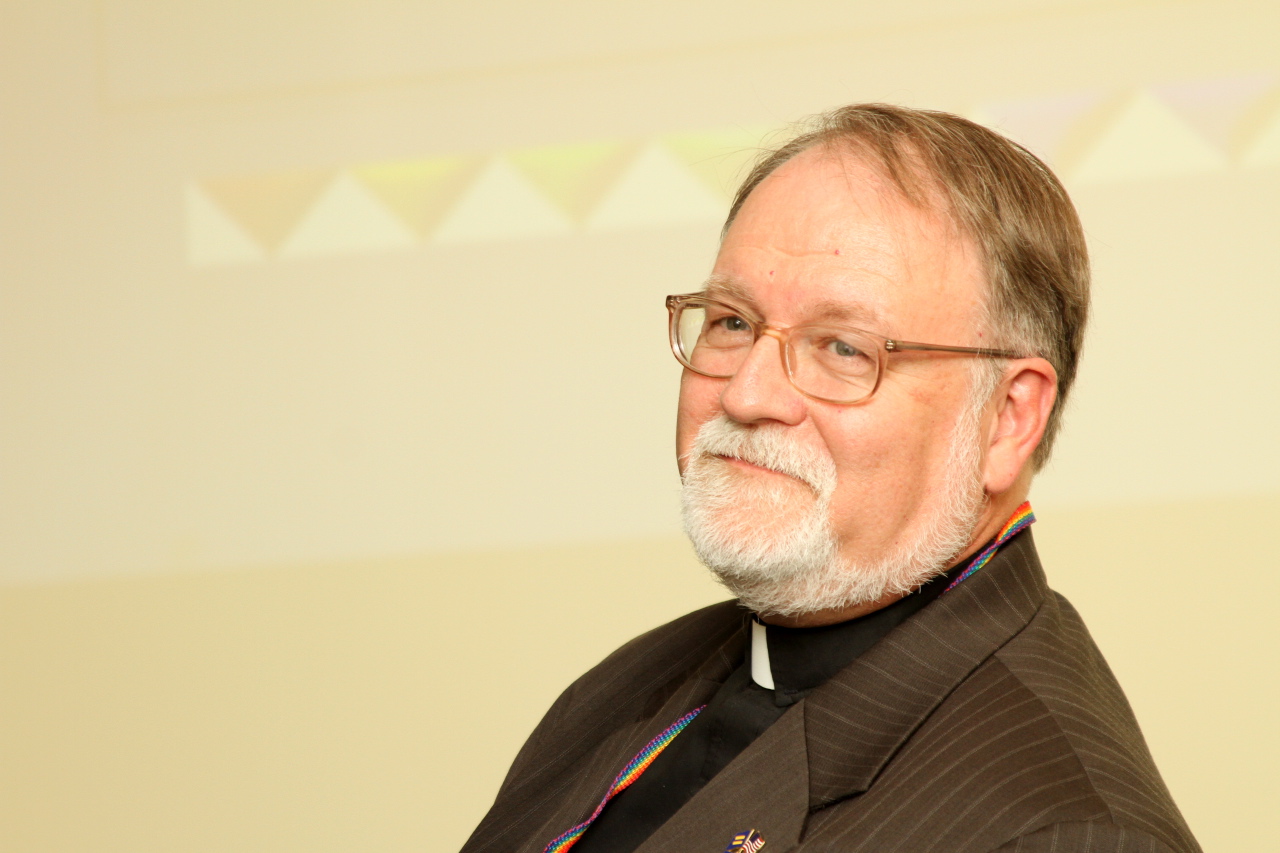
Dr. Stephen V. Sprinkle (Keith Tew photo).
Stephen V. Sprinkle is Director of Field Education and Supervised Ministry, and Professor of Practical Theology at Brite Divinity School, Fort Worth, Texas, a post he has held since 1994. An ordained Baptist minister, he is the first open and out Gay scholar in the history of the Divinity School, and the first open and out LGBTQ person to be tenured there. Read More…
Recent Social Justice Advocacy Activity By Dr. Sprinkle
 Summer 2009 – Dr. Sprinkle responded to the Fort Worth Police Department and Texas Alcoholic Beverage Commission Raid on the Rainbow Lounge, Fort Worth’s newest gay bar, on June 28, 2009, the exact 40th Anniversary of the Stonewall Rebellion. Dr. Sprinkle was invited to speak at three protest events sponsored by Queer LiberAction of Dallas. Here, he is keynoting the Rainbow Lounge Protest at the Tarrant County Courthouse on July 12, 2009. Read More…
Contact Us
Communicate with the Unfinished Lives project team:
info@unfinishedlivesblog.com


Schedule a Presentation
Dr. Sprinkle will gladly present his acclaimed presentation to your organization. To arrange an Unfinished Lives presentation for your organization or group, please contact us.
Dr. Sprinkle has given his Unfinished Lives presentation to these and other community groups and organizations. Read More…
-

Where are our readers?
Publisher: Steve Sprinkle (Project Director)
Steve Sprinkle
Unfinished Lives: Remembering LGBT Hate Crime VictimsBrite Divinity School/Texas Christian UniversityFort Worth TXprofessor, minister, author, blogger, LGBTQ advocate


Follow Unfinished Lives on Facebook
 Box Turtle Bulletin
- An error has occurred; the feed is probably down. Try again later.
- HRC Back Story
- Know About The Gender Identity Movement
- Why Is There A Need For Human Rights?
- Kinds Of Human Rights
- Human Rights Purposes And Violations
- Human Rights For Every Human Incident
- 8 Reasons Human Rights Are Important
- Everything About Human Rights
- Human Rights Issues Education & Law
- We Need To Stand Up For Our Rights And Those Of Others
- Coca-Cola Receives Perfect Score On Human Rights
- The Advocate: Daily News
- Eric Swalwell responds to sexual assault allegations in a to-camera video
- Eric Swalwell’s governor bid is collapsing as top Democrats turn on him
- What Melania Trump’s bizarre Jeffrey Epstein press event reveals about a White House in chaos
- New Bryon Noem bombshell puts Kristi Noem’s anti-trans politics under harsher spotlight
- Former Biden HHS leaders hail syphilis breakthrough as Trump dismantles the system behind it
- Advocate breaking news 4/10/26
- Pete Buttigieg hints at 2028 presidential run: ‘Save me a seat’
- Could Minneapolis welcome bathhouses back for the first time since the late 1980s?
- Donald Trump posts gruesome murder video to Truth Social
- Melania Trump blindsides White House aides with unexpected leap into Epstein scandal
- Dallas Voice: Instant Tea
- An error has occurred; the feed is probably down. Try again later.

 Unfinished Lives
The End of the Beginning: How the Passage of the Matthew Shepard Act Transforms Us
The dead are beyond further physical harm. So many hundreds have died at the hands of the ignorant, the malicious, and the sincerely bigoted. Gay Charlie Howard drowned in Bangor, Maine. Lesbian Talana Kreeger, manually disemboweled in Wilmington, North Carolina. Navajo Two-Spirit youth, F.C. Martinez, Jr., brained with a 25-pound rock in a blind canyon in Cortez, Colorado. African American transwoman, Duanna Johnson, shot down in a Memphis, Tennessee alley. Pfc. Barry Winchell, murdered by a fellow soldier with a baseball bat at Fort Campbell, Kentucky, on the suspicion that he was gay. And the archetype of them all, young Matthew Shepard, pistol-whipped into a coma and left to die, tied to the foot of a buck fence in Laramie, Wyoming. For every victim whose name is remembered, scores of anonymous others have died, their agonies unreported, their names forgotten.
What will change for all these victims of hate, once the Shepard Act becomes law? And, what about their families, lovers and spouses—what will change for them?
For the dead, the change will come subtly, like a gift of dignity. The Shepard Act is not only for the living. Those who have died at the hands of hatred will finally receive a measure of vindication. No longer will they be merely the debris of social history. Their stories will be told with renewed passion, and more and more people will want to know who they were. Their lives will take on a greater sense of meaning to the LGBTQ community, who will find encouragement to embrace these dead as their own—just as blacks, Jews, and other besieged peoples have embraced their fallen friends and family members. As these LGBTQ victims have become my teachers in my quest to recover their stories and the meaning of their lives, the queer community will find new strength for justice by remembering them.
For the families and loved ones of these victims, perhaps a measure of peace will come at last. Their loss, of course, is incalculable. Their pain is beyond reckoning. I have seen the furrows in their brows, the lingering sadness in their eyes. As Ryan Skipper’s mother Pat said to me, there is no closure for her and those like her. The change will come, I suspect, with a sense of honor, and a quiet assurance that their beloved will have not died in vain. When the Shepard Act finally passes, I will think first of all about the valiant witness of the mothers—women who never sought the spotlight, but who fought back tears to learn how to speak out for their children and for everyone else’s children. Signing day in President Obama’s office will be most of all for Judy Shepard, Pat Mulder, Elke Kennedy, Pauline Mitchell, Denise King, Kathy Jo Gaither and everyone else whose flesh and blood have consecrated the moment of passage.
Those who believe in justice will feel the change, too. The LGBTQ community will be challenged to mature and take their place among communities of survivors, witnesses who understand that it takes hard work to make hope become real for everyone. At the stroke of a pen, the entire LGBTQ community will experience the greatest lift since the Stonewall Rebellion forty years ago. But that will not be all. The America I know and love will encounter change on the day the Shepard Act becomes law, too. Summoned by the angel of justice, the American people will face the challenge to make the promise of the Constitution come true for their transgender, gay, bi, and lesbian neighbors and friends.
Passage and signing the Matthew Shepard Act into law will not magically stop the killing. Record numbers of LGBTQ Americans, especially young transgender people of color, are dying violently all across the land. But the high water mark of hatred will be scotched with the stroke of a pen on the day President Obama keeps his promise and signs the bill. The end of the beginning of full equality for my people will come. And we who believe in justice will not rest until it comes.
~ Stephen V. Sprinkle, Director of the Unfinished Lives Project
Share this:
October 16, 2009 Posted by unfinishedlives | Hate Crimes, Legislation, Matthew Shepard Act, Politics, Remembrances, Social Justice Advocacy, Washington, D.C. | D.C., Hate Crimes, hate crimes legislation, Matthew Shepard Act, Special Comment, Washington | 3 Comments