Remembering Sean William Kennedy (1987-2007)
 April 8 would be Sean Kennedy’s birthday, if someone hadn’t killed him for being gay. Sean would have been 23. He would be doing all those things he loved to do on his birthday, according to his Facebook Profile: “Hanging Out, Music, “Playing” Music, Talking, Being Crazy,Going Out, Movies, Driving Around Being Crazy, Listening To Music, Watching My Shows, Clubs (When Im In The Mood)” But in the wee hours of May 16, 2007, a fun night at Croc’s Bar in Greenville, South Carolina turned deadly when a homophobic young white man took it upon himself to punish Sean for being “other.” Sean’s mom, Elke Kennedy, relates what happened that night on the home page of Sean’s Last Wish, a foundation she and the family established so that Sean’s memory would live on, and his story would continue to change hearts and minds about LGBT people in America: “[That night] Sean was leaving a local bar in Greenville when a car pulled up beside him, a young man got out of the car, came around the car, approached my son, called him a ‘faggot’ and then punched him so hard that it broke his face bones. He fell back and hit the asphalt. This resulted in his brain [being] separated from his brain stem, ricocheting around in his head. Sean never had a chance. Sean’s killer got back in his car and left my son dying there. A little later he left a message on one of the girl’s phones who knew Sean, saying, ‘You tell your faggot friend that when he wakes up he owes me $500 for my broken hand!'” Stephen Moller, Sean’s 19-year-old killer, was given virtually every break the legal system in South Carolina could give him. He was sentenced to 5 years for involuntary manslaughter by subtly shifting the blame to his victim, and pleading for special treatment because he had fathered a child. The sentence was shortened to 3 years, he was given credit for time served and for being a good prisoner. Moller was given an early release parole hearing in February 2009, but thanks to the efforts of his mother, his stepfather, and hundreds of letter-writing protestors from around the nation, he was denied parole. Even then, Moller, who had gotten his GED behind bars, was released on July 7, 2009, a full week early from the already short sentence he had served for killing a young gay man who did him no harm other than being who he was. The justice system failed Sean as it has failed so many before and since. Elke Kennedy has gone on to become one of the most courageous and effective witnesses to the rights of LGBT youth in the United States. Sean’s Last Wish Foundation is making a difference for LGBT young men and women every day. But Sean is gone. The loss of his life is inestimable to his family, to the queer community, to his friends, and to the world he made a better and happier place because of his unquenchable spirit. One of his favorite sayings rings as true today as it did when he first published it on MySpace and Facebook: “We Could Learn Alot From Crayons” he wrote: “some are sharp, some are pretty, some are dull, some have weird names, and all are differant colors… but they all exist very nicely in the same box.” Who was this funny, wise, vivacious gay soul? We read his words about himself, and catch just a glimpse of what we lost when hatred and ignorance took Sean away: “i am 19 and my name is sean. i live in greenville, sc. it is a boring city. i love to meet new people. i love hanging out with people, chilling, shopping and having have a crazy fun time. ill do anything , i can have a fun time doing anything. i can have a fun time doing anything. i am a fun and crazy guy. ill do almost anything.im always on. so dont be scared to leave me a message.” We wish we could, Sean, today on your birthday. It will have to suffice that we will work in your name, remembering you, until justice comes for all your people and ours.
Billy Jack Gaither Humanitarian Award Given to Birmingham Human Rights Champion: Hate Victim Remembered

David Gary, Billy Jack Gaither Humanitarian Award Winner
Montgomery, Alabama – David Gary, a noted bank officer and dedicated LGBT activist well-known throughout Alabama, was awarded the Third Annual Billy Jack Gaither Humanitarian Award on Sunday, February 21, 2010. Mr. Gary is a master networker, and a true humanitarian. He is one of the founders of Integrity Alabama, the LGBT Episcopal advocacy group. The award was officially conferred during the 12th Annual Vigil for Victims of Hate and Violence, held on the steps of the state capital to commemorate the murder of Billy Jack Gaither of Sylacauga. Gaither, a gay man, was bludgeoned to death with an axe handle on the banks of Peckerwood Creek by two homophobic assailants on February 19, 1999. His body was burned like trash on a pile of tire carcasses. Both of his murderers remain in prison serving out their sentences. The Gaither murder, one of the most heinous anti-gay hate crimes in Alabama history, made news throughout the United States. Though Mr. Gary could not be present for the presentation because of a bout of ill health, his remarks were conveyed to the crowd. They are published here, in full: “I was very humbled when hearing of the honor given me by this group today and deeply regret not being able to attend. My life has changed and been dramatically enriched through my association of many, both here and absent, who have worked tirelessly for decades to ensure people who have fallen to hate did not die in vain. There are times when tragedy opens doors of association that we would have never known before. My friendship with Kathy Gaither is golden to me, as was my friendship with Ken Baker and the numbers of like-minded people he introduced me to. From Ken, Marshall Johnson and the Rev. Tim Holder, I learned the need of quick response and coordinated action. A more recent association is with the Rev. Dr. Stephen Sprinkle, associate professor of practical theology at Brite Divinity School, Fort Worth, Texas who has been researching LGBT hate crimes. Dr. Sprinkle visited Alabama to prepare his anthology of stories for his upcoming book, Unfinished Lives: Reviving the Memory of LGBT Hate Crimes Murder Victims. From him, I learned the importance of never, never, never allowing the stories to disappear. These horrific stories are very important and must not be forgotten. There are so many others we can discuss, but the important thing to remember, in my opinion, is threefold: The work we do here is important, sacred and necessary. It is important because we should never ever allow the stories and memories of those who are victims to be forgotten. It is sacred, because of how we reverently assemble to not allow them to be forgotten. Unfortunately, our work remains necessary because we all know that any morning we may awake to the news of yet another person how has fallen to hate. Extremism still exists and we can not stop our work as long as its ugliness lives among us. I invite all here to find the place to put your talents to work in the advocacy necessary to prevent yet another Billy Jack Gaither, whose name this award carries, along with the memory of many others, both with us and deceased.” Upon hearing the news of Mr. Gary’s selection for the Billy Jack Gaither Award, Dr. Stephen Sprinkle, Director of the Unfinished Lives Project, said, “The reason Billy Jack’s important story has not been forgotten is due in large measure to the tenacious advocacy of a small group of dedicated humanitarians and human rights activists in Birmingham, Tuscaloosa, and Montgomery. David Gary is a key figure in this group: strong, trusted throughout the state of Alabama, and dedicated to ushering in a better world for LGBT people and everyone else. No one is more deserving of this honor than Mr. Gary.” The sponsors of the vigil in Montgomery were Alabama NOW, Color It Pride, Equality Alabama, Immanuel Presbyterian Church (Montgomery), New Hope Metropolitan Community Church, PFLAG (Parents, Friends, and Families of Lesbians and Gays) Montgomery, and the Unitarian Universalist Fellowship of Montgomery. Keynote speaker for the event was Dr. Gwynedd A. Thomas, the first openly intersexed or transgender faculty member at Auburn University.
Larry King Remembered: Too Young To Die
 Lawrence “Larry” Fobes King was murdered by two gunshots to the back of the head on February 12, 2008, and died two days later. He was only 15 years old. His assailant, Brandon McInerney, was only 14. Larry died because he was gender non-conforming–a gay youth who would not, could not conceal who he was from his classmates at E.O. Green Middle School, Oxnard, California. McInerney remains in custody in Ventura County pending his trial as an adult for allegedly slaughtering King with his grandfather’s pistol during morning computer class. McInerney has pleaded not guilty to first-degree murder and hate crime charges. His trial is slated to begin in May 2010. Today, two years since the fatal shooting, we remember Larry, and mourn for Brandon, too. Two young lives have been lost to unreasoning homophobia. The message of Larry’s death is as clear on the second anniversary of his murder as it was when it occurred: violence and hatred against gender non-conforming youth–gay, lesbian, bi, and transgender–has got to stop. This weekend, vigils and memorial services are being held in Larry’s memory by Gay & Straight Alliances throughout the nation–in California, Iowa, Nebraska, Texas, Illinois, Minnesota, and Virginia, according to a GLSEN-endorsed site dedicated to him, www.rememberinglawrence.org. The Ventura County Star commemorated the anniversary with an article highlighting GSA efforts in Southern California, dedicated to bringing the terror of homophobic teen-on-teen violence to an end. J.T. Mendoza, a high school senior from Simi Valley and a member in the local Gay and Straight Alliance there, spoke for all who seek to honor Larry: “There needs to be more awareness that all students, regardless of their sexual orientation, need to be safe in schools. It’s not just a LGBT issue, but an everyone issue.”
Trans Community Demands Justice for Myra Ical
Houston, TX – Cristan Williams, Executive Director of the Transgender Foundation of America, takes the murder of Myra Ical personally. “She died struggling for her life…She went down fighting and she was literally beaten to death,” she said to reporters for KHOU 11 News. “It’s personal. I feel it on a personal level.” Hundreds agree with Williams. Myra Chanel Ical, 51, died in a Montrose area field a week ago, and Houston’s transgender community has rallied to her memory. Seven members of the transgender community have died violently in Houston in the last eleven years, and now the vigil organized to remember Ms. Ical on Monday night is being billed as the largest transgender event in Houston’s history. The vigil’s organizers intend to focus attention on the plight of transgender people in Harris County and Houston as they honor Ms. Ical’s memory and call for neighbors in Montrose to share any leads they may have on the unsolved murder with police investigators. While her slaying is not yet designated as a hate crime, police are certainly not ruling anything out. Sgt. Bobby Roberts, spokesperson for the Houston Police Department, told reporters, “It could have been anything at this point. We just don’t have any motive whatsoever on this case.” ABC News 13 reports that Ms. Ical’s body was covered in bruises and bore several defensive-type wounds that showed she was fighting back against her attacker(s). Harris County’s Medical Examiner ruled that she died from strangulation by some sort of ligature. Cristan Williams cannot get the horror of how Ms. Ical died out of her mind. “That in and of itself was just a horrific way to die. Her last moments of life were sheer terror.” Williams asks why none of the seven murders of Houston transgender people have been solved. Police told her they have no evidence in any of the cases, something Williams attributes to the way anti-transgender crimes went largely unreported in the recent past. Until the passage of the Matthew Shepard and James Byrd, Jr. Hate Crimes Prevention Act this past October, local and federal law enforcement agencies were not mandated to keep statistics on transgender hate crimes. Like the transgender population, these crimes were largely ignored. Human rights advocates for the LGBT community are watching closely to see if the election of Annise Parker, an open and out lesbian, as Mayor of Houston will make a difference in how law enforcement and the media approach violence against some of the most vulnerable citizens of America’s 4th largest city.
Major Media Fail Over Murder of Houston Transwoman
 Houston, TX – Myra Ical lived and died as a transwoman, but the Houston media have not given her the dignity of acknowledging her gender identity when reporting on her likely hate murder. The Houston Chronicle reported Ical’s January 18 murder in the Montrose section using exclusively male pronouns, calling her male, and playing up the sensational aspects of the area where homeless people eek out a living. As is often sadly the case in reportage that is lazy and salacious, the Chronicle used innuendo to suggest that Ical, whose body was found partially naked and covered with bruises and defensive injuries indicative of her fight with her attacker(s), was consorting with prostitutes and drug addicts. Local and national LGBT rights organizations have pushed back against this media injustice by calling attention to Ms. Ical’s gender identity and expression, and demanding that reportage get this aspect of such a terrible story right. According to The Advocate, Human Rights Campaign board member and Pride Houston president Meghan Stabler submitted a strongly worded letter on behalf of both organizations to media outlets covering Ms. Ical’s murder, urging reporters to “use fair, accurate and inclusive reporting” when reporting on LGBT issues. The letter read, in part: “On Monday January 18 the brutal murder of Myra Ical occurred in Houston. She is a transgender woman but the media continue to use male pronouns along with colorful statements about being found in an area known for drugs and prostitution. This lazy and irresponsible journalism shows the amount of ignorance about transgender issues that is rampant among far too many reporters despite the existence of resources to help them report accurately.” GLAAD and the AP have clear guidelines on how LGBT-oriented stories should be reported, leaving big media like the Houston Chronicle without excuse. Myra Ical, who was 51 when she died, will be remembered at a candlelight vigil near the site of her murder at the corner of Richmond Avenue and Garrott Street on Monday, January 25, from 6-6:30 pm. The Facebook notice for the vigil calls upon media and the Houston Police Department “to communicate with the public in a way that respects the victim.” Thanks to Daniel Williams for breaking this story in the DFW metroplex.
Christmas Murder of Gay Man in Louisiana Still Unresolved
 Houma, LA – Early on Christmas morning, Robert LeCompte, 39, was found stabbed to death in a prominent gay and lesbian night club he managed. His body was riddled with stab wounds, suggesting the possibility of a hate crime. $4,700 was reported missing by the club’s owner, Randall Chesnut, with whom LeCompte lived. Terrebone Parish law enforcement officers are working to develop clues in the case. When LeCompte did not come home as expected, Chesnut called the police, leading to their discovery of the gay man’s blood-soaked corpse lying in the middle of the dance floor of the Drama Club on Hollywood Road. Chesnut spoke kind words about his employee to reporters from the Tri-Parish Times: “He had no enemies,” Chesnut said. “The boy was loved by everyone. He wasn’t but 5-foot, 2 (inches), and soaking wet he didn’t weigh but 120 pounds. I’ve probably just lost one of the best friends I’ve ever had, and the best employee, too.” Initially, the missing money led the Terrebonne Parish Sheriff’s Office to communicate to the media that this was a robbery only. But Chesnut, himself a former detective, is not persuaded. “I would believe motivation would be definitely robbery, but when you start stabbing the body multiple times, that’s a crime of passion. I’m not ruling out the fact that it could be a hate crime. Whoever killed him was very angry, as far as the police are concerned.” Major Malcolm Wolfe, spokesman for the sheriff’s department, said that no strong leads exist in the case yet. He indicated that sheriff’s officers were working night and day to crack the case. According to Chesnut, the LeCompte family is unable to finance their relative’s funeral and burial by themselves, so members of the gay and lesbian community have stepped up to the challenge, and donations are coming in. He told Tri-Parish Times reporter Brett Schweinburg, “The gay community, I’m so proud of them. They’ve stepped up, and they’re pissed. They’re not scared. He has lit a fire in this community,” said Chesnut. “Most of the people in this community, they fear the law or they fear this, but it’s taken the opposite effect. There’s a determination here.” A vigil for LeCompte was held on Christmas Day at the Drama Club, with over 150 people attending. Vigils and fund-raisers are planned in Houma, Baton Rouge,and New Orleans with a memorial at the Drama Club set for Saturday, January 2, 2010. One of the saddest ironies of this possible anti-LGBT hate crime murder is that Christmas Day was his birthday.
Slain LGBT Icon Harvey Milk Inducted into California Hall of Fame
 The Associated Press reports that Harvey Milk was inducted on Tuesday into the California Hall of Fame, along with 12 other notables from the Golden State. Thirty-one years after Milk and Mayor George Moscone were assassinated by former San Francisco City Supervisor Dan White, Milk will be featured for the next year in the California Hall of Fame section of the California Museum in Sacramento. Milk, who had served as a San Franciso City Supervisor for 11 months, was 48 at the time of his murder. According to the Bay Area Reporter, Milk’s nephew, Stuart Milk, received the commendatory Spirit of California medal marking his uncle’s induction from Governor Arnold Schwarzenegger and First Lady Maria Shriver. Andy Grove, the former CEO of Intel, read the citation. Interviewed at the induction event, former campaign manager for Milk’s historic 1977 election campaign, Ann Kronenburg, called the honor, “definitely long past due.” Smiling, she told reporters, “Harvey’s up there right now dancing.” When asked about the importance of Harvey Milk to the LGBT community of California, Kronenburg quickly corrected the reporter, “To the world’s. Since the movie [Milk] came out I have continually received letters from around the world about what Harvey’s story means,” she explained. “And what it means is there’s hope. There’s so much hope.” Milk’s Hall of Fame exhibit features a recently-opened urn containing a lock of his hair, a letter in his handwriting, a campaign button, and a rainbow flag. The memorabilia were held by the Congressional Cemetery in Washington, D.C. until transported back to California for the exhibit. Some 50,000 school children are expected to visit the exhibition during the coming year. Though there were 12 other inductees honored at the ceremony, the greatest interest by the public and the press was clearly focused on the choice of Milk. Protesters criticized the selection of the famed gay-rights pioneer for the Hall of Fame. A group from San Leandro’s American Warrior Evangelical Ministry marched outside the ceremony venue carrying signs reading, “Harvey Milk was a pervert.” The Bay Area Reporter quotes one of the demonstrators, Ken Arras, as saying, “We just believe that [Milk] is undeserving of this honor. He may have been a nice guy outside of his immoral lifestyle, but what has he done? This award is all about his lifestyle. It’s just about him being a homosexual.” Another of the San Leandro protestors, Don Grundmann, admitted that Milk’s murder was “a fantastic tragedy,” but argued that an assassination is insufficient reason for public recognition, referring to both the Hall of Fame induction and to Harvey Milk Day, which he claimed was a direct assault on children. Grundmann went to to assert that no LGBT person should ever be inducted in the state’s Hall of Fame since “it would lead to acceptance” of immorality by impressionable youth. Earlier in the year, Governor Schwarzenegger signed a bill sponsored by San Francisco’s openly-gay State Senator, Mark Leno, creating May 22 “Harvey Milk Day,” a day of special significance throughout California. The Hall of Fame’s Class of 2009 included other stellar Californians, such as football coaching legend, John Madden, actor Carol Burnett, Chuck Yeager, the first test pilot to break the sound barrier, filmmaker George Lucas, and author Danielle Steele.
Gay Man Loses 14-Month Battle for Life After Possible Hate Attack
 Baltimore, Maryland – Glen H. Footman, 52, died November 9 in the University of Maryland Shock and Trauma Center after what the Bangor Daily News called “a 14-month emotional and courageous battle for life” from gunshot wounds in a possible anti-LGBT hate attack in the Mouth Vernon section of Baltimore. Footman was shot twice on September 22, 2008 after being seen walking hand-in-hand with his soul-mate and life partner of 12 years, Alejandro Chavarria. According to Baltimore police, the two gay men were walking shortly after midnight when a young man on a bicycle came up behind them. Footman turned to speak to the young man while Chavarria walked on ahead. Chavarria shouted back to his partner, “Come on, let’s go,” when two shots rang out, and Footman fell, wounded to the pavement. As Chavarria ran to help Footman, the assailant ran from the scene, but then raced back to collect his bike, and then made his getaway. Police have been treating the case as a possible anti-gay hate crime from the beginning of their investigation. The Baltimore Sun reports that the victim’s father, H. Rodney Footman of Brewer, Maine spoke to reporters by phone to say that Baltimore police have not been encouraging about ever locating the shooter. The elder Footman has no doubt that his son was killed because he was gay. Shortly before the attack, Footman’s father said, a witness overhead the assailant brag, “‘I’m going to kill myself a gay tonight.’ He took off with that intention and he did just that. Police were very up front with us in saying that the chance of this ever being solved is practically nil.” Glen Footman’s death not only bereaves his relatives and his partner. Footman was a force for good in the community who will be sorely missed by many. He was a licensed alcohol and drug abuse counselor in Maine, Rhode Island, and Texas, and held degrees in business administration and pastoral theology. He counseled youth in Maine and Texas. He and Alex had moved to Maryland shortly before the shooting, where he was to take up a new job at an insurance company. He leaves behind two children from a previous marriage, Nicole Leah and Blaine Jonathan. His beloved Alex, who the Bangor Daily News calls Footman’s “sustaining grace during his last challenging year of physical and emotional struggle,” has returned to San Antonio, where he and Glen first met. Police have not yet ruled Footman’s death a homicide, pending the coroner’s report on whether the injuries sustained in the 2008 shooting were the actual cause of death.
Slaughtered Gay Puerto Rican Teen Laid to Rest by Family and Friends
 Toa Alto, Puerto Rico – Jorge Steven López Mercado was laid to rest by over a thousand family members and friends on Monday. His mother, Miriam Mercado, and Pedro Julio Serrano, leading LGBT activist, made moving statements remembering Jorge Steven amidst bouquets of white roses and multicolored balloons. The whole gathering offered a final tribute to the slain teenager by saluting his resting place with his signature hand gesture, captured in so many photos on happier days. According to Boy from Bushwick, who has been covering the whole saga of young López Mercado’s brutal murder since the beginning, the youth’s maternal aunt, Ruby Mercado, told reporters present to cover the funeral mass, “The support we have received from the public and Steven’s friends has given us the strength to bear this moment of such horrible pain. I asked Steven with his wings from heaven to help us carry on without having him by our side.” One of his friends, José Alicia, said, “We definitely hope people and society wake up and demand justice.” El Nuevo Dia reports that Jorge Steven’s aunt and his former boyfriend, Luis Rivera, opened the cask holding his ashes, and placed a small necklace bearing a cross and a white rose inside before the interment. The service at Toa Alto bore the passion and style of the flamboyant young gay Puerto Rican from beginning to end. Music accompanying his ashes to the grave was Lady Gaga’s “Poker Face”: “I won’t tell you that I love you/Kiss or hug you/’Cause I’m bluffin’ with my muffin/I’m not lyin’ I’m just stunnin’ with my love-glue-gunning/Can’t read my, Can’t read my/No he can’t read my poker face.” Again and again during the funeral, family and friends called for respect for the LGBT community in Puerto Rico, and justice for Jorge Steven. Rest in peace, mi amigo.
Overflow Crowd Lays Jason Mattison, Jr. To Rest in Baltimore; Murder Investigation Continues
 East Baltimore, Maryland – An overflow crowd packed the Unity United Methodist Church on Edmundson Avenue in Baltimore Thursday for the funeral of slain gay teenager, Jason Mattison, Jr. The Baltimore Sun reports that the principal of Mattison’s high school announced the establishment of a scholarship in his memory at the service. “No one is truly gone if you carry them in your heart,” Principal Starletta Jackson said. “And Jason is a part of our heart. We all knew that Jason wanted to be a pediatrician. There was never a question of whether or not he was going to make it. Some children we have to pray over a lot — pray for grades that they pass, but we never worried about that with Jason.” Rev. Patricia D. Johnson, speaking to the mourners, said that young Mattison’s brutal murder serves as a warning to parents to watch over their children in neighborhood of rundown row houses that the church serves. At times during the 90-minute service, teen classmates who loved the sassy, joyous gay boy with his signature tight jeans and cool sweaters were so overcome with emotion they had to excuse themselves from the church sanctuary. No doubt he left his mark on their lives and on the Harlem Park neighborhood where he lived. Principal Jackson concluded her remarks, “We will miss you, Jason, but know that your memory will never be lost.” Mystery surrounds the grisly murder. Dante L. Parrish was arrested and confessed to the rape and slaughter of Mattison, and is being held without bail. Mattison’s cousin described him as “an old family friend,” presumably of Mattison’s aunt, where the gay youth’s body was found in an upstairs closet, gagged with a pillowcase and savagely stabbed in the head and neck with a box cutter. Conflicting accounts of why Mattison was at his aunts’ house have come from family members. His cousin says that he was “visiting relatives.” His paternal grandmother has said that her grandson was actually living in the home rather than in his parents’ home, suggesting some possible alienation or estrangement that Mattison kept under wraps at school. While he was an open book insofar as his sexual orientation was concerned, he was tightlipped about his home life and his living situation around his classmates. Family sources also suggest that Parrish had exhibited an unhealthy interest in Mattison for some time, one that allegedly made the gay youth uncomfortable. As the investigation into one of Baltimore’s worst bias-related hate crimes continues, the search for answers about his family’s relationship with a convicted murderer and their attitude toward Mattison’s homosexuality goes on. On Sunday, vigils and protests related to Jason’s horrific death and that of slain Puerto Rican gay teen, Jorge Steven López Mercado, took place in more than 20 cities around the country, from coast-to-coast.
About
If you are a first-time visitor to the Unfinished Lives Project website, we invite you to read A Welcome Message introducing you to our project. We are truly grateful for your visit.
The Unfinished Lives Project website is a place of public discourse which remembers and honors LGBTQ hate crime victims, while also revealing the reality of unseen violence perpetrated against people whose only “offense” is their sexual orientation, gender identity, or gender presentation. LGBTQ people in the United States are suffering a slow-rolling decimation of terror and murder all across the country. Every locale and demographic of society are affected: First Nations, Anglo, Black, Latino and Latina, South and Southeast Asian, Transgender, Bisexuals, Gay men, Lesbians, disabled, young, and mature. Homophobia has a long, crooked arm, and it is reaching out to snatch the life away from women and men whose tragic stories are under-reported to begin with, and whose memories are swiftly forgotten.
The horror of these killings transcends the shock and bereavement of loved ones and friends. These are not typical homicides; they are not killings for money or drugs, incidents of domestic strife, or crimes of passion. The vicious nature of hate crimes against LGBTQ persons is extremely brutal, grotesquely violent, and egregiously hateful.
Each murder serves the LGBTQ population as a sobering warning about the actual level of danger in our communities. The message these killings send is that freedom and open life for LGBTQ people is a cruel dream. Every time we remember one of these victims, however, the intentions of their killers are frustrated. To remember these women and men is to begin the process of changing the culture that killed them.
Our Project Director
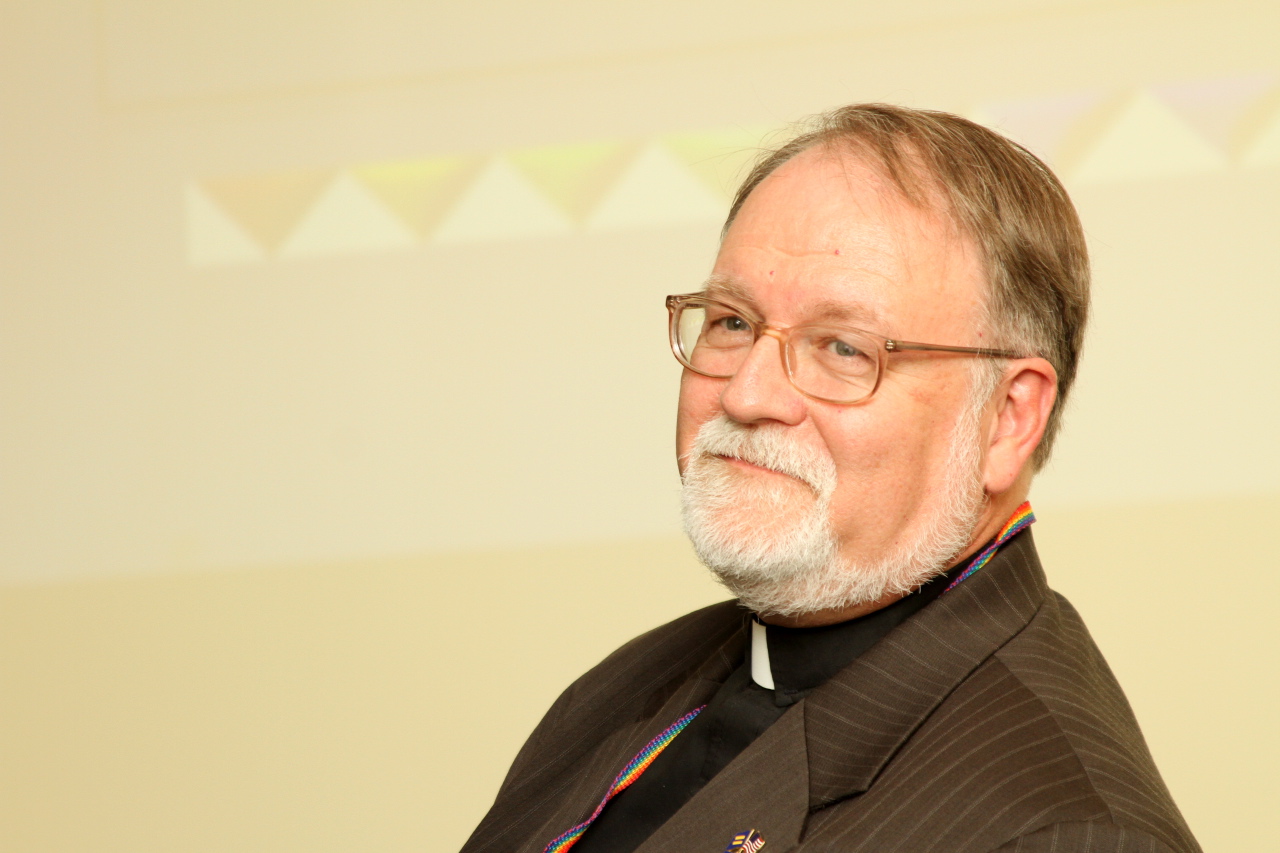
Dr. Stephen V. Sprinkle (Keith Tew photo).
Stephen V. Sprinkle is Director of Field Education and Supervised Ministry, and Professor of Practical Theology at Brite Divinity School, Fort Worth, Texas, a post he has held since 1994. An ordained Baptist minister, he is the first open and out Gay scholar in the history of the Divinity School, and the first open and out LGBTQ person to be tenured there. Read More…
Recent Social Justice Advocacy Activity By Dr. Sprinkle
 Summer 2009 – Dr. Sprinkle responded to the Fort Worth Police Department and Texas Alcoholic Beverage Commission Raid on the Rainbow Lounge, Fort Worth’s newest gay bar, on June 28, 2009, the exact 40th Anniversary of the Stonewall Rebellion. Dr. Sprinkle was invited to speak at three protest events sponsored by Queer LiberAction of Dallas. Here, he is keynoting the Rainbow Lounge Protest at the Tarrant County Courthouse on July 12, 2009. Read More…
Contact Us
Communicate with the Unfinished Lives project team:
info@unfinishedlivesblog.com


Schedule a Presentation
Dr. Sprinkle will gladly present his acclaimed presentation to your organization. To arrange an Unfinished Lives presentation for your organization or group, please contact us.
Dr. Sprinkle has given his Unfinished Lives presentation to these and other community groups and organizations. Read More…
-

Where are our readers?
Publisher: Steve Sprinkle (Project Director)
Steve Sprinkle
Unfinished Lives: Remembering LGBT Hate Crime VictimsBrite Divinity School/Texas Christian UniversityFort Worth TXprofessor, minister, author, blogger, LGBTQ advocate


Follow Unfinished Lives on Facebook
 Box Turtle Bulletin
- An error has occurred; the feed is probably down. Try again later.
- HRC Back Story
- Know About The Gender Identity Movement
- Why Is There A Need For Human Rights?
- Kinds Of Human Rights
- Human Rights Purposes And Violations
- Human Rights For Every Human Incident
- 8 Reasons Human Rights Are Important
- Everything About Human Rights
- Human Rights Issues Education & Law
- We Need To Stand Up For Our Rights And Those Of Others
- Coca-Cola Receives Perfect Score On Human Rights
- The Advocate: Daily News
- Boston University removed Pride flags. Backlash forced its president to back off
- Transgender Latina beaten outside Washington LGBTQ+ bar after helping man recalls attack
- Georgia educator says she was forced to resign after telling student she’s gay
- Ohio teacher sues over removal of ‘Hate Has No Home Here’ poster
- Texas wants Bibles in public classrooms as another way to bully, harm, and exclude LGBTQ+ kids
- These anti-LGBTQ+ Georgia Republicans did drag themselves, unearthed photos show
- Idaho said no Pride flags permitted. Boise said watch this
- Advocate newsletter 4/8/26
- Trump halts Iran strikes ‘for two weeks’ at last minute, claims ceasefire
- Urgent 25th Amendment calls grow after Trump threatens mass destruction of Iran's civilization
- Dallas Voice: Instant Tea
- An error has occurred; the feed is probably down. Try again later.

 Unfinished Lives