The Death and Life of Sean Kennedy: A Commemoration
 Sean Kennedy died from injuries sustained in an anti-LGBT hate crime attack outside a Greenville, SC bar on May 16, 2007. The facts of the case are not in dispute. At 3:45 a.m., Sean William Kennedy, 20, an out gay man, approached some young women who were talking with a car full of straight young men, among whom was Stephen Moller, 18. The women were distracted from speaking to the young studs by Kennedy, who inadvertently brushed his cigarette against Moller’s cheek, giving him a little burn. Another passenger in the car told Moller, “You know that dude is gay, right?” and “You probably have got AIDS from him!” Enraged, Moller rushed out of the car and hit Sean Kennedy in the face with his fist so hard that his facial bones broke. Kennedy fell back as a result of Moller’s blow with such force that when his head hit the concrete curb, his brain stem detached from his brain. Moller got back in the car, which sped away from the scene of the crime.
Sean Kennedy had no chance. In effect, he was dead from the moment his skull struck the curb. Elke Kennedy, his mother, has had to live with the horror of his murder ever since.
Moller, on the other hand, reveled in his macho moment. In a drunken phone call to one of Sean’s friends just fifteen minutes after the crime, Moller taunted Kennedy for his sexual orientation. Though it was taped and verified to be Moller’s voice, the call was never allowed into testimony at Moller’s trial:
“Hey. (laughter) Whoa stop. (laughter) Hey, I was just wondering how your boyfriend’s feeling right about now. (laughter) (??) knocked the f— out. (laughter). The f—— faggot. He ought to never stick his mother-f—— nose (??) Where are you going? Just a minute. (laughter). Yea boy, your boy is knocked out, man. The mother——-. Tell him he owes me $500.00 for breaking my god—- hand on his teeth that f—— bitch.”
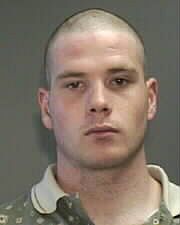
Moller's mug shot, SC Department of Corrections
Gay panic. AIDS terror. Homophobia. Macho bravado. A hands-on-attack in which the assailant feels the need to damage his target up close and personally. These are all the hallmarks of an anti-LGBT hate crime, as well as the response of the police on the scene who refused to take the hate crime dimension of the assault seriously enough to investigate it until later, and the reluctance of the District Attorney to bring sexual orientation into the case for fear of local heterosexist and homophobic prejudices. Local law enforcement reluctance to investigate or prosecute hate crimes against LGBT people is one of the prime reasons a federal hate crimes statute like the Matthew Shepard Act is so needed. Under the provisions of the Shepard Act, the Attorney General of the United States is enpowered to take over the investigation and prosecution of such a hate crime in situations like this one. No doubt, Moller’s homophobic braggadocio would have been taken into account, had the Shepard Act been on the books at the time of Sean Kennedy’s murder. Moller’s defense rested on two contentions that the court in Greenville bought, in the end: first, Moller didn’t even know Kennedy was gay until after the assault, the inadmissible taped phone conversation to the contrary, and second, nothing in this case rose to the level of murder. The D.A. settled for a charge of manslaughter which carries a penalty of 0-5 years in South Carolina. Moller got three years with credit for time served, and sympathy for his need to support a baby he sired while in the custody of the state. An attempt to lessen his prison time failed, thanks to the efforts of Sean Kennedy’s mother, stepfather, and hundreds of concerned people from around the country who petitioned the parole board in Columbia to deny Moller’s petition for early release. In the end, Moller will serve about a year and a half of actual time, with probation for the hate crime murder of an innocent gay man. Moller is due to be set free, his debt to society paid in full, in July 2009.
Sean’s death still tortures his loved ones. His mother said, “My son was violently murdered because of hate and as his mother I wanted justice. My family will never be the same, a big part of our lives has been ripped out of our hearts.” For too many hate crimes victims, that would be the end of it–injustice, anguish, and the eventual amnesia of a society that would rather just not think about such things. But not for Sean.
 Elke and her husband Jim Parker have rallied hundreds to the cause of remembering Sean and advocating for LGBT human rights. They established Sean’s Last Wish, a foundation that perpetuates Sean Kennedy’s desire that everyone be treated equally, www.seanslastwish.org. Sean’s parents have become lions in the struggle for South Carolina and the rest of the nation to have the tools needed to investigate and prosecute violence and intimidation motivated by bias against persons regardless of race, religion, national origin, ancestry, age, disability, gender, sexual orientation, gender expression or gender identity of the victim. Sean’s death has, in effect, given birth to a new and effective way for his memory to be preserved and honored: in the lives of all those spared and enriched to live fully as who they are, free of fear and violence.
The struggle for justice for Sean continues. Elke Kennedy recently said, “No mother should lose a child to hate. No mother should have to fight for justice for their child. To parents who reject their children for their orientation, what would you do if you got a call at three in the morning telling you your child had been murdered?” And Sean’s new life past his death, in memory, in advocacy, and as a cherished story that shall not be forgotten goes on and on. As Sean himself wrote, “So who knows what’s around the corner or down the street. I’m just gonna live life and find out.”

~~ Stephen V. Sprinkle, Director of the Unfinished Lives Project
Special Comment: Newsweek magazine and the Re-victimization of Larry King

by Stephen V. Sprinkle
If only journalists and their editors had a Hippocratic Oath to hold them responsible for the stories they tell about the dead. Medical doctors pledge, “First, do no harm.” If doctors proceed to do harm to their patients, then there is a professional society to hold them accountable. The editor of Newsweek, and the team who wrote the Cover Story on Larry King, “Young, Gay and Murdered,” for the July 28, 2008 issue have exercised no constraints on themselves, and unlike the backlash against Dan Rather’s reportage on President Bush’s military service record, there appears to be no one in the journalistic community willing to call their hand for re-victimizing an infamously murdered 15-year-old boy, Larry King. King, you will recall, was shot twice in the head by his alleged killer, 14-year-old classmate, Brandon McInerney.
I want to disclose fully. I am an out gay man who has been studying and writing on the stories of LGBT hate crimes murder victims. I am director of the Unfinished Lives Project that seeks to remember and honor the lives and deaths of women and men who have died violently because of whom others perceived them to be. Further, I am writing a book that will tell the stories of over twenty such LGBT people, and Larry King is one of them. I have spoken publicly at the Vigil for Larry King held in my hometown, Dallas, Texas. That is my “agenda”: to see that stories such as Larry’s are told in such a way that the society may encounter these murdered women, men and youths as human beings who are basically unremarkable from the rest of America, with the difference that as LGBT people, they belong to the last great group in our country it is still permissible to abuse.
Editor Daniel Klaidman, lead reporter Ramin Setoodeh, and team members Andrew Murr and Jennifer Ordoñez do not spell out their sexual orientations or their agendas for us to examine so that we can more fully evaluate how they tell Larry’s and Brandon’s stories. We are left only with their silence on these matters, antiseptic silence that suggests an objectivity that no one ever has when it comes to issues of society and morality. Journalists may have “trained subjectivities” they can bring to their tasks, but that is all they have, and to pretend anything else is dishonest. They do indeed have their agendas, and these agendas serve some end, but we are only left to speculate about what they may be.
The article is written from the angle that Larry’s story, being less “clear cut” because it is “more complicated than it had first appeared,” needs to be rescued from the LGBT people who are, in the words Setoodeh quotes from Larry’s father, using his son’s death as “a gay-rights issue, because it makes a poster child out of my son.” In brief, Setoodeh and his team write about Larry as “troubled,” “disturbed,” and quite possibly “a danger to himself.” The accounts of what growing up as a femininely-presenting boy of mixed race is like in grade and middle school are touched lightly, and the authors then go for their real goal: to pathologize Larry medically, suggesting that there was something sick about him. His diagnosis as ADHD is given, his history of therapy, and an assertion that runs throughout the article that Larry yearned for attention and didn’t know his own mind when it came to being LGBT. The authority for these statements is his father’s quotation of an anonymous “therapist” whose credentials to evaluate a gay youth are never given, and teachers most of whom by the authors’ own admission believed Larry to be a big problem. In contrast to the column space given to Brandon whose peccadilloes and flaws are presented minimally as the outworking of a troubled home, the dark star of the article is Larry who dressed provocatively, who cannot walk well in his heels, who sported glitter, spoke in a “roar,” was a “bully,” and sexually harassed Brandon and others in school. Setoodeh and his associates indict Larry without the benefit of dissenting voices. There is one mention of his being “gentle,” a gay stereotype. The accounts of classmates who claimed he was brave, unique, and nice are perfunctorily mentioned in the context of a school memorial service, leaving the unspoken assumption with us that memorials by grieving students are well meaning but shallow. The overwhelming assessment of the authors of the article is that Larry was a boy too hard for any parent or school to handle, who needed protection from others and himself like Britney Spears, and whose terrorizing behavior made teachers and students “not unsympathetic” to his killer.
The second irresponsible feature of the article is the way Joy Epstein, a lesbian, is put on trial as the alleged instigator of Larry’s outrages. She has an “agenda” of “gay rights.” Greg King, Larry’s adoptive father, is set over and against her, alleging that Epstein confused “her role as a junior-high principal,…asserting her beliefs for gay rights” in her dealings with his son. Even Epstein’s promotion to principal at another school because of her qualifications is portrayed as an attack on the King family. The lesbian school administrator is painted with a rather broad brush as a manipulating authority figure who is somehow the wicked puppet-master behind Larry’s excessive, needy narcissism.
The third and fourth irresponsible aspects of this article are the use of parentheses to soften the way Larry is indicted for his own demise, and the refusal to quote anyone who liked, taught or counseled him for Casa Pacifica. Editor Klaidman parenthetically whispers in his Editor’s Desk introduction to the Cover Story that, even though Larry’s behavior may have led to his death (nothing warrants his murder). The use of parentheses downplays the information encased in them. It is like an aside, and here it is used essentially to set aside the truth that should have been at the core of this article, not secreted away in punctuation: There is never an excuse for murder. Ever.
The absence of any voices from Casa Pacifica with the exception of a hearsay quote from Vicki Murphy is a failure of journalism on the part of the authors. Casa voices were not omitted in the cover story on the King murder published by The Advocate in its April 8, 2008 issue, and their omission in the Newsweek story raises the question of whether those people who knew Larry best in his last months have been silenced by attorneys, or were thought to have nothing to contribute that the authors wished to quote. The silence is provocative, and no reason for it is given. If Setoodeh spent five months rooting around Oxnard and environs, he surely could have written more than the scant, spare paragraph on Casa Pacifica in the article. If Casa Pacifica was the place where Larry was best able to explore his budding gay identity in security and acceptance, if indeed it was a time for him that “was the happiest of his life,” why leave it out? Why deal with the Ventura gay youth group meetings that were important during Larry’s residence at Casa in a single sentence? The interaction of the two main institutions in Larry’s life, Casa Pacifica and E.O. Green Middle School, is entirely left out, along with any insight on how this institutional interplay shaped the context of the murder.
The emotional impact of this irresponsible storytelling is that Larry King, the primary victim, the person who died with two bullets in his head, is actually the heavy in the Newsweek article. His killer, McInerney, who is undoubtedly the secondary victim in this tragic chain of events, is portrayed as confused and understandably violent toward this dangerous wild child. LGBT people are portrayed as agenda-driven and manipulative. Teachers, the superintendent, and the school board are treated sympathetically, and Casa Pacifica is essentially written out of the equation, along with the Ventura gay youth group Larry attended.
It is no surprise that Larry had his faults. LGBT hate crime murder victims are as noble and as ordinary as every one else. Even if the “pathology report” given about him was 100% true and accurate, what in any of this rises to the level of murder by two bullets in the back of the head in plain sight of all the youth in the classroom? Nothing. What is going on here is common in the treatment of the murders of LGBT people: discredit the humanity and character of the victim. Make bizarre behavior or drugs or a criminal record the lens through which the murderer is seen. Muffle the moral impact of the crime, downplay the hate crime aspect, and re-victimize the victim. After Satoodeh and his associates got done with Larry King, there was little left to mourn.
The Newsweek journalists and editors behind the “Young, Gay, and Murdered” story framed their article and selected their sources carefully to make a point about the equation of sexual harassment with male feminine-presentation and gender-variance in middle schools. This is not a neutral or objective piece, and it was not ultimately about Larry King at all. It was about changing the subject from a brutal school murder to “the limits of tolerance.”
When major articles invoke an inquiry into “the limits of tolerance” as the reason to publish them, we must ask whose sense of tolerance and which accounts of the range of acceptable expression dominate the story. The “tolerant” mercies of heterosexists are cruel to gay folk. California is stereotypically presented as the liberal incubator of gay rights by the authors of the Newsweek article. No one has paused long enough to ask how many murders and gay bashings lie behind these policies and laws in the Golden State. There have been so many, in fact, these laws were crafted and enacted to protect a vulnerable population from physical harm and a whole catalogue of discrimination. People are still being killed for being gay in the Bay Area, in Sacramento and environs, and in L.A. The report of the National Coalition of Anti-Violence Programs for 2007 showed that one of the most alarming increases in anti-LGBT violence in the country took place in Los Angeles—100% in one year. The point is that limits of tolerance cannot be invoked if there is no place in America where tolerance is a leading virtue. However that may sound, it is true. LGBT people are treated as second-class Americans, and it is somehow permissible in this country for the sexual majority to impose “acceptable limits of tolerance” upon people whose lives they do not understand.
Larry King was a boy whose life is held up to a level of scrutiny his journalistic judges could not withstand themselves. If the “gay activists” are guilty of using Larry as a justification for their purposes, the Newsweek team is no better. The context in which to understand Larry King’s murder is not just the school culture of blue-collar Oxnard. It is the nationwide context of violence against teenage boys who present femininely in a dangerous world of fragile, macho egos. 15-year-old Larry King died brutally in the same two-month period of 2008 during which 18-year-old Adolphus “Beyoncé” Simmons in North Charleston, South Carolina was shot by a teenage assailant as he carried out his trash, and 17-year-old Simmie Williams, Jr. was gunned down by unknown assailants in Fort Lauderdale, Florida while he was wearing a dress.
Setoodeh and his team are irresponsible for a more basic reason than framing their story with too narrow a context. They took their eyes off of the two points of reference essential for telling a true story about what happened that morning in E.O. Green Middle School’s computer class. They took their eyes off of the back of Larry’s head, and off of Brandon’s hand wrapped around his pistol.
Larry King brought a Valentine card to school. Brandon McInerney brought a loaded pistol. After all the whys and wherefores of the case are debated, these are the undisputed facts, and no responsible journalist may ever forget them.
Stephen V. Sprinkle
Director
The Unfinished Lives Project
Read this response by Alex Blaze, or this Box Turtle Bulletin article by Timothy Kincaid, which also question Newsweek’s journalistic approach. For another perspective, read this Bilerico post by Cathy Renna that provides a different opinion about the Newsweek article.
About
If you are a first-time visitor to the Unfinished Lives Project website, we invite you to read A Welcome Message introducing you to our project. We are truly grateful for your visit.
The Unfinished Lives Project website is a place of public discourse which remembers and honors LGBTQ hate crime victims, while also revealing the reality of unseen violence perpetrated against people whose only “offense” is their sexual orientation, gender identity, or gender presentation. LGBTQ people in the United States are suffering a slow-rolling decimation of terror and murder all across the country. Every locale and demographic of society are affected: First Nations, Anglo, Black, Latino and Latina, South and Southeast Asian, Transgender, Bisexuals, Gay men, Lesbians, disabled, young, and mature. Homophobia has a long, crooked arm, and it is reaching out to snatch the life away from women and men whose tragic stories are under-reported to begin with, and whose memories are swiftly forgotten.
The horror of these killings transcends the shock and bereavement of loved ones and friends. These are not typical homicides; they are not killings for money or drugs, incidents of domestic strife, or crimes of passion. The vicious nature of hate crimes against LGBTQ persons is extremely brutal, grotesquely violent, and egregiously hateful.
Each murder serves the LGBTQ population as a sobering warning about the actual level of danger in our communities. The message these killings send is that freedom and open life for LGBTQ people is a cruel dream. Every time we remember one of these victims, however, the intentions of their killers are frustrated. To remember these women and men is to begin the process of changing the culture that killed them.
Our Project Director
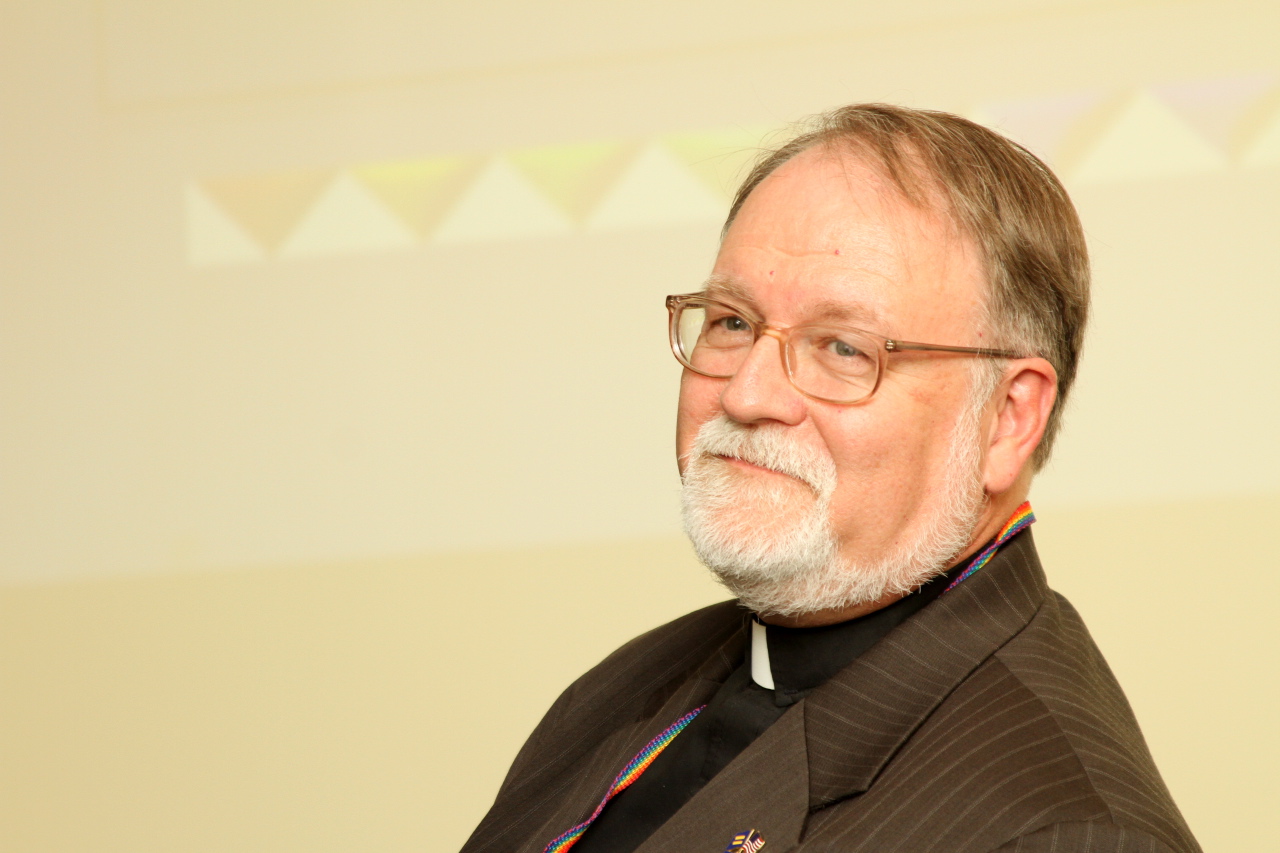
Dr. Stephen V. Sprinkle (Keith Tew photo).
Stephen V. Sprinkle is Director of Field Education and Supervised Ministry, and Professor of Practical Theology at Brite Divinity School, Fort Worth, Texas, a post he has held since 1994. An ordained Baptist minister, he is the first open and out Gay scholar in the history of the Divinity School, and the first open and out LGBTQ person to be tenured there. Read More…
Recent Social Justice Advocacy Activity By Dr. Sprinkle
 Summer 2009 – Dr. Sprinkle responded to the Fort Worth Police Department and Texas Alcoholic Beverage Commission Raid on the Rainbow Lounge, Fort Worth’s newest gay bar, on June 28, 2009, the exact 40th Anniversary of the Stonewall Rebellion. Dr. Sprinkle was invited to speak at three protest events sponsored by Queer LiberAction of Dallas. Here, he is keynoting the Rainbow Lounge Protest at the Tarrant County Courthouse on July 12, 2009. Read More…
Contact Us
Communicate with the Unfinished Lives project team:
info@unfinishedlivesblog.com


Schedule a Presentation
Dr. Sprinkle will gladly present his acclaimed presentation to your organization. To arrange an Unfinished Lives presentation for your organization or group, please contact us.
Dr. Sprinkle has given his Unfinished Lives presentation to these and other community groups and organizations. Read More…
-

Where are our readers?
Publisher: Steve Sprinkle (Project Director)
Steve Sprinkle
Unfinished Lives: Remembering LGBT Hate Crime VictimsBrite Divinity School/Texas Christian UniversityFort Worth TXprofessor, minister, author, blogger, LGBTQ advocate


Follow Unfinished Lives on Facebook
 Box Turtle Bulletin
- An error has occurred; the feed is probably down. Try again later.
- HRC Back Story
- Know About The Gender Identity Movement
- Why Is There A Need For Human Rights?
- Kinds Of Human Rights
- Human Rights Purposes And Violations
- Human Rights For Every Human Incident
- 8 Reasons Human Rights Are Important
- Everything About Human Rights
- Human Rights Issues Education & Law
- We Need To Stand Up For Our Rights And Those Of Others
- Coca-Cola Receives Perfect Score On Human Rights
- The Advocate: Daily News
- Journalist detained for booing Trump at Kennedy Center 'Chicago' performance
- Donald Trump telegraphs war crimes in profanity-filled Easter Sunday Iran threat
- NYC’s most powerful transgender official is fighting intensifying anti-LGBTQ+ federal pressure
- Maryland lawmakers advance broad school protections, including for trans students
- Fired for refusing to remove LGBTQ+ books, Tennessee librarian says she’d do it again
- Lawyers alarmed by immigration judge's 'atrocious' questions for gay asylum seekers
- What is the trans gaze? It's relief and recognition between strangers on a train
- Same-sex couples thrive in U.S. even as GOP support for marriage equality falls
- Did the FBI just post this propaganda video to save Kash Patel’s job?
- Over her short tenure as Trump’s attorney general, Pam Bondi terrorized LGBTQ+ Americans
- Dallas Voice: Instant Tea
- An error has occurred; the feed is probably down. Try again later.

 Unfinished Lives
Senate Passes DOD Bill with Matthew Shepard Hate Crimes Amendment Attached
~ Stephen Sprinkle, Director, Unfinished Lives Project
Share this:
July 24, 2009 Posted by unfinishedlives | Hate Crimes, Legislation, Matthew Shepard Act, Perpetrators of Hate Crime, Special Comments, U.S. Senate, Washington, D.C. | D.C., Hate Crimes, Matthew Shepard Act, Politics, Special Comment, U.S. Senate, Washington | Comments Off on Senate Passes DOD Bill with Matthew Shepard Hate Crimes Amendment Attached