Hate Crime Murder Trial Resumes in Brooklyn

Keith Phoenix: "So I killed a man? Does that make me a bad person?"
Brooklyn, NY – Keith Phoenix, alleged murderer of Ecuadoran immigrant José Sucuzhañay, is in a Brooklyn court again after a mistrial. Phoenix and his co-attacker, Hakim Scott, took offense at José and his brother, Romel, as they walked arm-in-arm on a freezing night in December 2008. Hurling epithets at the Ecuadorans for being Hispanic and “gay” (in fact, neither of the brothers are gay), Scott assaulted José with a beer bottle, and Phoenix allegedly delivered the coup de grace with an aluminum baseball bat. Scott received a sentence in the Spring for manslaughter, escaping hate crimes charges. When a juror in Phoenix’s first trial refused to continue, the judge in Brooklyn Supreme Court declared a mistrial. There seems little doubt that Phoenix is guilty. A toll booth camera caught the pair of assailants smiling and laughing as they fled the scene of the crime. Witnesses stand ready to testify again that the bat attack was so brutal and bloody the taxi driver witness had to avert his eyes from the scene. And Phoenix himself seems to be doing all he can to get himself convicted, too. In a confession taken by a detective at Phoenix’s arrest recorded the defendant as asking, “So I killed somebody. Does that make me a bad person?” Well, yes, as a matter of fact, it does, in the opinion of the Unfinished Lives Project Team. Critics of how the courts in Brooklyn have been handling this case look to the Phoenix trial as a way of redressing what appears to be a severe disrespect for Latin American immigrants and LGBT people. The main defense Phoenix is mounting is that too much alcohol led him to do what he did. He has yet to show any remorse for his actions. Keith’s attorney has suggested that his client feared that the victim might have a weapon in his waistband, and that José was the one who started the fight. When José M. Arrufat Gracia, the lawyer for the Sucuzhañay family heard these allegations, he said, “We definitely believe those allegations are insulting to the victims, alleging that the perpetrators were acting in self-defense.” Perhaps a prison term of decades will assist him to develop the self-restraint he could not exercize two years ago when he bludgeoned an innocent man to death, and the remorse for a hate crime he seems incapable of understanding today.
Ball Bat Attackers Immune from Hate Crimes Charges?: Authorities Backpedal on Anti-Gay Violence

Big Stick Combat photo
Dallas, TX – What does a midnight assault on two Dallas gay men Friday have in common with a December 2008 fatal attack on two Latinos mistaken as gay in Brooklyn, New York? Two things: first, both attacks were carried out by homophobes yelling anti-gay slurs as they swung baseball bats at the heads of their victims; and second, police in both cases classified neither assault as an anti-hate crime. What gives? What does it take to get officers of the law to prosecute hate crimes under existing hate crime statutes? While Dallas and Brooklyn are 1370 miles distant from each other and worlds apart culturally, they both have law enforcement resistant to investigate crimes against gay men as bias-motivated. The 2008 Brooklyn murder of José Sucuzhañay serves as an eerily familiar backdrop to the current Dallas attack on Kyle Steven Wear and his friend Alex. Like Dallasites Kyle and Alex, the Ecuadoran immigrant brothers José and Romel were walking together down the street in the wee hours of the night. The Brooklyn crime was carried out by two assailants swinging a broken beer bottle and an aluminum baseball bat, yelling anti-gay and anti-hispanic epithets. Trials in the Sucuzhañay case are proceeding right now in Brooklyn, where Hakim Scott has just been convicted of first-degree manslaughter, and his accomplice, Keith Phoenix, awaits an new court date since the New York judge dismissed all hate crimes charges and declared a mistrial because of a juror in the first Phoenix trial who refused to participate any further. The Brooklyn ball bat attack left José lingering five days in a coma from a broken skull before he died. The consensus of the supporters of Sucuzhañay family, outraged city officials, and the metropolitan New York media is that this ugly, brutal attack took place because Scott and Phoenix targeted two Hispanic men whom they mistook for gay because they didn’t like the way they looked. Wear and his friend Alex (last name still unreleased) were much more fortunate. As they walked along in the southwestern part of the Cedar Springs gay entertainment district in Dallas, “the gayborhood,” headed for the bars, four assailants only identified as Latinos wearing white tee-shirts, blindsided the pair shouting “Faggots, give us your fucking wallets!” according to WFAA News. Wear told WFAA on camera that he was knocked unconscious and his jaw was broken by one of the attackers swinging a ball bat. His friend, Alex, reported that he feared for his life as the homophobes forced him to the ground. The Dallas Police are refusing to classify the case as a hate crime, contending instead that the motive was to rob the gay men. But Alex isn’t buying it. He told Jonathan Betz of WFAA, “I still feel like that was why we were targeted in the first place, because we are gay. It was like it was funny to them.” John Wright of the Dallas Voice is outraged that the authorities have resisted investigating the Dallas ball bat assault as an anti-gay bias crime. In a May 16 post for the Dallas Voice blog, Instant Tea, he writes, “Despite the fact that the suspects yelled anti-gay slurs as they beat the victims with baseball bats, Dallas police have not classified the incident as a hate crime, which is an outrage.” Wright points out that Jimmy Lee Dean was nearly beaten and stomped to death in the same general neighborhood by two homophobic attackers in July 2008. Wright then shows that regardless of the refusal of Dallas law authorities to enforce Texas hate crimes law, federal hate crimes protections should kick in. The James Byrd, Jr. and Matthew Shepard Hate Crimes Prevention Act of 2009 classifies a hate crime as motivated in whole or in part by anti-LGBT bias. One major determining criterion of an anti-gay hate crime for the FBI is the use of epithets as the perpetrators carried out the crime. Anti-LGBT hate crimes are like the rest of life: seldom pure and simple. Other motives often accompany hate violence against gays, lesbians, and transgender persons: robbery, drugs, racism and sexism, to name a few. But homophobia and heterosexism, like a sinister bass line in a libretto, thread throughout all anti-LGBT hate crimes cases, targeting people who are assumed to be inferior, impure, and abominable because of their perceived sexuality. In Dallas and in Brooklyn, it seems baseball bats and anti-gay epithets are not enough to launch hate crimes prosecutions. Are anti-gay sluggers simply immune in Texas and New York? Again we ask, What does it take to get officers of the law to prosecute hate crimes under existing hate crime statutes? It takes an outcry from LGBT people and their allies so that law enforcement will not be permitted to backpedal on hate crimes against members of the sexual minority without a stink being raised to high heaven. If police and prosecutors are unfamiliar with what LGBT bias crimes are, they are responsible to educate themselves. If they are being intentionally obstructionist, then the mayor and the city council need to replace them with officials who will carry out the law.
Outrageous Verdict in the Sucuzhañay Hate Murder Case; Con Escapes Life Sentence
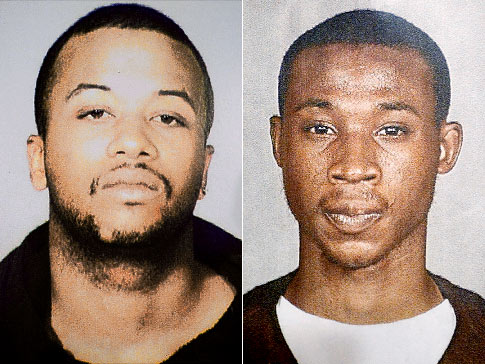
Keith Phoenix (l) and Hakim Scott (r) - NYPD mugshots
Brooklyn, NY – Testimony in Brooklyn’s Supreme Court corroborated Romel Sucuzhañay’s contention, that two young men attacked him and his brother, José Sucuzhañay, wielding a broken beer bottle and an aluminum base ball bat, screaming anti-Latino and anti-gay slurs. The assault left José with a broken skull. The Ecuadoran immigrant, 31 years old, living in the Bushwick section of Brooklyn, lingered in a coma for five days, dying just before his mother got to his bedside from Ecuador. Any reasonable person would call that a hate crime. Not the Brooklyn jury, however. They bought the defense line, that Hakim Scott, 26, was caught up in an unfortunate “escalating fight.” It did not seem to matter that a the prosecution established that Scott, who broke his beer bottle over José’s head before menacing Romel with the jagged glass, had dazed José to the point that his accomplice, Keith Phoenix, had an easy target as he lethally swung his bat. On May 6, the jury found Scott guilty, not of first or second degree murder and hate crime, but first degree manslaughter, allowing him to escape a life sentence for snuffing out an innocent man’s life. Scott and Phoenix didn’t like the Sucuzhañay brothers because they were Hispanic, and they appeared to be gay. While Scott will face a possible 40 years in prison for his manslaughter conviction when he is sentenced on June 9, it is hard not to say that there was a travesty of justice in this case. Now, because a juror refused to hear any more testimony in the Phoenix case, Judge Patricia Dimango has declared a mistrial, and the Sucuzhañay family and their supporters will have to wait further agonizing weeks to learn whether the 31-year-old ball bat perp will escape the full force of the law, too. Latinos, especially Ecuadorans, are outraged by the verdict. So are LGBT people. And justice has not been done for José Sucuzhañay. It seems that living at the intersection of two discriminations is very dangerous place to be in America.
Slain Ecuadoran’s Supporters Denounce One Brooklyn Verdict; Await Another
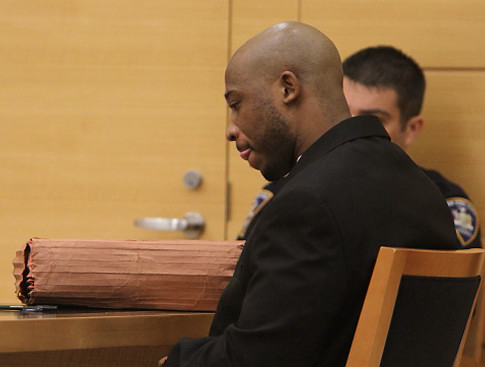
Hakim Scott listens to closing arguments in his trial for the murder of José Sucuzhañay (Ward photo for the Daily News)
Brooklyn, NY – Hakim Scott, 26, killer of Ecuadoran Immigrant José Sucuzhañay, escaped conviction for murder, but was convicted of manslaughter by a jury in Brooklyn Supreme Court on Thursday. No hate charge was sustained against Scott for the brutal slaying of the 31-year-old Sucuzhañay, who along with his brother Romel was mistaken as a gay man. The brothers were walking arm-in-arm against the cold early on December 7, 2008 in the Bushwick section of Brooklyn when Hakim and Keith Phoenix, hurling anti-gay and anti-hispanic epithets, attacked them with a beer bottle, their heavily shod feet, and an aluminum baseball bat. Family and friends of the victim swiftly denounced the verdict as soft and wrong-headed, according to several news sources. The New York Daily News reports that José’s brother Diego, vigorously maligned the verdict, saying, “There was testimony that these words of hate were used. We believe right now would have been a perfect time to send a message against hate, intolerism [sic] and racism.” On Friday, the Columbus, IN Republic interviewed Christine Quinn, speaker of the New York City Council, as she stood with Sucuzhañay’s three brothers outside the courthouse, “Look, two brothers were walking home. They weren’t bothering anybody. All of a sudden two guys jump out of a car and beat José and leave him for dead, calling him anti-gay and anti-immigrant names? That’s a hate crime,” she said. The Latin American Herald Tribune reported that Quinn further defined what kind of hate crime Sucuzhañay suffered: “Jose Sucuzhañay was murdered because Hakim Scott and Keith Phoenix did not like who he is and who they thought he was,” Quinn said. “And they attacked him, by all accounts, for no other reason than their hatred of the LGBT (lesbian-gay-bisexual-transgender) community and their hatred of Latinos and immigrants. That’s what killed Jose Sucuzhañay.” Quinn, Brooklyn Congresswoman Nydia Velazquez, and a number of other elected officials believe that the manslaughter verdict, which may entail a 25-year prison term for Scott, to be too lenient for such a savage killing. Diego, speaking for the Sucuzhañays on the courthouse steps during a Friday press conference, said, “The judicial system has failed to send a clear message. Our family still can’t understand how the jury has come to the conclusion that the attack on my brothers and the murder of José was not motivated by hate,” according to the LAHT. The trial of Keith Phoenix, who allegedly swung the bat so hard that it burst his victim’s skull, is still proceeding. The 30-year-old African American is being tried before a second jury seated in the same courtroom as the jury that convicted Scott of manslaughter. Phoenix is charged with murder and murder as a hate crime in the case. Members of the Scott jury who were willing to speak to the press speculated that Phoenix may likely be convicted of a hate crime for his part in the grisly bludgeoning of the Ecuadoran businessman. A verdict in his trial is expected sometime next week. As supporters await the Phoenix verdict, Walter Sinche, Director of the international Ecuadoran Alliance told a reporter for the Daily News, “Someday maybe we’ll get justice. Hopefully, these types of attacks will stop.”
Anti-Gay, Anti-Latino Murder Trial in Brooklyn; Assailants “Didn’t Like the Way They Looked”

José Sucuzhañay
Brooklyn, New York – After a year and a half, a murdered Ecuadoran immigrant mistaken as gay may get some justice. José Sucuzhañay, 31, a native of Ecuador with a real estate brokerage in New York, was savagely dispatched with a beer bottle, kicks and stomps, and an aluminum baseball bat, according to testimony reported by media throughout the Five Boroughs of New York. The trials of Hakim Scott, 26, and Keith Phoenix, 30, got underway in Brooklyn Supreme Court on April 10 for the 2008 murder of Sucuzhañay. Charges against the pair include second-degree murder, manslaughter, assault, and murder as a hate crime. If convicted, the alleged killers could face sentences of 78-years-to-life imprisonment. The defendants are being tried simultaneously before separate juries in a precisely choreographed judicial drama. At times, both juries are seated to hear the same testimony. At other times, dictated by the presentation of evidence, only one jury is present in the courtroom. As reported by the New York Times, José Sucuzhañay and his brother, Romel, visiting from Ecuador, were attacked at 3 a.m. on December 7, 2008 in the Bushwick section of Brooklyn because Scott and Phoenix “didn’t like the way they looked.” Prosecutor Josh Hanshaft, referring to Phoenix who allegedly wielded the bat, told the juries, “He didn’t like that they were Hispanic. From his eyes, it appeared they were a gay couple, a way of life he didn’t like and wasn’t going to tolerate.” In reality, both men were heterosexual. The Latino brothers had been drinking at parties in the neighborhood and were tipsy enough that they uninhibitedly hugged each other for support and warmth on a bitterly old night as they walked along. The attackers, who had also been partying that night, set upon them, yelling “faggot ass niggers” and “fucking Spanish,” from Phoenix’s red SUV. The prosecution believe that both assailants acted in concert to effect their victim’s death. Scott, Hanshaft said, emerged from the auto and smashed a beer bottle over José’s head. He then charged Romel with the deadly shards of broken glass, slashing at his neck. Phoenix took the bat, swinging it “high above his head,” and struck Sucuzhañay “over and over and over again,” Hanshaft said. “He came back with the bat and hit him two to three times on the head, cracking his skull wide open.” A Brooklyn cabbie at the scene witnessed the attack well enough to capture the license plate of the red SUV, but then had to cover his eyes with his hands, unable to watch the coup de grâce delivered by Phoenix. As reported by Chelsea Now, taxi driver Davi Almonte, speaking through an interpreter, told the court, “I didn’t want to see the head explode when it was hit. I could hear the impact [of the bat crushing his skull].” According to NY1, in testimony on the trial’s second day, Demetrius Nathaniels, cousin of Keith Phoenix, heard the bones cracking as Phoenix bludgeoned Sucuzhañay with the bat on his head, back, side and ribs. A coroner’s report confirmed that José died of a fractured skull from blunt force trauma. Romel, only superficially injured by Scott’s assault, was left stunned, nearly catatonic by the body of his brother who lay in a massive pool of blood, and had to be led away by police responding to the alarm raised by witnesses. The alleged killers sped from the scene. A toll booth video capture of the red SUV on the Triborough Bridge clearly shows Phoenix laughing and smiling barely 19 minutes after the fatal attack. Sucuzhañay was left brain dead, and placed on a ventilator at Elmhurst Hospital in Queens where he finally succumbed on December 12. An outpouring of grief and rage followed news of the murder, both in New York and in Sucuzhañay’s native Ecuador where the slain immigrant was given a near-state funeral attended by hundreds. New York Gay and Latino advocacy groups organized protests and vigils, while city officials roundly condemned the brutal killing. Philip J. Smallman, attorney for Phoenix, summed up the consensus of all concerned with events of December 7: “Does anything good happen at 3 o’clock on a Sunday morning in 30-degree weather, with people with bellies full of booze?” he asked. The Brooklyn trial is expected to last for a number of weeks.
Arrest in Transgender Woman’s Murder in Queens, NY
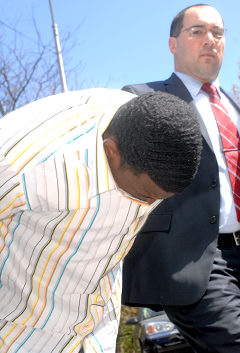
Rasheen Everett, arrested in Las Vegas (Anderson photo for the NY Daily News)
Queens, NY – the NY Daily News reports that police in Las Vegas, Nevada have arrested the man wanted in the strangulation murder of transgender woman Amanda Gonzalez-Andujar. Rahseen Everett, 29, (pictured at left in custody) allegedly strangled Ms. Gonzalez-Andujar in her Queens apartment. She was also 29 years of age. Everett is an ex-convict who is wanted in connection with two attempted murders in Massachusetts. After the alleged murder in Queens, Everett fled to Las Vegas, hiding out with an unidentified acquaintance. Police have not released details of the arrest, or how the suspect was traced to Nevada. Ms. Gonzalez-Andujar’s murder has angered and frightened members of the New York LGBT community, who are calling for the fullest possible penalty for her murderer. According to the Sylvia Rivera Law Project, A memorial service has been announced for her at the Metropolitan Community Church of Manhattan on April 24 from 2 pm to 3 pm. The address is 446 W. 36th Street (between 9th & 10th Avenue in Midtown Manhattan). A candlelight vigil is also planned in front of Ms. Gonzalez-Andujar’s Glendale Queens home on the same date, from 4 pm to 5 pm. Stefanie Rivera, representing the SLP Collective, said, “We are still outraged at the hatred, transphobia and violence that persist to lead to the untimely deaths of more and more transgender and gender nonconforming people, particularly young transgender women of color.” She pledged to combat the alarming trend of violence against all members of the sexual minority. On its web site, the SLP Collective says its mission is “to guarantee that all people are free to self-determine their gender identity and expression, regardless of income or race, and without facing harassment, discrimination, or violence. SRLP is a collective organization founded on the understanding that gender self-determination is inextricably intertwined with racial, social and economic justice. Therefore, we seek to increase the political voice and visibility of low-income people and people of color who are transgender, intersex, or gender non-conforming.” Ms. Gonzalez-Andujar’s body was found on March 30 some days after her death sprawled naked on her bed by a landlord who was prompted to open her apartment door by concerned friends. One of those friends, Barbara Vega, told the News, “Everything in the apartment was destroyed. All her Marilyn Monroe pictures were destroyed.”
Transgender Woman Murdered in Queens
 Queens, NY – The last images we have of Amanda Gonzalez-Andujar are on a video capture at the entrance to her apartment building in the Ridgewood neighborhood of Queens with a tall man wearing a dark hoodie. Sometime late on Friday, March 26 or very early on Saturday, March 27, Ms. Gonzalez-Andujar, 29, was strangled to death in her home. Her body was not discovered until March 30, stripped of all her clothing except for her bra, lying across the bed in her ransacked apartment. Her Marilyn Monroe photos, part of a collection of Marilyn memorabilia her friends said was precious to her, were destroyed, frames smashed and images defaced. Police are continuing to investigate the apparent homicide, and have not yet issued a statement about the possible hate crime aspect of the case. It is difficult to believe that some form of transphobia or gender hatred did not motivate the murder to some degree, given the destruction of the Monroe photographs. The search is still on for the tall man who accompanied her into her home, a person authorities and friends presume to be Ms. Gonzalez-Andujar’s boyfriend. The New York Daily News, which broke the story, reports that a neighbor called police after becoming alarmed the evening of the 26th about the sound of a loud argument in the apartment. When the landlord beat loudly on the door, however, no one answered. One of the problems attendant to translife is a subtle form of isolation separating a transperson from getting to know neighbors in the usual way people relate in communities. This isolation probably contributed to the lag time between Ms. Gonzalez-Andujoar’s disappearance and the discovery of her body in a fully occupied apartment building. A laptop with potential evidence of the identity of her murderer was missing, perhaps stolen in an attempt to slow law enforcement from tracking him down. EDGE Boston reports that the Queens Pride House and the Transgender Legal Defense and Education Fund are expressing alarm at the continuing violence against transfolk in New York’s five boroughs. In a joint statement to the press, Pride House and TLDEF said, “As organizations serving the transgender community, we are very concerned about the safety of transgender women within our community. We condemn the violence against Amanda Gonzalez-Andujar and encourage swift action by law enforcement to apprehend suspects, and to fully investigate this brutal crime and bring all appropriate charges.” Commenting on the difficulty transgender women face in the United States, MtoF transwoman from Queens, Justine Valinotti writes in her blog, transwomantimes, “If we–that is to say, our souls–go anywhere after this life, I hope Amanda finds love and acceptance there.”
Judge Puts Off Murder Trial of Gay Puerto Rican Teen’s Confessed Killer
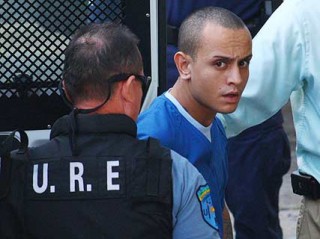 San Juan, Puerto Rico – In a controversial move, a Puerto Rican judge has postponed the murder trial of Juan José Martínez Matos (pictured at left) who confessed to the grisly decapitation, dismemberment, and immolation of the body of 19-year-old Jorge Steven López Mercado in November 2009. In the intervening months since his arrest, Martínez Matos has claimed gay panic and childhood sexual abuse as rationalizations for the murder he says he committed when he “discovered” that the gay teen was homosexual during a tryst. A psychiatric examination has deemed Martínez Matos competent to stand trial for the crime. EDGE reports that Judge Myriam Camila Justino announced on March 8th Juan José Martínez Matos’ trial would begin in Caguas on April 14th, not on March 30th as previously announced. No reason was given in the press for the postponement. López Mercado’s horrific murder, arguably the worst anti-LGBT hate crime in Puerto Rico’s history, has served as a magnet both for homophobic/heterosexist prejudice and for social justice advocacy on behalf of the LGBT population on the island. Law enforcement officers intimated to the press that the gay teen somehow got what he had coming to him because of his sexual orientation, comments that ignited a firestorm of protest both in Puerto Rico and on the U.S. mainland. Attempts to besmirch the slain teenager’s character, thereby lessening the sympathy of the public for his killing, were made early on in the reportage surrounding the case. Most recently, details of López Mercado’s alleged drug use and sex work have been brandished in the press. Social action advocates for human rights such as Pedro Julio Serrano have repeatedly beaten back such character attacking tactics by reminding the public that the slain teenager is not on trial here–his alleged murderer is. Politicians in the United States from the U.S. Congress and from New York city and state governments have traveled to Puerto Rico in recent months to focus attention on the plight of LGBT people in the U.S. Territory, and to express solidarity with the victim’s family. Large protests have been staged in San Juan and in cities around that nation such as New York, Chicago, San Francisco, Atlanta, Dallas, Boston, and Washington, D.C. The passage of the James Byrd, Jr. and Matthew Shepard Hate Crimes Prevention Act in October has set the stage for violence against LGBT people in Puerto Rico to be investigated in more effective ways than ever before. Though a Puerto Rican law made violence against LGBT people there illegal, no one has ever been prosecuted under the provisions of the law until this case. It remains to be seen if the power of cultural phobias and traditional religious antipathy to LGBT people will significantly impact the outcome of this trial. But first the defendant must have his day in court, barring his petition to avoid a jury trial altogether.
Gay Brazilian Granted Asylum By Homeland Security: Hope Now For Uganda?

L to R - Rena Stern, Augusto Pereira de Souza, and Brian Ward
New York City – A gay Brazilian man has been granted asylum in the United States on the grounds that deportation to Brazil would threaten his life. Columbia University’s Sexuality and Gender Law Clinic won asylum for Augusto Pereira de Souza, 27, from the U.S. Department of Homeland Security in a move that may bring hope to thousands of Ugandan LGBT persons in the event that the odious “Kill the Gays Bill” becomes law in Uganda. The news highlights the danger LGBT people face in Brazil. According to Grupo Gay da Bahia (GGB), the largest LGBT rights organization in Brazil, between 1980 and 2009, there were 2,998 murders of LGBT people in Brazil. In 2008, 190 such murders were reported, though the GGB notes that since many crimes against LGBT people go unreported in Brazil, the actual number of people who lost their lives because of their sexual orientation is likely much greater. Calling his decision to petition for asylum in the United States “a matter of life or death,” Augusto Pereira de Souza told reporters, “In Brazil, I lived in constant fear for my life. I tried to hide that I was gay, but still faced repeated beatings, attacks, and threats on my life because I was gay. At times I was attacked by skinheads and brutally beaten by cops. After the cops attack you and threaten your life for being gay, you learn quickly that there is no one that will protect you.” He will now live openly as a gay man in Newark, New Jersey, where he had lived for some time hiding his sexual orientation. Pereira de Souza’s writ of freedom is thanks to the tireless legal work of three students from Columbia Law School’s Sexuality and Gender Law Clinic, Rena Stern, Brian Ward, and Mark Musico. The trio of law students worked on the case since last September under the direction of clinic director, Dr. Suzanne Goldberg. In a statement reported by The Advocate, Ward said, “In Brazil, police routinely fail to investigate violence committed against GLBT individuals. In this environment, skinheads and other groups are free to persecute, torture, and even kill GLBT individuals with impunity.” Stern, who also assisted with Pereira de Souza’s case, said attacks and murder based on sexual orientation in Brazil appear to be on the rise there. “Mr Pereira de Souza’s story is unfortunately not unusual for a gay man in Brazil.” Such a grant of asylum is rare, largely because of the time and expense necessary to file the application and see it through the process of vetting to make sure that actual danger is truly probable for the asylum-seeker. Individuals must first make it into the United States even to apply, a significant hurdle for foreign LGBT people from countries in the developing world, such as Brazil and Uganda. For Ugandan LGBT people living in fear for their lives in a country where Parliament is debating the enactment of a law making homosexuality punishable by the death penalty, the decision to grant the Brazilian asylum is potentially life-saving news. President Obama and Secretary of State Clinton have spoken out against the “Kill the Gays Bill” as recently as their appearance at the right-wing sponsored National Prayer Breakfast last Thursday in the nation’s capitol. Should the Ugandan Parliament enact the bill into law, gay Ugandans could face a death sentence, their families and friends could be imprisoned for as much as seven years, and even landlords who rent to homosexuals could face jail time. Now, with the Pereira de Souza decision, the door to freedom and life in the United States is opened just a crack for LGBT Ugandans, but it is much more than they had even a week ago.
Arrest Made in Lesbian Stabbing Case

Suzanne Glover on the way to court
Buffalo, NY – From prosecution witness to defendant, all in one day. That’s how it went down when Buffalo Police arrested Susanna Deanna Glover of Tonawanda last week, charging her with stabbing a lesbian in the eye on New Year’s Eve outside a popular gay bar. Glover, 21, was taken into custody just hours after testifying against a man who shot her boyfriend to death right before her eyes in April 2009. Glover’s testimony helped jurors convict Jerome Thagard, 17, of the murder of Glover’s lover, Stephen Northrup, who was 31 at the time of his death. After her boyfriend’s murder, Glover moved to Florida where she now lives, returning to Buffalo for the express purpose of testifying against Thagard. The verdict in the Northrup case was handed down Monday evening. By that time, Glover was under arrest for the stabbing, which law enforcement authorities are calling a hate crime. The attack on Lindsay C. Harmon, 29, along with the murder of Christopher Rudow, a 32-year-old gay man, has rocked the Buffalo LGBT community in recent weeks. Glover allegedly attacked Lindsay Harmon outside Roxy’s, an LGBT nightclub, stabbing her in the left eye while yelling homophobic slurs. A grand jury will have to make the determination whether the charges against Glover for the attack warrant a hate crime designation, based on their judgment of Glover’s motivation for the attack. According to WIVB News 4, Glover attempted to hide her face from cameras as she was hustled into a city courtroom to face a judge. Harmon also attended the proceeding to get the first glimpse of her attacker since New Year’s, white bandaging prominent on her right eye. Some vision is returning to Harmon, according to her father, Michael Harmon, who told reporters for News 4 that his daughter still had a long way to go before full health would be restored to her. “It’s gonna be a long time and some more surgery,” he said. Glover has retained her own attorney, so the trial has been pushed back to later in February.
About

If you are a first-time visitor to the Unfinished Lives Project website, we invite you to read A Welcome Message introducing you to our project. We are truly grateful for your visit.
The Unfinished Lives Project website is a place of public discourse which remembers and honors LGBTQ hate crime victims, while also revealing the reality of unseen violence perpetrated against people whose only “offense” is their sexual orientation, gender identity, or gender presentation. LGBTQ people in the United States are suffering a slow-rolling decimation of terror and murder all across the country. Every locale and demographic of society are affected: First Nations, Anglo, Black, Latino and Latina, South and Southeast Asian, Transgender, Bisexuals, Gay men, Lesbians, disabled, young, and mature. Homophobia has a long, crooked arm, and it is reaching out to snatch the life away from women and men whose tragic stories are under-reported to begin with, and whose memories are swiftly forgotten.
The horror of these killings transcends the shock and bereavement of loved ones and friends. These are not typical homicides; they are not killings for money or drugs, incidents of domestic strife, or crimes of passion. The vicious nature of hate crimes against LGBTQ persons is extremely brutal, grotesquely violent, and egregiously hateful.
Each murder serves the LGBTQ population as a sobering warning about the actual level of danger in our communities. The message these killings send is that freedom and open life for LGBTQ people is a cruel dream. Every time we remember one of these victims, however, the intentions of their killers are frustrated. To remember these women and men is to begin the process of changing the culture that killed them.
Our Project Director
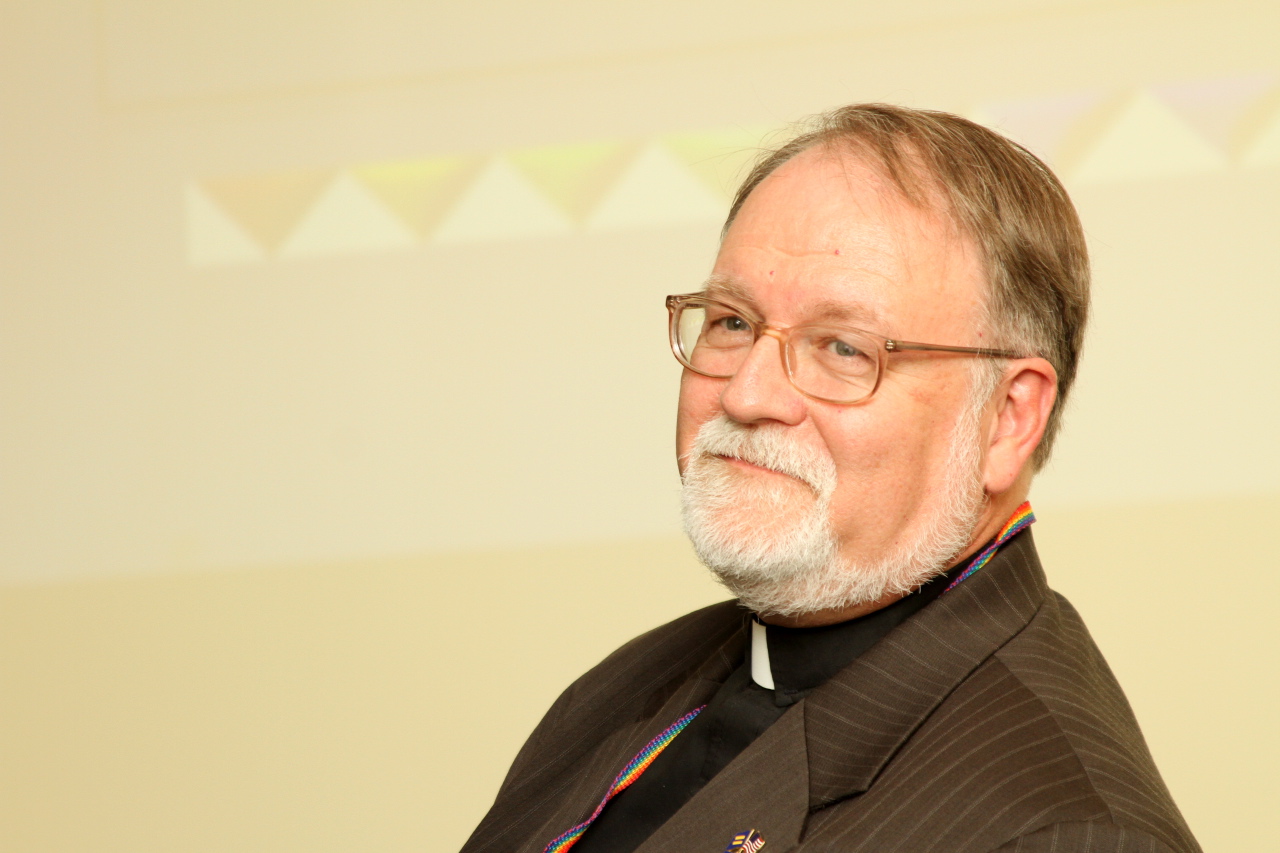
Dr. Stephen V. Sprinkle (Keith Tew photo).
Stephen V. Sprinkle is Director of Field Education and Supervised Ministry, and Professor of Practical Theology at Brite Divinity School, Fort Worth, Texas, a post he has held since 1994. An ordained Baptist minister, he is the first open and out Gay scholar in the history of the Divinity School, and the first open and out LGBTQ person to be tenured there. Read More…
Recent Social Justice Advocacy Activity By Dr. Sprinkle
 Summer 2009 – Dr. Sprinkle responded to the Fort Worth Police Department and Texas Alcoholic Beverage Commission Raid on the Rainbow Lounge, Fort Worth’s newest gay bar, on June 28, 2009, the exact 40th Anniversary of the Stonewall Rebellion. Dr. Sprinkle was invited to speak at three protest events sponsored by Queer LiberAction of Dallas. Here, he is keynoting the Rainbow Lounge Protest at the Tarrant County Courthouse on July 12, 2009. Read More…
Contact Us
Communicate with the Unfinished Lives project team:
info@unfinishedlivesblog.com


Schedule a Presentation
Dr. Sprinkle will gladly present his acclaimed presentation to your organization. To arrange an Unfinished Lives presentation for your organization or group, please contact us.
Dr. Sprinkle has given his Unfinished Lives presentation to these and other community groups and organizations. Read More…
-

Where are our readers?
Publisher: Steve Sprinkle (Project Director)
Steve Sprinkle
Unfinished Lives: Remembering LGBT Hate Crime VictimsBrite Divinity School/Texas Christian UniversityFort Worth TXprofessor, minister, author, blogger, LGBTQ advocate


Follow Unfinished Lives on Facebook
 Box Turtle Bulletin
- An error has occurred; the feed is probably down. Try again later.
- HRC Back Story
- Know About The Gender Identity Movement
- Why Is There A Need For Human Rights?
- Kinds Of Human Rights
- Human Rights Purposes And Violations
- Human Rights For Every Human Incident
- 8 Reasons Human Rights Are Important
- Everything About Human Rights
- Human Rights Issues Education & Law
- We Need To Stand Up For Our Rights And Those Of Others
- Coca-Cola Receives Perfect Score On Human Rights
- The Advocate: Daily News
- Federal judge rebuffs Trump administration push to restrict gender-affirming care for minors
- Donations surge for Tennessee librarian fired by conservative board over LGBTQ+ books
- South Carolina man faces hate crime charges after shooting into Myrtle Beach LGBTQ+ nightclub
- Journalist detained for booing Trump at Kennedy Center 'Chicago' performance
- Donald Trump telegraphs war crimes in profanity-filled Easter Sunday Iran threat
- NYC’s most powerful transgender official is fighting intensifying anti-LGBTQ+ federal pressure
- Maryland lawmakers advance broad school protections, including for trans students
- Fired for refusing to remove LGBTQ+ books, Tennessee librarian says she’d do it again
- Lawyers alarmed by immigration judge's 'atrocious' questions for gay asylum seekers
- What is the trans gaze? It's relief and recognition between strangers on a train
- Dallas Voice: Instant Tea
- An error has occurred; the feed is probably down. Try again later.

 Unfinished Lives