Homophobia Kills Straight People, Too
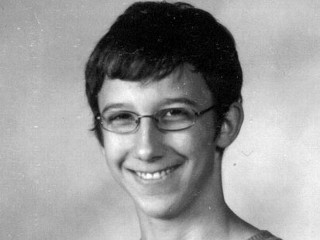
Eric Mohat, 17, committed suicide after merciless homophobic bullying at school. He was straight.
Mentor, OH: The parents of a 17-year-old straight son who was bullied in school so relentlessly for being homosexual that he killed himself filed suit in federal court on March 27, 2009 against the school system and officials who witnessed the name-calling, hitting, and pushing, but did nothing to protect the boy. Eric Mohat, whose nickname was “Twiggy,” was a tall, skinny boy who loved to play the piano, had a wonky sense of humor, and loved the theatre. The harassment proved too much to bear. A bully shouted at him in class on March 29, 2007, “Why don’t you go home and shoot yourself! No one will miss you!” Eric did.

Eric strikes a pose for the Yearbook
He went home, took out his father’s legally registered handgun, locked himself in the room, and shot himself in the head. His parents, William and Janis Mohat of Mentor, Ohio, allege that the suicides of three other youths at Mentor Senior High School, that occurred shortly after their son’s death, are also due to excessive bullying. Though the Mohats are seeking no punitive damages in their suit, they insist that the school system acknowledge the problem of homophobic bullying and address it effectively. School officials defend the operation of the 2,900 student school in an eastern exuburb of Cleveland, saying that they had already instituted a form of anti-bullying education, and took appropriate steps to address Eric’s fears when he brought them to their attention. Countering, friends of Eric’s attest that teachers and administrators saw what was happening to Eric and others, and in effect turned a blind eye. They say Eric was relentlessly badgered in class, and called “fag,” “homo,” “nancy boy,” and “queer” right in front of his teachers. Most of the bullying took place in a math class where the teacher, who is an athletic coach, failed to protect Eric. Experts on anti-bullying education note that the program the Mentor school is using has questionable results with homophobic jock culture when it is entrenched in a school or community.

Eric's MySpace pic, a gift from his sister, Erin
His older sister Erin, whom Eric called his hero, heard the shot from another room where she was exercising on a treadmill. In a blog, Erin wrote about losing her little brother: “It’s so surreal. I just keep thinking he’ll walk through the front door, bouncy as always, and say, ‘Oh the wound wasn’t that serious, they patched me up just fine.’ But I know better. The coroner has called and asked to use pieces of his heart to save three children’s lives, and his corneas too. The police were there to tell me, yes he was dead. But I knew from the moment I found him. I didn’t want to admit it because I was still hoping that just maybe my mind was playing tricks on me…. but that’s not the case and I knew it the moment I saw all that blood and I saw part of his brain on that floor. I can’t get it out of my head. The image of it all makes me sick but even with my eyes wide open I can see it.” Now Erin, who is 21, is studying to be a school psychologist.
Eric’s dad told ABC reporters, “When you lose a child like this it destroys you in ways you can’t even describe.” He and his wife have opened their hearts and their home to any child contemplating suicide, just so no one will have to believe that she or he is alone and afraid.
The Columbine tragedy in Colorado, and numerous other shootings across the country demonstrate the negative effects of homophobic epithets and name-calling. Recent studies, including those carried out by GLSEN, the Gay, Lesbian, Straight Education Network (www.glsen.org), show that youth who are bullied in school have a five to nine times higher incidence of suicide than those who do not suffer it.

Shrine to Eric in Mentor, Ohio, by his friends
Homophobia kills. LGBT folk are the primary targets of violent hate crimes due to homophobia and heterosexism. But as Eric Mohat’s story illustrates, the toll of murder and suicide is mounting for straight youth, too. When will the madness stop? Not until good people get involved and clamor for anti-bullying laws and hate crimes statutes.
Just days before the suicide, Eric Mohat told his mother, “I get picked on every day and I’ve got a whole nine weeks left. I can’t do this anymore.”
“We never had a chance to help him,” she said, choking back tears.
“It shouldn’t require legal action to get the school system to pay more attention to bullying than they do to their sports programs,” said his father. “How many suicides is enough?”
Fight Hate Crimes Campaign Launches Effort to Pass Matthew Shepard Act
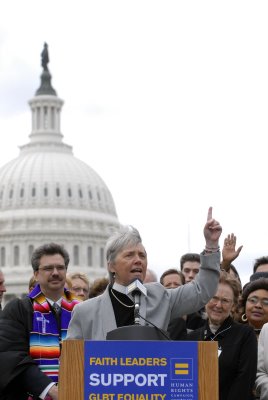
The Human Rights Campaign has launched its big federal legislative push to enact the Local Law Enforcement Hate Crimes Prevention Act, also called the Matthew Shepard Act, named in memory of the most widely recognized LGBT hate crimes victim in American history. Matthew Shepard was kidnapped, tortured, and murdered by two Laramie, Wyoming men in October 1998. Both pled guilty, and are serving life sentences for their crime. Visit the HRC site for more information: www.hrc.org/sites/hatecrimes/index.asp.
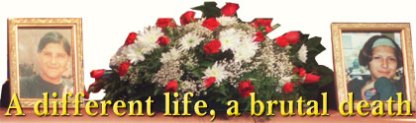
Martinez casket header for Denver Post article on F.C.'s murder
Fred C. Martinez, Jr. (1985-2001), a sixteen-year-old Navajo, is featured in the HRC campaign. He was one of the first subjects of research for the Unfinished Lives Project, and will figure prominently in Dr. Sprinkle’s forthcoming book, Unfinished Lives: Reviving the Memory of LGBT Hate Crimes Murder Victims. The book is still in the writing stage at this point, with a projected completion date of September 2009.

"Dance to the Berdache," George Catlin, ca. 1830
Martinez was a Two-Spirit person, also called a berdache. F.C., as his friends called him, suffered harassment in the Cortez, CO public schools for his transgender identity. In June 2001, on the night of the Ute Mountain Carnival and Rodeo, Shaun Murphy, a resident of Farmington, NM, lured F.C. into a narrow, deep canyon cut diagonally through the south part of Cortez, and cracked open his skull with a 25 pound rock. Murphy left him to die of exposure and blood loss, bragging the night of the murder that he had “bug-smashed a joto,” slang for “fag.” At the time F.C.’s body was discovered by small boys playing on the canyon floor five days after the homicide, his remains were so decomposed that his mother could identify him only by the blue bandana he wore when he left her home.


Shaun Murphy, F.C.'s killer
Murphy, 18, was sentenced to 40 years for F.C.’s murder. There is little to indicate that F.C., the most famous person ever to live in Cortez, had ever existed. Neither Colorado nor the United States has enacted anti-hate crime legislation. His mother, Pauline Mitchell, still works as an advocate for LGBT people and for the memory of her son. She visits his grave often, kneeling on the grass, talking to him in Navajo and English, thanking him for understanding that things are taking so long to change.

F.C. and his mom, Pauline Mitchell
There is strong medicine in the F.C. Martinez, Jr. story. As a nadleeh, as Navajo people refer to their Two-Spirits, he was a sign of the balance between the feminine and the masculine in us all. He walked the Way of Beauty. As the Navajo Blessingway Chant says:
Earth’s body has become my body
by means of this I shall live on.
Earth’s mind has become my mind
by means of this I shall live on.
Earth’s voice has become my voice
by means of this I shall live on.

Hate Crime Enhancement Ruled Out in Duncanson Verdict

Roberto “Pancho” Duncanson
1987 – May 12, 2007
Crown Heights, Brooklyn, New York
Terence at www.republicoft.com expresses outrage that Roberto Duncanson’s murder was not classified or prosecuted as an anti-gay hate crime. I share the outrage, T. If his stabbing death was not about hate, then what was it about?
Roberto Duncanson, nicknamed “Pancho,” worked at a local CVS Drug Store in Chelsea, NY. He had planned to vacation in Miami for his 21st birthday, and afterwards to start school to become an x-ray tech. He was a gay African American.
On the night of May 12, 2007, he had a run-in with Omar Willock, 17, who became enraged with Duncanson, claiming that he had flirted with him. All Willock could point to was the way he said Duncanson “looked” at him. Willock followed Duncanson down St. Mark’s Avenue, Crown Heights, shouting anti-gay slurs at him.
Duncanson walked away. He intended to visit a cousin on Brooklyn Avenue. Willock wouldn’t let it go. He kept verbally attacking Duncanson, and then started a fistfight with him. Duncanson defended himself. According to eye-witness testimony from his cousin, Jeimar Brown, after he and two girls pulled the two men apart, Willock had used a knife on his victim, having stabbed him four times. Willock ran from the scene. Duncanson collapsed on the sidewalk, striking his head on a street sign, bleeding profusely. He died an hour later at Kings County Hospital.
Willock was arrested after being picked out of a police lineup. His trial for the murder of Roberto Duncanson began March 11, 2009. On March 12, the judge in the trial tossed out the hate crime charge, which would have increased the minimum sentence in the case of conviction. He told the court that the DA had not sufficiently substantiated the hate crime nature of the murder. Willock was found guilty and sentenced from 15 years to life. Customarily, less than 25 years of such a sentence is served.
Willock dogged Duncanson again and again, verbally assaulting him with ugly, anti-gay epithets, provoked a fight, and then wielded his knife to stab and kill the person whose life he loathed. Hate crime? Hell, yes! What else would any reasonable person call it?
~ Stephen V. Sprinkle, Director of the Unfinished Lives Project
José Sucuzhañay dead after Brooklyn hate crime attack

José O. Sucuzhañay
31-year-old real estate broker José O. Sucuzhañay died on Friday, December 12th, after spending five days on a ventilator in a brain-dead condition.
Sucuzhañay and his brother Romel were walking home arm-in-arm after a night of drinking in a Brooklyn bar when three assailants attacked the brothers, having mistaken them as gay. The attackers emerged from a maroon SUV, yelling, “Check out those faggots over there.” The attackers also shouted racial epithets. Witnesses said the murderers first smashed a bottle over Sucuzhañay’s head and then struck him in the head with an aluminum baseball bat.
Gay City News describes the attack this way:
According to police, one assailant broke the bottle over Sucuzhanay’s head. After the victim fell to the ground, another of the attackers began beating him with the bat. Romel Sucuzhanay managed to flee from the path of the first assailant who chased after him with the broken beer bottle. He finally prevailed on the men to stop beating his brother when he showed them that he had a cellphone to use to call police.
Sucuzhañay’s mother was still on her way from Ecuador when José died at Elmhurst Hospital Center in Queens. The family had hoped to keep their brother alive on life support long enough for their mother to arrive and say good-bye to her son.
A third brother, Diego Sucuzhañay, calls his brother’s death “a loss beyond words.”
Sources:
Gay City News: “Hate Crime Victim Brain-Dead”
Box Turtle Bulletin: “Capital Crime: Appearing Gay”
Newsday: “Immigrant dead in possible hate crime”
Box Turtle Bulletin: “Brooklyn Hate Crime Victim Dies”
North Carolina arson case is a hate crime

An EDGE Boston article tells the story of Melvin Whistlehunt, whose house was burned down as part of an anti-LGBT hate crime.
On November 7, Whistlehunt received an urgent call at work warning him his house was burning. When firefighters arrived, they discovered signs of arson and an anti-gay slogan spray-painted on the brick of the home. The conflagration reached such severity that 28 firefighters and seven trucks were needed to bring the fire into control.
None of Whistlehunt’s property survived the blaze.
Additional information is available in this article at the Observer News Enterprise of Newton, North Carolina.
Two elderly gay men found slain in their Indiana home
An EDGE Boston article describes circumstances surrounding the deaths of two elderly gay men who shared a home in southwest Indianapolis. According to the article, “70-year-old Milton Lindgren and 73-year-old Eric Hendricks had been harassed prior to their deaths… with their phone and cable lines having been cut and a note containing an anti-gay epithet having been left on their door.”
The bodies were discovered by friends, Michael Brown and Kevin Tetrick, who had not heard from Lindgren or Hendricks for more than a week.
A WRTV Channel 6 report says police would not reveal how the two elderly men were killed or how long their bodies had been inside the home, only that their deaths came by “violent means.” An article in the IndyStar elaborates, saying the couple’s friends found an open window at the rear of the house and detected a strong smell coming from inside. Climbing through the window, one of the friends found Lindgren’s blood-covered body in one bedroom and Hendricks’ in another.
The WRTV report adds, “Police reports show that the men had their phone and cable lines cut twice in the past few months, and that anti-gay statements were posted on their front door. Investigators said that while they do believe the vandalism was related to Lindgren and Hendricks being gay, that they didn’t know if their killings were.”
Patrick Beard, another friend of the slain couple, said, “I firmly believe it was definitely a hate crime. Milt was 70 and his partner was 73 and to go into someone’s home and do something like that, it’s just too coincidental.” Beard’s son, Lee, added, “I’m not a genius, but if someone’s being harassed like that and fagot gets stamped on their door on a piece of paper, it’s not that hard to connect the dots two months later that these two people are brutally killed in their home.”
Hendricks, who was ill at the time he was attacked, had been confined to a wheelchair.
Additional information about this story, including commentary about Indiana’s hate crime laws, can be found at Advance Indiana.
Update: Police are now seeking Michael Brown, one of the friends who was at Hendricks’s and Lindgren’s murder site when police were originally called to investigate. “Mr. Brown was at the scene at the time officers were called to investigate what happened at the house,” said Indianapolis police Sgt. Paul Thompson. “He was one of the two individuals inside that stated the two individuals inside had not been seen or heard from in a while. Investigators did interview him initially, however, they have reason to interview him again.” Source: A report filed by WRTV Channel 6 in Indianapolis.
Project Activity — Summer of 2008
In the summer of 2008, Unfinished Lives project director Dr. Stephen V. Sprinkle researched the circumstances of several anti-gay hate crimes in America’s deep south. Sprinkle toured hate crime scenes, spoke with loved ones and friends of the victims, and preserved information about the lives and stories of LGBT persons killed only for their sexual orientation. Sprinkle’s research on behalf of the project took him to Texas’s Gulf Coast, Alabama, Florida, North Carolina and South Carolina.
June 2008 – Oklahoma City, Oklahoma – Unfinished Lives project director Stephen V. Sprinkle conducted research on Steven Domer.
June 2008 – Kansas City, Missouri – Unfinished Lives project director Stephen V. Sprinkle conducted research on Barry Winchell.
June 2008 – Houston, Texas – Project director Stephen Sprinkle traveled to Houston and the Gulf Coast region of Texas to investigate the Kenneth Cummings Jr. hate-crime murder. During that same trip, Dr. Sprinkle preached at Resurrection Metropolitan Community Church for its Pride Week observances.
After Sprinkle preached and presented “Unfinished Lives” at a special June 15 afternoon event, Senior Minister DeWayne Johnson led the congregation in prayer for the Unfinished Lives project, Dr. Sprinkle, and his summer research for the upcoming book.

For the next five days, Dr. Sprinkle traveled to sites relating to the murder of 46-year-old Southwest Airlines Flight Attendant, Kenneth Cummings, Jr.

Ken was a regular in the Montrose section of downtown Houston, the center of the metro area’s LGBT community. Here is EJ’s bar, a friendly, neighborhood gay pub where Ken first saw his murderer, Terry Mark Mangum:

This is the billiards area of EJ’s where Mangum, an ex-con, stalked his potential targets:

Ken and Mangum talked here and exchanged phone numbers. Ken had no idea Mangum was hunting a gay person to kill. On Sunday, June 4, 2007, Ken called friends saying that JR’s, another Montrose establishment, was “dead,” and suggested that he would just go home, since he had a flight early the next week.

Instead, he called Mangum, hooked up with him, and invited him to his home in suburban Pearland.

Mangum drove a 6-inch knife blade into Ken’s skull as he sat drinking a glass of wine. Mangum loaded Ken’s body in the trunk of Ken’s car, drove it to his grandfather’s ranch south of San Antonio, and tried to burn his remains in a shallow pit he dug in a dry stock tank. Ken’s body was burned beyond recognition, and could only be identified by dental records.
Dr. Sprinkle talked with co-workers, Houston Police officers, and Ken’s best friend of many years to gain insight into who this gentle, happy man really was. In August of 2008, a Brazoria County jury found Mangum, who claimed that God had called him to wipe out sexual perverts, guilty and sentenced him to life in prison.
June 2008 – Alabama, Part I – After leaving the Texas Gulf Coast, Unfinished Lives project director Dr. Stephen V. Sprinkle traveled to Alabama and performed research about the life and murder of Billy Jack Gaither. His work brought him to Tuscaloosa, Birmingham, Sylacauga and Montgomery. Sprinkle met with scholars, students, humanitarians, and members of the Gaither family.
In Tuscaloosa Sprinkle met Dr. Beverly Hawk, Ph.D., Director of the Crossroads Community Center at the University of Alabama at Tuscaloosa. Dr. Hawk is a noted scholar who studies diversity and hate crimes, and is a friend of the Gaither family. She worked to establish the Billy Jack Gaither Humanitarian Award, given annually on the anniversary of his death.

Sprinkle then traveled to Birmingham, where his host was David Gary, a bank officer and dedicated LGBT activist well-known throughout Alabama. Gary is a master networker, and a true humanitarian. He is one of the founders of Integrity Alabama, the LGBT Episcopal advocacy group.

One of the most significant moments of the summer came when Sprinkle met Kathy Joe Gaither, Billy Jack Gaither’s elder sister. Kathy Joe is the keeper of the flame of her brother’s memory.

Billy Jack had to travel up to Birmingham in order to experience freedom as a gay man. His favorite bar was the Toolbox, which is now named “Phoenix”

Sprinkle then traveled to Sylacauga, Billy Jack’s home town. On the night of his murder in February 1999, Billy Jack Gaither left his home on Pelham Avenue.

Gaither gave his two murderers a ride to The Tavern, Gaither’s local hangout.

His murderers later cut him severely, forced him into the trunk of his own car, and transported him to the kill-site on Peckerwood Creek, a virtually inaccessible spot these days. There they killed him with blows from a wooden ax handle, dragged his lifeless body to a pyre of kerosene soaked tires, and immolated him. Gaither’s killers have been convicted of murder.
Billy Jack Gaither has been laid to rest beside his father, Marion, at Evergreen Cemetery in Sylacauga.


Sprinkle also traveled to the National Civil Rights Memorial Center in Montgomery, a facility that preserves the memories of slain Civil Rights advocates and others. In the Plaza, beside the memorial fountain, he spoke to youth from New York State who were visiting the Center’s museum.

The Center educates and motivates visitors for the cause of civil rights and tolerance. Notably, the Center has memorialized Billy Jack, giving him a tablet in its hall of remembrance.


June 2008 – Alabama, Part II – After leaving Montgomery, Alabama, in late June 2008, Unfinished Lives project director Dr. Stephen V. Sprinkle continued his research, learning about the life and murder of Scotty Joe Weaver.
First, Sprinkle traveled to Bay Minette, Baldwin County, Alabama, 30 miles from Mobile. This was the home of 18-year-old Scotty Joe Weaver.


Scotty, who had been harassed for being gay until he dropped out of high school, went to work as a cook for the Bay Minette Waffle House. He earned pretty good money for the first time in his life, money that allowed him to pursue his avocation as a female impersonator who favored Dolly Parton, and to rent his own trailer in Dobbins Trailer Park with his mother’s help.


A truly generous person, Scotty Joe invited two unemployed former schoolmates to live in the trailer with him. The young woman was a person he had known since grade school. In short order, his trailer guests invited another young man to live with them. Tensions arose.
Scotty’s three guests ambushed him in his sleep, robbed him of around $65, strangled him, and cruelly tortured him for hours, mutilating him while he was still alive. After partially decapitating him, they hauled his body to a remote wooded area outside Bay Minette, urinated on his corpse, and burned his body beyond recognition. Dental records eventually identified him. A vigorous investigation, headed by Baldwin County District Attorney David Whetstone, led to the arrest of Scotty’s three killers. The two men have been sentenced to life, and the woman to 20 years in prison.

Vigils were held in nearby Mobile, led by Bay Area Inclusion founder Tony Thompson, local PFLAG founder Suzanne Cleveland, and LGBT activist Rev. Helene Loper from Tuscaloosa. Today, however, most of the story has been forgotten, an example of how swiftly LGBT hate crimes are swept away from view.


Here is the Bryars McGill Cemetery in far north Baldwin County where Scotty Joe has been laid to rest. His grave lies as far from the road as you can get. Scotty Joe’s tombstone shows the loving remembrance of a mother.


June and July 2008 – Florida – After leaving Bay Minette, Alabama, Unfinished Lives project director Dr. Stephen V. Sprinkle traveled to Florida and performed research about the life and murder of 26-year-old Ryan Keith Skipper. His research took him to Winter Haven, Auburndale, and Wahneta.
In Auburndale Dr. Sprinkle met Lynn Mulder, Ryan’s stepfather, and spoke about the Unfinished Lives Project to the Polk County PFLAG chapter. Pat and Lynn Mulder are both healthcare professionals, respected, long-time residents of Auburndale. Their open welcome and willingness to share Ryan’s story and his friends was the highlight of the summer for Dr. Sprinkle.


Lynn and Pat keep Ryan’s cat, Baby, who wanders through the house looking for him still. Lynn toured Dr. Sprinkle to the sights associated with his son: First Missionary Baptist Church, Auburndale, Ryan’s home church, Grace Lutheran School, Winter Haven, where Ryan attended, Winter Haven High School, where Ryan graduated in spite of being harassed virtually daily for being gay by students who yelled epithets and threw rotten oranges and even stones at his car and his person.


Dr. Sprinkle traveled to Wahneta, a small, rural community south of Auburndale where Ryan and two girlfriends rented a little red house, 211 Richburg.


His killers–Bearden, who lived in a trailer in Eloise, just north of Wahneta, and Brown, who lived in a disheveled trailer park within biking distance of Ryan and the girls–planned to kill him after he returned from work at the Sunglass Hut in the Lakeland Mall. They tricked him with the story that they needed a ride, and directed him to drive down a lonely road where they slashed him to death with knives, nearly decapitating him. They left him on the side of Morgan road. The local woman who discovered Ryan’s body reported that it looked like someone had turned on a sprinkler of blood.


Bearden and Brown unsuccessfully tried to fence Ryan’s car that night, after bragging to friends about what they had done. They drove it to this public boat ramp on Lake Pansy, and set the car afire. In short order, they were apprehended, charged with murder, and have yet to stand trial.

The Mulders and Ryan’s elder brother, Damien, carried out a vigil here in Auburndale’s city park where hundreds gathered to remember him. Vigils were carried out in many other cities and towns in Florida to express outrage at the brutality of his murder.

Here, in Auburndale, Ryan lies in peace, and is not forgotten.


Remembering Satendar Singh

July 21 marks the birthday of Satendar Singh, the victim of a 2007 anti-gay hate crime in Lake Natoma State Park in California. Russian evangelical Christians mobbed Satendar, shouted homophobic slurs, and beat him severely enough to cause a fatal brain injury. What began as a day to picnic and dance with friends is now a day of mourning for the LGBT community.
On Satendar’s birthday, we remember and celebrate his life. Singh would have been 28 years old today.
This “Being Gay Today” video describes the events leading to Satendar Singh’s death:
Remembering Charlie Howard

July 7 marks the twenty-fourth anniversary of Charles O. “Charlie” Howard’s murder in Bangor, Maine. As Charlie and his friend Roy Ogden walked on a downtown street, three teenagers accosted Charlie and his friend, shouted homophobic slurs, threw Charlie to the ground, and then punched and kicked him. The three youths decided to force Charlie over a bridge railing and into the Kenduskeag Stream twenty feet below. Ogden, who had initially fled from the assailants, looked back to see them throw Charlie over the railing. After sounding an alarm for help, Ogden, together with firemen and police, looked for his friend, whose body would not be found until hours later. On that same night, at a party, the three teenagers bragged about having thrown Charlie into the stream.

Today the Charles O. Howard Memorial Foundation and the City of Bangor are working to establish a granite monument to mark the place of Charlie’s murder. Despite earlier disagreements about the proposed memorial, the City of Bangor approved installation of the monument by unanimous vote during a City Council meeting last November.
Today the Unfinished Lives Project also remembers Charlie. The tragedy that befell Charlie twenty-four years ago still touches lives today, and as we remember him we also hope for a world where hate-crime violence no longer occurs.
About

If you are a first-time visitor to the Unfinished Lives Project website, we invite you to read A Welcome Message introducing you to our project. We are truly grateful for your visit.
The Unfinished Lives Project website is a place of public discourse which remembers and honors LGBTQ hate crime victims, while also revealing the reality of unseen violence perpetrated against people whose only “offense” is their sexual orientation, gender identity, or gender presentation. LGBTQ people in the United States are suffering a slow-rolling decimation of terror and murder all across the country. Every locale and demographic of society are affected: First Nations, Anglo, Black, Latino and Latina, South and Southeast Asian, Transgender, Bisexuals, Gay men, Lesbians, disabled, young, and mature. Homophobia has a long, crooked arm, and it is reaching out to snatch the life away from women and men whose tragic stories are under-reported to begin with, and whose memories are swiftly forgotten.
The horror of these killings transcends the shock and bereavement of loved ones and friends. These are not typical homicides; they are not killings for money or drugs, incidents of domestic strife, or crimes of passion. The vicious nature of hate crimes against LGBTQ persons is extremely brutal, grotesquely violent, and egregiously hateful.
Each murder serves the LGBTQ population as a sobering warning about the actual level of danger in our communities. The message these killings send is that freedom and open life for LGBTQ people is a cruel dream. Every time we remember one of these victims, however, the intentions of their killers are frustrated. To remember these women and men is to begin the process of changing the culture that killed them.
Our Project Director
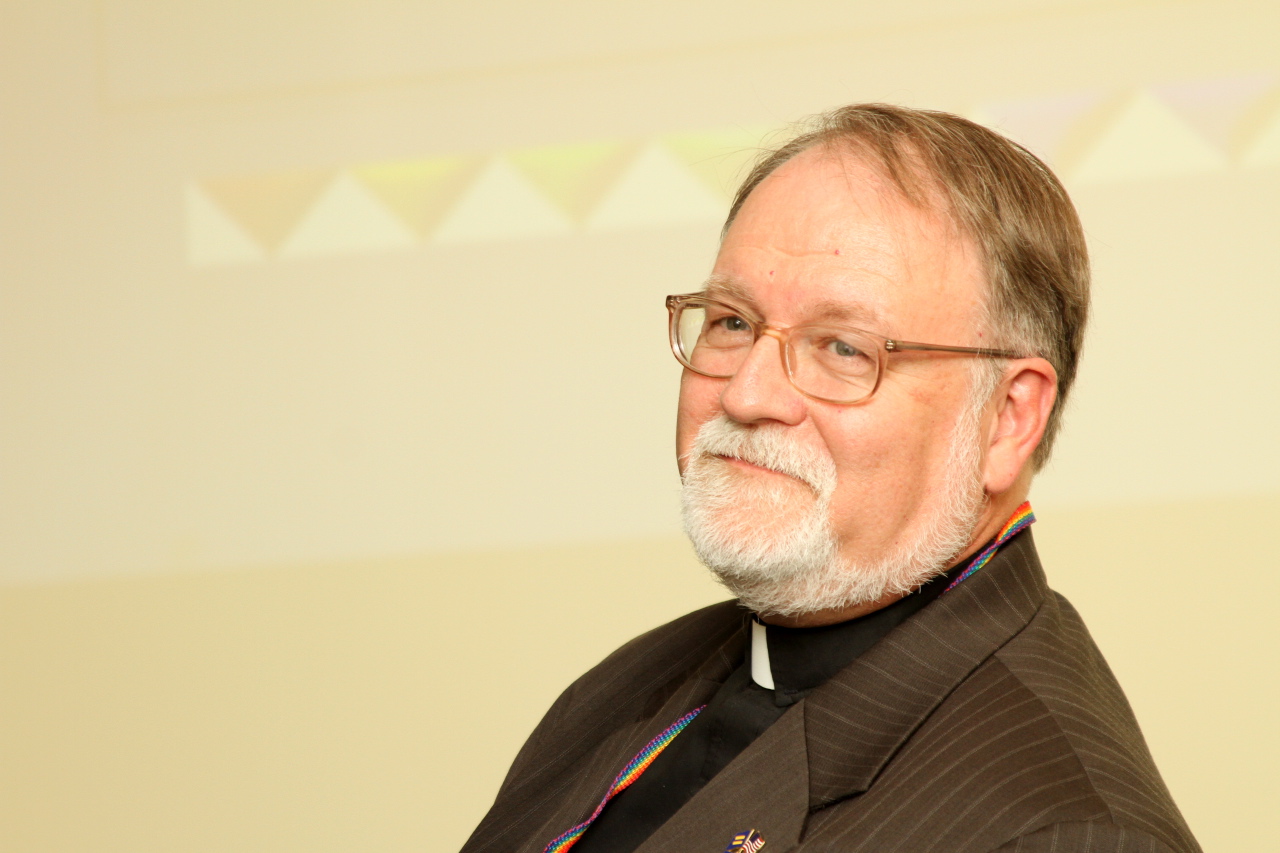
Dr. Stephen V. Sprinkle (Keith Tew photo).
Stephen V. Sprinkle is Director of Field Education and Supervised Ministry, and Professor of Practical Theology at Brite Divinity School, Fort Worth, Texas, a post he has held since 1994. An ordained Baptist minister, he is the first open and out Gay scholar in the history of the Divinity School, and the first open and out LGBTQ person to be tenured there. Read More…
Recent Social Justice Advocacy Activity By Dr. Sprinkle
 Summer 2009 – Dr. Sprinkle responded to the Fort Worth Police Department and Texas Alcoholic Beverage Commission Raid on the Rainbow Lounge, Fort Worth’s newest gay bar, on June 28, 2009, the exact 40th Anniversary of the Stonewall Rebellion. Dr. Sprinkle was invited to speak at three protest events sponsored by Queer LiberAction of Dallas. Here, he is keynoting the Rainbow Lounge Protest at the Tarrant County Courthouse on July 12, 2009. Read More…
Contact Us
Communicate with the Unfinished Lives project team:
info@unfinishedlivesblog.com


Schedule a Presentation
Dr. Sprinkle will gladly present his acclaimed presentation to your organization. To arrange an Unfinished Lives presentation for your organization or group, please contact us.
Dr. Sprinkle has given his Unfinished Lives presentation to these and other community groups and organizations. Read More…
-

Where are our readers?
Publisher: Steve Sprinkle (Project Director)
Steve Sprinkle
Unfinished Lives: Remembering LGBT Hate Crime VictimsBrite Divinity School/Texas Christian UniversityFort Worth TXprofessor, minister, author, blogger, LGBTQ advocate


Follow Unfinished Lives on Facebook
 Box Turtle Bulletin
- An error has occurred; the feed is probably down. Try again later.
- HRC Back Story
- Know About The Gender Identity Movement
- Why Is There A Need For Human Rights?
- Kinds Of Human Rights
- Human Rights Purposes And Violations
- Human Rights For Every Human Incident
- 8 Reasons Human Rights Are Important
- Everything About Human Rights
- Human Rights Issues Education & Law
- We Need To Stand Up For Our Rights And Those Of Others
- Coca-Cola Receives Perfect Score On Human Rights
- The Advocate: Daily News
- Eric Swalwell responds to sexual assault allegations in a to-camera video
- Eric Swalwell’s governor bid is collapsing as top Democrats turn on him
- What Melania Trump’s bizarre Jeffrey Epstein press event reveals about a White House in chaos
- New Bryon Noem bombshell puts Kristi Noem’s anti-trans politics under harsher spotlight
- Former Biden HHS leaders hail syphilis breakthrough as Trump dismantles the system behind it
- Advocate breaking news 4/10/26
- Pete Buttigieg hints at 2028 presidential run: ‘Save me a seat’
- Could Minneapolis welcome bathhouses back for the first time since the late 1980s?
- Donald Trump posts gruesome murder video to Truth Social
- Melania Trump blindsides White House aides with unexpected leap into Epstein scandal
- Dallas Voice: Instant Tea
- An error has occurred; the feed is probably down. Try again later.

 Unfinished Lives