Advocacy group calls for investigation of transgender woman’s murder

Lateisha Green
The Transgender Legal Defense & Education Fund (TLDEF) is urging the Syracuse (New York) Police Department and Onondaga County District Attorney’s Office to investigate the likely hate crime motivation in the murder of Lateisha Green, a 22-year-old African American transgender woman.
On the evening of November 14, Green and her brother, Mark Cannon, were sitting in a car preparing to leave a party when they were shot with a .22 caliber rifle. A single bullet grazed Cannon’s arm and then penetrated Green’s chest, severing her aorta.
According to Chief of Police Gary Miguel, the murder suspect, 20-year-old Dwight DeLee, retrieved the .22 caliber rifle when he heard other people at the party “making profane and vulgar comments in regards to the sexual preference” of Green and her brother. “Our suspect took a rifle and shot and killed this person, also wounding his brother, for the sole reason he didn’t care for the sexual preference of our victim,” says Miguel.
“Transgender people face discrimination and violence in communities across the country,” says TLDEF executive director Michael Silverman. “Lateisha’s senseless death demonstrates the increased risk of violence transgender people face.”
Gary Miguel adds, “Isn’t that sad? Isn’t that a sad situation that that’s the sole reason why?”
Sources:
“Syracuse Trans Murder Called Hate Crime.”
“Transgender Advocacy Group Calls Upon Authorities to Fully Investigate Transgender Woman’s Death”
“Local transsexual’s death draws state Human Rights officials to Syracuse”
NCAVP warns of national increase in anti-transgender violence
One day before the Transgender Day of Remembrance, a new NCAVP press release warns about a nationwide increase in severe violence perpetrated against transgender persons.

New York – As the Transgender Day of Remembrance approaches, a day when victims of anti-transgender bias are mourned around the globe, the National Coalition of Anti-Violence Programs (NCAVP) has documented increases in severe violence directed at transgender communities across the country, especially against transgender women of color.
- Latiesha Green, 22, was shot on November 14 in Syracuse, New York.
- Duanna Johnson, 43, was shot in Memphis, Tennessee, on November 8.
- Aimee Wilcoxson, 34, was found dead in her apartment on November 3 in Aurora, Colorado, just outside of Denver.
Some of these brutal acts of violence occurred in the same communities that continue to mourn the murders of two transgender people of color earlier this year: Ebony Whitaker, 20, murdered in June also in Tennessee and Angie Zapata, 18, murdered in July also in Colorado.
Organizations such as International Transgender Day of Remembrance and Remembering Our Dead that have helped to initiate Transgender Day of Remembrance (held this year on November 20) also track anti-trans murders. They documented 29 anti-trans murders in 2008, a 65% increase over 2007.
NCAVP wishes to express our sadness and outrage about this ongoing, horrific violence. We stand in solidarity with transgender communities in Tennessee, Syracuse, and Colorado, the victims and survivors, and their loved ones.
Mixed Criminal / Legal System Responses
Memphis
Ms. Johnson’s murder comes on the heels of Memphis Police Department’s brutal beating of Ms. Johnson in February 2008. The following Police security camera footage of the beating has been widely circulated since June (warning: clip contains disturbing material):
[YouTube=”http://www.youtube.com/watch?v=6N1Bvlbh_ws”%5D
The Memphis Police Department had been attempting to settle a law suit that Ms. Johnson had filed for the beating she endured while in custody. Former officers Bridges McRae and James Swain were fired only after the video was released, but it is not yet clear whether or not any criminal charges will be filed.
Local community members have speculated that anti-trans bias is likely a factor, not only in the beating itself but in the lack of criminal charges being filed. “This is not the first time the Shelby County District Attorney’s office has shown indifference to brutality against transgender people,” observed Dr. Marisa Richmond, the President of Tennessee Transgender Political Coalition. “When Tiffany Berry was murdered in 2006, her alleged perpetrator, D’Andre Blake, was released on only $20,000 bond.” Dr. Richmond noted that people charged with murder in Tennessee typically get a $100,000 bond.
The FBI is now assisting in the investigation of Ms. Johnson’s murder. NCAVP calls upon the FBI to bring its full resources to in the investigation of not only Ms. Johnson’s murder but also Ms. Ebony Whitaker’s. NCAVP also demands that District Attorney Gibbons bring appropriate charges against former officers McRae and Swain.
Aurora
In Colorado, the Aurora Sentinel reported that local police have speculated that Ms. Wilcoxson’s death was a suicide. But friends of hers insist that explanation is very unlikely given her life circumstances and also given the condition the body was in when it was discovered. NCAVP is hopeful that local police will conduct a thorough investigation that takes into account these statements from people who knew her.
Syracuse
In Syracuse, Sage Upstate and other local community members report that Syracuse City Police Department Chief Gary Miguel has responded to this crime with sensitivity. The family of Latiesha ‘Tiesh’ Green and LGBT advocates in the Syracuse community are hopeful that the Onondaga County District Attorney’s office will be able to include hate crime charges in the prosecution of this case.
NCAVP commends district attorneys and police who identify and appropriately categorize hate-motivated violence. We are hopeful that district attorneys and law enforcement in other jurisdictions will follow suit and NCAVP will continue to monitor the violence against transgender communities, as well as the police response.
Transgender and gender non-conforming people experience violence and harassment everyday and most of it never makes headlines. NCAVP encourages LGBT people experiencing any form of hate violence, harassment, vandalism, or bullying to contact NCAVP or one of our member programs by calling 212.714.1184 or emailing us at info@ncavp.org.
Gay man murdered and dismembered in Dallas

Richard Hernandez
According to a September article published in the Dallas Voice, gay man Richard Hernandez was murdered in his Dallas apartment and then dismembered in the bathtub. After Hernandez failed to appear at his job, worried co-workers called the police. The police went to Hernandez’s apartment to investigate, and found large amounts of blood in the living room and tissue from the victim’s internal organs in the bathtub.
Purchases made on Hernandez’s credit card led police to a suspect, Seth Lawton Winder, who was then charged with credit card fraud and capital murder. Seth’s father, Robert Winder, has pointed to his son’s schizophrenic history as a possible explanation for the crime, but police have also recovered a digital camera containing images of the suspect inside the victim’s apartment which might suggest a different theory about why the murder occurred.
Friends of the victim say Hernandez was a valued friend. “Rich was probably one of the most sincere, sweet people you will ever meet,” says one friend. “Rich always had a smile and would drop anything to help anybody, and it’s very, very sad what happened to him. It’s a very gruesome, horrible thing to happen to someone so sweet and so generous.”
Richard Hernandez was 38-years-old.
North Carolina arson case is a hate crime

An EDGE Boston article tells the story of Melvin Whistlehunt, whose house was burned down as part of an anti-LGBT hate crime.
On November 7, Whistlehunt received an urgent call at work warning him his house was burning. When firefighters arrived, they discovered signs of arson and an anti-gay slogan spray-painted on the brick of the home. The conflagration reached such severity that 28 firefighters and seven trucks were needed to bring the fire into control.
None of Whistlehunt’s property survived the blaze.
Additional information is available in this article at the Observer News Enterprise of Newton, North Carolina.
Two elderly gay men found slain in their Indiana home
An EDGE Boston article describes circumstances surrounding the deaths of two elderly gay men who shared a home in southwest Indianapolis. According to the article, “70-year-old Milton Lindgren and 73-year-old Eric Hendricks had been harassed prior to their deaths… with their phone and cable lines having been cut and a note containing an anti-gay epithet having been left on their door.”
The bodies were discovered by friends, Michael Brown and Kevin Tetrick, who had not heard from Lindgren or Hendricks for more than a week.
A WRTV Channel 6 report says police would not reveal how the two elderly men were killed or how long their bodies had been inside the home, only that their deaths came by “violent means.” An article in the IndyStar elaborates, saying the couple’s friends found an open window at the rear of the house and detected a strong smell coming from inside. Climbing through the window, one of the friends found Lindgren’s blood-covered body in one bedroom and Hendricks’ in another.
The WRTV report adds, “Police reports show that the men had their phone and cable lines cut twice in the past few months, and that anti-gay statements were posted on their front door. Investigators said that while they do believe the vandalism was related to Lindgren and Hendricks being gay, that they didn’t know if their killings were.”
Patrick Beard, another friend of the slain couple, said, “I firmly believe it was definitely a hate crime. Milt was 70 and his partner was 73 and to go into someone’s home and do something like that, it’s just too coincidental.” Beard’s son, Lee, added, “I’m not a genius, but if someone’s being harassed like that and fagot gets stamped on their door on a piece of paper, it’s not that hard to connect the dots two months later that these two people are brutally killed in their home.”
Hendricks, who was ill at the time he was attacked, had been confined to a wheelchair.
Additional information about this story, including commentary about Indiana’s hate crime laws, can be found at Advance Indiana.
Update: Police are now seeking Michael Brown, one of the friends who was at Hendricks’s and Lindgren’s murder site when police were originally called to investigate. “Mr. Brown was at the scene at the time officers were called to investigate what happened at the house,” said Indianapolis police Sgt. Paul Thompson. “He was one of the two individuals inside that stated the two individuals inside had not been seen or heard from in a while. Investigators did interview him initially, however, they have reason to interview him again.” Source: A report filed by WRTV Channel 6 in Indianapolis.
Unfinished Lives thanks the HRC’s Religion and Faith Program

The Unfinished Lives Project offers our sincere appreciation to the Human Rights Campaign’s Religion and Faith Program for highlighting our work in this week’s e-mail edition of “Religion and Faith News.”
The Human Rights Campaign’s Religion and Faith Program mobilizes people of faith to advocate for gay, lesbian, bisexual and transgender people. The program offers online preaching and devotional resources, works with state clergy coalitions to spread equality at the state and local level, and brings its affirming message to colleges and seminaries across America.
The program’s message of equality even reaches to the halls of Congress where religious leaders speak out on such critical justice issues facing the GLBT community as the Federal Marriage Amendment, Hate Crimes legislation and the Employment Non-Discrimination Act. In countless and meaningful ways, the Religion and Faith program spreads the good news that transformation is truly happening one community at a time.
The Unfinished Lives Project is proud to stand beside the Human Rights Campaign’s Religion and Faith Program, working to eliminate hate crimes and embracing “a culture of welcome, compassion, and hospitality, values that are at the heart of all our faith traditions.”
Visit the Religion and Faith Program, or its newsletter archive, to learn more about their extraordinary work.
Special Comment: Living Hope

by Stephen V. Sprinkle
A paraphrase of Edwin Markham’s poem, “Victory in Defeat,” goes something like this: “Defeat as well as victory can shake the soul and let the glory out.” We are here tonight to tell the history of hope, not hate: hope born out of the hateful deaths of two men ten years ago, James Byrd, Jr. of Jasper, Texas, and Matthew Wayne Shepard of Laramie, Wyoming. Their stories brought us all together tonight. A decade ago, in the United States of America, they each died brutally at the hands of men who had learned to hate someone different.

Dragged behind a pickup truck in the Lone Star State of Texas for over three miles, James Byrd, Jr. died dismembered in a ditch in the wee hours of a June Sunday morning. People going to church found his body, minus his head and right arm, lying in the road in front of a little cemetery. They called the police, and as the police were speeding on their way to the crime scene, other citizens flagged them down because they had found James Byrd’s head in a drainage ditch.
Bludgeoned into a fatal coma with the butt of a .357 Magnum pistol, young Matthew Shepard was robbed of his shoes, his wallet, and ultimately his life in the Equality State of Wyoming on a cold October night. High in the desolate prairie, Matt’s bloody, broken body was trussed to a buck fence where he was abandoned to freezing wind and unforgiving sun for over 18 hours. When his near-lifeless body was found, the deputy sheriff who cut him free from that buck fence testified that he no longer looked like a human being, but more like a beaten Halloween scarecrow, limp on the ground. She said that his face was slathered with blood except for the tracks of his tears on his cheeks where the blood had been washed away. A few days later, Matt’s heart gave out, and he lost his fight for life in an Intensive Care unit.
Yes, defeat can shake the soul. That is what the poet, Edwin Markham said. Markham was a youth in the American Civil War, and the cataclysm of war ravaged the country in the years of the poet’s childhood. African Americans know the earthquakes of hatred and defeat. Long after that awful war was over, new battles faced African Americans, new defeats challenged hope with hate. Jim Crow, Separate But Equal, Strange Fruit with so many thousands lost to the rope that a sinister new term had to be invented to describe it: “lynching.” Hanging from the limbs of southern trees, shot and cut by the Ku Klux Klan, bombed in their Sunday School rooms, cut down by gunfire on the balcony of the Lorraine Motel… in the defeat of death they lay like rows of grain chopped down in a grisly harvest. We remember their names: Medgar Evers and Malcolm X, Martin Luther King, Jr. and Emmet Till, the four little girls in the 16th Street Baptist Church bombing in Birmingham: Addie May Collins, Carole Robertson, Cynthia Wesley, and Denise McNair. Their killings and the murders of too many others to recount tonight show us what hate crimes against a whole race of people can do to shake the soul.

Another slow-rolling holocaust swept the United States from the time in the late 19th century when the term “homosexual” was first coined by doctors who said it was a disease. Who someone loved had already been contested ground in America. In 1958, Mildred Jeter (a woman of white, African-American and Native American heritage) and Richard Loving (a white man) fell in love in the racially mixed, low-income farmland of Caroline County, Virginia. Because of Virginia’s Racial Integrity Act, they traveled to Washington, D. C. to get married. Shortly after their return to Virginia, police burst into their bedroom at 3 a.m., arrested husband and wife, and carried them away to jail. The Lovings pleaded guilty to being married; they were sentenced to one year in prison. Though the U.S. Supreme Court struck down the Virginia law against “miscegenation,” or interracial marriage, in 1967, there are haters who still believe loving someone is a crime worthy of death.
Though silent and hidden for much of the 20th Century, loving someone of the same gender, or seeking to live into a different gender than the one assigned at birth by a doctor, or even being perceived as belonging to such an orientation has often meant assassination and terror. The defeat of death has shaken the Lesbian, Gay, Bisexual, and Transgender community, with thousands of fatal attacks throughout this land of the free. Their homes have been desecrated, their bars bombed and burned. They are shot in their classrooms before the eyes of their fellow students, beaten to death with fists and clubs, mutilated with knives, and immolated on stacks of kerosene-soaked tires down lonely, desolate roads. Their lives were counted as less worthy than the lives of other citizens, and scriptures have been endlessly quoted to justify their extermination. We remember their names, tonight, too: Harvey Milk and Diane Whipple, Larry King and Simmie Williams, Billy Jack Gaither and Scotty Joe Weaver, Talana Quay Kreeger and Sakia LaTona Gunn, Paul Broussard, Nicolas West, and Kenneth Cummings, Jr., Fred C. Martinez, Jr., Amancio Corrales, and Gwen Amber Rose Araujo.
The ground of hope on which we stand tonight still shakes with the defeat death brings to African Americans and LGBT Americans. Too many times our respective communities have been shaken apart by differences. As the Dallas Voice has said, it would be hard to find lives of two men more different than the lives of James Byrd, Jr. and Matthew Shepard. James Byrd was a 49-year-old black man, a father and a grandfather, living in Southeast Texas. Matthew Shepard was a 21-year-old white man, a son of privilege going to school at the University of Wyoming.

One of them was a political science major, longing to advocate for the poor and oppressed, ready to launch out into life for the very first time. One of them was unemployed, living on disability checks, and like the Black Church tradition sometimes says, “tryin’ to make a way out of no way.”
But if they are indeed united in the defeat of death, the souls of the Byrd Family and the Shepard Family shaken by the earthquake of terror that only a hate crime can effect, we believe James Byrd and Matthew Shepard are united in something far wider and more vast than the shadow of death. They are forever united in the history of hope, a living hope, a hope worth living for.
James Byrd, Jr. and Matthew Shepard represent living hope. As Rev. Karen Thompson, Senior Pastor of MCC Austin at Freedom Oaks has said so well, “It is important that we not let our lasting images of these two men…be images of them as victims of hate. Rather,” she goes on to say, “we are called by their memories to do all we can to ensure that hate will not be the final word.” Ignorance and fear would have us accept defeat in the face of hate, but we cannot do that, because we cannot permit the killers to own the stories of James Byrd, Jr. and Matthew Shepard.

When the intense spotlight of publicity glared down on the families of these slain men, the Byrd Family and the Shepard Family showed the way to healing and not hate.
Ten years ago, Diane Hardy-Garcia, former executive director of the parent organization of what is now Equality Texas, approached Stella and James Byrd, Sr. to ask that a Hate Crimes act be named after their son. As she recounted recently to the Dallas Voice, “[James Byrd, Jr.’s] mother was so gracious to us. I explained the history [of the Hate Crimes Law in Texas] to them, and how it had failed before and how we wanted to present it this time as a whole package. And I told her, ‘I’ve got to tell you the truth. I think they will pass it if it is just about race. The hang up is including sexual orientation.’
“I had given [Mrs. Byrd] my card,” Hardy-Garcia remembered, “which clearly said Lesbian Gay Rights Lobby.” After about a minute of silence, Mrs. Byrd said, “Follow me,” and took Hardy-Garcia into a room filled with condolence gifts from all over the world. Then Mrs. Byrd said, “I sent Matthew Shepard’s mother a note. We don’t have a problem.” Though the James Byrd, Jr. Hate Crimes Act went down to defeat the first time, as Hardy-Garcia predicted it might because of the inclusion of sexual orientation, the Byrd Family never wavered in their steadfast support.
The Byrd Family kept on calling for healing, not hating, and went on to establish the James Byrd, Jr. Foundation for Racial Healing. Ross Byrd, James Byrd, Jr.’s son, has chosen to oppose the death penalty, and he has campaigned against executing the very men who bludgeoned, spray painted, and chained his father to the back end of a pickup truck, dragging him to his death—all because he and his family believe in hope, not hate.

Matthew Shepard’s parents, Judy and Dennis Shepard, chose hope, not hate, and spoke out against the execution of the two young men who killed their son. Along with Matt’s younger brother, Logan, the Shepards became active in educating against hate through the Matthew Shepard Foundation, an organization they founded to erase hatred through programs of diversity and education.
No one has been more courageously outspoken for the passage of state and federal hate crimes legislation than Judy Shepard, who has said to all who will hear her:
“Matt is no longer with us today because the men who killed him learned to hate. Somehow and somewhere they received the message that the lives of gay people are not as worthy of respect, dignity and honor as the lives of other people. They were given the impression that society condoned or at least was indifferent to violence against gay and lesbian Americans.”
She went on to say, “Today, we have it within our power to send a very different message than the one received by the people who killed my son. It is time to stop living in denial and to address a real problem that is destroying families like mine, James Byrd Jr.’s, and many others across America.”
If we are to rise to the challenge these two great families give us, to shake the soul of Texas and the nation, and to let the glory of a better, more just America shine through, then we have to get real about what it means to live out the hope we proclaim tonight.
- The real problem is that it is ten years since the murders of James Byrd, Jr. and Matthew Shepard, and the United States still does not have a federal hate crimes law that includes sexual orientation, gender identity, and gender expression. There is still no Matthew Shepard Act on the books ten years after—why not?
- The real problem is that even when the Lone Star State has a hate crimes law, the James Byrd, Jr. Hate Crimes Act, though there have been over 1800 hate crimes perpetrated in Texas since its passage, there have been only nine hate crimes cases tried under the provisions of this law. Ten years after, why only nine?
- The real problem is that hate crimes are real and are on the rise in America. Don’t let anyone tell you there are not such things as hate crimes, or that “all murders are alike, and we already have the laws to cover them.” Hate crimes are brutally real, targeting whole populations of people with acts of terror. Hate crimes are significantly more violent and brutal than any other forms of domestic crime. You see, every locale and demographic of American society are affected: First Nations, Anglo, Black, Latino/Latina, South and Southeast Asian, Transgender, Gay Men, Lesbians, Disabled, young and mature. Homophobia and racism have long, crooked arms, reaching out to snatch the life away from women and men whose murders are underreported to begin with, and whose memories vanish so quickly.

We can’t talk about crimes like these tonight in the abstract. What does hate crime look like in the year 2008? Here is what it looks like:
- February 14, 2008: the senseless shooting of Lawrence “Larry” King, 15 years old, who was targeted because of his sexual orientation and non-conformity with traditional gender roles, in Oxnard, CA.
- June 17, 2008: a hate crime attack perpetrated by 12 young men and women against Black teenager Tizaya Robinson, 17 years old, in Marshfield, MA.
- July 17, 2008: the brutal and tragic hate murder of male-to-female transgender Latina, Angie Zapata, 18 years old, in Greeley, CO.
- July 29, 2008: the killing of Luis Eduardo Ramirez Zavala, 25 years old, an undocumented Mexican immigrant of Shenandoah, PA who was fatally beaten at the hands of five white teenagers.
- September 4, 2008: openly gay man, Richard Hernandez, 34 years old, murdered and dismembered inside his apartment in Dallas, TX.
- October 6, 2008: Pvt. 2nd Class Michael Handman, 20 years old, a Jewish soldier in the US Army, was moved to a secure location at Fort Benning, GA far from the scene of an anti-Semitic assault by a fellow soldier that left him hospitalized with a concussion and other serious injuries.
What must we then do, if we are to move through the manifold defeats of hate crime violence in this land, to a land of hope, and not hate? Like you, I take courage from the leadership of the Byrd and Shepard Families. Like you, I need that courage tonight, to rededicate myself to healing and not hating, to hope, and not hate.
I believe we must first move past our personal feelings of powerlessness and denial, beyond the natural psychological barriers we all face when we stare into the mirror of such violence, and see our own part in it. Oh, yes, though it would be convenient to lay the blame exclusively somewhere else, we in the LGBT and Racial/Ethnic minority communities still have much understanding to learn, and much forgiveness to ask of each other, if we are ever to move beyond being defeated people ourselves, and find our way together into a better future for all our people. Sweet Honey in the Rock, an all-female Black a capella choir, say it this way in the lyrics of their song, “Rise in Love”:
We have much work to do if we are to live into the hope we long for and talk about. We must renew our efforts to name, claim and reject the racism that too many LGBT people harbor against people of color, and to name, claim and reject the homophobia and heterosexism that too many racial/ethnic communities still hold against gay folk. We have to get over it! In a paraphrase of the Good Book, how can we say that we love justice and harbor ill will against others of us? We have to get “shook up and shook a-loose” ourselves if we are ever to lead our nation to a better society.

And finally, we must move beyond just feeling bad about injustice. Americans are good about feeling bad. Perhaps we get angry, perhaps we get mad enough when we hear the outrageous stories of hate crimes in our community that we pay attention for a news cycle or two. Perhaps we attend a rally like this, and even write a little check to an advocacy group. And once we are past the first flush of emotion, then the economy gets our attention, or the fine Texas autumn, and we go dormant until hate strikes again, for hate surely will strike again if we do not act. Yes, Americans are good at feeling bad, until we start to feel better.
We cannot afford to let emotion alone motivate the work of justice. We who believe in justice cannot rest! We who believe in justice cannot rest until it comes! (An homage to “Ella’s Song,” by Sweet Honey in the Rock.) When memory shakes the soul like an earthquake, we have the obligation and opportunity to remember James Byrd, Jr., and refuse to rest until Texas perfects the hate crimes statutes it has, and applies them not just nine times, but all 1800 times.
We who believe in justice cannot rest! We who believe in justice cannot rest until it comes! When a mother like Judy Shepard challenges us to send a different message to America than the one delivered by the men who killed her son, we must embrace that memory with all its pain, and break out of defeat into action. We must join Judy Shepard in agitating our lawmakers and opinion-makers until the Matthew Shepard Act is passed in the new Congress, and signed into law by a new President of these United States.
We who believe in justice cannot rest! We who believe in justice cannot rest until it comes! Until Black folks and gay folks, women and men, Latinos and Latinas, and all the citizens of this nation can live free and love without fear of acts of violence, until hate is overcome by acts of love and forgiveness and hope, until the glory of this land of the free and this home of the brave shines on all people without distinction and without discrimination.
Not another ten years! Not another 12 months! This very night, each one here must find the courage and resolve to lift up Byrd and Shepard as signs of our hope, a hope worth working for, a hope worth agitating for, a hope worth staying shook up about…
For we who believe in justice cannot rest! We who believe in justice cannot rest until it comes!
Stephen V. Sprinkle
Director
The Unfinished Lives Project
Ten Years Later: Remembering Matthew Shepard
Sunday, October 12 marks the tenth anniversary of Matthew Shepard’s death. In honor of this important day, I offer an excerpt of a chapter in my forthcoming book, Unfinished Lives: Reviving the Memories of LGBT Hate Crimes Murder Victims. The chapter is entitled, “The Second Death of Matthew Shepard.”
Another Mother’s Day came and went. Another Father’s Day, too. Matt Shepard’s chair is empty in the Shepard home in Casper, Wyoming: no card from him, or roses for his mom; no tie or set of slippers for his dad–for over ten years. His parents, Judy and Dennis Shepard, and his younger brother, Logan, miss him everyday.
At the center of advocacy for LGBT freedom remains the enigmatic memory of the young, blond man trussed to a buck fence in Laramie, Wyoming. He has become the symbol for the hurts and hopes of lesbians, gay men, bisexual people, and transgender folk, both here and abroad. Curiosity or outrage at what happened to him usually begins the change in heart and attitude about hate crimes for the millions who hear his story. That alone is reason enough to tell and retell Matt’s story, and the stories of so many other LGBT people who have died so brutally. But are we any closer to understanding the real person, or is that person locked away behind the closed door of a decade of myth-making and amnesia? For most Americans, other than his family and his closest friends, the only way we come to know him is through the veil of the savagery that cut his life short. He suffered the dying, but we deal with the effects of his death.
There may be no way to recover who Matt Shepard was: the complicated young man who comes to life when his mother talks about his passionate opinions, his flashing temper, his generosity to a fault, his love of politics, his hopes of becoming a human rights advocate… and, we must add, his disturbing naïveté. The person he might have been is long gone. Like Beth Loffreda says, what we have left is the “whiplash” of his memory, haunting Laramie and haunting us, luring and stinging the conscience of our violent American society. Forgetfulness seems not to work. We can neither forget him, nor should we. In telling and retelling how his life ended lies the hope that a grace of transformation may seize us. Justice may yet be done, and hatred may change gradually into acceptance: of LGBT people by others and by themselves, of those who strike out against persons they fear and do not understand, and ultimately, of the need to grant each other room to live and let live.
Rest in peace, brother. We who survive you cannot, yet. We have much work to do.
Stephen V. Sprinkle
Director
The Unfinished Lives Project
Project Activity — Summer of 2008
In the summer of 2008, Unfinished Lives project director Dr. Stephen V. Sprinkle researched the circumstances of several anti-gay hate crimes in America’s deep south. Sprinkle toured hate crime scenes, spoke with loved ones and friends of the victims, and preserved information about the lives and stories of LGBT persons killed only for their sexual orientation. Sprinkle’s research on behalf of the project took him to Texas’s Gulf Coast, Alabama, Florida, North Carolina and South Carolina.
June 2008 – Oklahoma City, Oklahoma – Unfinished Lives project director Stephen V. Sprinkle conducted research on Steven Domer.
June 2008 – Kansas City, Missouri – Unfinished Lives project director Stephen V. Sprinkle conducted research on Barry Winchell.
June 2008 – Houston, Texas – Project director Stephen Sprinkle traveled to Houston and the Gulf Coast region of Texas to investigate the Kenneth Cummings Jr. hate-crime murder. During that same trip, Dr. Sprinkle preached at Resurrection Metropolitan Community Church for its Pride Week observances.
After Sprinkle preached and presented “Unfinished Lives” at a special June 15 afternoon event, Senior Minister DeWayne Johnson led the congregation in prayer for the Unfinished Lives project, Dr. Sprinkle, and his summer research for the upcoming book.

For the next five days, Dr. Sprinkle traveled to sites relating to the murder of 46-year-old Southwest Airlines Flight Attendant, Kenneth Cummings, Jr.

Ken was a regular in the Montrose section of downtown Houston, the center of the metro area’s LGBT community. Here is EJ’s bar, a friendly, neighborhood gay pub where Ken first saw his murderer, Terry Mark Mangum:

This is the billiards area of EJ’s where Mangum, an ex-con, stalked his potential targets:

Ken and Mangum talked here and exchanged phone numbers. Ken had no idea Mangum was hunting a gay person to kill. On Sunday, June 4, 2007, Ken called friends saying that JR’s, another Montrose establishment, was “dead,” and suggested that he would just go home, since he had a flight early the next week.

Instead, he called Mangum, hooked up with him, and invited him to his home in suburban Pearland.

Mangum drove a 6-inch knife blade into Ken’s skull as he sat drinking a glass of wine. Mangum loaded Ken’s body in the trunk of Ken’s car, drove it to his grandfather’s ranch south of San Antonio, and tried to burn his remains in a shallow pit he dug in a dry stock tank. Ken’s body was burned beyond recognition, and could only be identified by dental records.
Dr. Sprinkle talked with co-workers, Houston Police officers, and Ken’s best friend of many years to gain insight into who this gentle, happy man really was. In August of 2008, a Brazoria County jury found Mangum, who claimed that God had called him to wipe out sexual perverts, guilty and sentenced him to life in prison.
June 2008 – Alabama, Part I – After leaving the Texas Gulf Coast, Unfinished Lives project director Dr. Stephen V. Sprinkle traveled to Alabama and performed research about the life and murder of Billy Jack Gaither. His work brought him to Tuscaloosa, Birmingham, Sylacauga and Montgomery. Sprinkle met with scholars, students, humanitarians, and members of the Gaither family.
In Tuscaloosa Sprinkle met Dr. Beverly Hawk, Ph.D., Director of the Crossroads Community Center at the University of Alabama at Tuscaloosa. Dr. Hawk is a noted scholar who studies diversity and hate crimes, and is a friend of the Gaither family. She worked to establish the Billy Jack Gaither Humanitarian Award, given annually on the anniversary of his death.

Sprinkle then traveled to Birmingham, where his host was David Gary, a bank officer and dedicated LGBT activist well-known throughout Alabama. Gary is a master networker, and a true humanitarian. He is one of the founders of Integrity Alabama, the LGBT Episcopal advocacy group.

One of the most significant moments of the summer came when Sprinkle met Kathy Joe Gaither, Billy Jack Gaither’s elder sister. Kathy Joe is the keeper of the flame of her brother’s memory.

Billy Jack had to travel up to Birmingham in order to experience freedom as a gay man. His favorite bar was the Toolbox, which is now named “Phoenix”

Sprinkle then traveled to Sylacauga, Billy Jack’s home town. On the night of his murder in February 1999, Billy Jack Gaither left his home on Pelham Avenue.

Gaither gave his two murderers a ride to The Tavern, Gaither’s local hangout.

His murderers later cut him severely, forced him into the trunk of his own car, and transported him to the kill-site on Peckerwood Creek, a virtually inaccessible spot these days. There they killed him with blows from a wooden ax handle, dragged his lifeless body to a pyre of kerosene soaked tires, and immolated him. Gaither’s killers have been convicted of murder.
Billy Jack Gaither has been laid to rest beside his father, Marion, at Evergreen Cemetery in Sylacauga.


Sprinkle also traveled to the National Civil Rights Memorial Center in Montgomery, a facility that preserves the memories of slain Civil Rights advocates and others. In the Plaza, beside the memorial fountain, he spoke to youth from New York State who were visiting the Center’s museum.

The Center educates and motivates visitors for the cause of civil rights and tolerance. Notably, the Center has memorialized Billy Jack, giving him a tablet in its hall of remembrance.


June 2008 – Alabama, Part II – After leaving Montgomery, Alabama, in late June 2008, Unfinished Lives project director Dr. Stephen V. Sprinkle continued his research, learning about the life and murder of Scotty Joe Weaver.
First, Sprinkle traveled to Bay Minette, Baldwin County, Alabama, 30 miles from Mobile. This was the home of 18-year-old Scotty Joe Weaver.


Scotty, who had been harassed for being gay until he dropped out of high school, went to work as a cook for the Bay Minette Waffle House. He earned pretty good money for the first time in his life, money that allowed him to pursue his avocation as a female impersonator who favored Dolly Parton, and to rent his own trailer in Dobbins Trailer Park with his mother’s help.


A truly generous person, Scotty Joe invited two unemployed former schoolmates to live in the trailer with him. The young woman was a person he had known since grade school. In short order, his trailer guests invited another young man to live with them. Tensions arose.
Scotty’s three guests ambushed him in his sleep, robbed him of around $65, strangled him, and cruelly tortured him for hours, mutilating him while he was still alive. After partially decapitating him, they hauled his body to a remote wooded area outside Bay Minette, urinated on his corpse, and burned his body beyond recognition. Dental records eventually identified him. A vigorous investigation, headed by Baldwin County District Attorney David Whetstone, led to the arrest of Scotty’s three killers. The two men have been sentenced to life, and the woman to 20 years in prison.

Vigils were held in nearby Mobile, led by Bay Area Inclusion founder Tony Thompson, local PFLAG founder Suzanne Cleveland, and LGBT activist Rev. Helene Loper from Tuscaloosa. Today, however, most of the story has been forgotten, an example of how swiftly LGBT hate crimes are swept away from view.


Here is the Bryars McGill Cemetery in far north Baldwin County where Scotty Joe has been laid to rest. His grave lies as far from the road as you can get. Scotty Joe’s tombstone shows the loving remembrance of a mother.


June and July 2008 – Florida – After leaving Bay Minette, Alabama, Unfinished Lives project director Dr. Stephen V. Sprinkle traveled to Florida and performed research about the life and murder of 26-year-old Ryan Keith Skipper. His research took him to Winter Haven, Auburndale, and Wahneta.
In Auburndale Dr. Sprinkle met Lynn Mulder, Ryan’s stepfather, and spoke about the Unfinished Lives Project to the Polk County PFLAG chapter. Pat and Lynn Mulder are both healthcare professionals, respected, long-time residents of Auburndale. Their open welcome and willingness to share Ryan’s story and his friends was the highlight of the summer for Dr. Sprinkle.


Lynn and Pat keep Ryan’s cat, Baby, who wanders through the house looking for him still. Lynn toured Dr. Sprinkle to the sights associated with his son: First Missionary Baptist Church, Auburndale, Ryan’s home church, Grace Lutheran School, Winter Haven, where Ryan attended, Winter Haven High School, where Ryan graduated in spite of being harassed virtually daily for being gay by students who yelled epithets and threw rotten oranges and even stones at his car and his person.


Dr. Sprinkle traveled to Wahneta, a small, rural community south of Auburndale where Ryan and two girlfriends rented a little red house, 211 Richburg.


His killers–Bearden, who lived in a trailer in Eloise, just north of Wahneta, and Brown, who lived in a disheveled trailer park within biking distance of Ryan and the girls–planned to kill him after he returned from work at the Sunglass Hut in the Lakeland Mall. They tricked him with the story that they needed a ride, and directed him to drive down a lonely road where they slashed him to death with knives, nearly decapitating him. They left him on the side of Morgan road. The local woman who discovered Ryan’s body reported that it looked like someone had turned on a sprinkler of blood.


Bearden and Brown unsuccessfully tried to fence Ryan’s car that night, after bragging to friends about what they had done. They drove it to this public boat ramp on Lake Pansy, and set the car afire. In short order, they were apprehended, charged with murder, and have yet to stand trial.

The Mulders and Ryan’s elder brother, Damien, carried out a vigil here in Auburndale’s city park where hundreds gathered to remember him. Vigils were carried out in many other cities and towns in Florida to express outrage at the brutality of his murder.

Here, in Auburndale, Ryan lies in peace, and is not forgotten.


About

If you are a first-time visitor to the Unfinished Lives Project website, we invite you to read A Welcome Message introducing you to our project. We are truly grateful for your visit.
The Unfinished Lives Project website is a place of public discourse which remembers and honors LGBTQ hate crime victims, while also revealing the reality of unseen violence perpetrated against people whose only “offense” is their sexual orientation, gender identity, or gender presentation. LGBTQ people in the United States are suffering a slow-rolling decimation of terror and murder all across the country. Every locale and demographic of society are affected: First Nations, Anglo, Black, Latino and Latina, South and Southeast Asian, Transgender, Bisexuals, Gay men, Lesbians, disabled, young, and mature. Homophobia has a long, crooked arm, and it is reaching out to snatch the life away from women and men whose tragic stories are under-reported to begin with, and whose memories are swiftly forgotten.
The horror of these killings transcends the shock and bereavement of loved ones and friends. These are not typical homicides; they are not killings for money or drugs, incidents of domestic strife, or crimes of passion. The vicious nature of hate crimes against LGBTQ persons is extremely brutal, grotesquely violent, and egregiously hateful.
Each murder serves the LGBTQ population as a sobering warning about the actual level of danger in our communities. The message these killings send is that freedom and open life for LGBTQ people is a cruel dream. Every time we remember one of these victims, however, the intentions of their killers are frustrated. To remember these women and men is to begin the process of changing the culture that killed them.
Our Project Director
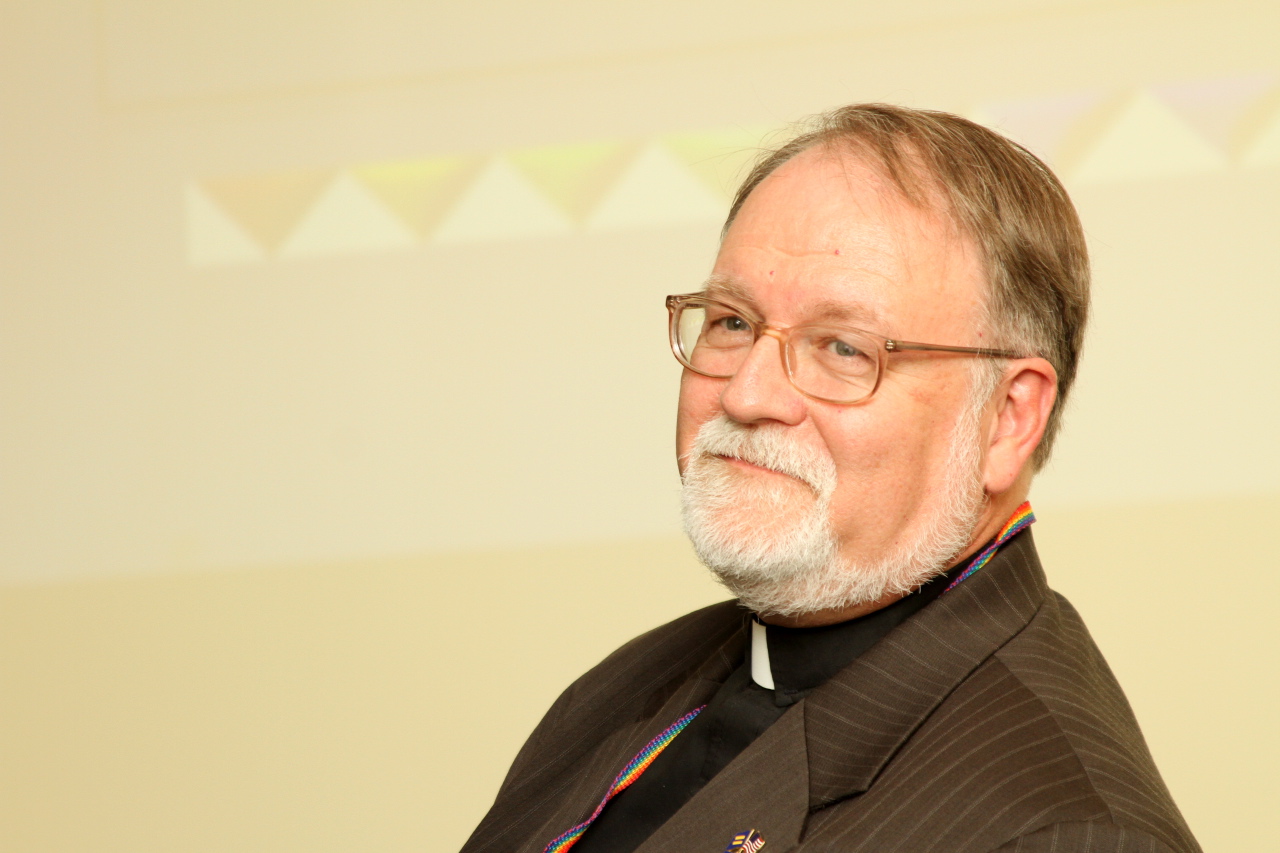
Dr. Stephen V. Sprinkle (Keith Tew photo).
Stephen V. Sprinkle is Director of Field Education and Supervised Ministry, and Professor of Practical Theology at Brite Divinity School, Fort Worth, Texas, a post he has held since 1994. An ordained Baptist minister, he is the first open and out Gay scholar in the history of the Divinity School, and the first open and out LGBTQ person to be tenured there. Read More…
Recent Social Justice Advocacy Activity By Dr. Sprinkle
 Summer 2009 – Dr. Sprinkle responded to the Fort Worth Police Department and Texas Alcoholic Beverage Commission Raid on the Rainbow Lounge, Fort Worth’s newest gay bar, on June 28, 2009, the exact 40th Anniversary of the Stonewall Rebellion. Dr. Sprinkle was invited to speak at three protest events sponsored by Queer LiberAction of Dallas. Here, he is keynoting the Rainbow Lounge Protest at the Tarrant County Courthouse on July 12, 2009. Read More…
Contact Us
Communicate with the Unfinished Lives project team:
info@unfinishedlivesblog.com
Thank you for your response. ✨

Schedule a Presentation
Dr. Sprinkle will gladly present his acclaimed presentation to your organization. To arrange an Unfinished Lives presentation for your organization or group, please contact us.
Dr. Sprinkle has given his Unfinished Lives presentation to these and other community groups and organizations. Read More…
-

Where are our readers?
Publisher: Steve Sprinkle (Project Director)
Steve Sprinkle
Unfinished Lives: Remembering LGBT Hate Crime VictimsBrite Divinity School/Texas Christian UniversityFort Worth TXprofessor, minister, author, blogger, LGBTQ advocate


Follow Unfinished Lives on Facebook
 Box Turtle Bulletin
- An error has occurred; the feed is probably down. Try again later.
- HRC Back Story
- Know About The Gender Identity Movement
- Why Is There A Need For Human Rights?
- Kinds Of Human Rights
- Human Rights Purposes And Violations
- Human Rights For Every Human Incident
- 8 Reasons Human Rights Are Important
- Everything About Human Rights
- Human Rights Issues Education & Law
- We Need To Stand Up For Our Rights And Those Of Others
- Coca-Cola Receives Perfect Score On Human Rights
- The Advocate: Daily News
- Abigail Spanberger becomes VA's first woman governor, honoring history and diversity in inaugural speech
- How a 'Mary Tyler Moore' episode and a gay actor broke new ground 53 years ago this month
- Queer trans ICE protester recounts pepper-spraying, jailing by agents
- Daily newsletter 1/16
- Georgia Republican's weeklong anti-trans obsession with Sarah McBride plays out on the House floor and online
- 911 calls reveal chaos after ICE agent shot Renee Good up to 4 times
- Former Sen. Kyrsten Sinema faces $25K lawsuit for allegedly destroying a 14-year marriage
- Daily newsletter 1/15
- As LGBTQ+ people go back into the closet under Trump, the Human Rights Campaign reveals plan to fight back
- U of Arkansas withdraws offer to new law school dean because she supported trans athletes
- Dallas Voice: Instant Tea
- An error has occurred; the feed is probably down. Try again later.

 Unfinished Lives
Special Comment on the Proposition 8 Protest Movement: “Now is Our Time”
by Stephen V. Sprinkle
One step too far: that is the step opponents of civil rights for LGBT people, the LDS Church and the Knights of Columbus, took in their all-out effort to repeal same-sex marriage in California. I do not contest the freedom of church organizations to voice their opinions about court decisions in America. But the desperate over-reach of Mormons and Roman Catholics to strip same-sex couples of the right of civil marriage the California Supreme Court had vouchsafed to them has awakened millions of LGBT people and allies to the power of a movement whose time has come. Pouring millions of church dollars and thousands of radio/TV advertisements into the struggle over Prop 8 has rebounded upon those who briefly celebrated beating back the high court’s decision on same-sex marriage. The agents of heterosexist theocracy may have won a single battle at the ballot box, but in doing so they have set in motion a war for public opinion they cannot win.
Our opponents managed one thing by their desperation and arrogance: they have galvanized the grassroots power of the millions of LGBT folk and allies who surged to the polls on November 4 to elect Barack Obama president. With the internet as the vehicle for equality, 300 protest events sprang up in less than twelve days. No other civil rights movement in American history has been launched in cyberspace before, and as the presidential campaign of 2008 demonstrated, the internet has vast potential to rally millions and to fund a national movement. As a witness to the No On 8 Protest at the Austin, Texas Town Hall, I can report the zeal and determination of 3,000 mostly first-time protesters to seize this time as our time, the long-deferred time for a true LGBT Civil Rights moment. As a marcher myself, I can testify to the thrill of taking it to the streets as a 50-something gay man in a new way. I was too closeted and too far removed from the Stonewall Uprising of 1969 to take to the streets then. But this is today, and Prop 8, no matter what LGBT people may privately think of marriage for ourselves, is a thumb in our eye. Myriads of young Lesbian, Gay, Bi and Transgender people built up their electoral muscle in Obama Pride, and now are ready to infuse new life, energy and possibility into the struggle for sexual and gender expression equality. The rally organizers did a fine job at the Austin Town Hall Plaza for the thousands who came out. All the usual advocacy groups were there, lending leadership and direction to the surging crowds of neophytes straining at the bit to do their part for justice. But closing the proceedings and urging protesters to sign up on contact lists or to buy tee shirts could not shut off the electricity generated by restless youth. When a movement goes viral, it cannot be shut down with the flip of a switch.
Perhaps the organizers of the Austin No On 8 Protest tried to get a march permit, but couldn’t. Whatever the story, hundreds of fired up queers and allies took their signs and passion into the streets, and marched up to the Texas State Capital, where we demonstrated outside the gates in the shadow of the tallest governmental dome in America. “What do we want?” “Equality!” “When do we want it?” “Now!” ricocheted up and down Austin streets as dozens of cars and pickups sped by blaring horns and shouting encouragement. The citizens of Austin stepped back, some smiling, some scowling at the surging rainbow line marching up Congress Avenue. Two descriptors came to my mind as I marched along chanting with the others: Power and Peace. This was no flash-in-the pan afternoon protest, no lark by first-timers seeking to get their pictures in the paper. Others have seized their moments: the anti-war movement, African Americans, the Moral Majority, women. But this has the feel of our time, the time when the issue of same-sex wedlock changed from a political hot potato into a viral movement elevating marriage to the status of a civil right for all Americans.
There are serious problems to work out. Before the rift with people of color tears any further, African Americans and Latinas/Latinos must be appealed to directly. LGBT people and straight people of color have a stake in the fight for justice together, not apart, and LGBT people of color must lead white queer folk to avoid driving a wedge between natural allies and us. That is where LGBT people of faith and progressive religious leaders have a major role to play by giving a faith rationale for the marriage equality movement. One of the lessons of the defeat in California is that when church bigotry waves crosses and distorts the issues for the voting public, the most potent antidote is the public witness of queer and progressive faith leaders wearing all their ecclesiastical regalia. God must not be hijacked any longer by the radical right in the fight for equality. Further, from what I saw and heard, LGBT rallies need media savvy and speakers need coaching on how to call out the passion and motivation that will translate into effective action for change. It was clear that we haven’t learned how to do this ‘thing,’ yet. But we must learn how, and quickly, if we are to ride the tide of commitment building in our queer communities.
My work on LGBT hate crimes murder victims teaches me that our movement already has its martyrs. I cannot help thinking of Harvey Milk, wondering if after 30 years since his assassination in San Francisco we have finally become ready to realize his vision and to vindicate his death and the deaths of so many hundreds of others. As we march and protest, their stories can give us the drive to confront a society yet unwilling to see us as equals. Never again must LGBT people stay silent when some of us are killed for simply being who we are. And never again may we sit idle on the sidelines while others struggle to win our freedom and equality. I saw and felt a justice movement building in the capital of the Lone Star State this past Saturday. As one sign in the Austin No on 8 Protest proclaimed, “Our Love Will Outlast Their H8!” We who believe in justice cannot rest! We who believe in justice cannot rest until it comes!
Stephen V. Sprinkle
Director
The Unfinished Lives Project
Share this:
November 20, 2008 Posted by unfinishedlives | California, Heterosexism and homophobia, Legislation, Marriage Equality, Politics, Protests and Demonstrations, religious intolerance, Social Justice Advocacy, Special Comments, Texas | Comments Off on Special Comment on the Proposition 8 Protest Movement: “Now is Our Time”