Clergy Call for Passage of Matthew Shepard Hate Crimes Act on Capitol Hill
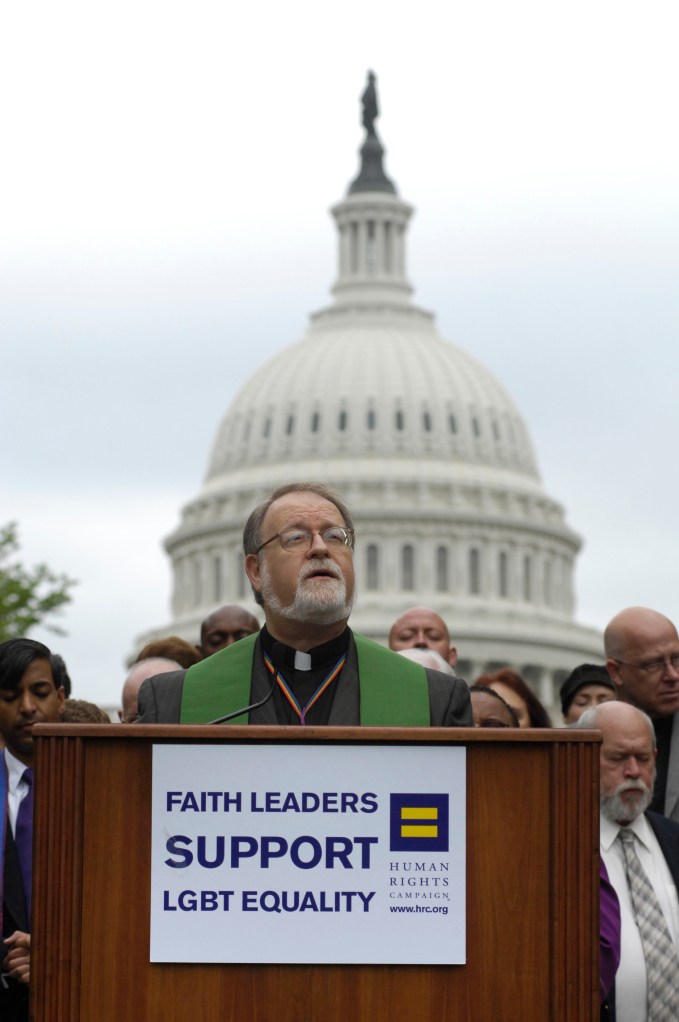
Unfinished Lives Project Director, Dr. Stephen Sprinkle, delivers the Opening Prayer at Clergy Call 2009
More than 300 LGBT Clergy and Allies hit Capitol Hill to pray and lobby for the passage of the Matthew Shepard Act and a fully trans-inclusive Employment Non-Descrimination Act. A new breeze seemed to be blowing in the halls of government. The Human Rights Campaign Religion and Faith Program, directed by Harry Knox and Sharon Groves, coordinated three days of events, May 4-6, 2009. Among the speakers for the Press Conference were Dr. Tony Campolo, noted evangelical leader, and Dr. Jo Hudson, Rector and Senior Pastor of Cathedral of Hope in Dallas. Clergy from all 50 states attended. The Matthew Shepard Act awaits the action of Senate Majority Leader Harry Reid and chief sponsor Senator Ted Kennedy in order to bring the legislation (which has already passed the House of Representatives by a healthy margin) to the floor of the Senate. President Obama has publicly indicated that he would sign the bill into law when it reaches his desk. Federal Hate Crimes legislation was first introduced in Congress 17 years ago. So much has happened since, and so many have needlessly died. With the Hebrew Prophets, the ministers, rabbis, and priests meeting for Clergy Call 2009 cry out, “How long, O Lord?”
The gathering of large contingents of LGBT Clergy and Allies to lobby for passage of fully inclusive hate crimes federal legislation, first in 2007 and now, has done much to persuade fence-sitting members of Congress that the radical right does not own the religious vote on this issue.
Feel the Morning Breaking: Remembering Bill Clayton (1978-1995)

Bill Clayton wanted to be a sculptor, a teacher, an architect, a counselor…but his life was cut short by irrational hatred on May 8, 1995. He was barely 17. Bill had come out to his parents as a bisexual three years before, when he was 14. Molested by a sexual predator that same year, he went into intensive therapy and regained his old confidence. It took years, but by April 1995 he and his counselor agreed that he was no longer in need of counseling for the PTSD that had plagued him for the past three years.
Bill was out at school, and a vocal, active proponent of the rights of sexual minorities. When an anti-LGBT storm broke over a Women’s History Month speaking invitation to Colonel Margarethe Cammermeyer (who defied Don’t Ask, Don’t Tell in the U.S. Military) at Olympia (Washington) High School, where Bill was a student, he openly supported her presence on campus. She was allowed to speak on March 21, 1995. Strong, homophobic feelings hung thick in the air after that.
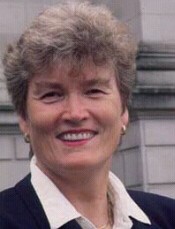
Colonel Margarethe Cammermeyer
On April 6, 1995, ironically one day after his therapist released him, Bill and his friends Sam and Jenny were attacked by a gang of students in broad daylight. The two boys were beaten and kicked unconscious after being verbally assaulted for being queer. The police arrested several boys under 18 who had acted on the community’s homophobia by targeting Bill and his friends. The assault was treated as a hate crime from the beginning. In time, the boys who attacked Bill and Sam were sentenced to 20-30 days in juvenile detention, followed up by probation and community service and four hours of diversity training concentrated on sexual orientation.

Bill after the hate crime assault
Olympia rose to the challenge, and began to face its homophobia at a rally in a city park on April 14. Bill spoke out, saying, “As an openly bisexual person in Olympia, I’m probably–or may be–the victim of this sort of thing again. Hate crimes–especially those against homosexuals and bisexuals and transgendered people are on the rise in this area. And that is why now–more than ever–we, the gay community need to come out and band together and fight for our civil rights and our right to be safe in our homes and on the streets.” It was a brave thing for him to do.
As a result of the attack, Bill fell into a deep depression, becoming suicidal. His family hospitalized him for his own protection and healing. Ten days later he came back home. He told his mother that all he could see ahead was a lifetime of dealing with one assault after another, and he was tired of coping with it all. She wrote about his fear and depression, “He was 17 years old–an age when kids are supposed to be excited about moving out into the world as adults. The only place he felt safe was at home.” She continued, “He saw no hope, so he chose to end his life.” As a living memorial to Bill, his mother, father, and brother have become advocates for LGBTQ youth, and strong voices for the prevention of teen gay suicide. They have not forgotten Bill, and we cannot let ourselves forget him, either.

One of Bill's last paintings, done while hospitalized for depression after the assault, "Hold Back The Dawn."
Now, with anti-bullying legislation on the books in several states, and pending in several others (NC, for one), Bill’s passion for life has a new dawning of hope. Federal legislation has been introduced in Congress to address school bullying and violence. Bill’s story takes on new power as the cause of security and hope for LGBT youth moves to center stage in American consciousness. Every time a life is saved, every time a young boy or girl is helped not to take their lives, Bill Clayton is honored. To save the lives of young queer folk is to vindicate the passion of our young brother, Bill, and all the thousands like him for whom the dawn did not break in time.
To that end, here is the link to the Trevor Helpline, http://www.thetrevorproject.org/ the oldest and largest 24/7 suicide prevention helpline for LGBTQ youth in existence. If you or a friend are feeling lost and alone, call the Trevor Helpline, 866-4-U-Trevor, [866-488-7386]. There is hope, there is help. Bill has not been forgotten. The morning is breaking.

Michael Scott Goucher and the Deadly Web of Homophobia

Michael Scott Goucher
Michael Scott Goucher, 21, thought he was meeting Shawn “Skippy” Freemore, 19, for a second tryst when he left his Stroudsburg, PA, apartment on the night of February 3, 2009 (see Towleroad, “Internet Tryst Leads to Murder of Pennsylvania Army Veteran, 2/13/2009”). Instead, Goucher was being set up for murder. Goucher met Freemore online. According to his MySpace page, Freemore identified as bisexual, but more interested in men. After the initial meet up in January, Freemore enlisted his friend, Ian Seagraves, 17, to ambush Goucher.
Goucher followed Freemore out of his car in a wooded area off of Snow Hill Road in Price Township. Seagraves, who was hiding under a nearby bridge, surprised Goucher, stabbing him in the neck. During the attack, his two assailants stabbed Goucher “45 to 50 times” according to police affadavits. They rifled his pockets, taking credit cards, his ID, and a cell phone. A DVD belonging to Goucher was later confiscated at Seagraves’ home. They covered his body with snow, and drove his car away.

Ian Seagraves & Shawn Freemore, courtesy of Pocono Record
When he was arrested, Freemore contended that he had acted alone and used the “gay panic” defense, saying that he resisted Goucher’s sexual advances in the car, and only after Goucher pursued him outside, stabbed him in the neck and stomach “about 20 times.” On February 11, 2009, Freemore showed police the location of Goucher’s body. Detectives secured a knife and a meat cleaver near the body, and a roll of duct tape with Seagraves’ fingerprint under the bridge. Seagraves, who apparently celebrated his part in the murder by changing his MySpace moniker to “ThrOwt Stabba,” was soon arrested, and the pair is now charged with premeditated murder.
This is one murder the FBI will surely miss in its Hate Crimes Statistics. The murky details of online hookups, closeted gayness, and bisexuality mingle with drug and alcohol addiction (on Freemore’s part at least), theft, and the involvement of the teenage men in a violence-exalting subculture called “the Juggaloes.” Anti-gay hate murder has been facilitated online before, as the story of Michael J. Sandy showed in 2006, as well as the role that homosexual self-loathing plays in the psychological makeup of some attackers. But this was a brutal, homophobia-instigated and motivated hate crime.

Michael Goucher at the Zion UCC organ
Goucher, a U.S. Army veteran, was a contributing member of his community. He worked for the local school system, and volunteered as the assistant organist of the Zion United Church of Christ in Stroudsburg, where he had impressed the pastor and the membership with his talent, sincerity, and friendliness. He was captain of the East Stroudsburg Crime Watch. He was a gay man. Though he came out to his family as early as 14, according to his uncle, William Searfoss, Goucher did keep his orientation from his Army superiors.
His killers will be judged according to the evidence. Allegedly, they own the guilt for this terrible crime. But Freemore and Seagraves are, in their own ways, victims of American-style homophobia, too. They were products of the same school system as Michael Goucher. They loathed gay men enough to turn a consensual sexual encounter into a bloodbath, with all the marks of homophobic overkill. They victimized Michael Goucher, giving way to their own self-loathing.
UPDATE: Following a Supreme Court ruling that juveniles cannot be sentenced to life without parole, Ian Seagraves was given a new hearing in hopes of securing a lesser sentence. His attorney filed a petition to the court based on the Supreme Court decision. But the judge was unmoved by the arguments, and after hearing the profanity laced lyrics of Seagraves’ song about the Goucher murder, reaffirmed the sentence Seagraves was serving. Goucher’s uncle, William Searfoss, said to PA Homepage, that the focus of the story can now return to Michael Goucher: “This isn’t about [Seagraves]. This is about Mike.”
Ten Years Later: Remembering Matthew Shepard

Sunday, October 12 marks the tenth anniversary of Matthew Shepard’s death. In honor of this important day, I offer an excerpt of a chapter in my forthcoming book, Unfinished Lives: Reviving the Memories of LGBT Hate Crimes Murder Victims. The chapter is entitled, “The Second Death of Matthew Shepard.”
Another Mother’s Day came and went. Another Father’s Day, too. Matt Shepard’s chair is empty in the Shepard home in Casper, Wyoming: no card from him, or roses for his mom; no tie or set of slippers for his dad–for over ten years. His parents, Judy and Dennis Shepard, and his younger brother, Logan, miss him everyday.
At the center of advocacy for LGBT freedom remains the enigmatic memory of the young, blond man trussed to a buck fence in Laramie, Wyoming. He has become the symbol for the hurts and hopes of lesbians, gay men, bisexual people, and transgender folk, both here and abroad. Curiosity or outrage at what happened to him usually begins the change in heart and attitude about hate crimes for the millions who hear his story. That alone is reason enough to tell and retell Matt’s story, and the stories of so many other LGBT people who have died so brutally. But are we any closer to understanding the real person, or is that person locked away behind the closed door of a decade of myth-making and amnesia? For most Americans, other than his family and his closest friends, the only way we come to know him is through the veil of the savagery that cut his life short. He suffered the dying, but we deal with the effects of his death.
There may be no way to recover who Matt Shepard was: the complicated young man who comes to life when his mother talks about his passionate opinions, his flashing temper, his generosity to a fault, his love of politics, his hopes of becoming a human rights advocate… and, we must add, his disturbing naïveté. The person he might have been is long gone. Like Beth Loffreda says, what we have left is the “whiplash” of his memory, haunting Laramie and haunting us, luring and stinging the conscience of our violent American society. Forgetfulness seems not to work. We can neither forget him, nor should we. In telling and retelling how his life ended lies the hope that a grace of transformation may seize us. Justice may yet be done, and hatred may change gradually into acceptance: of LGBT people by others and by themselves, of those who strike out against persons they fear and do not understand, and ultimately, of the need to grant each other room to live and let live.
Rest in peace, brother. We who survive you cannot, yet. We have much work to do.
Stephen V. Sprinkle
Director
The Unfinished Lives Project
Remembering Scotty Joe Weaver

On this day in 2004, Scotty Joe Weaver fell victim to an anti-gay hate crime in Bay Minette, Alabama. He died at the hands of his own roommates, people who on the surface represented friendship and trust. Yet Scotty Joe was murdered while pleading for his life in front of people who betrayed that relationship and bond.
Today, join the Unfinished Lives project as we remember Scotty Joe, mourn his loss, and celebrate his life. In our memory, we restore to Scotty Joe the dignity and worth that rightly belongs to every individual, regardless of one’s sexual orientation.
Read a September 2007 news story carried by WKRG about the prison sentencing of Weaver’s assailants, and view the related television news report:
Remembering Charlie Howard

July 7 marks the twenty-fourth anniversary of Charles O. “Charlie” Howard’s murder in Bangor, Maine. As Charlie and his friend Roy Ogden walked on a downtown street, three teenagers accosted Charlie and his friend, shouted homophobic slurs, threw Charlie to the ground, and then punched and kicked him. The three youths decided to force Charlie over a bridge railing and into the Kenduskeag Stream twenty feet below. Ogden, who had initially fled from the assailants, looked back to see them throw Charlie over the railing. After sounding an alarm for help, Ogden, together with firemen and police, looked for his friend, whose body would not be found until hours later. On that same night, at a party, the three teenagers bragged about having thrown Charlie into the stream.

Today the Charles O. Howard Memorial Foundation and the City of Bangor are working to establish a granite monument to mark the place of Charlie’s murder. Despite earlier disagreements about the proposed memorial, the City of Bangor approved installation of the monument by unanimous vote during a City Council meeting last November.
Today the Unfinished Lives Project also remembers Charlie. The tragedy that befell Charlie twenty-four years ago still touches lives today, and as we remember him we also hope for a world where hate-crime violence no longer occurs.
Remembering Barry Winchell

Today marks the ninth anniversary of the death of hate crime victim Barry Winchell. He served in the United States Army and held the rank of Private First Class. Following a period of ongoing harassment directed at Winchell for having dated a transsexual showgirl, fellow soldier Calvin Glover used a baseball bat to bludgeon Winchell as he slept on a cot in the barracks of Fort Campbell. Winchell died of massive head injuries the following day.
Winchell’s brutal murder prompted President Bill Clinton to review the “Don’t Ask, Don’t Tell” military policy, which many cite as a factor in the hate crime.
Today we remember Barry Winchell, and in our memory we restore to him the dignity and respect belonging to every person, regardless of sexual orientation.
About
If you are a first-time visitor to the Unfinished Lives Project website, we invite you to read A Welcome Message introducing you to our project. We are truly grateful for your visit.
The Unfinished Lives Project website is a place of public discourse which remembers and honors LGBTQ hate crime victims, while also revealing the reality of unseen violence perpetrated against people whose only “offense” is their sexual orientation, gender identity, or gender presentation. LGBTQ people in the United States are suffering a slow-rolling decimation of terror and murder all across the country. Every locale and demographic of society are affected: First Nations, Anglo, Black, Latino and Latina, South and Southeast Asian, Transgender, Bisexuals, Gay men, Lesbians, disabled, young, and mature. Homophobia has a long, crooked arm, and it is reaching out to snatch the life away from women and men whose tragic stories are under-reported to begin with, and whose memories are swiftly forgotten.
The horror of these killings transcends the shock and bereavement of loved ones and friends. These are not typical homicides; they are not killings for money or drugs, incidents of domestic strife, or crimes of passion. The vicious nature of hate crimes against LGBTQ persons is extremely brutal, grotesquely violent, and egregiously hateful.
Each murder serves the LGBTQ population as a sobering warning about the actual level of danger in our communities. The message these killings send is that freedom and open life for LGBTQ people is a cruel dream. Every time we remember one of these victims, however, the intentions of their killers are frustrated. To remember these women and men is to begin the process of changing the culture that killed them.
Our Project Director
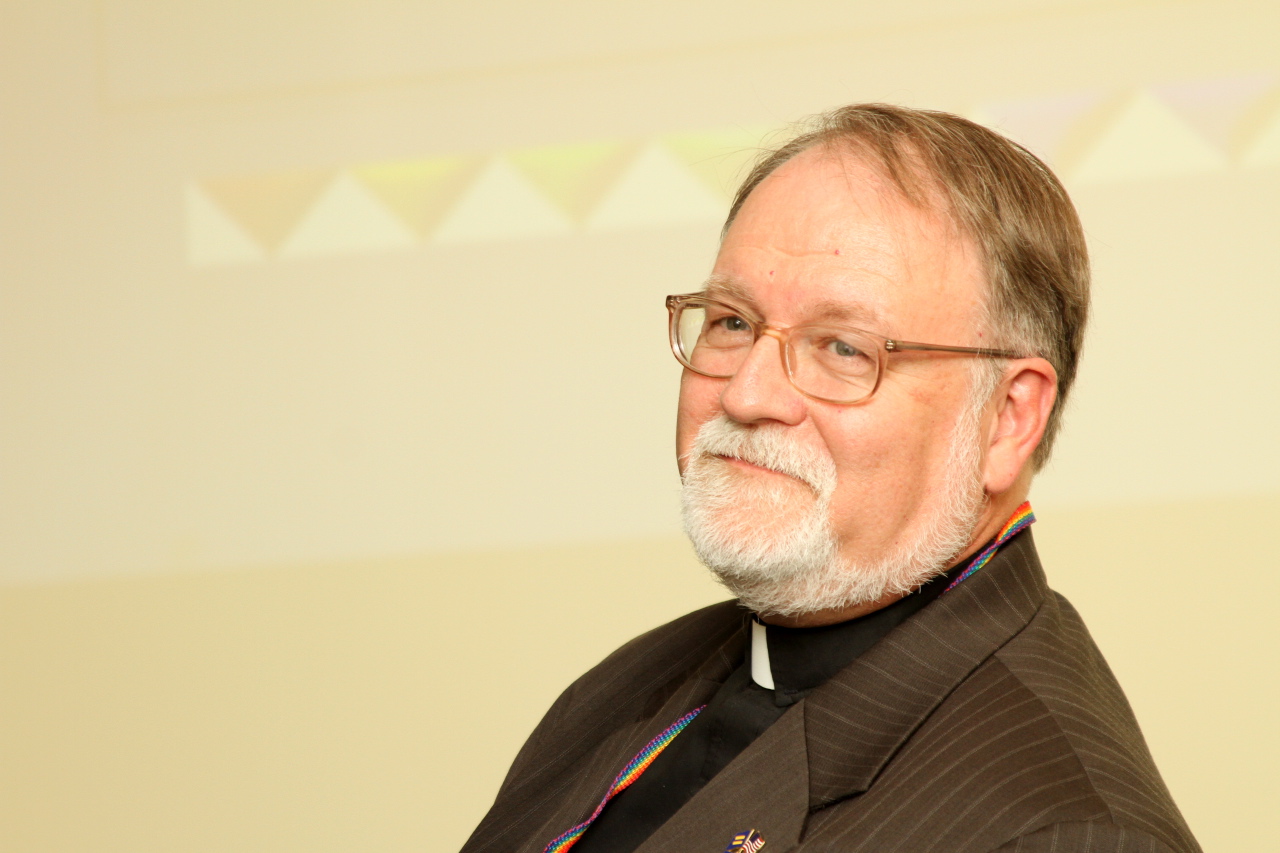
Dr. Stephen V. Sprinkle (Keith Tew photo).
Stephen V. Sprinkle is Director of Field Education and Supervised Ministry, and Professor of Practical Theology at Brite Divinity School, Fort Worth, Texas, a post he has held since 1994. An ordained Baptist minister, he is the first open and out Gay scholar in the history of the Divinity School, and the first open and out LGBTQ person to be tenured there. Read More…
Recent Social Justice Advocacy Activity By Dr. Sprinkle
 Summer 2009 – Dr. Sprinkle responded to the Fort Worth Police Department and Texas Alcoholic Beverage Commission Raid on the Rainbow Lounge, Fort Worth’s newest gay bar, on June 28, 2009, the exact 40th Anniversary of the Stonewall Rebellion. Dr. Sprinkle was invited to speak at three protest events sponsored by Queer LiberAction of Dallas. Here, he is keynoting the Rainbow Lounge Protest at the Tarrant County Courthouse on July 12, 2009. Read More…
Contact Us
Communicate with the Unfinished Lives project team:
info@unfinishedlivesblog.com


Schedule a Presentation
Dr. Sprinkle will gladly present his acclaimed presentation to your organization. To arrange an Unfinished Lives presentation for your organization or group, please contact us.
Dr. Sprinkle has given his Unfinished Lives presentation to these and other community groups and organizations. Read More…
-

Where are our readers?
Publisher: Steve Sprinkle (Project Director)
Steve Sprinkle
Unfinished Lives: Remembering LGBT Hate Crime VictimsBrite Divinity School/Texas Christian UniversityFort Worth TXprofessor, minister, author, blogger, LGBTQ advocate


Follow Unfinished Lives on Facebook
 Box Turtle Bulletin
- An error has occurred; the feed is probably down. Try again later.
- HRC Back Story
- Know About The Gender Identity Movement
- Why Is There A Need For Human Rights?
- Kinds Of Human Rights
- Human Rights Purposes And Violations
- Human Rights For Every Human Incident
- 8 Reasons Human Rights Are Important
- Everything About Human Rights
- Human Rights Issues Education & Law
- We Need To Stand Up For Our Rights And Those Of Others
- Coca-Cola Receives Perfect Score On Human Rights
- The Advocate: Daily News
- House Republicans push bill forcing states to stop acknowledging trans people in schools
- Advocate newsletter 4/9/26
- How I came out to my Mexican dad—who had secrets of his own
- 20+ powerful historic images of queer & feminist resistance
- Boston University removed Pride flags. Backlash forced its president to back off
- Transgender Latina beaten outside Washington LGBTQ+ bar after helping man recalls attack
- Georgia educator says she was forced to resign after telling student she’s gay
- Ohio teacher sues over removal of ‘Hate Has No Home Here’ poster
- Texas wants Bibles in public classrooms as another way to bully, harm, and exclude LGBTQ+ kids
- These anti-LGBTQ+ Georgia Republicans did drag themselves, unearthed photos show
- Dallas Voice: Instant Tea
- An error has occurred; the feed is probably down. Try again later.

 Unfinished Lives