Two Transgender Murders Bespeak Crisis of Violence

Marcal Camero Tye, 25, hate crime victim
Forrest City, Arkansas and Baltimore, Maryland – The brutal murders of two transgender women of color within the last month indicate the epidemic nature of transphobic and racist violence against the most vulnerable members of the LGBTQ community. No suspects have been identified yet in the murder of Tyra Trent, 25, who was found asphyxiated in a vacant building owned by the city in Baltimore on February 19. Ms. Trent had been reported missing days before the discovery of her body. Marcal Camero Tye, also 25, was murdered by dragging behind a vehicle for several hundred feet in Forrest City, Arkansas on March 8. The FBI has begun an investigation into the grisly murder of Ms. Tye, since Arkansas has not statute on the books protecting transgender people. No witnesses have come forward, and no suspects are being investigated in the Tye case as of yet. Transgender activists have filled the cyberworld with posts and articles about the two women, since regional and national media routinely ignore such stories, and the African American and LGBTQ press seem not to be much better when it comes to reporting these terrible acts of violence. Media chronically use male pronouns when referring to these women who gave so much in order to live life as they were born to be. Statements like “a man in a dress” sensationalize and demean the victims over and over again, even following their murders–thereby re-victimizing the victims. By definition, these murders are hate crimes perpetrated against a class of human beings who have remarkable hurdles to surmount in society. It is amazing to us at Unfinished Lives that Ms. Tye could live as a transgender woman in small town Arkansas. Ms. Trent faced similar problems in big town life. Local law enforcement authorities are reluctant to launch hate-crime investigations because of internalized bias against transgender persons. In the case of Ms. Tye, Arkansas LGBTQ activists were infuriated when Francis County Sheriff Bobby May asserted that her murder was a usual homicide and that the dragging death reports of he demise were “misleading.” The Little Rock-based Center for Artistic Revolution has issued statements of alarm and support for Ms. Tye since the initial reports of her slaying. As EDGE Boston reports: “The National Coalition of Anti-Violence Programs’ most recent report on anti-LGBT hate violence also indicated disproportionately high levels of anti-trans violence. Trans women-many of whom were of color-comprised half of the 22 reported anti-LGBT murders in 2009.” The situation has reached epidemic proportions across the nation. These two savage killings underscore the need for LGBTQ and racial/ethnic minority advocates to amplify the cries of the transgender community. The killings must stop.
Unfinished Lives Book Debuts in DC and Dallas
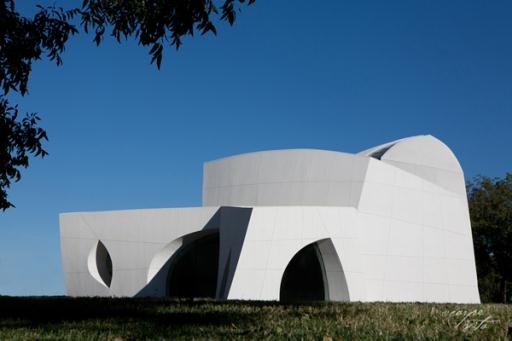
Interfaith Peace Chapel on the Campus of Cathedral of Hope, Dallas, Texas
Washington DC – Unfinished Lives: Reviving the Memories of LGBTQ Hate Crimes Victims, made its debut at the annual meeting of the Forum on the Military Chaplaincy this past Friday. Dr. Stephen Sprinkle will kick off a series of book signing events nationally, beginning with a lecture, panel discussion, book signing and reception at the Interfaith Peace Chapel on the campus of the Cathedral of Hope in Dallas, Texas, next Sunday, March 27. The Cathedral of Hope, a congregation of the United Church of Christ, is the world’s largest LGBTQ-predominant faith community. Members of the Forum on the Military Chaplaincy, meeting at the headquarters of the Human Rights Campaign in Washington, received the book with enthusiasm. Dr. Sprinkle was a guest at the 19th Annual Servicemembers Legal Defense Network Dinner, held at the National Building Museum on F Street. A stellar gathering of LGBTQ heroes and their allies celebrated the Repeal of Don’t Ask, Don’t Tell, and honored two mothers of gay servicemembers who were murdered because of their sexual orientation. Dorothy Hajdys-Clausen of Chicago Heights, Illinois, the mother of slain sailor Allen R. Schindler, and Pat Kuteles of Kansas City, Missouri, mother of murdered soldier Barry Winchell, were given a standing ovation. A chapter on Schindler, “Hell to Pay on the Belleau Wood,” is in Unfinished Lives, and Winchell has been featured in this blog repeatedly. A panel discussion is planned for the March 27th book signing event at the Interfaith Peace Chapel in response to a short lecture by Dr. Sprinkle. Dr. Keri Day, Assistant Professor of Theological Ethics and Director of Brite Divinity School’s Black Church Studies Program, Pastor Alex Byrd of Living Faith Covenant Church of Dallas, and Colonel Paul Dodd, U.S. Army Chaplain (Ret) of Austin will be on the panel. The event is scheduled from 3:30 until 5:30 pm. Dr. Sprinkle will be signing his book following the 9 am and the 11 am services at the Cathedral that morning in the Sources of Hope Bookstore. Cathedral of Hope is located at 5910 Cedar Springs Road in Dallas. For more information about the book signings on Sunday, March 27, contact Sue Schrader at sschrader@cathedralofhope.com, or Brian Parman at bparman@cathedralofhope.com.
Brooklyn Man Brutally Gay Bashed

Williamsburg native, Barie Shortell, the day of the attack
Brooklyn, New York – Barie Shortell, 29, was beaten savagely by a gang of six teens who thought he was gay. On February 22, Shortell walked past the hooded teens in the Williamsburg neighborhood who insulted and hurled anti-gay epithets at him. At about 10:10 PM, Shortell told The Brooklyn Paper, one of the youths yelled, “Oh, shit, is that a guy or a girl?” Shortell let the insult pass, thinking it “juvenile,” but the gang pursued him as he tried to cross Wythe Avenue, slamming him into a wall and then pummeling him on the sidewalk with such force that it shattered his nose, his eye sockets, and broke his jaw in several places. Shortell thankfully has no recollection of the moments of the assault. He was sure, however, of the motive for the attack. “I feel pretty confident they perceived me as a gay man and attacked me, but I can’t understand why they did what they did,” he said to The Brooklyn Paper. “I looked horrible. Blood was everywhere.” Shortell was rushed to Woodhull Hospital where surgeons worked for better than ten hours to reset his jaw and insert three metal plates into his face and head. A spokesperson for the hospital told reporters that the force of impact the injuries represented was equivalent to a car wreck. At first, police dismissed the hate crime aspect of the case. Pressure from the New York Anti-Violence Program made them reconsider. Now the case is being investigated as an anti-gay hate crime, though there have still been no arrests made as of March 17. The costs of Shortell’s surgery has mounted to over $100,000, so friends have organized a benefit to raise money for him next week on March 23. Calling the event “Gay Bash: A Benefit for Barie Shortell,” the organizers are asking $35.00 admission to the Blackout Bar, 916 Manhattan Avenue at Kent Street in Greenpoint. Doors open at 7 PM.
Gay Bashing Costs New Jersey Burger King $3.15 Million
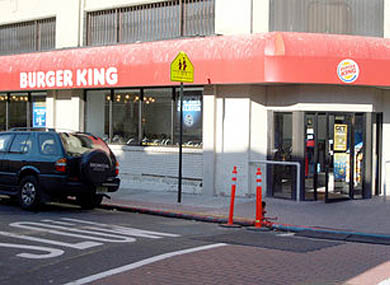 Union City, New Jersey – “They thought they were going to die.” James Fine, attorney for a gay couple attacked in 2007 at the Union City Burger King, said to NJ.com, that the large award granted to his clients was more than justified, given the severity of the assault: “The manager and a group of angry restaurant employees chased the couple and then mercilessly kicked, beat and spat upon the two men while screaming hate-filled anti-gay invectives.” Peter Casbar, 43, and Noel Robichaux, 46, got into a dispute at the local fast food restaurant which turned ugly, and then escalated as the couple fled out into the street. What had begun as a disagreement over an order at the counter exploded into a full-blown gay bashing. LGBTQ Nation reports that the gay men refused to take the hate crime attack lying down, and filed a suit under New Jersey’s Law Against Discrimination against Food Service Properties Corporation and Union City Restaurant Corporation which own seven Burger Kings including the one at 3501 Bergenline Avenue where the crime took place. Two employees of the restaurant, Christopher Soto and Angel Caraballo, have pleaded guilty to charges of aggravated assault against Robichaux and Casbar. The harshness of the violence was compounded for the gay men because of the hatred expressed against their sexual orientation, as a psychologist testified in the civil court case. The multi-million dollar size of the monetary award, which included $1.7 million in punitive damages, indicates the gravity with which the jury took the attack. According to NJ.com, the jury returned the verdict and damages within three hours of entering the jury room last Wednesday. At first, the plaintiffs were overcome with emotion by the court action. Attorney Fine said they were unable to speak. Joseph R. Donahue, another attorney representing Robichaux and Casbar, said to reporters, “The jury took this beating of our clients very seriously. I think it is a very big case and we are very pleased.” Attorney Fine concurred, “Violence against anybody, including gay people, cannot be condoned. The jury spoke to the issue.”
Houston Churches Break Cycle of Gay Hate: “Bring Your Gay Teen to Church Sunday,” Feb. 20
 Houston, Texas – When school bullying drove 13-year-old Asher Brown to take his own life on September 23, the horror and despair of so many LGBTQ youth was laid bare for Houston to see. LGBTQ teen suicide, a crisis for any society, hit leaders of Houston’s gay-affirming religious communities particularly hard. Now, the Houston Chronicle and the Dallas Voice report that 22 area churches are doing their part to break the cycle of religion-based negativity toward homosexuality by inaugurating “Bring Your Gay Teen to Church Sunday” this week. On Sunday, February 20, churches from a broad range of traditions make it public that their doors and fellowships are fully open and affirming of LGBTQ youth, their families, and loved ones. The connection with the suicide of young Asher Brown is important, since at the time public rallies and memorials in his memory were taking place, the visual absence of churches, synagogues, temples, and mosques was telling. Surely hundreds of people from faith communities attended these public memorial events, but there was no organized presence on the part of religious communities–a glaring absence that communicated a message of neglect or disapproval that concerned religious leaders are eager to dispel. The Houston Chronicle details grim statistics about how religion is perceived to reinforce LGBTQ youth attitudes of alienation from faith communities. The Chronicle reports that a recent survey by the Public Research Institute showed that less than 20 percent of Americans believe faith communities do a “good job” on the issues of homosexuality and gender expression. Almost half of those surveyed said that the religious message on the topic was “negative,” and fully 40 percent said that the intolerant attitudes of religious communities contributed “a lot” to the disapproval and condemnation of LGBTQ people in this country. The most damning statistic associated with these issues referred to teen LGBTQ suicides: two out of three Americans in the survey said that religion contributed heavily to increasing rates of suicide among gender non-confroming, queer, and gay youth. Robert P. Jones, executive officer of the Public Research Institute, underlined the long history of anti-LGBTQ messages coming from America’s houses of faith: “Religious Americans historically have had negative attitudes about gays and lesbians.” In response to the crisis of teen despair in public and private schools in the metro area, the Houston Clergy Council devised “Bring Your Gay Teen to Church Sunday” as a means of getting out the word that God and the faith community do not hate, reject, or despise LGBTQ youth–quite to the contrary, these affirming churches welcome gender non-conforming people and their families every day. The masthead of the Facebook page announcing the project reads, “Is your teenager Gay, Lesbian, Bisexual, Transgender, a Questioning (GLBTQ) teen? Bring your teen to one of these affirming churches, and rest assured we won’t try to ‘fix’ them. We think they are awesome just the way they are!” The list of churches is impressive, including historic mainline denominations (Episcopal, United Church of Christ, Lutheran, and United Methodist), non-denominational communities, the Society of Friends (Quakers), Unitarians and Universalists, and the largest Metropolitan Community Church in the world. There is even a lone courageous Baptist church with an open and affirming stance. The struggle with religious intolerance and hate speech from pulpits in Houston and around the nation will go on for a long time. Thousands of congregations in the Houston metro area deny the acceptability of homosexuality and gender non-conformity, declaring queer youth sinful or worse. But a cadre of deeply committed faith leaders and their communities are determined to get out the word in America’s fourth largest city that sexual minority youth are acceptable to God, and most certainly to them. “Bring Your Gay Teen to Church Sunday” is tomorrow, February 20.
How to Remember a Gay Hate Crimes Victim: 12 Years After Murder, Billy Jack Gaither’s Memory is Alive

Billy Jack Gaither
Montgomery, Alabama- Billy Jack Gaither’s memory will not die. A determined group of family, friends, and human rights advocates see to that annually, and on Sunday, February 2o, the 13th Annual Vigil for Victims of Hate and Violence will take place on the steps of the Alabama State Capital Building. Billy Jack, 39, died February 19, 1999 on the banks of Peckerwood Creek at the hands of two local men who hate him for being gay. Steven Mullins and Charles “Charlsey” Butler had no other motive for the grisly murder. They killed Billy Jack with a pick ax handle, and then burned his body on a pyre of old tire carcasses as an expression of their disdain for him and for all LGBTQ people as human beings. “Charlsey” and the “Skinhead” wanted this gentle, loving Alabamian from Sylacauga dead, immolated, and forgotten. But Billy’s family, especially sisters Kathy Jo and Vickie, and allies such as Dr. Beverly Hawk of the University of Alabama – Tuscaloosa and David Gary of Birmingham, have doggedly refused to let the killers win. They established the Billy Jack Gaither Humanitarian Award, to be presented annually at the Vigil to persons of outstanding social conscience and action. This year, the Vigil will commence at 3 p.m. with music by The Shouting Stones, and the Unitarian Universalist Fellowship Choir. Professor Gwen Thomas of Auburn University is the featured speaker. The Fourth Annual Billy Jack Humanitarian Award will be given to the Rev. and Mrs. Robert Graetz. Graetz was the white pastor of the predominantly black Trinity Lutheran Church in Montgomery during the historic Montgomery Bus Boycott in 1955. A personal friend of Rosa Parks, the Rev. Graetz was ostracized by whites for his support of the non-violent civil rights movement. His auto tires were slashed. The home he shared with his wife Jennie and their family was bombed three times, but thankfully the largest and last of the bombs was a dud, and did not go off. For Billy Jack to be remembered by awarding good works such as the courageous witness of the Rev. Graetz and his wife Jeanie is wonderful in itself. The award this year certainly embraces the LGBTQ and African American communities, and brings them into further dialogue as they struggle for justice together. But the planners and board members who refuse to forget Billy Jack are doing more than staging an event and presenting a named award–they are frustrating the intentions of hate crime killers like Mullins and Butler everywhere. They are bringing good people into an educational circle of hope and justice. They are sending a beam of light into the darkest regions of the human soul, the places where bigotry and hatred are incubated. So, once again, Billy Jack is remembered, celebrated, and beloved. Billy Jack’s memory is evergreen in Sweet Home Alabama. His killers languish forgotten serving life sentences in prison. Well done, Alabamians! [Billy Jack’s story, “Southern Gothic,” is told in the newly published Unfinished Lives: Reviving the Memories of LGBTQ Hate Crimes Victims. Follow this link for more information: http://www.amazon.com/Unfinished-Lives-Reviving-Memories-Victims/dp/1608998118/ref=sr_1_2?s=books&ie=UTF8&qid=1298017444&sr=1-2].
NC Man “Turns Straight,” Murders Gay Roommate with Ax and Shotgun, Blames Mucinex
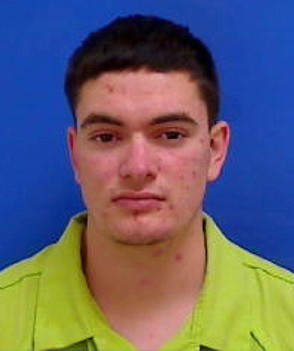
Michael Anderson: "Mucinex made me do it."
Hickory, NC – In one of the grisliest murders the local Catawba County Sheriff’s Department can recall, a teen roommate uses the gay panic defense to justify his alleged ax-and-shotgun murder of an older gay man. Michael Anderson, 19, of nearby King’s Mountain, is accused of murdering 38-year-old Stephen Starr at about 4:45 a.m. on Monday in the Hickory house they shared. The Hickory Daily Record reports that Anderson, claiming he “turned straight” during alleged sexual advances by Starr, shot him with a shotgun and pistol, carved words into his body and wrote some others with a pen, before lodging an ax in the victim’s stomach. “He shot his roommate and took an ax to him,” Catawba County Sheriff Coy Reid told the Daily Record. “It’s one of the nastiest crime scenes I’ve been to.” The words carved and written on Starr’s mutilated body were apparently so offensive that officials are not releasing what they were until the trial. Anderson announced the murder on his Facebook page between 4 a.m. and 5 a.m., asking God to forgive him, and claiming that no one would be able to take him alive. In a bizarre twist The Box Turtle Bulletin says is reminiscent of the infamous “Twinkie Defense” used to deflect blame for the murder of gay San Francisco Supervisor Harvey Milk by a straight rival on the board, Anderson claims that he took too many doses of Mucinex DM, an over-the-counter congestion medication. In a 911 recording released to the Daily Record on Tuesday, Anderson says that the pills “drove me mad”: “I Od’d on Mucinex DM. Dextromethorphan makes me feel a little weird and I took too many.” Anderson told the telecommunicator that he shot his roommate three times with a shotgun and pistol, then mutilated the corpse with an ax so brutally that Starr would not be able to be identified: “You’re not going to know who it is,” Anderson says on the recording. When asked why he killed his roommate, Anderson then says that it was because Starr was gay, and he was heterosexual. “I met [Starr] and went to his house and he took me in and I turned straight again. And he wanted to touch me and stuff and I wouldn’t let him, and he kept trying. And I waited until he went to sleep and then I shot him three times. And I mutilated him very badly and I’m sorry, I’m sorry. Oh God, please help me.” Starr had likened his relationship to Anderson as a parental one, according to his Facebook page. On February 6, Starr posted that he had a “new son,” a person he was trying to make a better human being. So, Anderson’s account of being picked up at a gay bar and molested seems not to square with Starr’s understanding of the relationship, neither does Anderson’s suggestion that the encounter with his older gay roommate was recent and brief. The two men apparently lived together for several days. As the case continues to sort itself out, it is well to remember that homophobia is a crooked phenomenon that erupts into violence in a variety of seemingly-irrational ways. It is also important to remember that Starr is unable to answer charges of sexual advances. News reports are carrying only allegations from the self-interested point of view of the alleged killer. The Unfinished Lives Team sees enough in this story to indicate that a possible anti-gay hate crime was committed by a desperate young man who is ready to blame over-the-counter cold medications and the victim for his actions, but not himself.
NC Gay Couple Harassed for a Year, Then Burned Out of Home
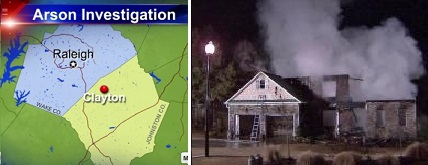
WRAL photo and graphic
Clayton, NC – A gay couple anonymously hiding in a motel out of fear for their safety, were burned out of house and home on Friday. Neighbors say the gay men suffered at least three deliberate acts of anti-gay harassment for over a year – but the neighbors are too scared to identify themselves, either. So Johnston County law enforcement, working from a state arson statute that doesn’t allow for violence against gay men as a hate crime, have determined that the burnout was “just arson.” Like 9/11 was “just some plane crashes.” Or like the murder of Ugandan gay activist David Kato was “just a robbery gone bad.” North Carolina has not seen fit to include sexual orientation, gender identity, or gender expression as protected classes in its existing hate crimes laws. So, an act of blatant hate crime terror that holds a gay couple and their whole neighborhood in fear is playing with matches. That is all this deed will remain officially unless the U.S. Justice Department invokes the Matthew Shepard Act to rectify neglectful conduct by the Johnston County Sheriff’s Department. WRAL.com interviewed a frightened, anonymous neighbor, who is sure that the three incidents of harassment were related to anti-gay hatred: “A note with derogatory language was left in the mailbox, an anti-gay slur was written on the house with marker, and the tires of a car parked in the garage were slashed.” The gay men’s friend and neighbor continued, “I felt sick to my stomach. I felt so sorry for the two gentlemen. They lost everything. We do believe that this is a hate crime.” The couple was out of town when other residents in the Winston Pointe subdivision discovered the fire belching from the brick veneer home at 1:30 a.m. Friday and called the alarm in. Flames quickly engulfed the structure, gutting it and destroying all the couple’s possessions. The American Red Cross has stepped in to offer food, clothing, and insurance contacts to the victims. Johnston County Sheriff Steve Bizzell says that the investigation has turned up no suspects yet. Bizzell acknowledged that he knew of two out of the three incidents of harassment against the gay men this past year, but he would not say which two.
Alabama Lesbian Attacked by a Dozen, But She Alone Was Arrested

Laura Gilbert, lesbian injured in bar attack
Opelika, Alabama – A 25-year-old lesbian was assaulted by a dozen assailants outside a local bar after a birthday party last week in an alleged hate crime, but law enforcement officers arrested only her. Laura Gilbert asserts that from the moment she went into The Villa, a bar on the outskirts of Opelika in Lee County, she felt uneasy. On February 2, Gilbert accompanied her friend from high school days, Sheila Siddall, to celebrate her birthday by singing karaoke. Gilbert told WRBL News, “As soon as we walked in the bar, I felt uncomfortable, I felt everybody staring at us, but you know, it was her birthday, I didn’t want to ruin it for her.” The victim says she had never been to the bar before, but had concerns that, as a lesbian, she would not be welcome there. Her fears were confirmed as the two women left the premises. According to Gilbert and Sidall, a woman approached them and started a fight. The altercation grew to include a gang of ten women and two men. One of the men shouted at Gilbert, “If you want to look like a man, you can get hit like a man!” Rather than being punched to the ground, Gilbert fought back to defend herself. Siddall immediately called 911, but the Lee County Sheriff’s Deputies who responded to the emergency call after the fight was over singled Gilbert out, arresting her for public intoxication and disorderly conduct. No one else has been charged or arrested. “They didn’t take our side of the story,” Gilbert told WRBL. “They took their side of the story, and then all of a sudden, they come up behind me and tell me to put my hands behind my back, that I’m going to jail.” Though witnesses reported that many other participants in the attack were just as intoxicated as Gilbert, she was the only person charged and taken off to jail. The victim was badly bruised, and her eye was severely blackened in the assault, as photographs taken at the time attest. Now Gilbert and Siddall are pushing back, saying that the attack was motivated by anti-lesbian bias, and that this prejudice against Gilbert’s sexual orientation is the motive for law enforcement siding with the attackers. Sidall, who is heterosexual, says that not only did the Lee County Sheriff’s Deputies neglect to take statements from her and her lesbian friend–the deputies were “laughing and cutting up” with the drunken perpetrators. Sheriff Jay Jones says that the “hate crime box” was not checked off at the time of the incident, so that must mean that no hate crime occurred. Alabama, however, is one of only five states in the nation that has no hate crimes protections for LGBTQ people. The Alabama hate crimes statute only recognizes bias against race, color, religion, national origin, ethnicity, or physical or mental disability. Sexual orientation and gender identity and expression are not protected under Alabama law, so it is doubtful that law enforcement officers would have acknowledged an anti-gay or lesbian hate crime that would not count in the state. Sheriff Jones, when questioned by WRBL reporters said that it was clear “something” had happened to the lesbian at The Villa, and belatedly offered to investigate further and issue warrants if he deems they are due. The Dallas Voice reports that both Siddall and Gilbert have since filed separate reports on the attack, but that no one in law enforcement has bothered to interview them. Gilbert,who is recovering from her injuries, summed up her situation to WRBL reporters: “I’m an American just like the rest of us are. I have rights. I have the same rights as y’all do, supposedly, but people from here don’t look at it that way.” States without protections for LGBTQ people typically report far fewer hate crimes incidents than those that do have such hate crimes laws. Comparable states in population like Alabama and Connecticut illustrate the point. In 2009, Alabama reported only nine hate crimes statewide. Connecticut, during the same period, recorded over 200. The Opelika bar attack is stirring debate on the need for “Sweet Home Alabama” to expand its hate crimes protections so that its residents may be justly treated–finally.
About
If you are a first-time visitor to the Unfinished Lives Project website, we invite you to read A Welcome Message introducing you to our project. We are truly grateful for your visit.
The Unfinished Lives Project website is a place of public discourse which remembers and honors LGBTQ hate crime victims, while also revealing the reality of unseen violence perpetrated against people whose only “offense” is their sexual orientation, gender identity, or gender presentation. LGBTQ people in the United States are suffering a slow-rolling decimation of terror and murder all across the country. Every locale and demographic of society are affected: First Nations, Anglo, Black, Latino and Latina, South and Southeast Asian, Transgender, Bisexuals, Gay men, Lesbians, disabled, young, and mature. Homophobia has a long, crooked arm, and it is reaching out to snatch the life away from women and men whose tragic stories are under-reported to begin with, and whose memories are swiftly forgotten.
The horror of these killings transcends the shock and bereavement of loved ones and friends. These are not typical homicides; they are not killings for money or drugs, incidents of domestic strife, or crimes of passion. The vicious nature of hate crimes against LGBTQ persons is extremely brutal, grotesquely violent, and egregiously hateful.
Each murder serves the LGBTQ population as a sobering warning about the actual level of danger in our communities. The message these killings send is that freedom and open life for LGBTQ people is a cruel dream. Every time we remember one of these victims, however, the intentions of their killers are frustrated. To remember these women and men is to begin the process of changing the culture that killed them.
Our Project Director
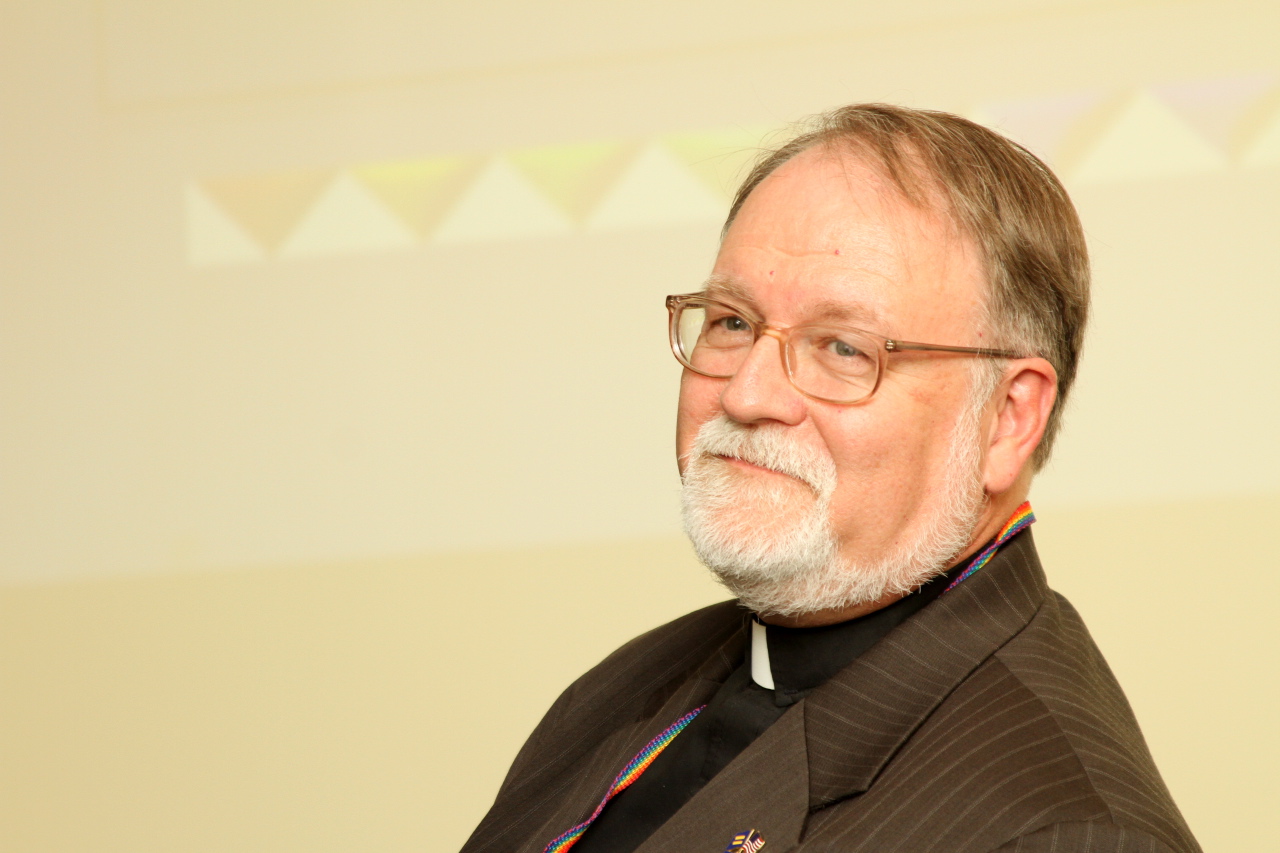
Dr. Stephen V. Sprinkle (Keith Tew photo).
Stephen V. Sprinkle is Director of Field Education and Supervised Ministry, and Professor of Practical Theology at Brite Divinity School, Fort Worth, Texas, a post he has held since 1994. An ordained Baptist minister, he is the first open and out Gay scholar in the history of the Divinity School, and the first open and out LGBTQ person to be tenured there. Read More…
Recent Social Justice Advocacy Activity By Dr. Sprinkle
 Summer 2009 – Dr. Sprinkle responded to the Fort Worth Police Department and Texas Alcoholic Beverage Commission Raid on the Rainbow Lounge, Fort Worth’s newest gay bar, on June 28, 2009, the exact 40th Anniversary of the Stonewall Rebellion. Dr. Sprinkle was invited to speak at three protest events sponsored by Queer LiberAction of Dallas. Here, he is keynoting the Rainbow Lounge Protest at the Tarrant County Courthouse on July 12, 2009. Read More…
Contact Us
Communicate with the Unfinished Lives project team:
info@unfinishedlivesblog.com


Schedule a Presentation
Dr. Sprinkle will gladly present his acclaimed presentation to your organization. To arrange an Unfinished Lives presentation for your organization or group, please contact us.
Dr. Sprinkle has given his Unfinished Lives presentation to these and other community groups and organizations. Read More…
-

Where are our readers?
Publisher: Steve Sprinkle (Project Director)
Steve Sprinkle
Unfinished Lives: Remembering LGBT Hate Crime VictimsBrite Divinity School/Texas Christian UniversityFort Worth TXprofessor, minister, author, blogger, LGBTQ advocate


Follow Unfinished Lives on Facebook
 Box Turtle Bulletin
- An error has occurred; the feed is probably down. Try again later.
- HRC Back Story
- Know About The Gender Identity Movement
- Why Is There A Need For Human Rights?
- Kinds Of Human Rights
- Human Rights Purposes And Violations
- Human Rights For Every Human Incident
- 8 Reasons Human Rights Are Important
- Everything About Human Rights
- Human Rights Issues Education & Law
- We Need To Stand Up For Our Rights And Those Of Others
- Coca-Cola Receives Perfect Score On Human Rights
- The Advocate: Daily News
- Senate blocks Trump-backed trans sports ban in Republican voting bill
- Officials say it’s ‘disgusting’ that Donald Trump is celebrating Robert Mueller’s death
- Donald Trump cheers former special counsel Robert Mueller’s death
- Robert Mueller, who investigated Trump and tested limits of presidential power, dies at 81
- Christian ‘Black Nazi’ Mark Robinson admits to porn obsession he denied while campaigning
- ‘I will not comply’: Tennessee librarian refuses to move LGBTQ+ books
- Fewer young Americans support LGBTQ+ protections, survey finds
- Tennessee bill could create public registry of trans residents’ medical info
- Trans trailblazer Andrea Jenkins on her history-making political career in Minneapolis
- Federal judge blocks RFK Jr. from limiting care for trans youth
- Dallas Voice: Instant Tea
- An error has occurred; the feed is probably down. Try again later.

 Unfinished Lives
Suspect 3rd Century Women Put to Death in Arena: Ancient Hate Crime?
Share this:
March 7, 2011 Posted by unfinishedlives | Africa, anti-LGBT hate crime murder, Bisexual persons, Carthage, Execution, Hate Crimes, Heterosexism and homophobia, Lesbian women, Martyrdom as State-Sanctioned Hate Crime, Perpetrators of Hate Crime, Perpetua and Felicity, Public Theology, religious intolerance, Remembrances, Roman North Africa, Special Comments, women | Africa, anti-LGBT hate crime murder, Bisexual persons, Carthage, Hate Crimes, Lesbians, Martyrdom as State-Sponsored Hate Crime, perpetrators, Perpetua and Felicity, public theology, religious intolerance, Remembrances, Roman North Africa, Special Comment, women | Comments Off on Suspect 3rd Century Women Put to Death in Arena: Ancient Hate Crime?