Lincoln Man Charged with Anti-Gay Hate Crime
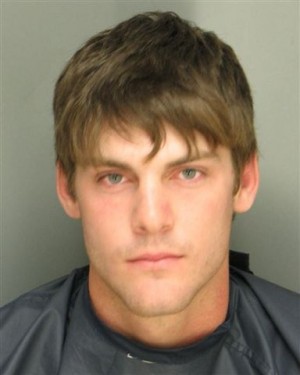
Alleged gay basher, Luke Stevens
Lincoln, Nebraska – A 22-year-old University of Nebraska – Lincoln student has been arrested and charged for assaulting a gay man outside a popular gay club on Friday, September 3. Luke Stevens allegedly harassed a 32-year-old gay man after leaving Lincoln’s Club Q, calling him “derogatory names” concerning his sexual orientation intended to start a fight, according to 1011now. As the target of the abuse tried to leave his antagonist, Stevens allegedly punched him in the face, and moved in to continue the fight. A police officer on the scene was drawn to the noise of the altercation, saw the punch thrown, and wrestled Stevens to the ground. The victim of the assault remains unidentified to the press. He was treated on the scene and released to return home. “The victim and several witnesses reported that Luke Stevens did not know them,” Officer Katie Flood, spokesperson for the LPD, told reporters. “He started calling them derogatory names based on their sexual orientation.” Stevens was charged with assault, disturbing the peace, and failure to comply. Because Nebraska has hate crimes legislation on the books, Stevens may be charged with bias crime, which would make his situation much more grave. If proven guilty of a hate crime, the enhancement would hike the misdemeanor assault charge to a felony. The Journal Star reports that the Nebraska hate crimes statute covers offenses carried out due to the victim’s “race, color, religion, ancestry, national origin, gender, sexual orientation, age, or disability.” Travis Garrett, 19, a friend of Stevens, was also charged with disturbing the peace. Stevens and Garrett were in Club Q together earlier in the evening, as well as Stevens’s victim. Witnesses and friends of the accused UNL student say that he is straight. That evening he was extremely upset at having been turned down by a girl. The contrast between the response of authorities in Lincoln and a similar anti-gay assault in Greenville, South Carolina three years earlier could not be starker. Both involved punches thrown at a gay man after verbal anti-gay harassment outside a bar. But in the case of Sean William Kennedy, 21, who was hit in the face outside Croc’s Bar in Greenville, an upstate South Carolina college town, both the outcome and the legal repercussions were outrageous. As Unfinished Lives has reported, Kennedy was hit by Steven Moller, an 18-year-old straight man spoiling for a fight with a gay person, in May 2007. Kennedy fell to the curb, hit his head on the concrete, and died. Moller was arrested and charged with manslaughter, since the Palmetto State did not have an anti-gay hate crimes law (and still resists passage of such legislation). While Nebraska police and prosecutors stand ready to investigate the assault in Lincoln as a hate crime, South Carolina officials refused to do so in the Kennedy case, giving Moller (who admitted attacking his victim) every benefit of the doubt. In the end, with time served, Moller received less of a sentence for killing Sean Kennedy than if he had been found guilty of killing a dog. For more up-to-date information on Sean Kennedy, see Sean’s Last Wish. We at Unfinished Lives only wish some of the same conscientious law enforcement had been available to the family and friends of young Sean. Moller is now a free man for lack of the will to bring anti-gay attackers to justice. What a difference a hate crimes law makes!
Gay Bashing in Savannah “Not A Hate Crime”

Stanzel (l), Cronauer (r)
Savannah, GA – The Chatham County District Attorney will not charge two U.S. Marines who gay bashed a man in June with a hate crime. EDGE reports that the Marines, Keil Cronauer, 22, and Christopher Stanzel, 23, will face misdemeanor battery charges in court on September 9. On June 12, a gay man, Kieran Daly, was assaulted, cursed for being gay, and left in a state bad enough that his friends administered emergency CPR to jumpstart his pulse. Cronauer accused Daly of “winking” at him, which the victim strongly denies. Stanzel allegedly delivered the blow to the back of Daly’s head, giving him a bruise on his brain. The blow is what the DA, Alicia Johnson, is calling “a punch,” and she cannot bring herself to move the charge from a misdemeanor to a felony since the victim had no “sustained injuries.” DA Johnson told the GA Voice that FBI agents had reviewed Daly’s medical records, and found “no merit” in categorizing the attack as a hate crime. “I can’t speak on the specifics because this is pending litigation, but for a crime to be considered a felony [which a hate crime is considered to be] there has to be proof of a sustained injury,” Johnson said. If convicted of misdemeanor battery, the Marines would face no more than a year in jail and a fine of no more than $1200. The state of Georgia has no statute protecting its LGBT residents from hate crimes. The key to prosecuting the Marines was always the implementation of the Matthew Shepard and James Byrd, Jr. Hate Crimes Prevention Act that President Obama signed into law last October. The ruling of the FBI, coupled with the familiar reluctance of local law enforcement to prosecute anti-gay violence in Savannah, seems to have put the Marines out of the reach of justice for now. Both Marines were rushed from the Chatham County jail to the custody of military police shortly after being arrested in June. Georgia Equality and other allies of the LGBTQ community have rallied to protest this avoidance on the part of officers of the law charged to protect the community. As the Voice reports, numbers of LGBT activists and allies met in Johnson Square in the historic district of Savannah, Ga., back on June 20 to express their outrage over the alleged beating and to call for Georgia to pass a state hate crimes law. Now, the Executive Director of Georgia Equality Jeff Graham is calling for the Justice Department to revisit the crime, in hopes that the attack will finally be ruled a hate crime. “I’m very concerned this happened in the first place. But these misdemeanor charges are outrageous,” Graham said. “And then to turn [the Marines] over to the military police is a miscarriage of justice.” The LGBTQ community in Savannah is questioning at what point can an attack on a person because of perceived sexual orientation be considered a hate crime. Does it take two blows? A maiming? God forbid, a murder?
Historic Decision in San Francisco Overturns Prop 8!

l to r: Ted Olson and David Boies
San Francisco, CA – in a landmark decision, Judge Vaughn Walker of the federal bench handed down a keenly anticipated decision yesterday ruling Proposition 8, the 2008 plebiscite on same-sex marriage unconstitutional. Walker found for the plaintiffs in the case, two same-sex couples, that barring their marriage under the provisions of Proposition 8 is a violation of their due process and equal protection rights under the U.S. Constitution. The attorneys for the plaintiffs, conservative Republican and former Solicitor General of the United States, Ted Olson, and liberal Democrat, David Boies, who once opposed each other during the court battle over the election of George W. Bush in 2000, joined forces to argue to this conclusion. On the Wednesday edition of the Rachel Maddow Show, Olson and Boies stated that “Equality is both a conservative and liberal issue.” Their work to press for the overturn of the California law demonstrates that millions of allies for LGBT human rights are working alongside the gay community to win against discrimination in the United States. The opposition has pledged to appeal the decision, which will ultimately go to the Supreme Court. Pundits have preliminarily declared that Judge Walker, a President George H.W. Bush appointee to the federal bench, has done a powerful job of establishing the facts of the case–over 80 findings of fact that will make it hard to overturn his decision on appeal. The Unfinished Lives Project is watching the effect this surge in publicity will have on hate crimes attacks against LGBT people in California and around the nation. There is a well-established correlation between increased visibility and media coverage of LGBT issues, and violent backlash against vulnerable gay folk. This landmark decision moves the LGBTQ community one step closer to a more peaceful, equal life for all the citizens of this republic. The ruling, amounting to 138 pages, is a tour de force of judicial precision. It is a page turner and worth reading in its entirety. The entire decision may be found in .pdf by following this link: https://docs.google.com/fileviewid=16CwOdcVWzEocsoGYqbeC0s22vr6bX8udtW3iUe1ol1UZsFRqE3EglP4oFnm4&hl.
Gays Murdered at 2nd Highest Level in a Decade
 New York, New York – Anti-gay hate crime murders reported for 2009 spiked up to the second highest level in a decade, according to the recent Hate Crimes Statistics Report of the National Coalition of Anti-Violence Programs (NCAVP). The press release in its entirety may be found here. 22 murders of LGBT people were reported by law enforcement agencies around the nation last year. Communities of color and transgender persons were the hardest hit, a grim trend to watch carefully in the coming months. 79% of anti-gay murder victims were people of color, and the majority of them were transgender women. The vast majority of attackers were men (77%) and were strangers to the victims they attacked (40%). Community United Against Violence’s Maria Carolina Morales noted in a conference call with the Bay Area Reporter that there continues to be “severe and persistent violence” against LGBTQ communities.” Ms. Morales, based in San Francisco, emphasized that “people of color, transgender women, and others continue to be disproportionately targeted for violence.” The report of the NCAVP shows that the highest incidence of physical attacks against LGBTQ people took place in October 2009 to coincide with the passage of Federal Hate Crimes legislation, the James Byrd, Jr. and Matthew Shepard Hate Crimes Prevention Act. The heightened media profile of the gay community is thought to account for the spike in numbers. As the press release states, there is a troubling correlation between “increased visibility and increased vulnerability.” Another alarming finding is that though the total of 2009 anti-gay hate crimes reports has dropped around 12% over the previous year, the NCAVP believes this does not mean that the actual numbers of physical bias attacks lessened last year. The drop took place because of cut-backs in funding to support reporting at the state and local levels. Lisa Gilmore of Community United Against Violence, a San Francisco-based organization reporting in this year’s findings, told the Bay Area Reporter, “During the past year, NCAVP member organizations lost crucial staff and programming in the wake of the [national] fiscal crisis…We believe that this drastically limited the ability of LGBTQ people to report violence and access support.” The NCAVP report made several recommendations for the coming year, including restoring funding to local, state and federal anti-violence programs, community-initiated efforts, and deliberate and consistent inclusion of LGBTQ people in research studies.
Terlingua Hate Rapists Still Unpunished
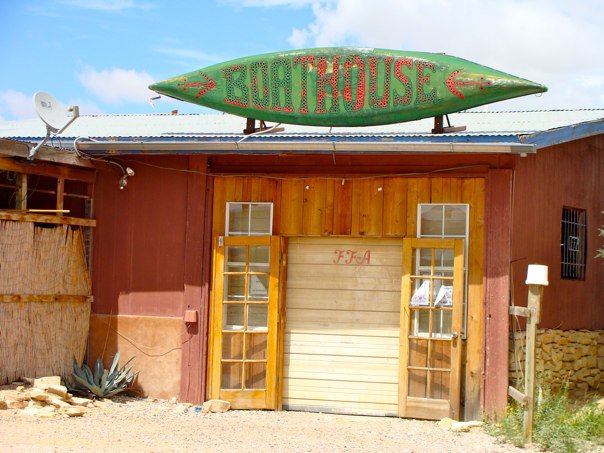
Boathouse Bar, Terlingua, Texas where two alleged rapists kidnapped their victim (Stephen Sprinkle photo)
Brewster County, Texas – Two alleged power rapists in Far West Texas, jailed since December 2009, have yet to face pre-trial proceedings in the abduction and repeated rape of a high school senior from Terlingua. Terlingua, near the Mexico border and Big Bend National Park, is remote–80 miles from Alpine, and 330 miles from El Paso. On the night of December 6-7, 2009, Daniel Martinez, 46, and Kristapher Buchanan, 27, allegedly abducted an 18 year old bisexual male at a bar and game room, stole the car he was living in, and traveled into the far desert to a shack in the Terlingua Ranch section of Brewster County where they brutally beat, demeaned and sexually assaulted their victim as they shouted anti-gay epithets. The assailants torched the victim’s car, burning up all his worldly possessions. As the young man tried to retrieve precious items, he was severely burned. After a second round of brutal rape, the attackers sunk into a drunken stupor, allowing the victim to escape into the desert at about 2 AM. He walked over three miles in the pitch dark through rough desert terrain wearing flip flops, pajama bottoms, and a tattered tee shirt in freezing temperature, finally making it to Highway 118 where a Sheriff’s Deputy found him and transported him to medical attention in Alpine. The identity of the victim is protected under Texas law since he was the victim of a sexual assault, and the case against his alleged assailants is still in process. Power-rape has been employed since time immemorial to subdue and shame victims. Residents of the area believe the assailants have a pattern of such activity involving young victims, and reports suggest the pair have used alcohol and intimidation to harm at least one 15-year-old boy in the region, as well. Although the case has the classic marks of an anti-gay hate crime, law enforcement has not filed charges under the Texas hate crimes law, named for James Byrd, Jr. as is the federal law now in force. Harry Knox, Director of the Religion and Faith Program of the Human Rights Campaign in Washington, D.C., and Dr. Stephen Sprinkle, professor at Brite Divinity School and Director of the Unfinished Lives Project, traveled to Brewster County to carry out a “ministry of presence” to officials involved in the case. Knox and Sprinkle arrived in Brewster County on July 7 and spent three days interviewing citizens and calling on authorities in order to communicate the interest of Texas and the nation in the hate crime, and in the welfare of the young victim. Clarence Russeau, Community Education and Outreach Specialist with the Family Crisis Center of the Big Bend, Inc. of Alpine and Terlingua, hosted Knox and Sprinkle, arranged appointments in the region, and served as guide throughout the visit. The trio visited the Alpine office of Texas State Representative Pete Gallego, 20 year veteran of the Texas Legislature, Jesse Gonzales, District Attorney in the case at his Fort Stockton office, President Ricardo Maestas of Sul Ross State University in Alpine, attorney for the victim, Jennie Fannin at her Alpine office, and the Terlingua branch of the Family Crisis Center where they met with Director Lovika De Koninck. At each stop, Knox, Sprinkle and Russeau emphasized the need for the community to hold local school, law enforcement, and higher education officials to a high standard of accountability in the hate crime case. Citizens of Terlingua told the visitors that the victim was well-known to them, and he has their full support as he recovers from his trauma. Over 200 residents of Terlingua protested the low bail assigned to the young victim’s alleged assailants, and sent a petition to the district attorney demanding the bail be raised. Ms. De Koninck said that the young man would have a warm welcome when he returns to Terlingua. Citizens told the trio that the victim had been shunned by his family because of his sexual orientation, and though he had only his car to live in, he continued to support himself with a job at a local café, and faithfully attended school. Initially, however, the superintendent of schools in Terlingua, Kathy Killingsworth, allegedly ordered the victim to leave school before he could graduate because she did not want his orientation or the crime perpetrated against him to be discussed in the schools she oversaw. Due to pressure from the community, the superintendent, who is also a Brewster County Commissioner, apparently reconsidered her position, and will now allow the victim to complete requirements for his diploma, according to local reports. No trial date has yet been set in the case, though the district attorney suggests that it will be before the end of the year. Both the FBI and the U.S. Justice Department have been notified about the crime. Knox and Sprinkle have pledged to monitor the situation from Dallas and Washington, and communicate with officials regularly to ensure care for the young hate crime victim and a speedy and just trial for the defendants in the case.
Remembering Charlie Howard: Murdered 26 Years Ago
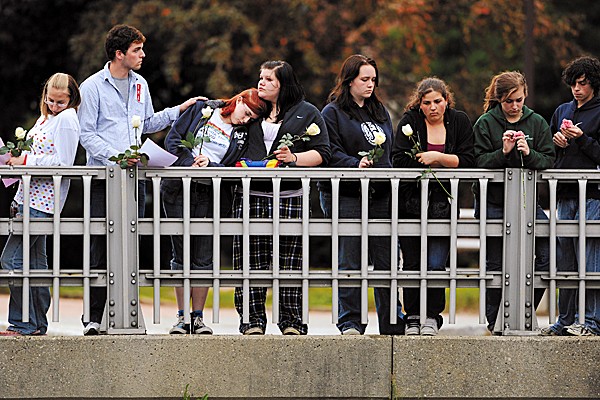
Remembering Charlie Howard on State Street Bridge, Bangor Daily News Photo
Bangor, ME – Charles O. “Charlie” Howard was drowned to death by three young men at 10 p.m. on July 7, 1984. His murder was the first full-blown hate crime murder against a gay person to be recognized as such in all of New England, if not the whole United States. The young men, Shawn Mabry, 16, Jim Baines, 15, and Daniel Ness, 17, ran him down on the State Street Bridge in the heart of downtown Bangor, beat and kicked him brutally, and then heaved him over the the railing into the Kenduskeag Stream below. Charlie screamed that he didn’t know how to swim. At 12:10 a.m. the next morning, police rescuers found his drowned body a few hundred feet from the bridge. A large eel had wrapped itself around his lifeless neck. An autopsy confirmed that he died of drowning, most probably hastened by a severe attack of asthma, a disease that had plagued Charlie all his life. He was 23 years old. The young attackers spent one night in jail, and then were released without bond into the custody of their parents. LGBT folk and their allies were galvanized by the murder of one of their own, and a fledgling equality organization started in the state in Charlie’s memory. Mabry, Baines and Ness were tried as juveniles, and sentenced to an “indeterminate term” in Maine Youth facilities in South Portland. Because of the nature of the law for juveniles, the convicts had to be released by their 21st birthdays. Mabry and Ness served 21 months apiece. Baines, the youngest, served two years. Fourteen years later, in 1998, Matthew Shepard was murdered on a ridge overlooking Laramie, WY, also because he was gay. Without what had been learned so painfully in the loss of Charlie Howard, there might very well have been no frame of reference for what happened to Matt. Echoes of Charlie Howard still reverberate in Maine. Bangor voted a non-discrimination ordinance protecting LGBT people. Laramie has not done so yet. Maine has a state hate crime law on the books, and the government is fairly scrupulous in enforcing it. Wyoming has never passed such a law protecting its LGBT citizens. Supporters finally won permission to erect a monument to Charlie near the bridge where he died. There is no such monument remembering Matt in Laramie. Matthew Shepard’s story is know around the world. Charlie Howard’s has remained pretty much a New England story. But Charlie’s story has changed lives for the better. And in sheer effect, his supporters have won more respect and practical protection for LGBT people in Maine and New England than Matt’s has yet to achieve in the nation as a whole. We at the Unfinished Lives Project remember lovely, goofy, maddening, flaming, edgy, and graciously generous Charlie Howard today. He did not die in vain. We must work to see to that, for him and for all the sons and daughters of America who died just because of who they were and whom they loved. Rest well, sweet brother. We have not forgotten you.
Second Gay Bashing Outrages Savannah

Savannah Protest Rally/Richard Burkhart photo for Savannah Daily News
Savannah, GA – A second gay man has come forward to report that he was the victim of a gay bashing in Savannah. John Takats, a grad student at the Savannah College of Art and Design issued a statement to the press through Georgia Equality claiming that he was called a “faggot” and struck in the back of the head so hard he fell to the sidewalk on February 27, 2010. While he admits he did not come forward to issue a complaint to police at the time out of fear, Mr. Takats felt he had to come forward when news of the June 12 bashing of another gay man, Kieran Daly, by two U.S. Marines hit newsstands. Mr. Takats says that his boyfriend had stepped away to recover a lost item when four people, two men and two women, menaced him, shouting, “What are you looking at?” and hurling anti-gay epithets at him. The blow to his head and kicks to his body stunned him, and the next thing he remembered was his boyfriend trying to revive him. In part, Mr. Takats’ account is as follows: “As the males approached me they started swinging. I immediately put up my hands, in front of my face, to protect myself. At that time, clearly out of nowhere, one of the males struck me in the back of my head. I was kicked till I fell to the ground by either the same (or the other) male. At that time, I heard one of the females scream ‘Stop that!’ The group ran away from the scene. I was completely shocked, hurting and confused and I began crying.” Project Q Atlanta has a Mr. Takats full statement online. The Daly case entered a new phase last week when the FBI and the local police began investigating whether that attack on Mr. Daly was a hate crime. The Anti-Defamantion League has issued a press release praising the move on the part of law enforcement. Bill Nigut, Southeastern Regional Director of the ADL said, “If this is a hate crime, prosecution under the new law will send a strong statement to the people of Savannah that violence against gays will not be tolerated.” Georgia Equality has learned from hard experience that the Savannah-Chatham Police Department has often been demeaning and unresponsive to LGBT complaints. Kevin Clark, Georgia Equality’s Savannah Chapter head, told WSAV News 3 that these attacks are just the latest installments in a pattern of violent anti-gay hate crimes in Savannah over the last five years. Speaking to a protest rally of 150 citizens calling for justice in the Kieran Daly gay bashing case, Clark said, “It should only take one or two individuals who have been attacked or know of others who have been attacked to get the attention of someone in leadership in this community– that in our opinion should have stepped forward way before now and condemned the violence and put out a loud call for swift just action here.” Savannah is a “military city,” close to the Marine Corps Air Station in nearby Beaufort, South Carolina, where both of Daly’s alleged Marine attackers were stationed. But what sets Savannah apart from other cities with large military bases nearby, according to Jim Morekis of Connect Savannah, is its “large and influential gay community.” Morekis concluded his op-ed piece, “Let’s hope that the two Marines who attacked Daly receive a fair trial, and if found guilty receive a punishment suited to the crime. And let’s hope that society, and the military, can continue to move beyond ignorance and prejudice. A good start would be for the Georgia legislature to put a fair hate crime law on the books so we can join the rest of the nation.”
Milwaukee Trans Woman “+” Brutally Shot to Death in the Street

Chanel Larkin, FORGE photo
Milwaukee, Wisconsin – A struggle for the assailant’s .357-caliber pistol ended savagely for a Milwaukee trans woman of color on May 7. Chanel Larkin (née Dana A. Larkin), 26, was shot three times in the head by a man who allegedly picked her up for sex, and offered her $20 to turn a trick. Authorities contend that Andrew Olacirequi, who was cruising the vicinity for a prostitute, shot Larkin three times in the head when Larkin revealed to him that she was biologically male, according to EDGE Boston. Larkin’s lifeless body was found on the sidewalk along North 23rd Street. Olacirequi was arrested later than night at the scene of the crime when he returned to find a lost cell phone. Law enforcement has charged him with first-degree reckless homicide and use of a deadly weapon. EDGE reports that he could face up to 65 years in prison for the crimes. As is so often the situation in transphobic murder cases, law enforcement and media follow the sensational and freakish imaginings of the general public rather than seeking to learn about the real lives lost and the human struggles that trans people face every day of their lives in biased communities. Michael Silverman, executive director of the Transgender Legal Defense and Education Fund, said to EDGE, “The media matters and phrases like ’cross-dressing prostitute’ are loaded terms playing to a victim-blaming stereotype or a ’transgender panic’ defense,” Silverman explained. “These types of stories play into the cultural stereotype of transgender people somehow committing fraud or trying to trick people, none of which is true.” Michael Munson, Executive Director of FORGE, (For Ourselves: Reworking Gender Expression), has worked tirelessly to express Chanel Larkin’s story to the media in a sensitive and meaningful way, pointing out that Ms. Larkin, who had identified as a woman since her mid-teens, was a vital young trans woman of color who never deserved to die at the hands of transphobic violence. Munson and FORGE decry the way some mainstream media have mis-characterized Ms. Larkin as “a man posing as a woman.” She was a trans+ person, according to FORGE standards of address. “People are much more complex than a set of words and labels,” the FORGE website points out. “‘+’ indicates an expansiveness that words cannot capture, recognizing and welcoming the beautiful diversity within our community.” Chanel Larkin was beloved of her family, especially her siblings and her grandmother. Over 200 people attended her funeral on May 14, and the trans+ community, as well as the African American, LGBT and entertainment communities are bereaved and deeply affected by her passing. Ms. Larkin’s story is all-to-familiar on the mean streets of America. She lived at the crossing point of oppressions: female, trans, black, and poor. At some point, she resorted to sex work to pay her bills and make a living in a down economy that set the background for the violence she had to risk every day of her too-short life. Speaking to EDGE, Brenda Coley, a staff member at Diverse and Resilient who knew Ms. Larkin, said, “We have to stand up as a [LGBT] community and speak out against this. I hope we’ll see how we’re all really connected and how the problems a person or group of people face are not walled off within that group but permeate through the whole society. None of us are free if some of us are not,” Coley added. “These are not throw-away members of our community. These are precious lives.” Chanel Larkin was not responsible for her death. She fought to live when her alleged assailant pulled his gun on her. She also fought to survive as an authentic person amidst an epidemic of anti-trans violence in a state that has never applied its hate crime statute to any LGBT person, according to activists in Milwaukee. Pressure from trans and LGBT advocates is mounting on the district attorney to designate her murder as a hate crime, and to prosecute her alleged murderer as a hate-killer under the law. But the ongoing struggle for justice in Milwaukee and around the country will continue to be against poverty, racism, sexism, and prejudice against trans people, whether it comes from the straight or the gay community. Chanel Larkin is beyond harm now. It remains for the living to struggle in her name against the fear and injustice that took her life and the lives of hundreds like her around the world.
Ball Bat Attackers Immune from Hate Crimes Charges?: Authorities Backpedal on Anti-Gay Violence

Big Stick Combat photo
Dallas, TX – What does a midnight assault on two Dallas gay men Friday have in common with a December 2008 fatal attack on two Latinos mistaken as gay in Brooklyn, New York? Two things: first, both attacks were carried out by homophobes yelling anti-gay slurs as they swung baseball bats at the heads of their victims; and second, police in both cases classified neither assault as an anti-hate crime. What gives? What does it take to get officers of the law to prosecute hate crimes under existing hate crime statutes? While Dallas and Brooklyn are 1370 miles distant from each other and worlds apart culturally, they both have law enforcement resistant to investigate crimes against gay men as bias-motivated. The 2008 Brooklyn murder of José Sucuzhañay serves as an eerily familiar backdrop to the current Dallas attack on Kyle Steven Wear and his friend Alex. Like Dallasites Kyle and Alex, the Ecuadoran immigrant brothers José and Romel were walking together down the street in the wee hours of the night. The Brooklyn crime was carried out by two assailants swinging a broken beer bottle and an aluminum baseball bat, yelling anti-gay and anti-hispanic epithets. Trials in the Sucuzhañay case are proceeding right now in Brooklyn, where Hakim Scott has just been convicted of first-degree manslaughter, and his accomplice, Keith Phoenix, awaits an new court date since the New York judge dismissed all hate crimes charges and declared a mistrial because of a juror in the first Phoenix trial who refused to participate any further. The Brooklyn ball bat attack left José lingering five days in a coma from a broken skull before he died. The consensus of the supporters of Sucuzhañay family, outraged city officials, and the metropolitan New York media is that this ugly, brutal attack took place because Scott and Phoenix targeted two Hispanic men whom they mistook for gay because they didn’t like the way they looked. Wear and his friend Alex (last name still unreleased) were much more fortunate. As they walked along in the southwestern part of the Cedar Springs gay entertainment district in Dallas, “the gayborhood,” headed for the bars, four assailants only identified as Latinos wearing white tee-shirts, blindsided the pair shouting “Faggots, give us your fucking wallets!” according to WFAA News. Wear told WFAA on camera that he was knocked unconscious and his jaw was broken by one of the attackers swinging a ball bat. His friend, Alex, reported that he feared for his life as the homophobes forced him to the ground. The Dallas Police are refusing to classify the case as a hate crime, contending instead that the motive was to rob the gay men. But Alex isn’t buying it. He told Jonathan Betz of WFAA, “I still feel like that was why we were targeted in the first place, because we are gay. It was like it was funny to them.” John Wright of the Dallas Voice is outraged that the authorities have resisted investigating the Dallas ball bat assault as an anti-gay bias crime. In a May 16 post for the Dallas Voice blog, Instant Tea, he writes, “Despite the fact that the suspects yelled anti-gay slurs as they beat the victims with baseball bats, Dallas police have not classified the incident as a hate crime, which is an outrage.” Wright points out that Jimmy Lee Dean was nearly beaten and stomped to death in the same general neighborhood by two homophobic attackers in July 2008. Wright then shows that regardless of the refusal of Dallas law authorities to enforce Texas hate crimes law, federal hate crimes protections should kick in. The James Byrd, Jr. and Matthew Shepard Hate Crimes Prevention Act of 2009 classifies a hate crime as motivated in whole or in part by anti-LGBT bias. One major determining criterion of an anti-gay hate crime for the FBI is the use of epithets as the perpetrators carried out the crime. Anti-LGBT hate crimes are like the rest of life: seldom pure and simple. Other motives often accompany hate violence against gays, lesbians, and transgender persons: robbery, drugs, racism and sexism, to name a few. But homophobia and heterosexism, like a sinister bass line in a libretto, thread throughout all anti-LGBT hate crimes cases, targeting people who are assumed to be inferior, impure, and abominable because of their perceived sexuality. In Dallas and in Brooklyn, it seems baseball bats and anti-gay epithets are not enough to launch hate crimes prosecutions. Are anti-gay sluggers simply immune in Texas and New York? Again we ask, What does it take to get officers of the law to prosecute hate crimes under existing hate crime statutes? It takes an outcry from LGBT people and their allies so that law enforcement will not be permitted to backpedal on hate crimes against members of the sexual minority without a stink being raised to high heaven. If police and prosecutors are unfamiliar with what LGBT bias crimes are, they are responsible to educate themselves. If they are being intentionally obstructionist, then the mayor and the city council need to replace them with officials who will carry out the law.
About
If you are a first-time visitor to the Unfinished Lives Project website, we invite you to read A Welcome Message introducing you to our project. We are truly grateful for your visit.
The Unfinished Lives Project website is a place of public discourse which remembers and honors LGBTQ hate crime victims, while also revealing the reality of unseen violence perpetrated against people whose only “offense” is their sexual orientation, gender identity, or gender presentation. LGBTQ people in the United States are suffering a slow-rolling decimation of terror and murder all across the country. Every locale and demographic of society are affected: First Nations, Anglo, Black, Latino and Latina, South and Southeast Asian, Transgender, Bisexuals, Gay men, Lesbians, disabled, young, and mature. Homophobia has a long, crooked arm, and it is reaching out to snatch the life away from women and men whose tragic stories are under-reported to begin with, and whose memories are swiftly forgotten.
The horror of these killings transcends the shock and bereavement of loved ones and friends. These are not typical homicides; they are not killings for money or drugs, incidents of domestic strife, or crimes of passion. The vicious nature of hate crimes against LGBTQ persons is extremely brutal, grotesquely violent, and egregiously hateful.
Each murder serves the LGBTQ population as a sobering warning about the actual level of danger in our communities. The message these killings send is that freedom and open life for LGBTQ people is a cruel dream. Every time we remember one of these victims, however, the intentions of their killers are frustrated. To remember these women and men is to begin the process of changing the culture that killed them.
Our Project Director
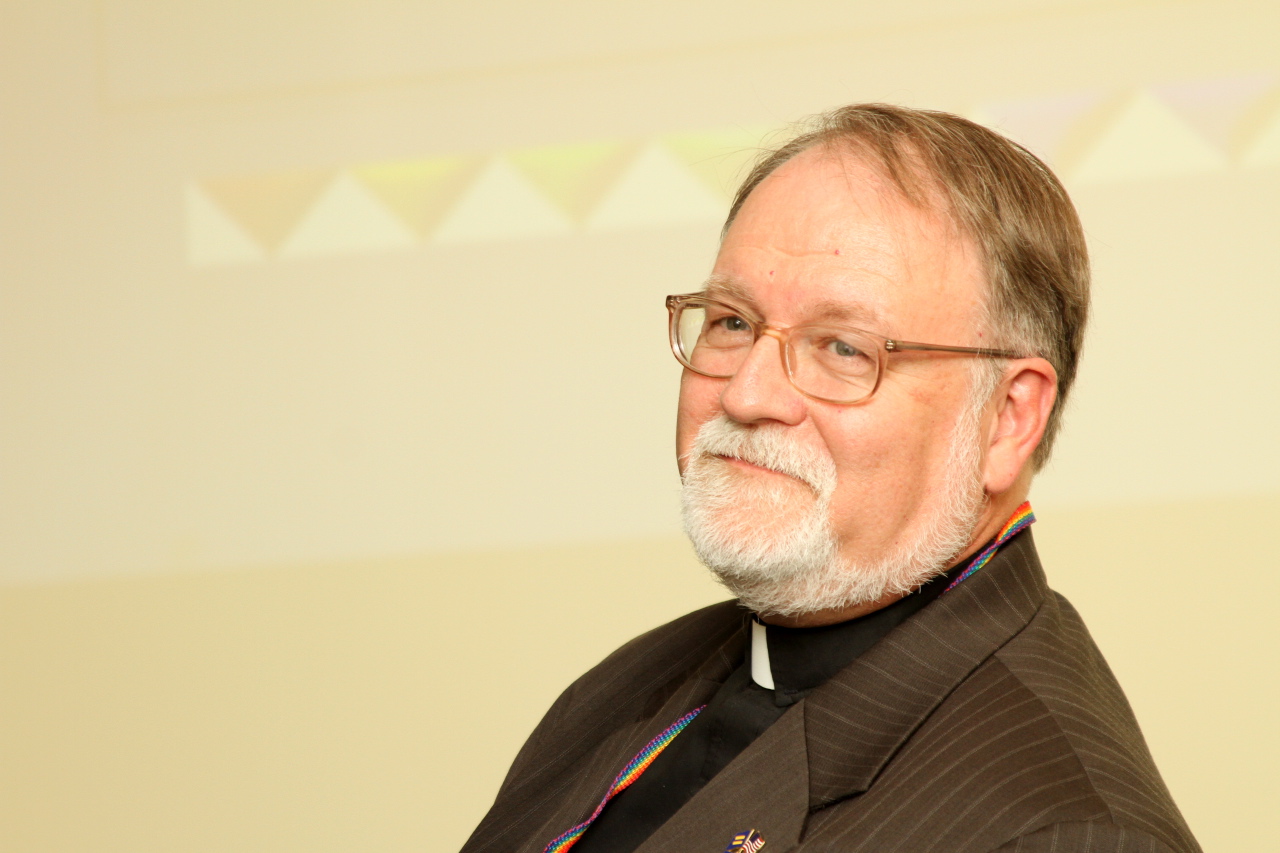
Dr. Stephen V. Sprinkle (Keith Tew photo).
Stephen V. Sprinkle is Director of Field Education and Supervised Ministry, and Professor of Practical Theology at Brite Divinity School, Fort Worth, Texas, a post he has held since 1994. An ordained Baptist minister, he is the first open and out Gay scholar in the history of the Divinity School, and the first open and out LGBTQ person to be tenured there. Read More…
Recent Social Justice Advocacy Activity By Dr. Sprinkle
 Summer 2009 – Dr. Sprinkle responded to the Fort Worth Police Department and Texas Alcoholic Beverage Commission Raid on the Rainbow Lounge, Fort Worth’s newest gay bar, on June 28, 2009, the exact 40th Anniversary of the Stonewall Rebellion. Dr. Sprinkle was invited to speak at three protest events sponsored by Queer LiberAction of Dallas. Here, he is keynoting the Rainbow Lounge Protest at the Tarrant County Courthouse on July 12, 2009. Read More…
Contact Us
Communicate with the Unfinished Lives project team:
info@unfinishedlivesblog.com


Schedule a Presentation
Dr. Sprinkle will gladly present his acclaimed presentation to your organization. To arrange an Unfinished Lives presentation for your organization or group, please contact us.
Dr. Sprinkle has given his Unfinished Lives presentation to these and other community groups and organizations. Read More…
-

Where are our readers?
Publisher: Steve Sprinkle (Project Director)
Steve Sprinkle
Unfinished Lives: Remembering LGBT Hate Crime VictimsBrite Divinity School/Texas Christian UniversityFort Worth TXprofessor, minister, author, blogger, LGBTQ advocate


Follow Unfinished Lives on Facebook
 Box Turtle Bulletin
- An error has occurred; the feed is probably down. Try again later.
- HRC Back Story
- Know About The Gender Identity Movement
- Why Is There A Need For Human Rights?
- Kinds Of Human Rights
- Human Rights Purposes And Violations
- Human Rights For Every Human Incident
- 8 Reasons Human Rights Are Important
- Everything About Human Rights
- Human Rights Issues Education & Law
- We Need To Stand Up For Our Rights And Those Of Others
- Coca-Cola Receives Perfect Score On Human Rights
- The Advocate: Daily News
- A federal judge is forcing the Trump administration to answer for Renee Good’s killing
- Nebraska lawmaker fails again to revive anti-trans bills after repeated attempts
- As Day of Silence turns 30, LGBTQ+ students are stuck in 1996
- How a Democrat's House win in Nebraska could erase the ‘blue dot’ & harm LGBTQ+ rights
- Maryland protects trans students. Stephen Miller’s group is coming for those protections
- Mississippi passes restrictive transgender driver’s license law
- Minnesota’s largest pediatric system restarts gender-affirming care for trans minors
- House Republicans push bill forcing states to stop acknowledging trans people in schools
- Advocate newsletter 4/9/26
- How I came out to my Mexican dad—who had secrets of his own
- Dallas Voice: Instant Tea
- An error has occurred; the feed is probably down. Try again later.

 Unfinished Lives

Phelps Funeral Protesters Assaulted with Pepper Spray: A Special Comment
Share this:
August 30, 2010 Posted by unfinishedlives | Condolences, Fred Phelps, funerals, harassment, hate speech, Heterosexism and homophobia, Law and Order, Legislation, Maryland, military, Nebraska, Protests and Demonstrations, religious hate speech, religious intolerance, Special Comments, U.S. Marines, U.S. Supreme Court | Condolences, funerals, harassment, Heterosexism and homophobia, Maryland, military, Nebraska, Protests and Demonstrations, religious hate speech, religious intolerance, U.S. Marines, U.S. Supreme Court | Comments Off on Phelps Funeral Protesters Assaulted with Pepper Spray: A Special Comment