President Obama Officially Proclaims June 2011 “Lesbian, Gay, Bisexual, and Transgender Pride Month”
 THE WHITE HOUSE
Office of the Press Secretary
FOR IMMEDIATE RELEASE
May 31, 2011
LESBIAN, GAY, BISEXUAL, AND TRANSGENDER PRIDE MONTH, 2011
BY THE PRESIDENT OF THE UNITED STATES OF AMERICA
A PROCLAMATION
The story of America’s Lesbian, Gay, Bisexual, and Transgender (LGBT) community is the story of our fathers and sons, our mothers and daughters, and our friends and neighbors who continue the task of making our country a more perfect Union. It is a story about the struggle to realize the great American promise that all people can live with dignity and fairness under the law. Each June, we commemorate the courageous individuals who have fought to achieve this promise for LGBT Americans, and we rededicate ourselves to the pursuit of equal rights for all, regardless of sexual orientation or gender identity.
Since taking office, my Administration has made significant progress towards achieving equality for LGBT Americans. Last December, I was proud to sign the repeal of the discriminatory “Don’t Ask, Don’t Tell” policy. With this repeal, gay and lesbian Americans will be able to serve openly in our Armed Forces for the first time in our Nation’s history. Our national security will be strengthened and the heroic contributions these Americans make to our military, and have made throughout our history, will be fully recognized.
My Administration has also taken steps to eliminate discrimination against LGBT Americans in Federal housing programs and to give LGBT Americans the right to visit their loved ones in the hospital. We have made clear through executive branch nondiscrimination policies that discrimination on the basis of gender identity in the Federal workplace will not be tolerated. I have continued to nominate and appoint highly qualified, openly LGBT individuals to executive branch and judicial positions. Because we recognize that LGBT rights are human rights, my Administration stands with advocates of equality around the world in leading the fight against pernicious laws targeting LGBT persons and malicious attempts to exclude LGBT organizations from full participation in the international system. We led a global campaign to ensure “sexual orientation” was included in the United Nations resolution on extrajudicial execution — the only United Nations resolution that specifically mentions LGBT people — to send the unequivocal message that no matter where it occurs, state-sanctioned killing of gays and lesbians is indefensible. No one should be harmed because of who they are or who they love, and my Administration has mobilized unprecedented public commitments from countries around the world to join in the fight against hate and homophobia.
At home, we are working to address and eliminate violence against LGBT individuals through our enforcement and implementation of the Matthew Shepard and James Byrd, Jr. Hate Crimes Prevention Act. We are also working to reduce the threat of bullying against young people, including LGBT youth. My Administration is actively engaged with educators and community leaders across America to reduce violence and discrimination in schools. To help dispel the myth that bullying is a harmless or inevitable part of growing up, the First Lady and I hosted the first White House Conference on Bullying Prevention in March. Many senior Administration officials have also joined me in reaching out to LGBT youth who have been bullied by recording “It Gets Better” video messages to assure them they are not alone.
This month also marks the 30th anniversary of the emergence of the HIV/AIDS epidemic, which has had a profound impact on the LGBT community. Though we have made strides in combating this devastating disease, more work remains to be done, and I am committed to expanding access to HIV/AIDS prevention and care. Last year, I announced the first comprehensive National HIV/AIDS Strategy for the United States. This strategy focuses on combinations of evidence-based approaches to decrease new HIV infections in high risk communities, improve care for people living with HIV/AIDS, and reduce health disparities. My Administration also increased domestic HIV/AIDS funding to support the Ryan White HIV/AIDS Program and HIV prevention, and to invest in HIV/AIDS-related research. However, government cannot take on this disease alone. This landmark anniversary is an opportunity for the LGBT community and allies to recommit to raising awareness about HIV/AIDS and continuing the fight against this deadly pandemic.
Every generation of Americans has brought our Nation closer to fulfilling its promise of equality. While progress has taken time, our achievements in advancing the rights of LGBT Americans remind us that history is on our side, and that the American people will never stop striving toward liberty and justice for all.
NOW, THEREFORE, I, BARACK OBAMA, President of the United States of America, by virtue of the authority vested in me by the Constitution and the laws of the United States, do hereby proclaim June 2011 as Lesbian, Gay, Bisexual, and Transgender Pride Month. I call upon the people of the United States to eliminate prejudice everywhere it exists, and to celebrate the great diversity of the American people.
IN WITNESS WHEREOF, I have hereunto set my hand this thirty-first day of May, in the year of our Lord two thousand eleven, and of the Independence of the United States of America the two hundred and thirty-fifth.
BARACK OBAMA
About

If you are a first-time visitor to the Unfinished Lives Project website, we invite you to read A Welcome Message introducing you to our project. We are truly grateful for your visit.
The Unfinished Lives Project website is a place of public discourse which remembers and honors LGBTQ hate crime victims, while also revealing the reality of unseen violence perpetrated against people whose only “offense” is their sexual orientation, gender identity, or gender presentation. LGBTQ people in the United States are suffering a slow-rolling decimation of terror and murder all across the country. Every locale and demographic of society are affected: First Nations, Anglo, Black, Latino and Latina, South and Southeast Asian, Transgender, Bisexuals, Gay men, Lesbians, disabled, young, and mature. Homophobia has a long, crooked arm, and it is reaching out to snatch the life away from women and men whose tragic stories are under-reported to begin with, and whose memories are swiftly forgotten.
The horror of these killings transcends the shock and bereavement of loved ones and friends. These are not typical homicides; they are not killings for money or drugs, incidents of domestic strife, or crimes of passion. The vicious nature of hate crimes against LGBTQ persons is extremely brutal, grotesquely violent, and egregiously hateful.
Each murder serves the LGBTQ population as a sobering warning about the actual level of danger in our communities. The message these killings send is that freedom and open life for LGBTQ people is a cruel dream. Every time we remember one of these victims, however, the intentions of their killers are frustrated. To remember these women and men is to begin the process of changing the culture that killed them.
Our Project Director
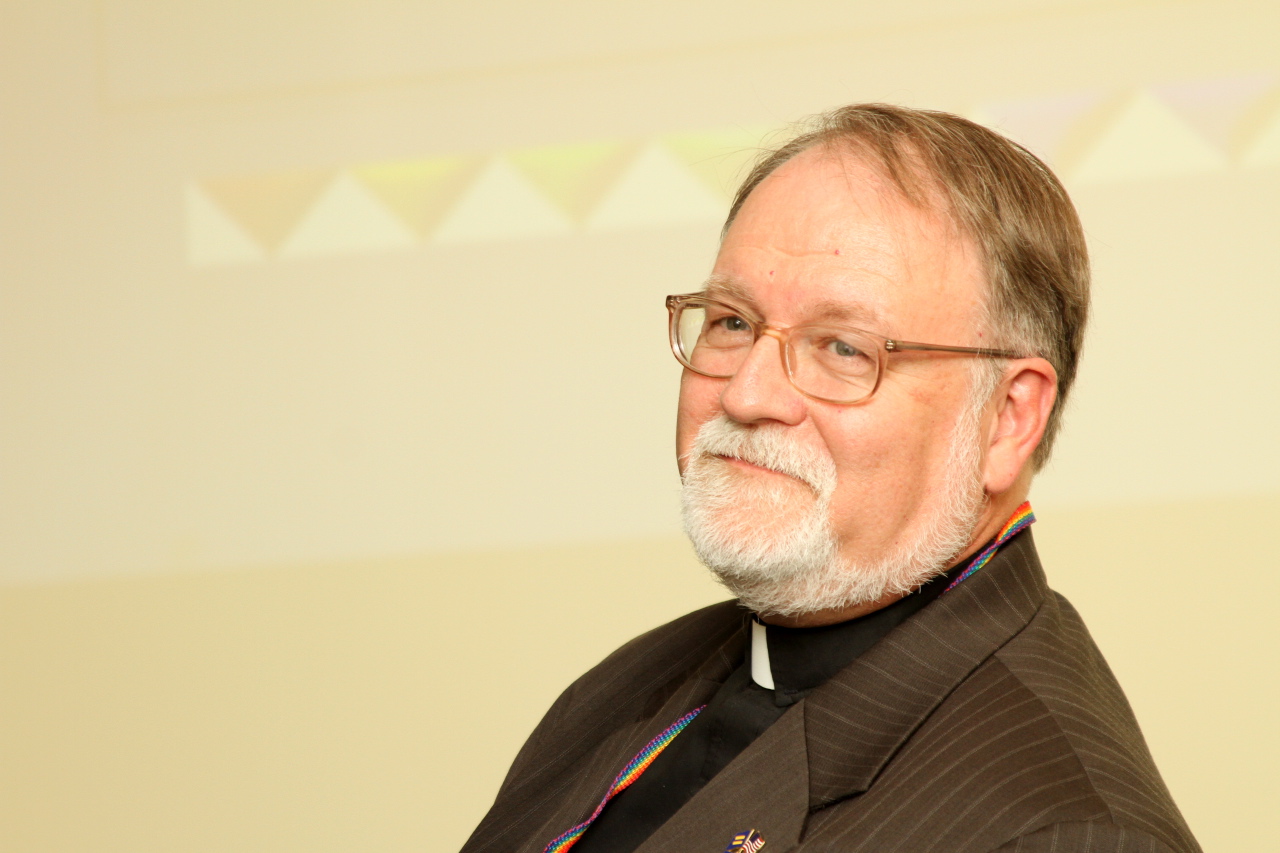
Dr. Stephen V. Sprinkle (Keith Tew photo).
Stephen V. Sprinkle is Director of Field Education and Supervised Ministry, and Professor of Practical Theology at Brite Divinity School, Fort Worth, Texas, a post he has held since 1994. An ordained Baptist minister, he is the first open and out Gay scholar in the history of the Divinity School, and the first open and out LGBTQ person to be tenured there. Read More…
Recent Social Justice Advocacy Activity By Dr. Sprinkle
 Summer 2009 – Dr. Sprinkle responded to the Fort Worth Police Department and Texas Alcoholic Beverage Commission Raid on the Rainbow Lounge, Fort Worth’s newest gay bar, on June 28, 2009, the exact 40th Anniversary of the Stonewall Rebellion. Dr. Sprinkle was invited to speak at three protest events sponsored by Queer LiberAction of Dallas. Here, he is keynoting the Rainbow Lounge Protest at the Tarrant County Courthouse on July 12, 2009. Read More…
Contact Us
Communicate with the Unfinished Lives project team:
info@unfinishedlivesblog.com


Schedule a Presentation
Dr. Sprinkle will gladly present his acclaimed presentation to your organization. To arrange an Unfinished Lives presentation for your organization or group, please contact us.
Dr. Sprinkle has given his Unfinished Lives presentation to these and other community groups and organizations. Read More…
-

Where are our readers?
Publisher: Steve Sprinkle (Project Director)
Steve Sprinkle
Unfinished Lives: Remembering LGBT Hate Crime VictimsBrite Divinity School/Texas Christian UniversityFort Worth TXprofessor, minister, author, blogger, LGBTQ advocate


Follow Unfinished Lives on Facebook
 Box Turtle Bulletin
- An error has occurred; the feed is probably down. Try again later.
- HRC Back Story
- Know About The Gender Identity Movement
- Why Is There A Need For Human Rights?
- Kinds Of Human Rights
- Human Rights Purposes And Violations
- Human Rights For Every Human Incident
- 8 Reasons Human Rights Are Important
- Everything About Human Rights
- Human Rights Issues Education & Law
- We Need To Stand Up For Our Rights And Those Of Others
- Coca-Cola Receives Perfect Score On Human Rights
- The Advocate: Daily News
- Remorseless Seattle man sentenced in hate crime beating of trans woman
- State Department visa rule sets stage for ICE scrutiny of transgender immigrants
- About four in ten Americans still view homosexuality as immoral, survey finds
- Donald Trump attacks trans women in Women’s History Month proclamation
- Ric Grenell to step down as Kennedy Center president after controversial tenure
- Los Angeles Marathon nonbinary champion receives no prize money
- The rainbow Pride pin James Talarico encouraged me to wear
- Gay asylum seeker files claim for damages over Trump deportations to CECOT torture prison
- Breaking newsletter: NYC office 3/13/26
- Iowa bans cities and towns from protecting transgender citizens’ civil rights
- Dallas Voice: Instant Tea
- An error has occurred; the feed is probably down. Try again later.

 Unfinished Lives
Hate Crimes and Capital Punishment: A Special Comment
Lawrence Russell Brewer, on the day he was booked for the murder of James Byrd Jr.
Huntsville, Texas – On September 21 at 6:11 p.m., before witnesses whom included his hate crime victim’s family and his own, Lawrence Russell Brewer, 44, was injected with lethal drugs in the execution chamber of Huntsville Prison. Ten minutes later, he was pronounced dead. Sentenced to death for the 1998 dragging murder of James Byrd Jr., there was no doubt about the convict’s guilt. Brewer and two accomplices, John William King and Shawn Allen Berry, abducted Byrd, a 49-year-old African American, in Jasper, Texas, beat him, bound him with a log chain attached to the backend of a pickup truck, and dragged him three miles down a rough East Texas road until his head was detached from his body when it hit a culvert. The racially-motivated murder made the nation shudder–and marked a decisive moment in the hate crime justice movement for LGBTQ people as well as for African Americans. But the justice of capital punishment for hate crime murders is still up for serious question, even after the execution of a bigoted man who displayed no remorse for his crime. Brewer had even urinated on Byrd before dragging him to his death.
In Texas, the racist murder of James Byrd Jr. was quickly equated with the anti-gay murder of young Matthew Wayne Shepard in Laramie, Wyoming, that occurred barely four months later. After abortive attempts to get a state hate crimes statute naming gays and lesbians as a protected class, the Byrd family agreed to sign on with Shepard’s family to achieve a landmark Texas law including African Americans and LGB persons as protected classes from prejudicial murder. Governor Rick Perry, who today is the notably anti-gay Republican front runner for President, signed the James Byrd Jr. Hate Crimes Act into law back in May 2001, inclusive of “sexual preference” as a protected category. It took the federal government eight more years to enact a comprehensive hate crimes law inclusive of LGBT people in the United States. The James Byrd Jr. and Matthew Shepard Hate Crimes Prevention Act, also known as the Matthew Shepard Act, was signed into law by President Obama in October 2009. The families of Matthew Shepard and James Byrd Jr. were honored guests at the presidential signing ceremony in the White House.
Can state-sanctioned execution remedy anti-gay or racially motivated hate crime murders? Brewer’s death by lethal injection, in the same week as the hotly contested execution of Troy Davis in Georgia, brought that issue to a head for the national media, human and civil rights activists, moral theologians, and the families of victims alike. Lawrence O’Donnell, MSNBC anchor of “The Last Word,” opined that the only way to prevent the execution of putatively innocent death row inmates like Davis is to outlaw the execution of even the most unrepentant of guilty killers like Brewer. Dick Gregory, the fabled comedian and human rights activist, was present in Huntsville protesting the execution of James Byrd Jr.’s murderer for just that reason. The Houston Chronicle quotes Gregory as saying, “Any state killing is wrong. If Adolph Hitler were to be executed,” he said, “I would be here to protest . . . I believe life in prison is punishment. Execution is revenge.”
Ross Byrd, James Byrd’s son, who is now 32, spoke out to Reuters the night before Brewer’s execution for the murder of his father. “You can’t fight murder with murder,” Byrd said, representing his family. “Life in prison would have been fine. I know he can’t hurt my daddy anymore. I wish the state would take in mind that this isn’t what we want.” The Reuters article concludes by presenting Ross Byrd’s position that for the state to execute Brewer is no more that a continuation of the cycle of violence that destroyed his father’s life on that lonely road in the dead of night in 1998. Byrd believes that all people, the government included, should decide not to perpetuate that cycle of death. “Everybody’s in that position,” he said. “And I hope they will stand back and look at it before they go down that road of hate. Like Ghandi said, an eye for an eye, and the whole world will go blind.”
Dennis Shepard, Matthew Shepard’s father, took a similar position on the day his son’s second killer was sentenced to two consecutive life terms in prison. Speaking to Aaron James McKinney, the roofer who beat Matt into a fatal coma with a pistol, Shepard said that Matt was not opposed to the death penalty. As a matter of fact, at a family meeting, Matt had said that heinous murders like the dragging death of James Byrd Jr. deserved capital punishment. “Mr. McKinney,” Shepard said, “I, too, believe in the death penalty. I would like nothing better than to see you die, Mr. McKinney. However, this is the time to begin the healing process. To show mercy to someone who refused to show any mercy. To use this as the first step in my own closure about losing Matt. Mr. McKinney, I am not doing this because of your family. I am definitely not doing this because of the crass and unwarranted pressures put on by the religious community. If anything, that hardens my resolve to see you die. Mr. McKinney, I’m going to grant you life, as hard as that is for me to do, because of Matthew.” Shepard concluded, “Mr. McKinney, I give you life in the memory of one who no longer lives. May you have a long life, and may you thank Matthew every day for it.”
Admittedly, all other hate crimes victims’ families do not necessarily agree with Mr. Byrd and Mr. Shepard. Some support capital punishment as justice for the heinous nature of the crimes committed against their loved ones. But Lawrence Russell Brewer’s Texas execution is not so cut and dried as the most ardent supporters of capital punishment would like to believe. The world is far grayer than any black-and-white wishes for closure can achieve in a culture where bigotry kills innocent people everyday, and where the state can and does execute anyone it deems legal to terminate. What is right and what is wrong about capital punishment for hate crimes murder perpetrators? What is just for the victims and their families, and for the society the killers have also grievously wounded by their deeds of hatred? We at the Unfinished Lives Project do not claim to have the final truth about these monumental issues. But we do agree with Ross Byrd and Dennis Shepard. Until our fallible knowledge is replaced by the divine in some other world than this and some other time than ours, we will err on the side of mercy. Honor the dead. Break the cycle. Stop the killing.
Share this:
September 27, 2011 Posted by unfinishedlives | African Americans, Anglo Americans, anti-LGBT hate crime murder, Bisexual persons, capital punishment, Dragging murders, Execution, gay bashing, gay men, Georgia, GLBTQ, gun violence, Hate Crimes, hate crimes prevention, Heterosexism and homophobia, Law and Order, Legislation, Lesbian women, LGBTQ, Matthew Shepard Act, Perpetrators of Hate Crime, President Barack Obama, Racism, Social Justice Advocacy, Special Comments, Texas, transgender persons, Wyoming | African Americans, Anglo Americans, anti-LGBT hate crime murder, Bisexual people, capital punishment, Dick Gregory, Dragging murders, execution, gay bashing, gay men, GLBTQ, gun violence, Hate Crimes, hate crimes legislation, Heterosexism and homophobia, James Byrd Jr., James Byrd Jr. and Matthew Shepard Hate Crimes Prevention Act, Law and Order, Lesbians, LGBTQ, Matthew Shepard Act, perpetrators, racism, Social Justice Advocacy, Texas, transgender persons, transphobia, Washington D.C., Wyoming | Comments Off on Hate Crimes and Capital Punishment: A Special Comment