Harass Gays at Your Own Peril in New Jersey

Douglas Brown (Essex County Prosecutor's Office photo)
Newark, New Jersey – A 36-year-old harasser in Essex County found out the hard way that attacking gay people is costly–to himself! Douglas Brown started harassing his former gay neighbors in the Ironbound section of Newark back in May–chanting slurs and epithets, spewing hate speech. Unsatisfied with the results, Brown escalated his aggression against the couple, pouring oil on their home, destroying their property, and eventually slashing their car tires. Brown was arrested on Thursday, and faces harassment, bias intimidation, and criminal mischief charges, according to reports by the Associated Press, The Advocate, and NBC New York. Brown obviously never counted the cost of his bias against his next door neighbors, acting on it with abandon until his arrest. He is being held under $25,000 bond at the Essex County Correctional Facility. Acting Essex County Prosecutor Carolyn Murray is preparing to prosecute Brown for anti-gay hate crime. There is no information yet about who Brown’s attorney will be. In the Brick City, once notorious for the 2003 hate murder of lesbian teen Sakia LaTona Gunn, the times appear to be a-changing. Attacking gay people in Newark will now get you prosecuted to the full extent of the law.
Heartbroken 14-year-old Gay Youth Tormented to Death
 Amherst, New York – Jamey Rodenmeyer wrote Lady Gaga lyrics on his Facebook page the weekend before he took his own life: “Don’t forget me when I come crying to heaven’s door.” The quotation is from “The Queen,” a song included on Lady Gaga’s hit album, “Born This Way.” The 14-year-old Williamsville North High student suffered unrelenting taunting and cyberbullying for being gay. Though he was in counseling with a therapist and a social worker, and was supported by his parents and a host of fans around the country due to his YouTube video for the “It Gets Better” project, the cumulative effect of psychic trauma and fear of violence broke down young Rodenmeyer’s defenses. His parents, who found Jamey’s body outside their home on September 19, told WGRZ Buffalo that they are certain he killed himself because of the bullying. Rodenmeyer’s suicide immediately rekindled nationwide concern and anger over the culture of violence elementary, middle, and secondary school LGBTQ students face in and out of classrooms every day. Lady Gaga called for a campaign to make bullycide a hate crime by law (no bullying laws exist in New York State). An outspoken advocate for the gay and lesbian community, Gaga tweeted her fans: “Jamey Rodemeyer, 14 yrs old, took his life because of bullying. Bullying must become be illegal. It is a hate crime.” She then committed herself to approach President Obama. “I am meeting with our President,” she posted. “I will not stop fighting. This must end. Our generation has the power to end it. Trend it #MakeALawForJamey.” Dan Savage, the co-originator of the “It Gets Better” project for which Rodemeyer made a video last May, said that he broke down and cried when he heard about the youth’s suicide. Savage wrote on his blog, “The point of the ‘It Gets Better’ project is to give kids like Jamey Rodemeyer hope for their futures. But sometimes hope isn’t enough. Sometimes the damage done by hate and by haters is simply too great. Sometimes the future seems too remote. And those are the times our hearts break.”
The insults, rumors, and ridicule became too much for Jamey to bear. On a Formspring site he opened to chat with friends online, he was targeted by irrational hate. The Washington Post reports two representative instances of hate speech that would have unsettled anyone, no matter how well grounded: “JAMIE IS STUPID, GAY, FAT ANND UGLY. HE MUST DIE!” an anonymous detractor wrote. Another went straight for his heart: “I wouldn’t care if you died. No one would. So just do it 🙂 It would make everyone WAY more happier!” Even though there were expressions of support among the posts to his site, the loudness of the hate drowned out the love. In hindsight, Jamey’s cries for help are all too obvious. On September 9, he wrote on Facebook, “I always say how bullied I am, but no one listens. … What do I have to do so people will listen to me? No one in my school cares about preventing suicide, while you’re the ones calling me [gay slur] and tearing me down.” But the face he let his parents see was calm and relatively upbeat. Just days before he took his own life, the family went on a camping trip.
Amherst Police are investigating whether charges may be brought against youths who continually dogged Rodenmeyer with taunts and slurs. Buffalo News reports that the Special Victims Unit has been assigned to investigate whether crimes were committed against Jamey. Cyberbullying, especially if it was centered on Rodenmeyer’s sexual orientation, could carry charges against his tormentors. Police spokesmen have said that they are focusing their probe on one to three young harassers who targeted Rodenmeyer ever since he was a student at Heim Middle School. “We’re looking into it to see if he was the victim of any crimes, and that’s the bottom line,” Amherst Chief of Police John C. Askey told reporters. “We’re going to be speaking to school officials and students and anyone with direct information about crimes that may have been committed against this individual.”
Nearly 5,000 youths commit suicide each year, according the Centers for Disease Control, making teen suicide, especially teen LGBTQ suicide, a national health issue. But the statistics cannot adequately count the cost of bullying in American society. Criminal harassment, ridicule, and threats strike real boys and girls one-by-one, like Jamey Rodenmeyer, and rip away their futures. In the last communication of his short life, Jamey tweeted Lady Gaga, “@ladygaga bye mother monster thank you for all you have done, paws up forever.” In a tribute to Gaga, Jamey’s parents buried him Saturday wearing his “Born This Way” tee shirt.
Don’t Ask, Don’t Tell is History: We Must Not Forget Its Cost
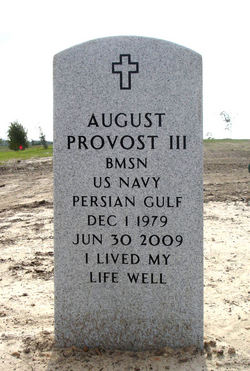 Washington, D.C. – Today marks the advent of full repeal of Don’t Ask, Don’t Tell, the 1993 law making gay and lesbian servicemembers liable for discharge if they admitted their sexual orientation. While there will be celebrations and night watch parties throughout the nation marking this historic day in the struggle for LGBTQ equality, we cannot afford to forget the terrible cost anti-gay discrimination has wrought in the Armed Forces of the United States. So, today, we lift up the lives and patriotic service of four gay men who died because of the ignorance and bigotry of other servicemembers, and the systemic bigotry of the services themselves which at best permitted these murders, and at worst encouraged them.
Seaman August Provost of Houston, Texas, was shot to death on duty in a Camp Pendleton guard shack, and his remains were burned to erase the evidence of the deed on June 30, 2009 in San Diego, California. He had recently complained to his family that a fellow servicemember was harassing him because of his sexual orientation. He feared speaking with his superiors about the harassment because of the threat of discharge due to DADT. His partner in life, Kaether Cordero of Houston, said, “People who he was friends with, I knew that they knew. He didn’t care that they knew. He trusted them.” Seaman Provost joined the Navy in 2008 to gain benefits to finish school, where he was studying to become an architectural engineer.
Private First Class Michael Scott Goucher, a veteran of the Iraq War, was murdered near his home in East Stroudsburg, Pennsylvania, on February 4, 2009 by an assailant who stabbed him at least twenty times. Known locally as “Mike on a Bike” by neighbors and friends, Goucher was an assistant organist for a congregation of the United Church of Christ, and Captain of the neighborhood Crime Watch. He also was a selectively closeted gay man, hiding his sexual orientation from his community. Goucher survived deployment in Iraq, only to meet death at the hands of homophobes back home.
Private First Class Barry Winchell of Kansas City, Missouri, was bludgeoned to death with a baseball bat as he slept in his barracks by a member of his unit at Fort Campbell, Kentucky on July 6, 1999. Winchell had fallen in love with a transgender woman, Calpurnia Adams, who lived in Nashville, Tennessee. In the fallout from his murder, President Bill Clinton ordered a review of DADT, which resulted in the addition of a “Don’t Harass” amendment to the policy, but little else. The Servicemembers Legal Defense Network, who represented Winchell’s parents in litigation with the U.S. Army, demanded to know who in the upper ranks of Fort Campbell knew of the murder and its subsequent cover up. The commandant of the fort was promoted over the objections of many human rights advocates. Winchell’s story has been immortalized by the 2003 film, “Soldier’s Girl.”
Petty Officer Third Class Allen R. Schindler Jr. of Chicago Heights, Illinois was murdered on October 27, 1992 in a public toilet on base in Sasebo, Nagasaki Prefecture, Japan. His killer was a shipmate who despised Schindler for being gay. He had been outed while on board the U.S.S. Belleau Wood, and was supposedly under the protection of his superiors until he could be separated from the service. Schindler had called his mother to tell her to expect him home by Christmas. Instead, the Navy shipped his savaged remains home to Chicago Heights before Thanksgiving. The only way family members could identify his remains was by a tattoo of the U.S.S. Midway on his forearm. Otherwise, he was beaten so brutally that his uncle, sister, and mother could not tell he was their boy. Schindler’s murder was presented as a reason DADT should never have been enacted, but authorities in Washington brushed his story aside and enacted the ban against gays in the military anyway. Schindler’s story is told at length in Unfinished Lives: Reviving the Memories of LGBTQ Hate Crimes Victims, authored by the founder of the Unfinished Lives Project, Dr. Stephen Sprinkle.
We at Unfinished Lives celebrate the repeal of DADT tonight with thanksgiving for the courage of lesbian and gay servicemembers who chose to serve their country in the military though their country chose not to honor them. More than 13,500 women and men were drummed out of the service under DADT. But in addition to the thousands who faced discharge and shame, we cannot forget, we must not forget, the brave souls who died at the hands of irrational hatred and ignorance–the outworking of a blatantly discriminatory policy that never should have blighted the annals of American history. The four lives we remember here are representative of hundreds, perhaps thousands more, whose stories demonstrate the lengths to which institutions and governments will go to preserve homophobia and heterosexism. We will remember with thanksgiving our gay and lesbian dead, for to forget them would be to contribute to the ills wrought by DADT.
Prosecutors To Retry Gay Teen Larry King’s Killer “Immediately”

Floral Tribute for Larry King, 15-year-old hate crime victim
Ventura County, California – Prosecutors in the Brandon McInerney murder trial promised to retry the teen for premeditated murder and a hate crime on Friday, the day after a Superior Court jury deadlocked on a verdict. The Los Angeles Times reported that the prosecution maintains the evidence in the murder of 15-year-old gender variant Lawrence Fobes “Larry” King by his 14-year-old classmate in February 2008 is still persuasive: When McInerney shot King in an Oxnard middle school classroom, it was nothing less than a homophobic/transphobic hate crime and a clear cut case of premeditated homicide under California law.
The hung jury, who after several votes finally deadlocked at seven for voluntary manslaughter and five split between first- and second-degree murder, presents both a problem and an opportunity to the Ventura County officials. On the one hand, jurors have suggested that they believe charging McInerney, now 17, for murder as an adult, was an overreach. Had he been convicted of first-degree murder, the defendant would have served better than fifty years in prison, and perhaps life. Had McInerney been tried and convicted in juvenile court, he would have been released by age 25. Some other jurors have said to defense attorneys that the hate crime charge was not proven in court. On the other hand, a conviction as a juvenile may be easier to obtain. So, the prosecution will have to determine whether to re-try the defendant as a juvenile this time, even though California law permits 14-year-olds to be charged and tried as adults in cases of capital murder. Chief Assistant District Attorney Jim Ellison told the Times: “We will consider the fact that this was a very significantly split jury. We will consider everything. There are obviously very strong reactions on both sides, and we will consider all those in how we proceed.”
The murder of Larry King is the most closely watched hate crime murder case in the United States, since the trial of Aaron McKinney and Russell Henderson for the slaying of University of Wyoming student, 21-year-old Matthew Wayne Shepard in 1998. Of particular importance to LGBTQ advocates and other hate crimes victims throughout the country is the controversial use of the “gay panic defense” by McInerney’s defense team. Should McInerney receive a lesser sentence for the murder of King because he was disturbed by King’s sexual orientation and gender presentation, or by his bearing, words, and deeds that expressed that dimension of who King was, such as the clothes or cosmetics he wore, or his flirtatiousness, then the implications for other killers perturbed by race, religion, sexuality, or gender characteristics would be immense. Also of note is the success of the defense in minimizing the bullying King, a bi-racial gay boy, endured in schools for over five years, virtually exclusively because of bias against his sexual orientation and gender presentation.
In a second report on Friday, the L.A. Times interviewed long-time former district attorney from Ventura County, Michael Bradbury. Bradbury contends that even though prosecutors may glean a whole trove of new information from the current jury, re-trying anyone after a deadlocked jury is risky, especially re-trying a youth like McInerney. Bradbury told the Times, “The public may see a straightforward murder case, but this case is far more complex, firstly, because of the age of the defendant at the time of the act and, secondly, the manner in which he was raised by his parents, which was clearly dysfunctional and by all accounts horrific.” The former D.A. went on to say that the host of strong emotions surrounding the case makes a second trial’s outcome “highly unpredictable.”
Judge in Larry King Murder Case Declares Mistrial: Jury Hung

No Justice Yet for Hate Murder Victim Larry King
Chatsworth, Los Angeles, California – In breaking news, the judge in the trial of teen Brandon McInerney for the hate crime murder of bi-racial student Larry King has declared a mistrial. Prosecutors have not yet decided whether they will seek to retry McInerney, now 17 years old, for the murder of his gender variant classmate in 2008. Steve Rothaus of Gay South Florida picked up the Associated Press report late this afternoon, detailing how the jury could not come to a unanimous verdict in the case. Nine women and three men on the jury informed Judge Charles Campbell that they were stalemated over whether to find McInerney, who undisputedly shot 15-year-old Larry King to death with a .22 caliber pistol in first period computer class at E.O. Green Middle School in February 2008, guilty of manslaughter, first-degree murder, or second-degree murder. Seven jurors declared they were in favor of a verdict of voluntary manslaughter, while the other five were split between first- and second-degree murder.
The defense team appears to have scored something of a victory, convincing a majority of the jury that their client was in some sort of “dissociative state” at the time of the killing. More disturbingly for LGBTQ legal advocacy observers and hate crime activists is the partial success of the “gay panic defense” that Scott Wippert and the defense team denied was a part of their strategy, but which most sure was. Defense hammered the jury with claims that teen gay student King was somehow responsible for his fate because of their rendition of “bizarre sexualized behavior” and “sexual aggression.” The gay panic defense, which blames the victim for the crime, has been discredited for years in American courts, but the special circumstances of a youth like McInerney who came from a dysfunctional family background (both his parents were addicts) successfully clouded what was otherwise a clear cut case of first-degree, premeditated murder.
Under California law, McInerney was old enough to be tried as an adult. Ventura County Prosecutor Maeve Fox argued that since the defendant told at least six people he was going to kill King, premeditation was clearly established. Further, Fox argued that McInerney was a fervent anti-gay boy, influenced by white supremacist and Neo-Nazi skinhead ideology and teachings. McInerney was in possession of a trove of Nazi items and symbols, as well as white supremacist literature at the time of the murder.
Nonetheless, the mistrial gives the prosecution pause. As commentator Lisa Bloom, a respected attorney, noted on a CNN panel discussing the trial last week, the jury is not supposed to ignore premeditation or be swayed by sympathy for the sad circumstances of a defendant. “[The gay panic defense] is not an acceptable defense in an American courtroom,” she said. Bloom went on to assert that no jury would allow a racist to claim that rage over the acts and speech of a black person altered the consciousness of the defendant enough to push him to murder. What is the prosecution to do in a situation in which the message that a boy was gay was enough to get him killed, and to hang the jury in his slayer’s murder trial? McInerney killed King. Now, whether he will face the justice his actions deserve is up in the air–as well as the memory of his victim, Lawrence Fobes “Larry” King.
Fate of Larry King’s Teen Murderer Goes to Jury in California

Brandon McInerney (L), and Lawrence Fobes "Larry" King, (R)
Chatsworth, Los Angeles, California – After prosecution’s closing statement yesterday, and defense’s closing statement today, the trial of teen Brandon McInerney goes to the jury. Long weeks of hard-fought testimony, evidence and counter-evidence have come down to the judgment of twelve citizens over a deadly serious question: Is the victim of a homicide responsible for his own death, or not? McInerney’s defense team, led by Scott Wippert, has tried mightily to paint 15-year-old Larry King as the aggressor in his own slaying, justifying their client, the confessed killer, somehow for shooting his classmate twice in the head in broad daylight. Bridling at any suggestion by the prosecution that he and his team were using a version of the discredited “gay panic defense,” in which the psychic trauma of encountering perceived harassment by a gay person “ignites” a passion to kill, Wippert nonetheless has consistently used that logic to paint King as a “sexual aggressor” who made all the boys at E.O. Green Middle School in Oxnard feel unsafe. According to The Advocate, King’s manner of effeminate dress and language “harassed” the boys (most especially his client), and disrupted school life to the point that, as Wippert put it to the jury, “The [E.O. Green] boys didn’t feel safe in the school,” because of the 5-foot 4-inch, 125-pound King.
Prosecutor Maeve Fox sought to counter such an argument, calling the strategy of the defense an appeal to anti-gay sentiments and oppressive anti-feminine stereotypes. “It’s an attempt to reach somewhere deep down,” she said in her rebuttal to the jury. “To a dark place.” Fox showed a photo of King taken just days before his execution-style murder, smiling as he held up a green dress given him by his teacher, Dawn Boldrin. According to The Advocate, King was wearing a school uniform at the time of the picture, not women’s clothing, and had on unobtrusive makeup. Fox asked the jury as she held up the picture, “This is the guy that you are being asked to believe was a sexual predator who tortured the defendant into a state of despair.This [person] is so threatening to the average male psyche of 14 or 44 or 84?” She reminded the jury that if they bring in a verdict of manslaughter, they would be ignoring the testimony of students who said McInerney told them days before the killing that he was going to end King’s life, and further, the expert psychiatric report in which McInerney said he did not even consider his victim a human being. A manslaughter verdict would mean the jury believed that any average person would have acted in the same way McInerney did on the day he took his teenage classmate’s life. But premeditation of the sort the defendant exhibited by planning and waiting until first period class was well underway before he pulled out his pistol and shot King in the back of the head dictates a first-degree murder sentence.
Wippert reported referred to the tender age of his client 39 times in his closing statement to the jury. He contended that King’s quip to McInerney the day before he killed King, “What’s up, baby?”, was “the straw that popped the balloon,” and pushed McInerney to shoot him. Fox rebutted that King was just giving back something of the stress that he had experienced from McInerney and his clique as they bullied him for being different.
But would an average person take such umbrage at affectations and effeminate ways, even if aimed at such a person, that he would plan and shoot an unarmed person in cold blood? Prosecutor Fox said no. McInerney wasn’t acting as an average person. He was acting out his white supremacist schooling to kill a sub human, as reported by the Associated Press. He believed, Fox contended, that killing King was doing everyone a favor, and that he would be congratulated for doing it.
The jury will decide soon. No case of a hate crime killing against a gay person has drawn more attention since the murder of Matthew Shepard in Laramie, Wyoming in 1998. If the jury brings in a verdict of manslaughter, McInerney, who is now 17, may be eligible for release before he is forty. If they decide for first-degree murder, he may not see freedom before he is 57.
Larry King’s Teen Murderer Refuses to Testify in His Own Defense
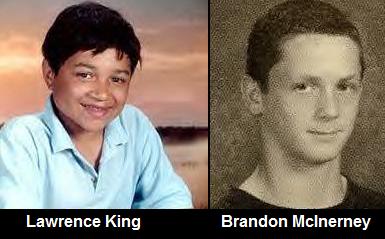 Chatsworth, Los Angeles, California – Seventeen-year-old Brandon McInerney was not put on the stand by his defense team on Monday, the last day of testimony for the defense, in the closely watched trial of straight-on-gay teen murder. The Los Angeles Times reports that his chief attorney, Scott Wippert, told the court that McInerney declined to take the stand. Now that the defense has rested, closing arguments are expected to commence immediately. The facts of the case are not in dispute: McInerney, 14 at the time of the February 2008 homicide, killed his fellow eighth grade student, Lawrence Fobes “Larry” King, a gay, bi-racial 15-year-old, in their first period computer class at E.O. Green Middle School in Oxnard. McInerney’s defense hinges on a version of the discredited “gay panic” defense that has long been employed by defendants in cases of anti-gay murder. His defense team is gambling that they can create sympathy for McInerney by claiming he was in a severe “dissociative state” because of King’s gay mannerisms, dress, and affectation–that McInerney interpreted King’s speech, dress, and acts as “sexual harassment,” and killed him because of it. A psychologist for the defense testified that McInerney “snapped” at the time of the shooting, according to ABC News 7. When employed to justify the violence perpetrated by mature adults, the gay panic defense seeks to play on the latent fears of jury members to cloud the verdict they would otherwise render, or, barring that, to soften the punishment for the crime because of “mitigating circumstances” and “states of mind.”
The prosecution built its case on testimony and physical evidence of skin-head, Neo-Nazi and white supremacist loyalties McInerney held. The motive for McInerney’s deadly crime, the prosecution contends, was deep-seated hostility toward gays and transgender people. Prosecutor Maeve Fox pointed repeatedly to the premeditation it took the defendant to plan the slaying, conceal the murder weapon, restrain his attack until first period class was in session, and then shoot his victim not once but twice in the back of the head, execution-style. McInerney announced his intention to kill King well ahead of the deed, according to testimony rendered in court. Evidence of premeditation prior to the trial in large part caused a judge to rule that McInerney would be tried under California criminal law as an adult, even given his youth.
If the defense succeeded in convincing the jury that young Larry King was responsible for his own murder at the hands of an innocent, straight boy who snapped under the strain of “unwanted sexual advances,” then the gay panic defense will have a new lease on life in courtrooms throughout the United States where perpetrators will make the argument that their gay, lesbian, bisexual, and transgender victims in some sense “made them do it.” If, on the other hand, the prosecution turns aside this latest version of the gay panic defense, and convinces the jury that a murdered boy cannot be guilty of his own death, then the venerable and disreputable gay panic defense will be dealt a severe blow in American juris prudence.
Police Refusing to Report Anti-Lesbian Hate Crime Could Lose Their Jobs
 Washington, D.C. – When several Metropolitan Police refused to report a brutal attack against five lesbians in the District of Columbia, they had no idea how big a mistake they were making, according to the Southern Poverty Law Center’s Hatewatch. Brushing off the attack by two males who shouted anti-lesbian epithets as they assaulted the women, the police even threatened to arrest the victims because “they didn’t know how to act.” Now, these officers are under investigation themselves. The investigation could take as long as four months. They could face suspension, punishment, and even termination of their jobs with loss of pension benefits. Four police cruisers with seven officers responded to a 911 emergency call outside the Columbia Heights Metro station in the early morning hours of July 30. Two men had beaten their lesbian victims, and a third man accompanying the assailants stood by capturing video of assault on his cell phone. When the lesbians reported the attack to the police, the officers dismissed the violence. Though the police had restrained one of the assailants, they just let him go. Hatewatch has learned that the mother of one of the victims called the Metro Police to complain about the officers’ behavior. Then, on August 1, the D.C. LGBT liaison unit filed a report on the incident as a hate crime.
Gays and Lesbians Opposing Violence (GLOV), a local LGBTQ activist group, met with D.C. Police Chief Cathy Lanier to demand more rigorous protection of the queer community in Washington. The chief seemed inclined to act on the concerns of the group, according to GLOV spokesperson, A.J. Singletary. D.C. gays, lesbians, and transgender persons, especially those from racial/ethnic minority groups, have suffered an increasing number of violent attacks in recent years, most notably the murders of four transgender women of color, two of them teenagers.
The once strong and effective gay and lesbian liaison unit of the Metro Police Department was decimated by budgetary cuts three years ago. Its officers were distributed among police units throughout the city, rather than working together as a discreet group. Training in LGBTQ sensitivity for the police has been severely diminished, as well, according to Singletary. The anecdotal result has been an increase of attacks on queer folk, and many reported incidents where police have not even bothered to file hate crime reports when they have occurred. GLOV has asked Chief Lanier to beef up the number and quality of LGBT officers on the force, and to reinstate rigorous LGBTQ training for all members of the Metropolitan Police. Singletary reports that this latest act of neglect has spurred Chief Lanier to take charges against the police seriously, and to make some of the changes activists in the LGBTQ community are asking for.
The Southern Poverty Law Center has published study results showing that the LGBTQ community is beset by more violence, especially of an extreme nature, than any other community of persons in the United States. Compared to its rank in the population at large, according to the study, an LGBTQ person is 8.3 times more likely to be the victim of a violent hate crime than others in this country.
Families/Friends at Each Other’s Throats During Trial of Larry King’s Alleged Murderer

Brandon McInerney (left), and Lawrence Fobes "Larry" King (right)
Chatsworth, Los Angeles, California – The Advocate and the Los Angeles Times report that the trial of Brandon McInerney erupted in tears and rage as the courtroom proceedings entered their fourth week. Dawn Boldrin, former teacher of both boys, showed pictures she took of the lime green strapless chiffon dress she presented to 15-year-old Larry King. Ms. Boldrin, members of McInerney’s family, and many in the courtroom sobbed and shed tears as they saw the broad smile on King’s face as he held up the dress. Shortly after Larry King received the dress, just a matter of days, in fact, his classmate Brandon McInerney allegedly shot King to death execution-style in full view of dozens of other students and Ms. Boldrin, their first period teacher. The display of emotion proved too much for King’s parents. As the L.A. Times reports: “An infuriated Greg King, father of Larry King, stomped out of the courtroom. He returned a short while later and rounded up the entire King family to leave the courthouse for the day. As the group walked past Boldrin’s daughter and another relative, Larry’s mother, Dawn King, whispered an expletive to them.” On Friday morning, the presiding judge, Ventura County Superior Court Judge Charles Campbell, ruled that King’s mother would not be permitted to attend the trial any further because of her profane outburst the previous day. Later, outside the courtroom, King’s father told reporters that he became enraged at the emotional display on Boldrin’s part because he believed her to be a hypocrite, shedding what he termed “crocodile tears.” The Advocate quotes King as saying, “My son is dead and they’re crying? That’s the woman (referring to Boldrin) who gave him a dress after complaining that he shouldn’t be coming to school in makeup and boots!” By accentuating Larry King’s overt gender-outlaw behavior, and hyping the image of the dress, McInerney’s defense team is seeking to shift blame from their client to the dead gay student, suggesting that his alleged aggressive, sexualized overtures toward McInerney drove him to violence. In order to counter this subtle form of the outworn “gay panic defense,” the prosecution has portrayed the defendant as a violence-prone neophyte white supremacist who harbored deep anti-gay and anti-transgender biases. McInerney is being tried in the Chatsworth courthouse as an adult, even though he was 14 at the time of the murder. If he is convicted of the slaying, McInerney, now 17, could face 53 years to life in prison.
About

If you are a first-time visitor to the Unfinished Lives Project website, we invite you to read A Welcome Message introducing you to our project. We are truly grateful for your visit.
The Unfinished Lives Project website is a place of public discourse which remembers and honors LGBTQ hate crime victims, while also revealing the reality of unseen violence perpetrated against people whose only “offense” is their sexual orientation, gender identity, or gender presentation. LGBTQ people in the United States are suffering a slow-rolling decimation of terror and murder all across the country. Every locale and demographic of society are affected: First Nations, Anglo, Black, Latino and Latina, South and Southeast Asian, Transgender, Bisexuals, Gay men, Lesbians, disabled, young, and mature. Homophobia has a long, crooked arm, and it is reaching out to snatch the life away from women and men whose tragic stories are under-reported to begin with, and whose memories are swiftly forgotten.
The horror of these killings transcends the shock and bereavement of loved ones and friends. These are not typical homicides; they are not killings for money or drugs, incidents of domestic strife, or crimes of passion. The vicious nature of hate crimes against LGBTQ persons is extremely brutal, grotesquely violent, and egregiously hateful.
Each murder serves the LGBTQ population as a sobering warning about the actual level of danger in our communities. The message these killings send is that freedom and open life for LGBTQ people is a cruel dream. Every time we remember one of these victims, however, the intentions of their killers are frustrated. To remember these women and men is to begin the process of changing the culture that killed them.
Our Project Director
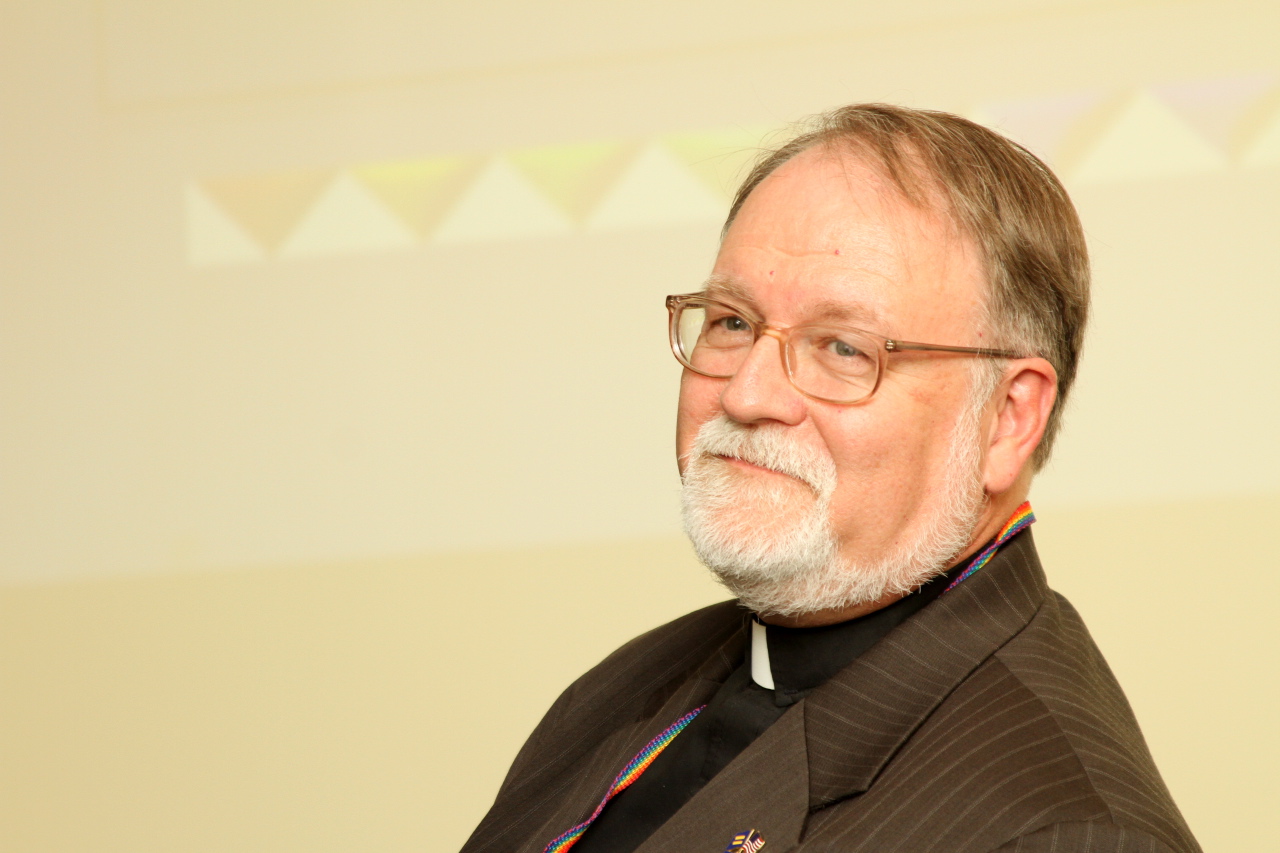
Dr. Stephen V. Sprinkle (Keith Tew photo).
Stephen V. Sprinkle is Director of Field Education and Supervised Ministry, and Professor of Practical Theology at Brite Divinity School, Fort Worth, Texas, a post he has held since 1994. An ordained Baptist minister, he is the first open and out Gay scholar in the history of the Divinity School, and the first open and out LGBTQ person to be tenured there. Read More…
Recent Social Justice Advocacy Activity By Dr. Sprinkle
 Summer 2009 – Dr. Sprinkle responded to the Fort Worth Police Department and Texas Alcoholic Beverage Commission Raid on the Rainbow Lounge, Fort Worth’s newest gay bar, on June 28, 2009, the exact 40th Anniversary of the Stonewall Rebellion. Dr. Sprinkle was invited to speak at three protest events sponsored by Queer LiberAction of Dallas. Here, he is keynoting the Rainbow Lounge Protest at the Tarrant County Courthouse on July 12, 2009. Read More…
Contact Us
Communicate with the Unfinished Lives project team:
info@unfinishedlivesblog.com


Schedule a Presentation
Dr. Sprinkle will gladly present his acclaimed presentation to your organization. To arrange an Unfinished Lives presentation for your organization or group, please contact us.
Dr. Sprinkle has given his Unfinished Lives presentation to these and other community groups and organizations. Read More…
-

Where are our readers?
Publisher: Steve Sprinkle (Project Director)
Steve Sprinkle
Unfinished Lives: Remembering LGBT Hate Crime VictimsBrite Divinity School/Texas Christian UniversityFort Worth TXprofessor, minister, author, blogger, LGBTQ advocate


Follow Unfinished Lives on Facebook
 Box Turtle Bulletin
- An error has occurred; the feed is probably down. Try again later.
- HRC Back Story
- Know About The Gender Identity Movement
- Why Is There A Need For Human Rights?
- Kinds Of Human Rights
- Human Rights Purposes And Violations
- Human Rights For Every Human Incident
- 8 Reasons Human Rights Are Important
- Everything About Human Rights
- Human Rights Issues Education & Law
- We Need To Stand Up For Our Rights And Those Of Others
- Coca-Cola Receives Perfect Score On Human Rights
- The Advocate: Daily News
- Black LGBTQ+ leader derides Trump’s cuts to HIV funding after State of the Union
- Transgender Chicago man hospitalized after saving baby from drowning in Lake Michigan
- This Georgia education champion could be the first Black out gay man to represent the South in Congress
- Kansas immediately revokes transgender residents’ driver’s licenses
- Clinton depositions spur Democrats’ demand for Donald Trump’s Epstein files testimony
- Outraged Ben Shapiro says Candace Owens documentary labels Erika Kirk a ‘lesbian pedophile’
- 'They better take away duct tape': Trans men say they'll keep binding despite FDA crackdown
- Chuck Schumer leads New York Democrats’ bill to protect Pride flags at Stonewall & national park sites
- Gov. Gavin Newsom again under fire for comments on trans athletes & pronouns
- How can PrEP use among Black people be improved?
- Dallas Voice: Instant Tea
- An error has occurred; the feed is probably down. Try again later.

 Unfinished Lives
Hate Crimes and Capital Punishment: A Special Comment
Lawrence Russell Brewer, on the day he was booked for the murder of James Byrd Jr.
Huntsville, Texas – On September 21 at 6:11 p.m., before witnesses whom included his hate crime victim’s family and his own, Lawrence Russell Brewer, 44, was injected with lethal drugs in the execution chamber of Huntsville Prison. Ten minutes later, he was pronounced dead. Sentenced to death for the 1998 dragging murder of James Byrd Jr., there was no doubt about the convict’s guilt. Brewer and two accomplices, John William King and Shawn Allen Berry, abducted Byrd, a 49-year-old African American, in Jasper, Texas, beat him, bound him with a log chain attached to the backend of a pickup truck, and dragged him three miles down a rough East Texas road until his head was detached from his body when it hit a culvert. The racially-motivated murder made the nation shudder–and marked a decisive moment in the hate crime justice movement for LGBTQ people as well as for African Americans. But the justice of capital punishment for hate crime murders is still up for serious question, even after the execution of a bigoted man who displayed no remorse for his crime. Brewer had even urinated on Byrd before dragging him to his death.
In Texas, the racist murder of James Byrd Jr. was quickly equated with the anti-gay murder of young Matthew Wayne Shepard in Laramie, Wyoming, that occurred barely four months later. After abortive attempts to get a state hate crimes statute naming gays and lesbians as a protected class, the Byrd family agreed to sign on with Shepard’s family to achieve a landmark Texas law including African Americans and LGB persons as protected classes from prejudicial murder. Governor Rick Perry, who today is the notably anti-gay Republican front runner for President, signed the James Byrd Jr. Hate Crimes Act into law back in May 2001, inclusive of “sexual preference” as a protected category. It took the federal government eight more years to enact a comprehensive hate crimes law inclusive of LGBT people in the United States. The James Byrd Jr. and Matthew Shepard Hate Crimes Prevention Act, also known as the Matthew Shepard Act, was signed into law by President Obama in October 2009. The families of Matthew Shepard and James Byrd Jr. were honored guests at the presidential signing ceremony in the White House.
Can state-sanctioned execution remedy anti-gay or racially motivated hate crime murders? Brewer’s death by lethal injection, in the same week as the hotly contested execution of Troy Davis in Georgia, brought that issue to a head for the national media, human and civil rights activists, moral theologians, and the families of victims alike. Lawrence O’Donnell, MSNBC anchor of “The Last Word,” opined that the only way to prevent the execution of putatively innocent death row inmates like Davis is to outlaw the execution of even the most unrepentant of guilty killers like Brewer. Dick Gregory, the fabled comedian and human rights activist, was present in Huntsville protesting the execution of James Byrd Jr.’s murderer for just that reason. The Houston Chronicle quotes Gregory as saying, “Any state killing is wrong. If Adolph Hitler were to be executed,” he said, “I would be here to protest . . . I believe life in prison is punishment. Execution is revenge.”
Ross Byrd, James Byrd’s son, who is now 32, spoke out to Reuters the night before Brewer’s execution for the murder of his father. “You can’t fight murder with murder,” Byrd said, representing his family. “Life in prison would have been fine. I know he can’t hurt my daddy anymore. I wish the state would take in mind that this isn’t what we want.” The Reuters article concludes by presenting Ross Byrd’s position that for the state to execute Brewer is no more that a continuation of the cycle of violence that destroyed his father’s life on that lonely road in the dead of night in 1998. Byrd believes that all people, the government included, should decide not to perpetuate that cycle of death. “Everybody’s in that position,” he said. “And I hope they will stand back and look at it before they go down that road of hate. Like Ghandi said, an eye for an eye, and the whole world will go blind.”
Dennis Shepard, Matthew Shepard’s father, took a similar position on the day his son’s second killer was sentenced to two consecutive life terms in prison. Speaking to Aaron James McKinney, the roofer who beat Matt into a fatal coma with a pistol, Shepard said that Matt was not opposed to the death penalty. As a matter of fact, at a family meeting, Matt had said that heinous murders like the dragging death of James Byrd Jr. deserved capital punishment. “Mr. McKinney,” Shepard said, “I, too, believe in the death penalty. I would like nothing better than to see you die, Mr. McKinney. However, this is the time to begin the healing process. To show mercy to someone who refused to show any mercy. To use this as the first step in my own closure about losing Matt. Mr. McKinney, I am not doing this because of your family. I am definitely not doing this because of the crass and unwarranted pressures put on by the religious community. If anything, that hardens my resolve to see you die. Mr. McKinney, I’m going to grant you life, as hard as that is for me to do, because of Matthew.” Shepard concluded, “Mr. McKinney, I give you life in the memory of one who no longer lives. May you have a long life, and may you thank Matthew every day for it.”
Admittedly, all other hate crimes victims’ families do not necessarily agree with Mr. Byrd and Mr. Shepard. Some support capital punishment as justice for the heinous nature of the crimes committed against their loved ones. But Lawrence Russell Brewer’s Texas execution is not so cut and dried as the most ardent supporters of capital punishment would like to believe. The world is far grayer than any black-and-white wishes for closure can achieve in a culture where bigotry kills innocent people everyday, and where the state can and does execute anyone it deems legal to terminate. What is right and what is wrong about capital punishment for hate crimes murder perpetrators? What is just for the victims and their families, and for the society the killers have also grievously wounded by their deeds of hatred? We at the Unfinished Lives Project do not claim to have the final truth about these monumental issues. But we do agree with Ross Byrd and Dennis Shepard. Until our fallible knowledge is replaced by the divine in some other world than this and some other time than ours, we will err on the side of mercy. Honor the dead. Break the cycle. Stop the killing.
Share this:
September 27, 2011 Posted by unfinishedlives | African Americans, Anglo Americans, anti-LGBT hate crime murder, Bisexual persons, capital punishment, Dragging murders, Execution, gay bashing, gay men, Georgia, GLBTQ, gun violence, Hate Crimes, hate crimes prevention, Heterosexism and homophobia, Law and Order, Legislation, Lesbian women, LGBTQ, Matthew Shepard Act, Perpetrators of Hate Crime, President Barack Obama, Racism, Social Justice Advocacy, Special Comments, Texas, transgender persons, Wyoming | African Americans, Anglo Americans, anti-LGBT hate crime murder, Bisexual people, capital punishment, Dick Gregory, Dragging murders, execution, gay bashing, gay men, GLBTQ, gun violence, Hate Crimes, hate crimes legislation, Heterosexism and homophobia, James Byrd Jr., James Byrd Jr. and Matthew Shepard Hate Crimes Prevention Act, Law and Order, Lesbians, LGBTQ, Matthew Shepard Act, perpetrators, racism, Social Justice Advocacy, Texas, transgender persons, transphobia, Washington D.C., Wyoming | Comments Off on Hate Crimes and Capital Punishment: A Special Comment