Prominent Trans Woman of Color Murdered in PA
 Philadelphia, Pennsylvania – A transgender woman of color was murdered October 11 at her Point Breeze home. While details are few at this time, the killing of Stacey Lee, 31, has been officially ruled “a homicide” by police, according to the Philadelphia Daily News. Though members of the transgender community are suspicious about the nature of the slaying, investigators say that there is no evidence yet of a transphobic hate crime. Ms. Lee was found by her longtime lover partially dressed and strangled to death at approximately 9:30 pm on Monday in the second-floor bedroom of the house. Ms. Lee’s lover, fearing for his job if his identity was made public, has asked to remain unidentified. Since he has a strong alibi, the authorities do not consider him to be a suspect in the investigation. He related to the Daily News that he had tried several times to reach Ms. Lee by cell phone on Monday, to no avail. When he arrived at the Point Breeze home, he let himself in with a key as usual. Ms. Lee’s five dogs rushed to him, arousing his suspicion, since the dogs always remain with her when she is at home. The boyfriend discovered Ms. Lee’s corpse in the upstairs bedroom. She was without a wig, tipping off her lover that she was not expecting company when she was attacked. “She always has at least a wig on, even if it’s just to come down to get a pizza,” he told the Daily News. He says he has not eaten or slept since finding the body. Neighbors say that Ms. Lee was a friendly, considerate neighbor, someone they were happy to know. Two male neighbors, interviewed separately yesterday, said they would often see strange, white men in nice cars coming and going from the house during the day, when Ms. Lee’s boyfriend was at work. Ms. Lee has also been identified as “Overall Mother Stacey Blahnik,” by the transgender education and advocacy organization, The House of Blahnik. As Overall Mother, Ms. Lee held a post of importance in the organization. Founded in 2000, the House of Blahnik, according to its website, “is a nationally recognized lesbian, gay, bisexual and transgender (LGBT) community provider who specializes in the performing arts, specifically using its creative talent in the area of health promotion and disease prevention.” NY Overseer Stephaun Blahnik & Vice-Chairman of the National Board of Directors called Ms. Lee loving, inspiring, wise, and encouraging. Though a hate crime designation is “not even in the picture” at this point for Ms. Lee’s murder, Homicide Sergeant Bob Wilkins says that no possible motive has yet been ruled out. As the National Transgender Day of Remembrance approaches on November 21, leaders of the LGBTQ community are preparing themselves for a large roll call of murdered transpeople this year. Garden State Equality notes, “One of the most underreported tragedies in America is the disproportionate rate of murder and other violent crimes against our transgender sisters and brothers.” Since no reports of stolen items from her home have leaked out to the press, social justice advocates and transgender leaders throughout the Middle Atlantic states are watching closely for indications that Ms. Lee may have died of transphobic violence. A candlelight vigil is planned in Ms. Lee’s memory for Saturday.
Murdered NJ Transwoman Disrespected Even in Death
 Maplewood, NJ – A 28-year-old transwoman who worked as a model was shot to death at a private residence in Maplewood, New Jersey on September 12. Victoria Carmen White, 28, was beautiful, talented, and greatly beloved by her friends. The transgender community and their allies are up in arms at the news of her murder, which is still under investigation, because initial reports by authorities and news media mis-identifed her by her birth identity as a male. Only after an outcry from the public was Ms. White’s identity corrected by the Maplewood Police and the Essex County Prosecutor’s Office. This statement was released to the press: “Following an examination by the Medical Examiner and further investigation, it has been confirmed that the victim was a post-operative transgender female having undergone sex reassignment surgery.” Calling the act of mis-identification an act of gross disrespect and “erasure,” the trans community is launching an effort to educate both straight and gay communities about the demands of human dignity transpeople need and deserve in today’s world. As Bird of Paradox wrote following the act of mis-identifying Ms. White as male: “That a society has such contempt for transsexual women that the first thing it does after we die is attempt to impose on us an identity which isn’t even legally ours, let alone one in which we lived, speaks volumes about the depth and intensity of insensitivity and downright hatred which we face each and every day of our lives.” The facts of the case are few. Ms. White was shot at approximately 5 a.m. on the morning of September 12 at an apartment complex located at 159 Jacoby Street in Maplewood, an upscale city of 22,000 named as “one of the most desirable places to live in America.” Incomes are generally high, and numbers of people living in poverty in Maplewood are low. The city is picturesque enough to be the setting for several recent films, such as Garden State, One True Thing, and Stepmom. Columbia High School, where Ms. White attended, is the birthplace of Ultimate Frisbee, and proudly displays a plaque to that effect. While the crime has not been labeled an anti-transgender hate crime by authorities, it is difficult for Ms. White’s friends and the trans community to believe that a significant aspect of the motive for the murder could not be transphobia and gender hatred. An outpouring of grief and admiration has come from friends throughout New Jersey for the beautiful woman many knew as “April.” Her longtime friend, Angela DeRocco, wrote about her determination to be who she was, no matter the misunderstanding she received since her days as a student at Columbia High School. “She did what she had to do to get through life and she didn’t care what anyone thought of her,” DeRocco wrote for Maplewood Patch. “If they did think negative, she just brushed it off her shoulders because she knew the ones who truly cared about her wouldn’t judge her and would always be there for her.” DeRocco continued, “I love her so much and respect her for keeping true to herself. She worked so hard becoming who she was, and it made her happy.” In the media frenzy since the death-by-bullying of Rutgers freshman Tyler Clementi and so may other gay teenagers throughout the country, the outrageous murder and blundering (perhaps deliberate) mis-identification of Victoria Carmen White should not be forgotten. Pam’s House Blend, as usual, has done a great service by lifting up this sad story in the days running up the the Transgender Day of Remembrance in early November. Bird of Paradox leaves us with the question of justice for all transpeople in the wake of Ms. White’s murder: “If the authorities – having insisted we jump through all these flaming hoops in order to be considered the women and men we know ourselves to be – can then so casually dismiss everything about us except that we’ve undergone major abdominal surgery, and that we were once assigned identities which weren’t ours, then what hope do we have of ever being accepted as ourselves, dead or alive?” Rest in peace, beautiful sister. We have much work to do.
Out Impact Magazine Features Hate Crimes Work of Unfinished Lives Project

Sprinkle at Cathedral of Hope, Dallas (Barb Nunn photo)
Out Impact, the Gay Online Magazine, has a feature news article on the work of the Unfinished Lives Project and its Director, Dr. Stephen V. Sprinkle, in its latest issue. Chrishelle Griffin, a graduate of Spelman College, carried out the interview with Dr. Sprinkle for Out Impact. In a portion of the Q & A, Griffin asked Dr. Sprinkle what he believes are the most glaring misconceptions about hate crimes against LGBTQ people. “Let me share two with you,” Sprinkle responded.. “The first is that LGBTQ hate crimes victims were engaging in ‘risky’ behaviors that contributed to their deaths. This is nothing but an internalized version of the old ‘gay panic defense’ that says we are somehow responsible for the victimization we suffer. I never met a gay hate crimes survivor who had a death wish,” Sprinkle said. “These women and men were simply trying to live what is normal for them. They were looking for love, seeking companionship, or whatever. Straight people do the same sorts of things all the time. We, however, live in a culture that makes our lives vulnerable—all of our lives, for every one of us. That is the message most of us never seem to get. As long as the majority culture permits some of us to be killed and maimed, every one of us is at risk.” Sprinkle then shared a further misconception that he wishes would be dispelled from the American mind: “Second,” Sprinkle went on to say, “the murders of LGBTQ people are not ‘tragedies.’ There is nothing tragic about murder. It is an outrage, a capital crime, an attack on the whole human race and the persons of the victims who are targeted, but not a ‘tragedy.’ People don’t get worked up over tragedies. They experience a catharsis from a tragedy, and then move on. Hate crime murder is a human horror perpetrated against some members of a group to terrorize the whole group. We must find our anger about this, so that we will act to stop these senseless hate crimes.” In response to Out Impact’s question, “Who pushes you to be better?” Sprinkle said, “Two groups of people motivate me to be better. The first group is made up of my students. I teach theology at Brite Divinity School, and the wonderful interaction I have with students continually pushes me to be better. The second group of people is made up of the family, friends, and lovers of the LGBTQ hate crimes victims I have met around the nation. Mothers, sisters, dads, children, co-workers, neighbors, broken hearted lovers: many of them have become “accidental activists,” shoved by circumstance into the glaring light of public advocacy because of the unspeakable horror they endured when hate took away someone dear to them. These are great Americans, and the notion of their courage keeps me going.” For the complete interview and a series of photographs illustrating the work of the project, go to: http://www.outimpact.com/activism/gay-rights/hate-crimes/steve-sprinkle-tackling-hate-crimes-lgbtq-community.
Anti-LGBT Junk Suit Fails Against Shepard Hate Crimes Law
 Washington, D.C. – Human Rights Campaign Back Story reports that a suit brought against the Matthew Shepard and James Byrd, Jr. Hate Crimes Prevention Act failed in the U.S. District Court of Eastern Michigan. The suit, put forward by Michigan pastors and the American Family Association of Michigan, challenged the constitutionality of the Shepard Act in February of this year. Among its claims, the suit alleged that the Shepard Act forecloses on the free exercise of fundamental rights of those who “publicly oppose homosexual activism, the homosexual lifestyle, and the homosexual agenda.” Further, the law suit argues that the Shepard Act creates “thought crimes” and “is an effort to eradicate religious beliefs opposing the homosexual agenda.” The three Michigan pastors claimed that the law had chilled their rights under the First Amendment, the Tenth Amendment, the Equal Protection Clause, and the Commerce Clause. U.S. Attorney General Eric Holder called upon the court to dismiss the case, arguing that the Shepard Act does not violate the rights of Americans, and was passed to protect LGBTQ people in this country from physical violence, not thought or speech. The judge hearing the case agreed with Attorney General Holder, and dismissed the case as meritless on all counts on September 7.
Execution-Style Murders Plague Atlanta Black Gay Pride
 Atlanta, Georgia – Two gay black men attending last weekend’s Atlanta Black Gay Pride were found shot to death “execution-style” on Sunday night in southeast Atlanta. The Advocate reports that the victims, Calvin Streater, 26, of Atlanta and Samuel Blizzard, Jr., 21, of Spring Cove, Virginia, were discovered by a friend at the Richmond Hill Apartments at approximately 10 p.m.. Blizzard was a student at Georgia State University. Atlanta police said that one man was found in a front room and the other in a bedroom in the apartment. Both of the victims had been shot in the back of the head. At this point in the investigation, the Atlanta Police Department is not yet ready to classify the murders as hate crime killings. As an investigator for the APD told The Examiner, “The men were at a Black Gay Pride event at some point during the day…We do not know if their sexual orientation played a role in the shooting deaths.” Police surmise that the men knew their killer, since there was no evidence of a break-in, and Richmond Hill is a gated facility. Others suggest that the killer or killers could have gained entrance to the complex on foot when a car was buzzed in by other residents. The Atlanta Black Gay community is up in arms, and is demanding answers. In the days prior to Atlanta Black Pride, one of the major organizers of the event, Durand Robinson, also a gay black man, was gunned down on a street in southwest Atlanta. His body was found in the middle of the street with a gunshot wound to his chest. EDGE reports that Robinson’s murder has not yet been classified as a hate crime killing, since police are operating on the theory that Robinson was murdered in a car-jacking incident. The slayings of three gay men associated with Atlanta Black Gay Pride have marred the Labor Day weekend event, which is billed as the largest gathering of LGBTQ black people in the world. The state of Georgia does not have an anti-LGBT hate crimes law on the books. These recent murders have made the debate over such legislation more urgent. No arrests have been made in any of these cases. Commenting on the lack of hate crimes legislation in the state, Carlos Campos, spokesperson for the Atlanta Police Department, told the Examiner, “In March 2006, the Georgia Senate reinstated a hate crime bill in the state, but after much debate, the House deleted provisions that specified hate crimes as those committed because of the victims’ sexual orientation, race, gender, religion or ancestry to naming the only offenses committed “because of bias or prejudice.” Vigils have been held in memory of the victims, and more activism on their behalf is sure to follow.
Lincoln Man Charged with Anti-Gay Hate Crime
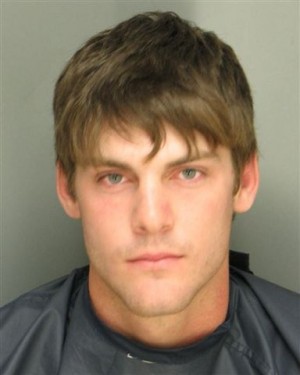
Alleged gay basher, Luke Stevens
Lincoln, Nebraska – A 22-year-old University of Nebraska – Lincoln student has been arrested and charged for assaulting a gay man outside a popular gay club on Friday, September 3. Luke Stevens allegedly harassed a 32-year-old gay man after leaving Lincoln’s Club Q, calling him “derogatory names” concerning his sexual orientation intended to start a fight, according to 1011now. As the target of the abuse tried to leave his antagonist, Stevens allegedly punched him in the face, and moved in to continue the fight. A police officer on the scene was drawn to the noise of the altercation, saw the punch thrown, and wrestled Stevens to the ground. The victim of the assault remains unidentified to the press. He was treated on the scene and released to return home. “The victim and several witnesses reported that Luke Stevens did not know them,” Officer Katie Flood, spokesperson for the LPD, told reporters. “He started calling them derogatory names based on their sexual orientation.” Stevens was charged with assault, disturbing the peace, and failure to comply. Because Nebraska has hate crimes legislation on the books, Stevens may be charged with bias crime, which would make his situation much more grave. If proven guilty of a hate crime, the enhancement would hike the misdemeanor assault charge to a felony. The Journal Star reports that the Nebraska hate crimes statute covers offenses carried out due to the victim’s “race, color, religion, ancestry, national origin, gender, sexual orientation, age, or disability.” Travis Garrett, 19, a friend of Stevens, was also charged with disturbing the peace. Stevens and Garrett were in Club Q together earlier in the evening, as well as Stevens’s victim. Witnesses and friends of the accused UNL student say that he is straight. That evening he was extremely upset at having been turned down by a girl. The contrast between the response of authorities in Lincoln and a similar anti-gay assault in Greenville, South Carolina three years earlier could not be starker. Both involved punches thrown at a gay man after verbal anti-gay harassment outside a bar. But in the case of Sean William Kennedy, 21, who was hit in the face outside Croc’s Bar in Greenville, an upstate South Carolina college town, both the outcome and the legal repercussions were outrageous. As Unfinished Lives has reported, Kennedy was hit by Steven Moller, an 18-year-old straight man spoiling for a fight with a gay person, in May 2007. Kennedy fell to the curb, hit his head on the concrete, and died. Moller was arrested and charged with manslaughter, since the Palmetto State did not have an anti-gay hate crimes law (and still resists passage of such legislation). While Nebraska police and prosecutors stand ready to investigate the assault in Lincoln as a hate crime, South Carolina officials refused to do so in the Kennedy case, giving Moller (who admitted attacking his victim) every benefit of the doubt. In the end, with time served, Moller received less of a sentence for killing Sean Kennedy than if he had been found guilty of killing a dog. For more up-to-date information on Sean Kennedy, see Sean’s Last Wish. We at Unfinished Lives only wish some of the same conscientious law enforcement had been available to the family and friends of young Sean. Moller is now a free man for lack of the will to bring anti-gay attackers to justice. What a difference a hate crimes law makes!
Jurors in Teen Gay Murder Trial Imported for “Fairness”
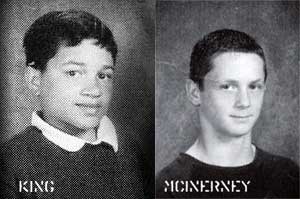 Oxnard, CA – The Los Angeles Times reports that jurors must be imported to Ventura County from Santa Barbara County to insure a fair trial for a teenager accused of shooting his gay classmate to death. Brandon McInerney, now 16, was 14 in February 2008 when he allegedly shot his gay middle school classmate to death during a morning computer class at E.O. Green School in Oxnard. According to reports from eyewitnesses, McInerney walked up behind Larry King, 15, an openly gay person of color, aimed a pistol at the back of his head, and shot him twice. King lingered in hospital with no evidence of brain function, and died some time later. McInerney was charged with felony murder, and a judge in Ventura County determined he would stand trial as an adult. Though the youth of the defendant made the ruling controversial, there was enough evidence of planning and premeditation on McInerney’s part that justice demanded he stand trial as an adult. The pistol he allegedly used belonged to his grandfather. King was a gender non-conforming boy who wore women’s accessories, used make up, and affected a gay demeanor. He was living in a youth home because of trouble at home with his parents. McInerney, who also came from a difficult home life, was said by classmates to be macho and troubled by the openness of King’s sexual identity. Some claim that King had an obvious crush on McInerney, who took the attention badly. The case has drawn national attention for a variety of reasons, not the least of which is the youth of both boys. Conservative pundits have argued that the shooting was prompted by King’s aggressive sexualized behavior. LGBTQ activists have countered that no such evidence exists, and in any case nothing warrants the murder of a femininely presenting youth because of the discomfort of a classmate. Defense attorneys contended that their client could not receive a fair trial in Ventura County because of the extensive media coverage given the case. The Santa Barbara Independent reports that Ventura County prosecutors agreed that media saturation made it unlikely they could find an unbiased jury in their jurisdiction, but disagreed that the trial should be moved to another venue as the defense wished. Instead, jurors from Santa Barbara County will be imported to the trial which will still be held in Ventura County Superior Court. If McInerney is found guilty of first-degree murder with a hate crime sentence enhancement, he could conceivably be in prison for 53 years to life.
About

If you are a first-time visitor to the Unfinished Lives Project website, we invite you to read A Welcome Message introducing you to our project. We are truly grateful for your visit.
The Unfinished Lives Project website is a place of public discourse which remembers and honors LGBTQ hate crime victims, while also revealing the reality of unseen violence perpetrated against people whose only “offense” is their sexual orientation, gender identity, or gender presentation. LGBTQ people in the United States are suffering a slow-rolling decimation of terror and murder all across the country. Every locale and demographic of society are affected: First Nations, Anglo, Black, Latino and Latina, South and Southeast Asian, Transgender, Bisexuals, Gay men, Lesbians, disabled, young, and mature. Homophobia has a long, crooked arm, and it is reaching out to snatch the life away from women and men whose tragic stories are under-reported to begin with, and whose memories are swiftly forgotten.
The horror of these killings transcends the shock and bereavement of loved ones and friends. These are not typical homicides; they are not killings for money or drugs, incidents of domestic strife, or crimes of passion. The vicious nature of hate crimes against LGBTQ persons is extremely brutal, grotesquely violent, and egregiously hateful.
Each murder serves the LGBTQ population as a sobering warning about the actual level of danger in our communities. The message these killings send is that freedom and open life for LGBTQ people is a cruel dream. Every time we remember one of these victims, however, the intentions of their killers are frustrated. To remember these women and men is to begin the process of changing the culture that killed them.
Our Project Director
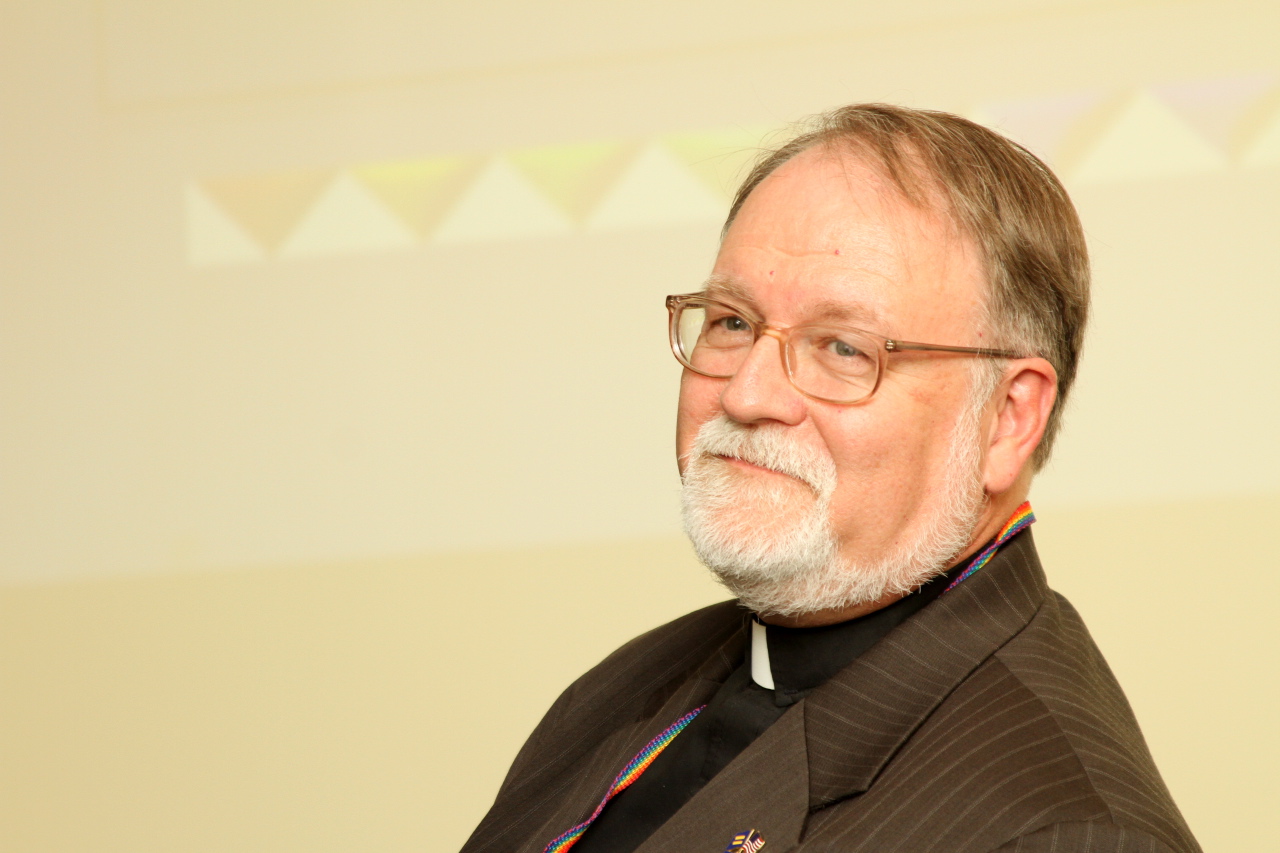
Dr. Stephen V. Sprinkle (Keith Tew photo).
Stephen V. Sprinkle is Director of Field Education and Supervised Ministry, and Professor of Practical Theology at Brite Divinity School, Fort Worth, Texas, a post he has held since 1994. An ordained Baptist minister, he is the first open and out Gay scholar in the history of the Divinity School, and the first open and out LGBTQ person to be tenured there. Read More…
Recent Social Justice Advocacy Activity By Dr. Sprinkle
 Summer 2009 – Dr. Sprinkle responded to the Fort Worth Police Department and Texas Alcoholic Beverage Commission Raid on the Rainbow Lounge, Fort Worth’s newest gay bar, on June 28, 2009, the exact 40th Anniversary of the Stonewall Rebellion. Dr. Sprinkle was invited to speak at three protest events sponsored by Queer LiberAction of Dallas. Here, he is keynoting the Rainbow Lounge Protest at the Tarrant County Courthouse on July 12, 2009. Read More…
Contact Us
Communicate with the Unfinished Lives project team:
info@unfinishedlivesblog.com


Schedule a Presentation
Dr. Sprinkle will gladly present his acclaimed presentation to your organization. To arrange an Unfinished Lives presentation for your organization or group, please contact us.
Dr. Sprinkle has given his Unfinished Lives presentation to these and other community groups and organizations. Read More…
-

Where are our readers?
Publisher: Steve Sprinkle (Project Director)
Steve Sprinkle
Unfinished Lives: Remembering LGBT Hate Crime VictimsBrite Divinity School/Texas Christian UniversityFort Worth TXprofessor, minister, author, blogger, LGBTQ advocate


Follow Unfinished Lives on Facebook
 Box Turtle Bulletin
- An error has occurred; the feed is probably down. Try again later.
- HRC Back Story
- Know About The Gender Identity Movement
- Why Is There A Need For Human Rights?
- Kinds Of Human Rights
- Human Rights Purposes And Violations
- Human Rights For Every Human Incident
- 8 Reasons Human Rights Are Important
- Everything About Human Rights
- Human Rights Issues Education & Law
- We Need To Stand Up For Our Rights And Those Of Others
- Coca-Cola Receives Perfect Score On Human Rights
- The Advocate: Daily News
- Senate blocks Trump-backed trans sports ban in Republican voting bill
- Officials say it’s ‘disgusting’ that Donald Trump is celebrating Robert Mueller’s death
- Donald Trump cheers former special counsel Robert Mueller’s death
- Robert Mueller, who investigated Trump and tested limits of presidential power, dies at 81
- Christian ‘Black Nazi’ Mark Robinson admits to porn obsession he denied while campaigning
- ‘I will not comply’: Tennessee librarian refuses to move LGBTQ+ books
- Fewer young Americans support LGBTQ+ protections, survey finds
- Tennessee bill could create public registry of trans residents’ medical info
- Trans trailblazer Andrea Jenkins on her history-making political career in Minneapolis
- Federal judge blocks RFK Jr. from limiting care for trans youth
- Dallas Voice: Instant Tea
- An error has occurred; the feed is probably down. Try again later.

 Unfinished Lives
Remembering Matthew Shepard on the 12th Anniversary of His Murder
~ Stephen V. Sprinkle, Director of the Unfinished Lives Project
Share this:
October 12, 2010 Posted by unfinishedlives | anti-LGBT hate crime murder, Bisexual persons, Bullying in schools, Colorado, gay men, gay teens, Gender Variant Youth, harassment, Hate Crimes, hate crimes prevention, Heterosexism and homophobia, Law and Order, Legislation, Lesbian women, LGBT teen suicide prevention, LGBTQ suicide, Matthew Shepard, Matthew Shepard Act, Matthew Shepard Foundation, Media Issues, Remembrances, Sakia Gunn Film Project, Social Justice Advocacy, Special Comments, transgender persons, transphobia, Wyoming | anti-LGBT hate crime murder, Bisexual persons, Bullying in schools, Colorado, gay men, gay teens, Gender Variant Youth, harassment, Hate Crimes, hate crimes legislation, Law and Order, Lesbians, LGBTQ suicide, LGBTQ suicide prevention, LGBTQ teen suicide, Matthew Shepard, Matthew Shepard Act, Matthew Shepard Foundation, Media Issues, Remembrances, Sakia Gunn Film Project, Social Justice Advocacy, transgender persons, transphobia, Wyoming | 1 Comment