Phoenix Transperson’s Murder Still Unsolved After Four Years
 Phoenix, AZ – Maurice Dupree Green, known by friends in a gay support group as Melissa, was 22 when she was fatally shot in the back on the night of March 21, 2006. Now, four years since the brutal shooting, Green’s murderer remains at large with no promising leads. A candlelight vigil marking the anniversary of Green’s death was held Sunday in Phoenix, according to reports from ABC 15. When interviewed by a reporter for ABC, Arizona TransAlliance Co-Chair Erica Keppler said that Green’s murder highlighted the fear trans youth and adults face every day in the Grand Canyon State: “I want to move through the world as a citizen and feel safe like anybody else does, but I can never know that I’m safe,” she said. “I can never know that when I walk through a parking lot that I could be at risk of violence, of someone attacking me.” Green was in transition from male to female. According to a report filed near the date of her shooting, Melissa Green was wearing a long brown wig and women’s clothing as she walked alone in the neighborhood of an adult bookstore she sometimes frequented. AZCentral.com reported that a man approached her from behind and fired a single shot into her back with no warning just after midnight. She bled to death on the sidewalk before paramedics could reach her. Police were originally reluctant to label Green’s murder a hate crime, but members of the Arizona trans community, local politicians like openly gay Phoenix City Councilman Tom Simplot, and her youth support group friends have no doubt that hatred of LGBT people motivated the shooter. Simplot, who donated a considerable sum of money back in 2006 to reward anyone identifying the killer, comes to honor Green every year, and believes the annual vigil is important for youth in metro Phoenix. “This vigil every year is to tell our youth that the community does care about them, that we care what happens to them when they get kicked out of the house just for being gay,” Simplot said to ABC 15. Since the murder, Green’s mother Ceda has been inconsolable. She spoke to reporters at a previous vigil, confessing that her life could never be the same after the death of her child. Each year, vigil supporters hope that renewed interest in Green and the trans youth of Arizona will prompt someone to come forward with information leading to an arrest. Until then, the tenacious citizens of Phoenix will remember Melissa Green’s untimely, violent death, and work to improve the lot of the living.
Archbishop Tutu: “I would never worship a homophobic God”
 Washington, DC – Desmond Tutu, emeritus Archbishop of Cape Town, issued a strong protest against African politicians and clerics who are persecuting LGBT people throughout the African continent. In a powerfully worded editorial published in Friday’s Washington Post, the Nobel Peace Prize winner denounced anti-gay laws and policies in Uganda, Malawi, Rwanda, Burundi, Senegal, and Kenya. Since perpetrators of anti-LGBT violence use Christian rhetoric and scripture in support of their crimes against gays and lesbians, The Unfinished Lives Project quotes at length here from the text of the editorial in order to begin to redress the perception that God, Christ, and the Church are in solidarity against LGBT people. It is our hope that religious leaders of conscience throughout the world will join Archbishop Tutu in undercutting religious and spiritual bigotry wherever it arises. The Archbishop writes: “Gay, lesbian, bisexual and transgendered people are part of so many families. They are part of the human family. They are part of God’s family. And of course they are part of the African family. But a wave of hate is spreading across my beloved continent. People are again being denied their fundamental rights and freedoms. Men have been falsely charged and imprisoned in Senegal, and health services for these men and their community have suffered. In Malawi, men have been jailed and humiliated for expressing their partnerships with other men. Just this month, mobs in Mtwapa Township, Kenya, attacked men they suspected of being gay. Kenyan religious leaders, I am ashamed to say, threatened an HIV clinic there for providing counseling services to all members of that community, because the clerics wanted gay men excluded.
“Uganda’s parliament is debating legislation that would make homosexuality punishable by life imprisonment, and more discriminatory legislation has been debated in Rwanda and Burundi.
“These are terrible backward steps for human rights in Africa.
“Our lesbian and gay brothers and sisters across Africa are living in fear.
“And they are living in hiding — away from care, away from the protection the state should offer to every citizen and away from health care in the AIDS era, when all of us, especially Africans, need access to essential HIV services. That this pandering to intolerance is being done by politicians looking for scapegoats for their failures is not surprising. But it is a great wrong. An even larger offense is that it is being done in the name of God. Show me where Christ said ‘Love thy fellow man, except for the gay ones.’ Gay people, too, are made in my God’s image. I would never worship a homophobic God.”
The Archbishop leaves no room for misunderstanding: “Hate,” he writes, “has no place in the house of God.” We at Unfinished Lives could not agree with him more.
Judge Puts Off Murder Trial of Gay Puerto Rican Teen’s Confessed Killer
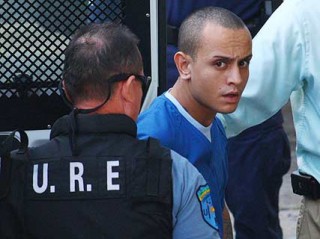 San Juan, Puerto Rico – In a controversial move, a Puerto Rican judge has postponed the murder trial of Juan José Martínez Matos (pictured at left) who confessed to the grisly decapitation, dismemberment, and immolation of the body of 19-year-old Jorge Steven López Mercado in November 2009. In the intervening months since his arrest, Martínez Matos has claimed gay panic and childhood sexual abuse as rationalizations for the murder he says he committed when he “discovered” that the gay teen was homosexual during a tryst. A psychiatric examination has deemed Martínez Matos competent to stand trial for the crime. EDGE reports that Judge Myriam Camila Justino announced on March 8th Juan José Martínez Matos’ trial would begin in Caguas on April 14th, not on March 30th as previously announced. No reason was given in the press for the postponement. López Mercado’s horrific murder, arguably the worst anti-LGBT hate crime in Puerto Rico’s history, has served as a magnet both for homophobic/heterosexist prejudice and for social justice advocacy on behalf of the LGBT population on the island. Law enforcement officers intimated to the press that the gay teen somehow got what he had coming to him because of his sexual orientation, comments that ignited a firestorm of protest both in Puerto Rico and on the U.S. mainland. Attempts to besmirch the slain teenager’s character, thereby lessening the sympathy of the public for his killing, were made early on in the reportage surrounding the case. Most recently, details of López Mercado’s alleged drug use and sex work have been brandished in the press. Social action advocates for human rights such as Pedro Julio Serrano have repeatedly beaten back such character attacking tactics by reminding the public that the slain teenager is not on trial here–his alleged murderer is. Politicians in the United States from the U.S. Congress and from New York city and state governments have traveled to Puerto Rico in recent months to focus attention on the plight of LGBT people in the U.S. Territory, and to express solidarity with the victim’s family. Large protests have been staged in San Juan and in cities around that nation such as New York, Chicago, San Francisco, Atlanta, Dallas, Boston, and Washington, D.C. The passage of the James Byrd, Jr. and Matthew Shepard Hate Crimes Prevention Act in October has set the stage for violence against LGBT people in Puerto Rico to be investigated in more effective ways than ever before. Though a Puerto Rican law made violence against LGBT people there illegal, no one has ever been prosecuted under the provisions of the law until this case. It remains to be seen if the power of cultural phobias and traditional religious antipathy to LGBT people will significantly impact the outcome of this trial. But first the defendant must have his day in court, barring his petition to avoid a jury trial altogether.
Billy Jack Gaither Humanitarian Award Given to Birmingham Human Rights Champion: Hate Victim Remembered

David Gary, Billy Jack Gaither Humanitarian Award Winner
Montgomery, Alabama – David Gary, a noted bank officer and dedicated LGBT activist well-known throughout Alabama, was awarded the Third Annual Billy Jack Gaither Humanitarian Award on Sunday, February 21, 2010. Mr. Gary is a master networker, and a true humanitarian. He is one of the founders of Integrity Alabama, the LGBT Episcopal advocacy group. The award was officially conferred during the 12th Annual Vigil for Victims of Hate and Violence, held on the steps of the state capital to commemorate the murder of Billy Jack Gaither of Sylacauga. Gaither, a gay man, was bludgeoned to death with an axe handle on the banks of Peckerwood Creek by two homophobic assailants on February 19, 1999. His body was burned like trash on a pile of tire carcasses. Both of his murderers remain in prison serving out their sentences. The Gaither murder, one of the most heinous anti-gay hate crimes in Alabama history, made news throughout the United States. Though Mr. Gary could not be present for the presentation because of a bout of ill health, his remarks were conveyed to the crowd. They are published here, in full: “I was very humbled when hearing of the honor given me by this group today and deeply regret not being able to attend. My life has changed and been dramatically enriched through my association of many, both here and absent, who have worked tirelessly for decades to ensure people who have fallen to hate did not die in vain. There are times when tragedy opens doors of association that we would have never known before. My friendship with Kathy Gaither is golden to me, as was my friendship with Ken Baker and the numbers of like-minded people he introduced me to. From Ken, Marshall Johnson and the Rev. Tim Holder, I learned the need of quick response and coordinated action. A more recent association is with the Rev. Dr. Stephen Sprinkle, associate professor of practical theology at Brite Divinity School, Fort Worth, Texas who has been researching LGBT hate crimes. Dr. Sprinkle visited Alabama to prepare his anthology of stories for his upcoming book, Unfinished Lives: Reviving the Memory of LGBT Hate Crimes Murder Victims. From him, I learned the importance of never, never, never allowing the stories to disappear. These horrific stories are very important and must not be forgotten. There are so many others we can discuss, but the important thing to remember, in my opinion, is threefold: The work we do here is important, sacred and necessary. It is important because we should never ever allow the stories and memories of those who are victims to be forgotten. It is sacred, because of how we reverently assemble to not allow them to be forgotten. Unfortunately, our work remains necessary because we all know that any morning we may awake to the news of yet another person how has fallen to hate. Extremism still exists and we can not stop our work as long as its ugliness lives among us. I invite all here to find the place to put your talents to work in the advocacy necessary to prevent yet another Billy Jack Gaither, whose name this award carries, along with the memory of many others, both with us and deceased.” Upon hearing the news of Mr. Gary’s selection for the Billy Jack Gaither Award, Dr. Stephen Sprinkle, Director of the Unfinished Lives Project, said, “The reason Billy Jack’s important story has not been forgotten is due in large measure to the tenacious advocacy of a small group of dedicated humanitarians and human rights activists in Birmingham, Tuscaloosa, and Montgomery. David Gary is a key figure in this group: strong, trusted throughout the state of Alabama, and dedicated to ushering in a better world for LGBT people and everyone else. No one is more deserving of this honor than Mr. Gary.” The sponsors of the vigil in Montgomery were Alabama NOW, Color It Pride, Equality Alabama, Immanuel Presbyterian Church (Montgomery), New Hope Metropolitan Community Church, PFLAG (Parents, Friends, and Families of Lesbians and Gays) Montgomery, and the Unitarian Universalist Fellowship of Montgomery. Keynote speaker for the event was Dr. Gwynedd A. Thomas, the first openly intersexed or transgender faculty member at Auburn University.
Gay Teen’s Murder Inspired Federal Student Non-Discrimination Act

Seattle students celebrate Pride, photo by jglsongs
Washington, DC – The execution-style murder of a 15-year-old gay boy inspired an openly gay Congressman to author the Student Non-Discrimination Act. Lawrence “Larry” Fobes King was shot twice in the back of the head two years ago by a fellow computer class student, 14-year-old Brandon McInerney at E.O. Green Middle School in Oxnard, California. Now, even before McInerney stands trial for murdering his gender non-conforming classmate, Congress will consider the proposed law which for the first time would make it unlawful throughout the country for a any school receiving federal aid to discriminate against a person because of a perception that the individual is gay or lesbian. As VCStar.com reports, “Under the proposed law, known as the Student Non-Discrimination Act, gay and lesbian students in public schools could not be excluded from participating in or be subject to discrimination under any educational program that receives federal assistance. Discrimination would include harassment, which is defined as acts of ‘verbal, nonverbal or physical aggression,’ as well as intimidation or hostility based upon a student’s actual or perceived sexual orientation.” Rep. Jared Polis (D-Colorado), the author and primary sponsor of the bill said that King’s death was foremost in his mind as he framed this legislation and promoted it among his colleagues. “I absolutely had Larry King in mind and other kids like him,” he told reporters. In an interview with DCAgenda.com, Polis said the legislation would give schools across the country tools to fight against discrimination that includes “everything from exclusion from prom, to banning clubs, to lack of actions addressing bullying situations.” Polis continued, “Gays and lesbians across the country face discrimination and frequently institutionalized discrimination in many school districts, and giving them a federal remedy, just as girls do and minorities, will help address this.” The bill, H.R. 4530, has good support in Congress, with 65 co-sponsors including Rep. Tammy Baldwin (D-Wisconsin) and Rep. Barney Frank (D-Massachusetts). Speaker of the House Nancy Pelosi (D-California) is reviewing the legislation which Polis introduced in late January 2010. Nine out of ten LGBT students in middle and secondary schools throughout the nation report that they have been harassed because of their actual or perceived sexual orientation, and 61 per cent of them say they feel unsafe in their schools because of attitudes about their sexuality, according to GLSEN, the Gay, Lesbian and Straight Education Network. According to his school friends, Larry King suffered repeated harassment because of his feminine self-presentation. He sometimes wore jewelry and dressed in high heels and feminine apparel. Students have confirmed that he had tense exchanges with McInerney in the weeks before the fatal shooting. Rep. Lois Capps (D-California), one of the bill’s co-sponsors and the Congresswoman representing Oxnard where King was murdered, told the VC Star, “Larry’s murder was particularly painful because it happened at his school, a place that should have been a sacred space where he could grow and learn in a safe and supportive environment.” School officials in Oxnard contend they did nothing wrong, so the proposed law would not affect them. Their critics, among them LGBT activists in Southern California, counter that nothing substantive has been done to address the underlying hatred that permitted one of their students to act out his phobia on another, to the point of murder. McInerney, who is to be tried as an adult because of indications of pre-meditation of the crime, has pleaded not guilty to murder and hate crimes charges in the case.
Larry King Remembered: Too Young To Die
 Lawrence “Larry” Fobes King was murdered by two gunshots to the back of the head on February 12, 2008, and died two days later. He was only 15 years old. His assailant, Brandon McInerney, was only 14. Larry died because he was gender non-conforming–a gay youth who would not, could not conceal who he was from his classmates at E.O. Green Middle School, Oxnard, California. McInerney remains in custody in Ventura County pending his trial as an adult for allegedly slaughtering King with his grandfather’s pistol during morning computer class. McInerney has pleaded not guilty to first-degree murder and hate crime charges. His trial is slated to begin in May 2010. Today, two years since the fatal shooting, we remember Larry, and mourn for Brandon, too. Two young lives have been lost to unreasoning homophobia. The message of Larry’s death is as clear on the second anniversary of his murder as it was when it occurred: violence and hatred against gender non-conforming youth–gay, lesbian, bi, and transgender–has got to stop. This weekend, vigils and memorial services are being held in Larry’s memory by Gay & Straight Alliances throughout the nation–in California, Iowa, Nebraska, Texas, Illinois, Minnesota, and Virginia, according to a GLSEN-endorsed site dedicated to him, www.rememberinglawrence.org. The Ventura County Star commemorated the anniversary with an article highlighting GSA efforts in Southern California, dedicated to bringing the terror of homophobic teen-on-teen violence to an end. J.T. Mendoza, a high school senior from Simi Valley and a member in the local Gay and Straight Alliance there, spoke for all who seek to honor Larry: “There needs to be more awareness that all students, regardless of their sexual orientation, need to be safe in schools. It’s not just a LGBT issue, but an everyone issue.”
Gay Brazilian Granted Asylum By Homeland Security: Hope Now For Uganda?

L to R - Rena Stern, Augusto Pereira de Souza, and Brian Ward
New York City – A gay Brazilian man has been granted asylum in the United States on the grounds that deportation to Brazil would threaten his life. Columbia University’s Sexuality and Gender Law Clinic won asylum for Augusto Pereira de Souza, 27, from the U.S. Department of Homeland Security in a move that may bring hope to thousands of Ugandan LGBT persons in the event that the odious “Kill the Gays Bill” becomes law in Uganda. The news highlights the danger LGBT people face in Brazil. According to Grupo Gay da Bahia (GGB), the largest LGBT rights organization in Brazil, between 1980 and 2009, there were 2,998 murders of LGBT people in Brazil. In 2008, 190 such murders were reported, though the GGB notes that since many crimes against LGBT people go unreported in Brazil, the actual number of people who lost their lives because of their sexual orientation is likely much greater. Calling his decision to petition for asylum in the United States “a matter of life or death,” Augusto Pereira de Souza told reporters, “In Brazil, I lived in constant fear for my life. I tried to hide that I was gay, but still faced repeated beatings, attacks, and threats on my life because I was gay. At times I was attacked by skinheads and brutally beaten by cops. After the cops attack you and threaten your life for being gay, you learn quickly that there is no one that will protect you.” He will now live openly as a gay man in Newark, New Jersey, where he had lived for some time hiding his sexual orientation. Pereira de Souza’s writ of freedom is thanks to the tireless legal work of three students from Columbia Law School’s Sexuality and Gender Law Clinic, Rena Stern, Brian Ward, and Mark Musico. The trio of law students worked on the case since last September under the direction of clinic director, Dr. Suzanne Goldberg. In a statement reported by The Advocate, Ward said, “In Brazil, police routinely fail to investigate violence committed against GLBT individuals. In this environment, skinheads and other groups are free to persecute, torture, and even kill GLBT individuals with impunity.” Stern, who also assisted with Pereira de Souza’s case, said attacks and murder based on sexual orientation in Brazil appear to be on the rise there. “Mr Pereira de Souza’s story is unfortunately not unusual for a gay man in Brazil.” Such a grant of asylum is rare, largely because of the time and expense necessary to file the application and see it through the process of vetting to make sure that actual danger is truly probable for the asylum-seeker. Individuals must first make it into the United States even to apply, a significant hurdle for foreign LGBT people from countries in the developing world, such as Brazil and Uganda. For Ugandan LGBT people living in fear for their lives in a country where Parliament is debating the enactment of a law making homosexuality punishable by the death penalty, the decision to grant the Brazilian asylum is potentially life-saving news. President Obama and Secretary of State Clinton have spoken out against the “Kill the Gays Bill” as recently as their appearance at the right-wing sponsored National Prayer Breakfast last Thursday in the nation’s capitol. Should the Ugandan Parliament enact the bill into law, gay Ugandans could face a death sentence, their families and friends could be imprisoned for as much as seven years, and even landlords who rent to homosexuals could face jail time. Now, with the Pereira de Souza decision, the door to freedom and life in the United States is opened just a crack for LGBT Ugandans, but it is much more than they had even a week ago.
Arrest Made in Lesbian Stabbing Case

Suzanne Glover on the way to court
Buffalo, NY – From prosecution witness to defendant, all in one day. That’s how it went down when Buffalo Police arrested Susanna Deanna Glover of Tonawanda last week, charging her with stabbing a lesbian in the eye on New Year’s Eve outside a popular gay bar. Glover, 21, was taken into custody just hours after testifying against a man who shot her boyfriend to death right before her eyes in April 2009. Glover’s testimony helped jurors convict Jerome Thagard, 17, of the murder of Glover’s lover, Stephen Northrup, who was 31 at the time of his death. After her boyfriend’s murder, Glover moved to Florida where she now lives, returning to Buffalo for the express purpose of testifying against Thagard. The verdict in the Northrup case was handed down Monday evening. By that time, Glover was under arrest for the stabbing, which law enforcement authorities are calling a hate crime. The attack on Lindsay C. Harmon, 29, along with the murder of Christopher Rudow, a 32-year-old gay man, has rocked the Buffalo LGBT community in recent weeks. Glover allegedly attacked Lindsay Harmon outside Roxy’s, an LGBT nightclub, stabbing her in the left eye while yelling homophobic slurs. A grand jury will have to make the determination whether the charges against Glover for the attack warrant a hate crime designation, based on their judgment of Glover’s motivation for the attack. According to WIVB News 4, Glover attempted to hide her face from cameras as she was hustled into a city courtroom to face a judge. Harmon also attended the proceeding to get the first glimpse of her attacker since New Year’s, white bandaging prominent on her right eye. Some vision is returning to Harmon, according to her father, Michael Harmon, who told reporters for News 4 that his daughter still had a long way to go before full health would be restored to her. “It’s gonna be a long time and some more surgery,” he said. Glover has retained her own attorney, so the trial has been pushed back to later in February.
Trans Community Demands Justice for Myra Ical
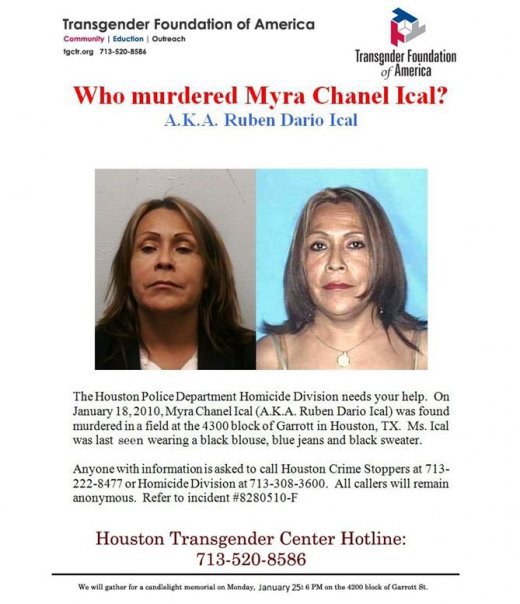
Houston, TX – Cristan Williams, Executive Director of the Transgender Foundation of America, takes the murder of Myra Ical personally. “She died struggling for her life…She went down fighting and she was literally beaten to death,” she said to reporters for KHOU 11 News. “It’s personal. I feel it on a personal level.” Hundreds agree with Williams. Myra Chanel Ical, 51, died in a Montrose area field a week ago, and Houston’s transgender community has rallied to her memory. Seven members of the transgender community have died violently in Houston in the last eleven years, and now the vigil organized to remember Ms. Ical on Monday night is being billed as the largest transgender event in Houston’s history. The vigil’s organizers intend to focus attention on the plight of transgender people in Harris County and Houston as they honor Ms. Ical’s memory and call for neighbors in Montrose to share any leads they may have on the unsolved murder with police investigators. While her slaying is not yet designated as a hate crime, police are certainly not ruling anything out. Sgt. Bobby Roberts, spokesperson for the Houston Police Department, told reporters, “It could have been anything at this point. We just don’t have any motive whatsoever on this case.” ABC News 13 reports that Ms. Ical’s body was covered in bruises and bore several defensive-type wounds that showed she was fighting back against her attacker(s). Harris County’s Medical Examiner ruled that she died from strangulation by some sort of ligature. Cristan Williams cannot get the horror of how Ms. Ical died out of her mind. “That in and of itself was just a horrific way to die. Her last moments of life were sheer terror.” Williams asks why none of the seven murders of Houston transgender people have been solved. Police told her they have no evidence in any of the cases, something Williams attributes to the way anti-transgender crimes went largely unreported in the recent past. Until the passage of the Matthew Shepard and James Byrd, Jr. Hate Crimes Prevention Act this past October, local and federal law enforcement agencies were not mandated to keep statistics on transgender hate crimes. Like the transgender population, these crimes were largely ignored. Human rights advocates for the LGBT community are watching closely to see if the election of Annise Parker, an open and out lesbian, as Mayor of Houston will make a difference in how law enforcement and the media approach violence against some of the most vulnerable citizens of America’s 4th largest city.
Major Media Fail Over Murder of Houston Transwoman
 Houston, TX – Myra Ical lived and died as a transwoman, but the Houston media have not given her the dignity of acknowledging her gender identity when reporting on her likely hate murder. The Houston Chronicle reported Ical’s January 18 murder in the Montrose section using exclusively male pronouns, calling her male, and playing up the sensational aspects of the area where homeless people eek out a living. As is often sadly the case in reportage that is lazy and salacious, the Chronicle used innuendo to suggest that Ical, whose body was found partially naked and covered with bruises and defensive injuries indicative of her fight with her attacker(s), was consorting with prostitutes and drug addicts. Local and national LGBT rights organizations have pushed back against this media injustice by calling attention to Ms. Ical’s gender identity and expression, and demanding that reportage get this aspect of such a terrible story right. According to The Advocate, Human Rights Campaign board member and Pride Houston president Meghan Stabler submitted a strongly worded letter on behalf of both organizations to media outlets covering Ms. Ical’s murder, urging reporters to “use fair, accurate and inclusive reporting” when reporting on LGBT issues. The letter read, in part: “On Monday January 18 the brutal murder of Myra Ical occurred in Houston. She is a transgender woman but the media continue to use male pronouns along with colorful statements about being found in an area known for drugs and prostitution. This lazy and irresponsible journalism shows the amount of ignorance about transgender issues that is rampant among far too many reporters despite the existence of resources to help them report accurately.” GLAAD and the AP have clear guidelines on how LGBT-oriented stories should be reported, leaving big media like the Houston Chronicle without excuse. Myra Ical, who was 51 when she died, will be remembered at a candlelight vigil near the site of her murder at the corner of Richmond Avenue and Garrott Street on Monday, January 25, from 6-6:30 pm. The Facebook notice for the vigil calls upon media and the Houston Police Department “to communicate with the public in a way that respects the victim.” Thanks to Daniel Williams for breaking this story in the DFW metroplex.
About
If you are a first-time visitor to the Unfinished Lives Project website, we invite you to read A Welcome Message introducing you to our project. We are truly grateful for your visit.
The Unfinished Lives Project website is a place of public discourse which remembers and honors LGBTQ hate crime victims, while also revealing the reality of unseen violence perpetrated against people whose only “offense” is their sexual orientation, gender identity, or gender presentation. LGBTQ people in the United States are suffering a slow-rolling decimation of terror and murder all across the country. Every locale and demographic of society are affected: First Nations, Anglo, Black, Latino and Latina, South and Southeast Asian, Transgender, Bisexuals, Gay men, Lesbians, disabled, young, and mature. Homophobia has a long, crooked arm, and it is reaching out to snatch the life away from women and men whose tragic stories are under-reported to begin with, and whose memories are swiftly forgotten.
The horror of these killings transcends the shock and bereavement of loved ones and friends. These are not typical homicides; they are not killings for money or drugs, incidents of domestic strife, or crimes of passion. The vicious nature of hate crimes against LGBTQ persons is extremely brutal, grotesquely violent, and egregiously hateful.
Each murder serves the LGBTQ population as a sobering warning about the actual level of danger in our communities. The message these killings send is that freedom and open life for LGBTQ people is a cruel dream. Every time we remember one of these victims, however, the intentions of their killers are frustrated. To remember these women and men is to begin the process of changing the culture that killed them.
Our Project Director
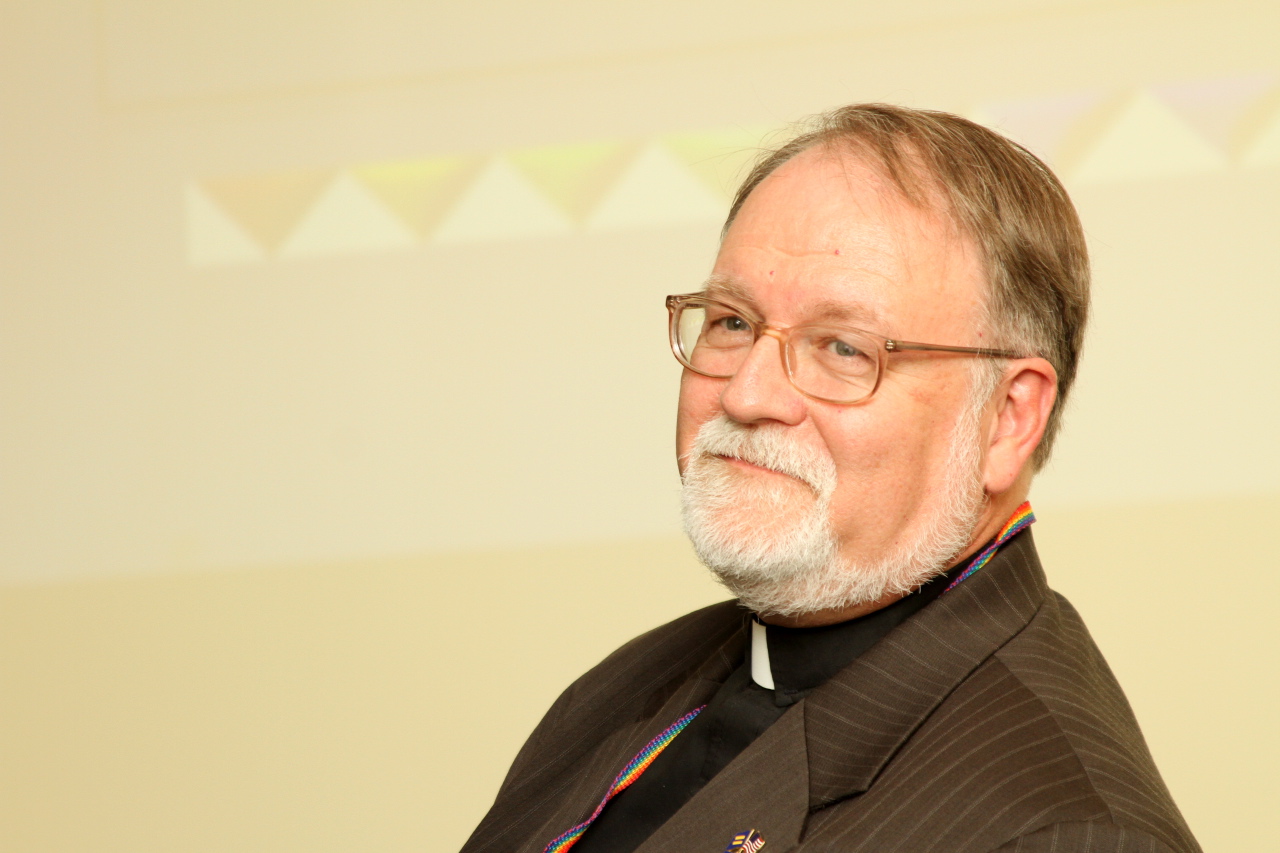
Dr. Stephen V. Sprinkle (Keith Tew photo).
Stephen V. Sprinkle is Director of Field Education and Supervised Ministry, and Professor of Practical Theology at Brite Divinity School, Fort Worth, Texas, a post he has held since 1994. An ordained Baptist minister, he is the first open and out Gay scholar in the history of the Divinity School, and the first open and out LGBTQ person to be tenured there. Read More…
Recent Social Justice Advocacy Activity By Dr. Sprinkle
 Summer 2009 – Dr. Sprinkle responded to the Fort Worth Police Department and Texas Alcoholic Beverage Commission Raid on the Rainbow Lounge, Fort Worth’s newest gay bar, on June 28, 2009, the exact 40th Anniversary of the Stonewall Rebellion. Dr. Sprinkle was invited to speak at three protest events sponsored by Queer LiberAction of Dallas. Here, he is keynoting the Rainbow Lounge Protest at the Tarrant County Courthouse on July 12, 2009. Read More…
Contact Us
Communicate with the Unfinished Lives project team:
info@unfinishedlivesblog.com


Schedule a Presentation
Dr. Sprinkle will gladly present his acclaimed presentation to your organization. To arrange an Unfinished Lives presentation for your organization or group, please contact us.
Dr. Sprinkle has given his Unfinished Lives presentation to these and other community groups and organizations. Read More…
-

Where are our readers?
Publisher: Steve Sprinkle (Project Director)
Steve Sprinkle
Unfinished Lives: Remembering LGBT Hate Crime VictimsBrite Divinity School/Texas Christian UniversityFort Worth TXprofessor, minister, author, blogger, LGBTQ advocate


Follow Unfinished Lives on Facebook
 Box Turtle Bulletin
- An error has occurred; the feed is probably down. Try again later.
- HRC Back Story
- Know About The Gender Identity Movement
- Why Is There A Need For Human Rights?
- Kinds Of Human Rights
- Human Rights Purposes And Violations
- Human Rights For Every Human Incident
- 8 Reasons Human Rights Are Important
- Everything About Human Rights
- Human Rights Issues Education & Law
- We Need To Stand Up For Our Rights And Those Of Others
- Coca-Cola Receives Perfect Score On Human Rights
- The Advocate: Daily News
- Breaking news: Trans men sue Kansas
- Florida suddenly cuts off 12,000 people from receiving their HIV meds
- Two transgender men sue Kansas government over law voiding driver's licenses
- After 40 years living with HIV, this military veteran sees history repeating
- Idaho Republicans are trying to strip localities of nondiscrimination ordinances that protect LGBTQ+ people
- Pete Hegseth declares that Scouting America will eliminate transgender tolerance & diversity programs
- LGBTQ+ stories take center stage nationwide on National Day of Reading in an era of book bans
- The Advocate newsletter: 2/27/26
- Black LGBTQ+ leader derides Trump’s cuts to HIV funding after State of the Union
- Transgender Chicago man hospitalized after saving baby from drowning in Lake Michigan
- Dallas Voice: Instant Tea
- An error has occurred; the feed is probably down. Try again later.

 Unfinished Lives