Suspect 3rd Century Women Put to Death in Arena: Ancient Hate Crime?
 Carthage, North Africa Province – Roman authorities ordered the public execution of a young Roman noblewoman and a female slave in the arena of Carthage on this date, March 7, 203 CE (Common Era). Vibia Perpetua, 22, a young mother, and Felicitas, a slave of like age who was also a young mother, both North African Christians, joined their male counterparts as victims in what legitimately might be called a state-sanctioned hate crime for refusing to swear allegiance to the Emperor, Septimius Severus. Suspicion about the sexual orientation of the women has swirled around the story for centuries. Was the tie that bound these young women together faith alone, or was it something more? Perpetua, one of the first Christian women in history to author an account of her own life, wrote a “Prison Diary” that was edited after her execution by an anonymous narrator who opens with an short introduction and closes with what appears to be an eye-witness account of the life-and-death drama that took place in the amphitheater of Carthage. Nothing explicit is written concerning the possible desire of the two young women for each other in the account, entitled “The Passion of Saints Perpetua and Felicity.” But the lasting impression among gays and lesbians for the last two hundred years is that these North African Christian women were bound to each other with a mutuality that seems particularly “woman-centered” even for the outlawed early Christian communities of the late second and early third centuries, not to mention the strictly hierarchical and socially stratified world of the Roman provinces. Perpetua had given birth to a baby shortly before her condemnation, and Felicity who joined her in prison gave birth right on the eve of the execution. The motherhood of the women has been used to counter the suspicion of lesbianism or bisexuality, but as Yale gay historian John Boswell writes, “A young woman’s marriage in second- or third-century Rome did not necessarily indicate anything about the direction of her affections.” Others have argued that the Christian mission of the women made them comrades in martyrdom as they died for their faith, in refutation of any suggestion of lesbian affection between them. Mary Rose D’Angelo refuses this objection in her famous essay on women partners in the New Testament: “In the early Christian pairs, it is the women’s participation in the Christian mission that takes the foreground. But that should not obscure the recognition that their commitment to the mission can also be seen as the commitment to each other.” The witness-narrator of the execution watched as a crazed, wild heifer, especially chosen for its gender to shame the young women, was unleashed to gore them. The mad cow tossed Perpetua, ripping her dress. The cow then crushed Felicity to the ground before losing interest in the victims. There was nothing un-Roman about a young noblewoman reaching out her hand to help a slave up, as the narrator reports Perpetua does. But then something most un-Roman takes place. The Latin text (20.7) reads: Et ambae pariter steterunt, “And they both stood there together.” It is not only that these young women stood together, but that they did so when they were not expected to do so. Carolyn Osiek, the New Testament scholar from Brite Divinity School, writes of this dramatic moment: “But perhaps the author knew more than we suspect and was telling of a solidarity that had grown between the two women of unequal social status, who stood together as equals facing death.” In this moment of surprise, the curtain of nearly two thousand years is parted for an instant. Elizabeth Castelli writes that there are “moments of slippage, spaces where the self-evidency of gender conventions and relationships for which they were foundational might have been thought otherwise.” This surprising moment is one of them, when a coating of eroticism thinly glosses over two standing together, social unequals, equally facing death side-by-side. Perpetua and Felicity stand at the head of a long line of transgressive women who suffered gender hatred, suspect because of sexual outlaw status. At the very heart of Christian witness, two young women whose affection for each other was forged in a Roman prison hold onto love in the face of state-sanctioned hate crime. For this, we honor them.
Houston Churches Break Cycle of Gay Hate: “Bring Your Gay Teen to Church Sunday,” Feb. 20
 Houston, Texas – When school bullying drove 13-year-old Asher Brown to take his own life on September 23, the horror and despair of so many LGBTQ youth was laid bare for Houston to see. LGBTQ teen suicide, a crisis for any society, hit leaders of Houston’s gay-affirming religious communities particularly hard. Now, the Houston Chronicle and the Dallas Voice report that 22 area churches are doing their part to break the cycle of religion-based negativity toward homosexuality by inaugurating “Bring Your Gay Teen to Church Sunday” this week. On Sunday, February 20, churches from a broad range of traditions make it public that their doors and fellowships are fully open and affirming of LGBTQ youth, their families, and loved ones. The connection with the suicide of young Asher Brown is important, since at the time public rallies and memorials in his memory were taking place, the visual absence of churches, synagogues, temples, and mosques was telling. Surely hundreds of people from faith communities attended these public memorial events, but there was no organized presence on the part of religious communities–a glaring absence that communicated a message of neglect or disapproval that concerned religious leaders are eager to dispel. The Houston Chronicle details grim statistics about how religion is perceived to reinforce LGBTQ youth attitudes of alienation from faith communities. The Chronicle reports that a recent survey by the Public Research Institute showed that less than 20 percent of Americans believe faith communities do a “good job” on the issues of homosexuality and gender expression. Almost half of those surveyed said that the religious message on the topic was “negative,” and fully 40 percent said that the intolerant attitudes of religious communities contributed “a lot” to the disapproval and condemnation of LGBTQ people in this country. The most damning statistic associated with these issues referred to teen LGBTQ suicides: two out of three Americans in the survey said that religion contributed heavily to increasing rates of suicide among gender non-confroming, queer, and gay youth. Robert P. Jones, executive officer of the Public Research Institute, underlined the long history of anti-LGBTQ messages coming from America’s houses of faith: “Religious Americans historically have had negative attitudes about gays and lesbians.” In response to the crisis of teen despair in public and private schools in the metro area, the Houston Clergy Council devised “Bring Your Gay Teen to Church Sunday” as a means of getting out the word that God and the faith community do not hate, reject, or despise LGBTQ youth–quite to the contrary, these affirming churches welcome gender non-conforming people and their families every day. The masthead of the Facebook page announcing the project reads, “Is your teenager Gay, Lesbian, Bisexual, Transgender, a Questioning (GLBTQ) teen? Bring your teen to one of these affirming churches, and rest assured we won’t try to ‘fix’ them. We think they are awesome just the way they are!” The list of churches is impressive, including historic mainline denominations (Episcopal, United Church of Christ, Lutheran, and United Methodist), non-denominational communities, the Society of Friends (Quakers), Unitarians and Universalists, and the largest Metropolitan Community Church in the world. There is even a lone courageous Baptist church with an open and affirming stance. The struggle with religious intolerance and hate speech from pulpits in Houston and around the nation will go on for a long time. Thousands of congregations in the Houston metro area deny the acceptability of homosexuality and gender non-conformity, declaring queer youth sinful or worse. But a cadre of deeply committed faith leaders and their communities are determined to get out the word in America’s fourth largest city that sexual minority youth are acceptable to God, and most certainly to them. “Bring Your Gay Teen to Church Sunday” is tomorrow, February 20.
Gay Georgian Nearly Roasted Alive As He Slept
 Carrollton, Georgia – A 43-year-old, disabled gay man was targeted by arsonists as he slept in his bedroom. Christopher Staples, affectionately called “Brother” by acquaintances in this Appalachian foothills community, was lucky to escape with his life on Sunday, January 23, when his house was set ablaze in the predawn hours by charcoal fluid squirted into water pipe access holes in the home’s kitchen area. The victim called the Carroll County Sheriff’s Department to report that about 8:30 p.m. on Saturday, while he was watching television and finishing a cigarette, someone threw a heavy rock with a note attached threatening his life for being gay. Staples and his family sounded the alarm for the Sheriff’s Department again at 5:30 a.m. on Sunday, reporting that he had nearly burned alive, and that his small house was engulfed in flames. Staples, who has been open about his gay orientation for thirty years, told WSBTV 2 that the note read: “We know you’re gay. And God hates gays. You won’t be raping anybody in the county and God’s going to make sure that you burn in hell . . .My daddy will make sure you burn in hell.” Staples revealed further details on the note to the Georgia Voice. The note, he said, had algebra homework written on one side, and “On the other side in pencil, it called me an ‘AIDS infested faggot’ and ‘God hates gays’ and ‘God will make sure all gays burn in hell.” After Staples had gone to sleep, he was awakened by a repetitive “popping” noise which made him think someone was throwing rocks at the house again. When he pushed back the covers, his comforter was already melting, and the bed was wreathed in thick smoke. “The house was black. And all I could see was an orange glow behind my head,” Staples said in the WSB interview. Staples believes God “held his hand” led him to safety, according to the GA Voice. The Sheriff’s Department is heading the investigation, assisted by the FBI. Possible hate crimes angles are being considered, but the case for what most anywhere else would be automatically considered an anti-gay hate crime will prove difficult to make in Georgia, one of only five states that has no LGBTQ protections in its laws. The only way the crime could be prosecuted as a hate crime would be by invoking the federal Matthew Shepard Act, something unlikely in rural west Georgia. The Times-Georgian reports that a $10,000 reward has been offered for information leading to arrests and convictions in the Staples case from the Georgia Arson Control Program. Initially, a Christian hate group was reported to have carried out the hit on the Carrollton native, but as the investigation proceeds, the identification of the perpetrators becomes less clear. Some local church groups have actually reached out to assist Staples, but whether out of a sense of Christian solidarity with the gay man, or in order to counter anti-Christian publicity is a matter of interpretation. On the whole, according to Staples’s family, gay outreach from around the country has outstripped the response of local straight groups and individuals. Now, two weeks after the attack, Staples is trying to put his life back together, and cope with the idea that someone tried to kill him in his sleep. “I know it happened, you look out there at my place and you see that,” Staples told the Times-Georgian. “But the severity of it hasn’t hit me. The fact that someone threw a rock through my window, told me they were going to kill me and then tried to do it is what doesn’t seem possible. I hear that whoever did this could get life in prison and I think, no way. But then my friends are like ‘Dude, someone tried to burn you alive.’ I mean, I still can’t grasp the thought of that. Why? I just don’t understand.”
Ugandan Gay Activist Killed in Cold Blood: Were Christians Accomplices in His Murder?
 Kampala, Uganda – Prominent defender of Gay Rights in Uganda, David Kato, was murdered in his home by two blows with a hammer this Wednesday. Kato, 40-something at the time of his slaughter, was a well-known voice around the world for human rights, and an outspoken leader protesting Draconian legislation in his home country which would make consensual same-sex activity punishable by law, perhaps even requiring the state to execute convicted homosexuals. What responsibility does the Christian Church bear for the outrageous murder of David Kato? Many in Uganda, including leading church officials, priests, missionaries, and ministers, fervently believe in a sort of “gay conspiracy”on the part of same-sex loving men whom they say will infect their children with the “virus of homosexuality.” Friday, Kato’s funeral was marred by the homophobic outburst of an Anglican priest, Fr. Thomas Musoke, who loudly invoked dire comparisons with the destruction of Sodom and Gomorrah until mourners wrenched a microphone out of his hands, according to 365 Gay. The Ugandan Anglican Church, active in encouraging resistance among conservative Episcopalians to the elevation of gays and lesbians as bishops in the United States in recent years, is well-known for opposing LGBTQ rights in the Central African nation. Christian evangelical missionaries and so-called “experts” on homosexual sin from the United States, such as the notorious Watchman on the Walls Scott Lively, have preached the judgment of God on the Ugandan people if gays and lesbians are allowed to live and love openly in society. U.S. evangelicals exerting influence in Uganda teach that gays and lesbians could be changed to heterosexuality by prayer and counseling if they had enough faith. According to masslive.com, Lively, part of a 2009 evangelical mission to Uganda preaching anti-gay messages to officials and churchmen (Lively even spoke before the Ugandan Parliament during the tour), now says that it is “too early to call Kato’s murder a hate crime,” since the police have rushed to claim that the murder was the consequence of a simple robbery. In rebuttal, Val Kalende, chairwoman of an LGBT human rights group in Uganda said to the New York Times, “David’s death is a result of the hatred planted in Uganda by U.S. evangelicals in 2009. The Ugandan government and the so-called U.S. evangelicals must take responsibility for David’s blood.” Indeed, well-funded groups such as the shadowy Washington C Street evangelical organization, “The Family,” have sent funds and encouragement for the “Kill The Gays” legislations still making its way through the Ugandan Parliament. M.P. David Bahati, primary sponsor of anti-gay legislation in Uganda, is affiliated with “The Family.” NPR host, Michel Martin, explored the culpability of Christians for Kato’s murder with guests on her weekday broadcast, “Tell Me More,” this Friday. Martin interviewed Jeffery Gettleman, East Africa Bureau chief for the New York Times, asking him directly, “This has also been a big story in the United States, of course, because of the participation of a group of American evangelicals whom we also interviewed on this program. One in particular named Scott Lively, who many human rights activists have said helped to create this context of intolerance. Do you think that that’s true? Do you think the American evangelicals’ visit there was really that influential?” Gettleman replied, “I do think it was influential. I think a lot of people in Uganda and the part of Africa where I live, in Kenya and most of this continent and probably most of this world, there’s many people who are homophobic. But it didn’t take a violent form. It was – people thought that, in Uganda, people thought gay people were strange, that they were outliers, but they weren’t really fired up to do anything about it.” Gettleman continued, “It was only after the visits by these Americans who billed themselves as experts in dealing with homosexual issues that the Ugandan politicians and church groups got really angry about it and suggested killing gay people.” Religious hate speech, whether “soft” in its rhetoric (“Love the Sinner/Hate the Sin”), or blatantly hostile (“Gays and Lesbians are an Abomination in God’s Sight, and Deserve to Die”) has consequences for the safety of LGBTQ people wherever they live. This is certainly true, in our opinion, in Central Africa. David Kato was deservedly called “the father of the Uganda gay rights movement.” In the wave of hostility in tabloid media toward LGBTQ people following the 2009 U.S. evangelical tour of Uganda, Kato’s lynching was suggested in the press. When Christian leaders justify the demonization of LGBTQ people for their sexual orientation or gender presentation, either by selectively quoting scripture and subsequently distorting its life-giving meaning, or by reading their own homophobia back into church teaching to claim that “Gays and Lesbians are sinners,” these clerics are not only exposing a vulnerable minority to religious, political, and social persecution. They are also exposing their own theology and ethics as woefully bankrupt and void of spiritual integrity. Clerics in Uganda and the United States who stoke hatred against LGBTQ people are no longer messengers of God. They have become a mob of theological thugs. Anglican Archbishop Emeritus of Capetown, Desmond Tutu, is one of the few courageous voices of Christian integrity in Africa willing to speak out against religious intolerance and hate speech. In the Washington Post last March, Archbishop Tutu appealed for the church to own up to its role in fomenting hatred against gays and lesbians, and instead to commit its resources for repentance and reconciliation for all people. He said, in part, “Hate has no place in the house of God. No one should be excluded from our love, our compassion or our concern because of race or gender, faith or ethnicity — or because of their sexual orientation.” Tutu continued, “Our lesbian and gay brothers and sisters across Africa are living in fear. And they are living in hiding — away from care, away from the protection the state should offer to every citizen and away from health care in the AIDS era, when all of us, especially Africans, need access to essential HIV services. That this pandering to intolerance is being done by politicians looking for scapegoats for their failures is not surprising. But it is a great wrong. An even larger offense is that it is being done in the name of God. Show me where Christ said ‘Love thy fellow man, except for the gay ones.’ Gay people, too, are made in my God’s image. I would never worship a homophobic God.” Amen, Archbishop! Tutu must be joined by a world-wide chorus of Christian voices denouncing the murder of David Kato, the terrorization of his LGBTQ brothers and sisters, and renouncing the use of religion to incite bigotry and fear. Unless the world Christian community repents of its role in murder and mayhem like that in Uganda and Central Africa, Christian theology itself will continue to collapse from “heart-failure”–failing to discern and apply the heart of the message of Jesus Christ which was never bad tidings of fear, but Good News of mercy and justice for everyone.
Osteen Broadcasts Fundamentalist Homophobia on CNN
 Joel Osteen, best-selling author and religious entertainer, says “Homosexuality is a sin” in an interview with Piers Morgan which will air on Wednesday, January 26. “Piers Morgan Tonight” previewed the Wednesday interview two days early in which Osteen, the pastor of mammoth Lakewood Church in Houston, Texas, toes a fundamentalist, homophobic line on the interpretation of the Bible. In response to Morgan’s questions about his condemnation of LGBTQ Americans, Osteen retreats into the same literalist interpretation of a very few passages of scripture that right wing preachers have used to bash gay people for generations:
MORGAN: Say a friend of mine like Elton John watching this at home, who with his partner – a civil partner, David Furnish – have just had a surrogate child which was born on Christmas day. They’re going to be pretty angry what they hear. They’re going to think who are you to call them a sinner.
J. OSTEEN: Yes.
MORGAN: But why are they sinners in your eyes?
J. OSTEEN: Well, it’s strictly back to what the scripture says. I mean, I can’t grab one part and say God wants you to be blessed and live an abundant life, and not grab the other part that says, you know what? You know, live that kind of life. So it comes back to the scripture. I’m not the judge. You know, God didn’t tell me to go around judging everybody.
Osteen tries to have it both ways in the interview with Morgan. Though he clearly condemns gay and lesbian people for parenting children, seeking marriage in monogamous relationships, and for forming same-sex loving families, Osteen claims that he is not a “gay basher.” The distinction will surely be lost on queer folk and their families when the widely popular preacher has just clobbered them with the Bible. “The scriptures shows that it’s a sin,” Osteen says to Morgan in the CNN interview. “But you know, I’m not one of those that are out there to bash homosexuals and tell them that they’re terrible people and all of that. I mean, there are other sins in the Bible too…I don’t believe homosexuality is God’s best for a person’s life.” Osteen has repeatedly peddled his own brand of “soft homophobia” as recently as November 2010 on television shows like ABC’s “The View,” as previously reported by the Unfinished Lives Project. Osteen betrays a simplistic form of Bible reading and interpretation that begins from a heterosexist and homophobic set of beliefs alien to the vast majority of reputable scholars and Bible teachers throughout the world. The Houston mega-church preacher apparently relies on a literalistic, legalistic reading of two texts in the entire Bible to arrive at his claim that God considers homosexuality a “sin.” In the Hebrew Testament, only two passages in the priestly code of Leviticus (selected verses in Leviticus 18 and 20), and one primary text from Paul’s letter to the Romans which is actually about idolatry and not homosexuality in any modern sense (Romans 1:26-28) are available to Osteen and his ilk to make such a universally condemnatory argument against a marginalized group of people. The consensus of progressive and moderate Jewish and Christian biblical scholars is that fundamentalist interpretations of these passages are off base at best, and dangerous at worst. Opinions driven by cultural bias and read back into the Bible such as Osteen’s have proven to be used to justify their religious intolerance and violence by those who attack LGBTQ people both verbally and physically. For a responsible and accessible book on the Bible that teaches biblical respect for LGBTQ people, see Dr. Peter J. Gomes, “The Good Book.” While Osteen seems to think he can appeal to his conservative base with condemnatory statements like those on “Piers Morgan Tonight,” and at the same time soften his rhetoric enough to convince the gullible that he is the very nicest of gay bashers (so they can be “nice” gay bashers, too!), his use of the Bible is irresponsible, uninformed, and contributes to the suffering of millions of people whose only offense is whom they love.
President Signs DADT Repeal: What This Means for America’s LGBTQ Community
 Washington, D.C. – In a breakthrough moment for the LGBTQ community, President Barack Obama signed the repeal of Don’t Ask, Don’t Tell into law today. The ceremony was held in the Interior Department to accommodate a large and emotional crowd of witnesses to the making of American history. The meaning of this moment will unfold and grow over time. But this much at least may be said now: LGBTQ Americans have moved one significant step closer to full equality because of this political victory. The President noted that while the struggle to repeal DADT has gone on for nearly two decades, this day is a culmination of untold sacrifice and heroism on the part of LGBTQ servicemembers and their families for over 200 years. From the American Revolution to the current Iraqi and Afghan conflicts, gay and lesbian patriots have fought for the freedoms they themselves have not fully known. Most of their service has been hidden in the anonymity of history for obvious reasons. To serve openly as gay was not tolerated in the American armed forces. The darker side of this history is the story of untold thousands who have been persecuted, harassed, harmed, and killed because of their actual or perceived sexual orientation and gender presentation. The Unfinished Lives Project and other efforts have sought to chronicle some of these stories: Army PFC Barry Winchell, Petty Officer Allen R. Schindler, Seaman August Provost, and Army veteran Michael Scott Goucher, to name but a few. Not only have the battlefields of the world been consecrated with the blood of LGBTQ American servicemembers. The closets of the military in all branches of the service are likewise battlegrounds stained with queer blood. The signature of President Obama should not become a coda to their memory. If anything, this moment should give the LGBTQ community added impetus to remember and honor our war dead–both on the battlefield of honor and on the battlefields of American prejudice. This moment is fraught with religious and theological significance, as well. Now that this landmark legislation for human rights and dignity is the law of the land, the recalcitrant majority of conservative military chaplains must choose to fulfill their pledge of service to all the nation’s soldiers, sailors, airmen, marines, and guardsmen. Human rights and dignity are a prophetic dimensions of all the advance theologies of the world since time immemorial, but the savage side of religion has often displaced God’s favor for all people with a purist extremism that honors neither God or country. The crucial choice now is in the lap of the fundamentalist military chaplaincy, who have discounted the good service of LGBTQ women and men for decades, and the religious righteousness of their chaplaincy peers who have embraced LGBTQ servicemembers as children of God. It is time for the fundamentalist chaplains in the armed services, including the chiefs of chaplains in the Army, Navy, and Air Force to either salute smartly and comply with the law, or take their pensions and go. The choice is theirs. The moderate and progressive religious communities in this nation are faced with another type of challenge. They must re-evaluate their stance toward military service, and remove institutional and ecclesial impediments to honorable service. Seminaries on the theological left will need to open their doors for training the next generation of military chaplains. For the LGBTQ community generally, the call of this day is to become a more mature and reasoned community among the peoples of this nation. Nothing has changed for military servicemembers yet, nor will it for quite some time, until the law can be implemented throughout the armed forces. There will be continued bias and discrimination against queer folk in the military by the military. But LGBTQ people are now offered a renewed sense of who we are: strong, proud, sacrificial, patriotic, and peace-loving–all at the same time. This is a red-letter day in American history, and a rainbow-colored day in the struggle for full LGBTQ equality.
Gays Most Often Targeted by Hate Crimes in America; SPLC Report Confirms Alarming News
 Montgomery, Alabama – In a blockbuster announcement released today, the highly respected Southern Poverty Law Center’s annual Intelligence Report confirms that LGBTQ people are the most often targeted group for physical violence in American life. As human rights groups scored advances for LGBTQ people in 2009, hard-core anti-gay groups have stepped up hate speech and are digging in to reverse the justice done to queer folk throughout the United States. In its analysis of better than 14 years of data on hate crimes, the SPLC found that LGBTQ people were twice as likely to be the victims of violent attacks than Jews or African Americans, more than four times more likely than Muslims, and 14 times more likely than Latinos and Latinas. As gay and lesbian people increase in acceptability among the populace at large, anti-gay groups are becoming far more extreme in opposition, and are employing alarming new tactics to undermine the queer community. PR Newswire and US Newswire quote Mark Potok, editor of the Winter 2010 issue of the SPLC Intelligence Report: “As Americans become more accepting of homosexuals, the most extreme elements of the anti-gay movement are digging in their heels and continuing to defame gays and lesbians with falsehoods that grow more incendiary by the day. The leaders of this movement may deny it, but it seems clear that their demonization of homosexuals plays a role in fomenting the violence, hatred and bullying we’re seeing.” Spurred on by a belief that homosexuality threatens “historic Christian faith,” hard-line religious groups and their secular right wing political allies are blaming the very people and organizations dedicated to protecting the LGBTQ community, especially LGBTQ teenagers who have been reported as committing “bullycide” from anti-gay harassment in recent weeks. As Evelyn Schlatter writes in her Intelligence Report article on religiously-motivated anti-gay bias groups: “Even as some well-known anti-gay groups like Focus on the Family moderate their views, a hard core of smaller groups, most of them religiously motivated, have continued to pump out demonizing propaganda aimed at homosexuals and other sexual minorities. These groups’ influence reaches far beyond what their size would suggest, because the “facts” they disseminate about homosexuality are often amplified by certain politicians, other groups and even news organizations.” A particular target for the ire of the religious right has been GLSEN, the Gay, Lesbian, and Straight Education Network, which has been most outspoken against the bullying of LGBTQ youth in American schools through its “Safe Schools” campaign. Eighteen anti-LGBTQ hate groups are profiled in the report, and ten popular myths about LGBTQ people are debunked, as well, including the irrational claim that homosexuals were somehow responsible for the Nazi Holocaust of the Jews during the Second World War. The Report does contend that some religious leaders are speaking out against anti-gay violence, such as the Rev. Fritz Ritsch, Senior Minister of Fort Worth’s St. Stephen’s Presbyterian Church: “The recent epidemic of bullying-related teen suicides is a wake-up call to us moderate Christians,” Rev. Ritsch, wrote in October in the Fort Worth, Texas, Star-Telegram. “To most unchurched Americans — meaning most Americans — the fruit of the church is bitter indeed. … [T]he bullying crisis has put a fine point on the need for moderates to challenge the theological bullies from our own bully pulpits. We cannot equivocate. Children are dying. We need to speak up. If not now, when?” The summation of the SPLC report is grimly realistic. For the near term, religiously-spawned anti-LGBTQ violence will continue, and perhaps increase. The report concludes, in part: “Although leaders of the hard core of the religious right deny it, it seems clear that their demonizing propaganda plays a role in fomenting that violence.” It is up to all people of good conscience–especially people who identify with organized religion–to find the courage and spiritual resources to combat religiously and politically motivated violence against LGBTQ folk everywhere.
Osteen Cannot Mask His Homophobia on ABC’s “The View”
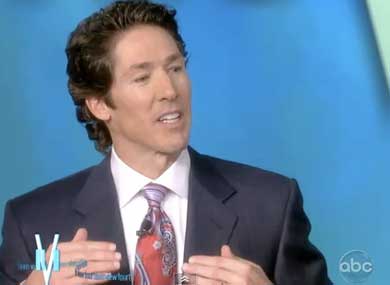 Houston, Texas – Joel Osteen met his match on ABC Television’s The View as he tried to peddle his brand of “soft-homophobia” to the nation. The Advocate reports that Joy Behar took Osteen to task for denigrating lesbians and gay men as “not God’s best,” a statement he made on the program last year. Osteen, pastor of Lakewood Church in Houston, a megachurch boasting an average weekly attendance of 43,500 and a national television outreach, responded to Whoopi Goldberg that like God, he loved “everybody,” but while some of his friends were gay (“the nicest people in the world”), he couldn’t agree that God did the right thing creating people with a homosexual orientation (a remark he struggled to take back later in the broadcast). Osteen claimed a single biblical message on homosexuality, and when pressed by Joy Behar, classed gays and lesbians with “drunkards” and “people on drugs.” When Osteen was asked about his position on whether fellow megachurch pastor Jim Swilley, founder of the Conyers, Georgia Church in the Now, should remain as leader of the church, Osteen retreated into his anti-gay theology. Swilley, married twice to women and the father of four children, came out as a gay man recently in response to the rash of LGBTQ teen suicides, confessing that he could no longer remain in the closet while so many gay youth were dying. The death by bullycide of Tyler Clementi, the Rutgers University freshman, particularly affected Swilley, who says he knew he was gay since youth, but tried to live as a heterosexual person. As reported in thespreadit.com, Swilley said of his sexual orientation, “At a certain point, you are who you are.” Osteen said that scripture would prohibit a gay man from pastoring a church (though the Bible never mentions the subject of pastoral leadership and homosexuality). Still, Osteen labored to convince the women on The View that his church was welcoming to gays. Asked again about his inflammatory contention that homosexuality “is not God’s best,” he said to co-host Barbara Walters, “I should finish that sentence. I should make it clear. I don’t think it’s God’s best for your life. I don’t think it’s not God’s best making us.” Joy Behar pointed out that Osteen, who above all wanted to come across on national television as a nice person, was left with “a conundrum”: either God created homosexual people good (Genesis says that God pronounces all creation “good”), or God made a mistake by creating people as “less than God’s best.” Osteen hesitated to comment about the conundrum his soft brand of heterosexism and homophobia poses for church leaders who truly want gays and lesbians to attend their churches and contribute their money, but who disapprove of their existence as God created them to be. While less overt than many Christianist anti-gay positions, Osteen’s form of bias is perhaps the most insidious in American life today. While maintaining a smooth, pleasing public persona, such soft anti-gay prejudice feeds the internalized homophobia of LGBTQ people who yearn for church blessings, and grants a green light to homophobic exclusion from circles of “normalcy” and from church leadership positions (which are the true test of any church’s feelings toward LGBTQ people). Osteen further claims a simplistic “Bible-based” set of anti-gay teachings that plays well to the mob, which serious biblical scholars have debunked for decades. Osteen claimed in an exit interview that he “loved” being on The View, that he had “a great time.” The success of his appearance will be determined, to paraphrase President Abraham Lincoln a bit, by whether a charlatan can, indeed, “fool all of the people all of the time.”
Gay Prof’s Message to Gay Youth Goes National: “God Loves You!”
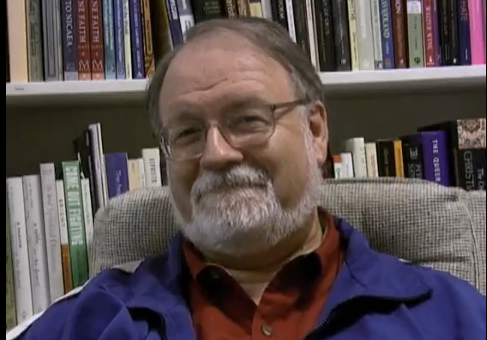 Fort Worth, Texas – A gay divinity school professor’s short video message of God’s acceptance and love for LGBTQ youth has “gone national,” according to The Dallas Voice. Reporting on an Associated Press story about the It Gets Better Project started by Dan Savage to speak directly to American gay young people who have been shaken by multiple teen gay suicide throughout the nation, Dallas Voice online editor, John Wright, opined that Dr. Stephen Sprinkle’s Santa Claus-like demeanor and grandfatherly message has struck a positive chord among thousands of YouTube watchers. Sprinkle’s 4-minute video was one of only four featured in a national AP story about submissions to the effort to give LGBTQ teens and young adults a reason to resist suicide because of despair. Savage told the New York Times what he hoped would happen as gay men and lesbians caught onto the idea of sending a positive message to LGBTQ teens through YouTube. He said, “I don’t want it to be ‘lifestyles of the gay and fabulous.’ What we want to say to kids is that if you don’t win the economic lottery, and most people don’t, you can have a good and decent and fun life that brings love.” In barely two weeks, the It Gets Better Channel on YouTube has had over 1,000 video uploads selected by Savage, and a million visitors. As the AP story says, “comment threads are growing and e-mails are pouring in from bullied and closeted teens.” Among the many emails Sprinkle has received have been two so far from young men struggling with God and their sexuality. One who is 18 told Sprinkle he was on the verge of “exploding” over the question of God and gays. As a closeted gay person, the teen doubts that God can love and approve of a same-gender-loving person. Over and over, he asked Sprinkle “Does God hate me? Are you sure?” Sprinkle replied, “Heavens no! God created you wonderfully and beautifully as a gay person. God doesn’t make mistakes.” Then Sprinkle says he connected the youth with counseling help so that the healing can begin in this young man’s life. At this point, over 12,000 viewers have seen Sprinkle’s video. When asked about how the sudden popular response to the video makes him feel, Sprinkle said, “My hope is that, regardless of the messenger, the message gets through that God fully and thoroughly accepts and loves LGBTQ young people.”
About
If you are a first-time visitor to the Unfinished Lives Project website, we invite you to read A Welcome Message introducing you to our project. We are truly grateful for your visit.
The Unfinished Lives Project website is a place of public discourse which remembers and honors LGBTQ hate crime victims, while also revealing the reality of unseen violence perpetrated against people whose only “offense” is their sexual orientation, gender identity, or gender presentation. LGBTQ people in the United States are suffering a slow-rolling decimation of terror and murder all across the country. Every locale and demographic of society are affected: First Nations, Anglo, Black, Latino and Latina, South and Southeast Asian, Transgender, Bisexuals, Gay men, Lesbians, disabled, young, and mature. Homophobia has a long, crooked arm, and it is reaching out to snatch the life away from women and men whose tragic stories are under-reported to begin with, and whose memories are swiftly forgotten.
The horror of these killings transcends the shock and bereavement of loved ones and friends. These are not typical homicides; they are not killings for money or drugs, incidents of domestic strife, or crimes of passion. The vicious nature of hate crimes against LGBTQ persons is extremely brutal, grotesquely violent, and egregiously hateful.
Each murder serves the LGBTQ population as a sobering warning about the actual level of danger in our communities. The message these killings send is that freedom and open life for LGBTQ people is a cruel dream. Every time we remember one of these victims, however, the intentions of their killers are frustrated. To remember these women and men is to begin the process of changing the culture that killed them.
Our Project Director
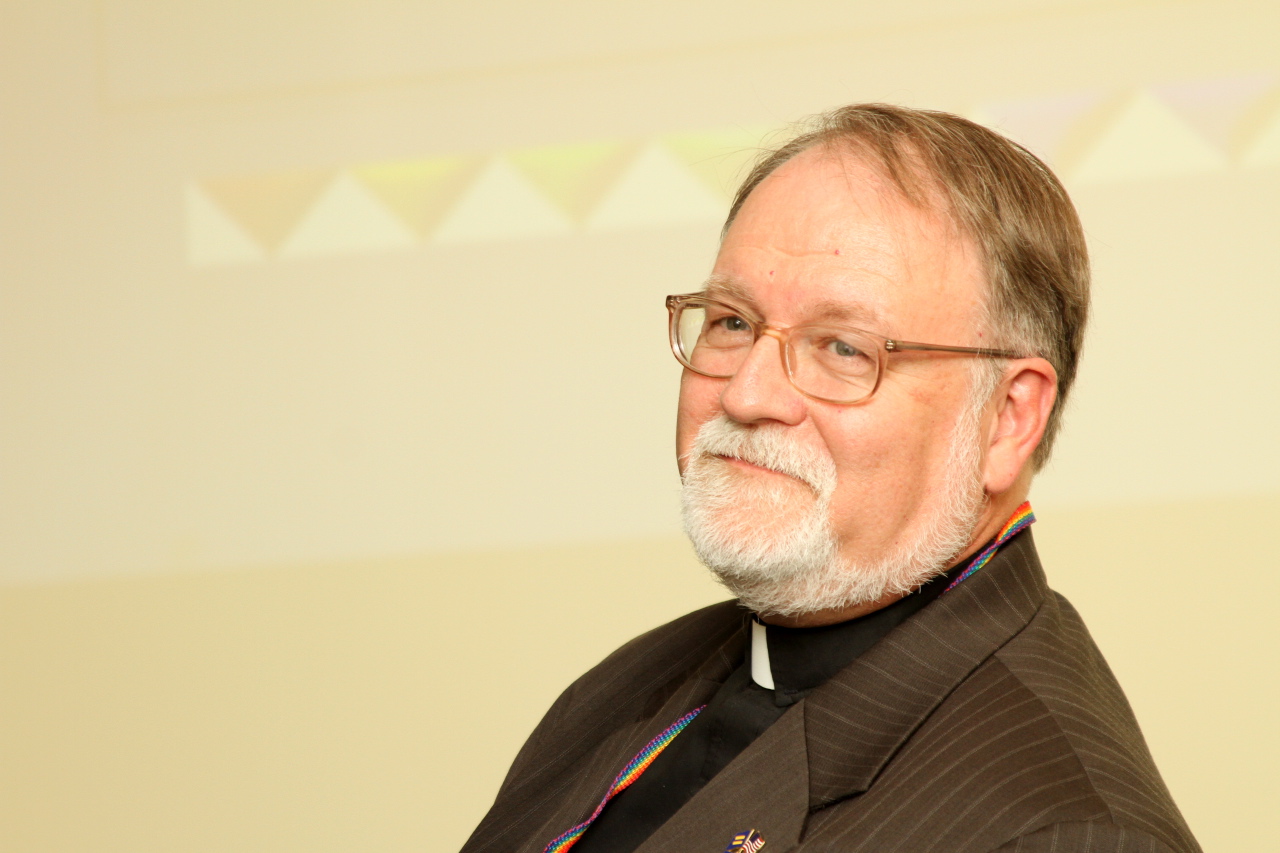
Dr. Stephen V. Sprinkle (Keith Tew photo).
Stephen V. Sprinkle is Director of Field Education and Supervised Ministry, and Professor of Practical Theology at Brite Divinity School, Fort Worth, Texas, a post he has held since 1994. An ordained Baptist minister, he is the first open and out Gay scholar in the history of the Divinity School, and the first open and out LGBTQ person to be tenured there. Read More…
Recent Social Justice Advocacy Activity By Dr. Sprinkle
 Summer 2009 – Dr. Sprinkle responded to the Fort Worth Police Department and Texas Alcoholic Beverage Commission Raid on the Rainbow Lounge, Fort Worth’s newest gay bar, on June 28, 2009, the exact 40th Anniversary of the Stonewall Rebellion. Dr. Sprinkle was invited to speak at three protest events sponsored by Queer LiberAction of Dallas. Here, he is keynoting the Rainbow Lounge Protest at the Tarrant County Courthouse on July 12, 2009. Read More…
Contact Us
Communicate with the Unfinished Lives project team:
info@unfinishedlivesblog.com


Schedule a Presentation
Dr. Sprinkle will gladly present his acclaimed presentation to your organization. To arrange an Unfinished Lives presentation for your organization or group, please contact us.
Dr. Sprinkle has given his Unfinished Lives presentation to these and other community groups and organizations. Read More…
-

Where are our readers?
Publisher: Steve Sprinkle (Project Director)
Steve Sprinkle
Unfinished Lives: Remembering LGBT Hate Crime VictimsBrite Divinity School/Texas Christian UniversityFort Worth TXprofessor, minister, author, blogger, LGBTQ advocate


Follow Unfinished Lives on Facebook
 Box Turtle Bulletin
- An error has occurred; the feed is probably down. Try again later.
- HRC Back Story
- Know About The Gender Identity Movement
- Why Is There A Need For Human Rights?
- Kinds Of Human Rights
- Human Rights Purposes And Violations
- Human Rights For Every Human Incident
- 8 Reasons Human Rights Are Important
- Everything About Human Rights
- Human Rights Issues Education & Law
- We Need To Stand Up For Our Rights And Those Of Others
- Coca-Cola Receives Perfect Score On Human Rights
- The Advocate: Daily News
- Appeals court rebukes New York judge for repeatedly refusing to seal trans name change records
- Senate Republicans’ last-minute SAVE Act rewrite includes anti-transgender provisions
- Advocate newsletter 3/18/26
- At Creating Change, LGBTQ+ activists gathered to confront turbulent times
- Demolition underway at Pulse nightclub, site of one of the deadliest U.S. mass shootings
- Ric Grenell’s very ‘normal gay’ implosion
- Revisiting 'Ode to Billy Joe'—and the boy who jumped—50 years later
- Who is Daniel Biss, the Democrat who narrowly beat Gen-Z star Kat Abughazaleh in Illinois
- Indicted Chicago-area progressive MAGA foe falls short in Illinois Democratic U.S. House primary
- Democratic incumbent fends off progressive Army captain & trans rights ally in Illinois primary
- Dallas Voice: Instant Tea
- An error has occurred; the feed is probably down. Try again later.

 Unfinished Lives
“It Gets Better” Makes Us All Stronger! A Special Comment by Dr. Stephen Sprinkle
Dr. Stephen Sprinkle and Dan Savage (Unfinished Lives Project Director, Dr.Sprinkle, was an early contributor to the "It Gets Better Project").
When Dan Savage and Terry Miller conceived of the “It Gets Better Project,” the goal they had was a hundred videos. Now there are over 10,000 of them, and the videos have been viewed over 40,000,000 times to date—and growing! Dan has said that had there been 20 videos online, and one life saved, it would have been worth it. We know now that many, many teenage lives have been given new hope, and also that young lives by the hundreds have been saved by this visionary project. As the Jewish Talmud teaches, “Whoever destroys a soul, it is considered as if he destroyed an entire world. And whoever saves a life, it is considered as if he saved an entire world” (Mishnah Sanhedrin 4:5; Babylonian Talmud Tractate Sanhedrin 37a). The IGB Project, and now the New York Times bestselling book by the same name has already saved a galaxy of worlds by this rabbinic measure.
But the IGB project and book have gone one better than this, if such a thing might be possible. Dan, Terry, and the worldwide host of contributors to this positive effort have changed the world irrevocably, queer and straight alike. Here are two of the ways I see.
First, the “coming out story,” a staple of LGBTQ life, has been transformed into a declaration of how the queer community is overcoming shame, persecution, and victimhood—and coming on strong. For two generations since Stonewall, the coming out story has been a way LGBTQ people shared their struggles and established solidarity with each other. Most of these stories were accounts of struggle, hurt, and survival. Queer folk got to see they were not alone and isolated—we heard the battles others fought, and compared scars—and that was powerful for all parties, because these stories allowed us to see that there were others like us in this difficult world—that we resisted and lived on into a new life together, no longer alone. But IGB went a crucial step further: as thousands of us were empowered to speak directly to queer teenagers with a positive message of hope and power, “It really does get better, and this is how it got better for us,” we got to overhear ourselves rehearsing stories of strength and success—not just repetitions of woe and endurance. IGB powered up the queer community to tell the whole world how we are defeating opposition in fine style thousands of different ways everyday. The message is, “We are no one’s patsies anymore, thank you! And we are ready and able to make things improve for ourselves and our teens every day, until it gets better for all of us!” IGB changed the coming out story into the overcoming stories of a powerful queer people who will never settle for victimhood again. In my religious tradition, as a queer Baptist preacher, that makes me want to shout, Hallelujah!
Second, IGB empowered our straight allies to come out strong, too. From President Obama to Secretary of State Hillary Clinton. From Prime Minister David Cameron to Lutheran Presiding Bishop Mark Hanson. From moms and pops, school teachers who taught us, and straight employers who hired us. Our allies joined the queer community to make the message of zero tolerance for school bullying perfectly queer. I know the term “queer” rankles some genteel sentiments, but to see the way our straight allies have taken the term and wrapped themselves in it for our sakes should dispel the last reservations we have about the word and about how the LGBTQ movement for human rights and equal dignity will grow and eventually prevail. Straight queer allies by the hundreds of thousands are rising up against bullying, het privilege, and the culture of violence that imperils not only gender non-conforming youth, but all youth everywhere. By ourselves, LGBTQ people are not numerous enough to change the het world. But IGB shows youth and adults in our LGBTQ communities—out or closeted—that growing numbers of queerly empowered straight allies are joining us to transform the world we all share. This is no panacea, of course. My generation may not live to see it, especially in the churches, synagogues, temples, and mosques where old prejudices linger with desperate power. But even there, straight allies are queering religion with us. When the annals of these years are written, I believe the IGB Project will feature prominently in the story of how all us queers, LGBTQ and straight, overcame together. Like the Black Gospel refrain goes, “Over! Over! My soul looks back and wonders how I got over!”
So, Dan and Terry, and the tens of thousands who have rallied to the cause of a safer world for youth to grow up in, a salute to you! The children will rise up to call you “blessed.” And so does this mighty queer Baptist preacher from Texas, too! ~ Stephen V. Sprinkle, Brite Divinity School, and Unfinished Lives Project Director
Share this:
April 3, 2011 Posted by unfinishedlives | African Americans, Anglo Americans, Anti-LGBT hate crime, Bisexual persons, Bullying in schools, Dan Savage, gay bashing, gay men, gay teens, gender identity/expression, Gender Variant Youth, harassment, Hate Crimes, hate crimes prevention, Heterosexism and homophobia, It Gets Better Book, It Gets Better Project, It Gets Better Project (IGBP), Latino and Latina Americans, Latinos, Lesbian women, LGBT teen suicide prevention, LGBTQ suicide, Popular Culture, religious hate speech, religious intolerance, Secretary of State Hillary Clinton, Slurs and epithets, Social Justice Advocacy, Special Comments, Stonewall Inn, transgender persons, transphobia | African Americans, Anglo Americans, Anti-LGBT hate crime, anti-LGBT hate crime murder, Bisexual people, Bullying in schools, Dan Savage, gay men, gay teens, harassment, Hate Crimes, Heterosexism and homophobia, It Gets Better book, it gets better project, Latino / Latina Americans, Lesbians, LGBTQ suicide prevention, LGBTQ teen suicide, Popular Culture, President Barack Obama, religious intolerance, Secretary of State Hillary Clinton, Slurs and epithets, Social Justice Advocacy, Special Comment, Straight Allies, transgender persons, transphobia | Comments Off on “It Gets Better” Makes Us All Stronger! A Special Comment by Dr. Stephen Sprinkle