Body of Gay Rutgers Student Found; Furor Over Death Grows

Clementi was a gifted violinist
New York City, New York – CNN reports that the body of Tyler Clementi, gay Rutgers University freshman who jumped off the George Washington Bridge because of cyber-bullying, has been recovered from the Hudson River on Friday. The body had floated in the river for a week after Clementi threw himself of the bridge near the New York side of the Hudson in a desperate act of suicide after being exposed as gay on the world wide web. Clementi, 18, promising young violinist, was distraught over being spied upon during a gay tryst by a hidden web cam activated remotely by his roommate, Dharun Ravi. Ravi shared the live stream images of Clementi and his lover with another Rutgers student, Molly Wei. Ravi allegedly broadcast the tryst on the web September 19, and attempted to do so again on September 21. The next day, Clementi carried out his suicide. In a mobile Facebook status update on September 22, Clementi wrote, “jumping off the gw bridge sorry.” Ravi took apparent delight in exposing his roommate, whom he suspected was gay from tracing Clementi’s web activity to a gay hook up and chat site called “Just Us Boys.” Later, on Just Us Boys, the day before Clementi jumped to his death from the bridge, a user called cit2mo posted a thread under the subject “college rommate spying.” Cit2mo wrote, “so the other night i had a guy over. I had talked to my roommate that afternoon and he had said it would be fine w/him. I checked his twitter today. he tweeted that I was using the room (which is obnoxious enough), AND that he went into somebody else’s room and remotely turned on his webcam and saw me making out with a guy.” Investigators suspect that Cit2mo was actually Clementi. Respondents to the thread advised that the web cam was a violation of privacy, and should be reported to the dorm authorities. A lawyer for Just Us Boys has told CNN that Cit2mo’s ID was traced back to Rutgers University. News of the cyber-voyeurism leading to Clementi’s suicide exploded across the nation in the days since Clementi died. New Jersey Governor Christie has condemned the actions of Ravi and Wei in strong terms, saying he does not know how they sleep at night. Presently, the two 18-year-old suspects are charged with invasion of privacy and face five years of jail time for every count against them, if proven guilty as charged. The Governor issued a call to prosecutors to examine the case carefully to see is further charges can be brought against the pair of freshmen whose prank turned deadly. The Clementi family has remained quietly at home, enduring their grief over the loss of their son with dignity. They have issued this statement to the public: “We understand that our family’s personal tragedy presents important legal issues for the country as well for us. Regardless of legal outcomes, our hope is that our family’s personal tragedy will serve as a call for compassion, empathy and human dignity,” the statement said. On Friday, the President of Rutgers, Richard McCormick, pledged to meet with gay, lesbian, bisexual and transgender students who are angry and fearful after Clementi’s suicide. McCormick announced that the university will hold a candlelight vigil in Clementi’s memory on Sunday evening on campus, calling the vigil “an opportunity to come together in this difficult time to reaffirm our commitment to the values of civility, dignity, compassion, and respect for one another.”
Gay University Freshman Commits Suicide After Privacy Invasion with Hidden Camera
 Piscataway, New Jersey – An 18-year-old Rutgers University freshman jumped to his death from the George Washington Bridge September 22 after his roommate live-streamed his sex session with another male using a hidden camera. The New York Daily News reports that Tyler Clementi, a renowned young violinist who had just enrolled at Rutgers, the State University of New Jersey, left his car on the New Jersey shore, walked to a spot on the George Washington Bridge near the New York side, and plunged to his death in the Hudson River. His body has not been recovered. Authorities say that he left a suicide note. His roommate, Dharun Ravi, 18, posted that Clementi had “asked for the room” at midnight, so Ravi enabled a hidden web cam, went to the room of his high school friend, Molly Wei, and switched on her computer to live-stream Clementi’s tryst. Wei is also 18 years old. “I went into Molly’s room and turned on my webcam,” Ravi posted. “I saw him making out with a dude. Yay.” The Twitter post went out on the internet on September 19, three days before Clementi’s suicide. Ravi and Wei, both from Asian American extraction and Rutgers freshmen on the Piscataway campus, are charged with two counts each of invasion of privacy under a New Jersey law. Illegally collecting or viewing images showing sexual contact involving another individual without that individual’s consent in the Garden State is a fourth-degree crime. Transmitting or distributing such images is a third-degree crime. Ravi has also been charged with two more counts of invasion of privacy for his attempt to broadcast another sex session Clementi is alleged to have had on September 21. Both suspects surrendered peacefully to university police. Ravi is free on $25,000 bond. Wei was released on her own recognizance pending prosecution. The top penalty the two web-voyeurs could receive if found guilty as charged is five years in prison for each count. Officials of the university are making no comment on the alleged crimes so long as the investigations are proceeding. Clementi is remembered as a wonderfully gifted musician. His parents have been devastated, and are making no comment to the press. Apparently the shock of being outed in such a public and humiliating way led him to such despair that he could not bear to live. As Jim Burroway of Box Turtle Bulletin said, “It’s not just high school kids being bullied and humiliated to their deaths.”
Second Sentence in NY Hate Crime Murder: Phoenix Gets 37 Years to Life
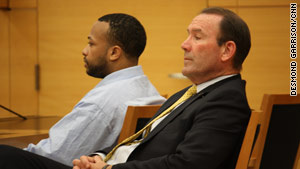
Keith Phoenix (l) in court
Brooklyn, NY – Keith Phoenix won’t be on the street again for a long time: 37 years to life, for the brutal hate murder of José Suchuzhañay in December 2008. Phoenix wielded an aluminum baseball bat at the Ecuadorian immigrant’s head. In a later remark to police, Phoenix exhibited the callous attitude behind the murder: “So I killed a guy,” he said. “Does that make me a bad person?” The jury convicted him in early August of a hate crime as well as of murder, taking into account the defendant’s homophobic and anti-Hispanic remarks at the time of the slaying. His accomplice, Hakim Scott, received a 37 year sentence earlier in the year for his role in the attack and murder. The murder of Suchuzhañay enflamed the LGBTQ community and ignited an international outcry. Suchuzhañay had lived in the United States for over a decade, and was a legal resident. Though the victim was not gay, his assailants believed he was–another in a long line of incidents demonstrating the lethal potential still at work against the LGBTQ population in America. The Ecuadorian community in the United States has expressed some satisfaction with the verdicts against their countryman’s slayers, and has called for continued vigilance as immigrants are targeted for discrimination and harm. Diego Suchuzhañay, José’s brother, said to CNN, “Our brother wanted to make history when he died, and he did already. We should be proud of him. The way he died, we should be proud of him.”
New Yorker Murders Boy Toddler “For Acting Like a Girl”
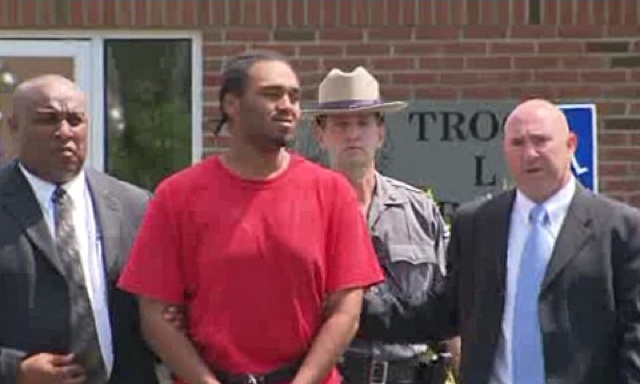
Pedro Jones, alleged infant killer, heads to court
Shinnecock Indian Reservation, outside Riverside, Long Island – A 20-year-old Southampton man is accused of killing his girlfriend’s toddler on August 1, 2010. Pedro Jones, who was babysitting the 17-month-old tot, allegedly grabbed him by the neck and punched him repeatedly with his closed fist “to toughen him up,” the batterer said, in order to make the child “act like a boy and not a girl.” Roy Antonio Jones III, the victim (no relation to his assailant though they share the same surname), went into cardiac arrest and died as a result of his injuries late on Sunday evening. His mother, Vanessa Jones, had left her child in the care of her boyfriend to visit her cousin for about an hour, according to family sources. Ms. Jones said that she had no knowledge that her lover had ever hit the baby before. Jones has been charged with first-degree manslaughter in the slaying, a charge that carries a maximum of 25 years in prison. He has pled not guilty to the charge, and is being held in Suffolk County Jail without bail. NewsOneOriginal reports that Pedro Jones told police he had never hit the toddler “that hard before.” “A one-time mistake and I am going to do 20 years,” he said. Jones is not a member of the Shinnecock Nation as is the infant’s mother, whom the alleged killer said he intended to marry. Her family hopes that Jones will receive a much harsher sentence than incarceration for 20 years. The grandmother of the dead child confronted Jones who was in custody at Southampton Town Court, and shouted at him, “You killed my grandson! I hope you rot in hell!” On Monday night, August 2, approximately 100 members of the Shinnecock Nation gathered to mourn the killing of the infant. “People expressed the need to come together to love one another, to tighten the gap in our community so this doesn’t happen again,” Ms. Donna Collins-Smith, the great aunt of the victim, said to The Southampton Press. “Basically, we’re trying to come together as a family and do the best we can.” The horror of this killing has shocked many around the nation. Jones was apparently so irrationally irritated by behavior patterns in the tot he believed were effeminate that he took matters into his own hands to beat the girlishness out of him. Because the victim was perceived to be gender-variant, the attack was a sexual hate crime according to many commentators. Michael Rowe wrote for the Huffington Post: “The beating death of 17-month-old Roy Jones was no less a hate crime because the victim was a baby. Whether he would have grown up to be gay, or transgender, or just a gentle, sweet-natured straight boy, was still many years away. More, it was irrelevant.” As the Unfinished Lives Project has reported repeatedly, violent crimes against gender non-conforming people of color, especially young boys of color who present femininely, have reached alarming levels in our country. They are among the most vulnerable members of our society, and are paying a terrible price for the irrational hatred of men (and some women!) who feel they must use violence to enforce heterosexist male stereotypes. Baby Roy will never have a chance to show the world who he was becoming. Instead of making him socially acceptable in a hyper-masculine world, the man who said he loved the child, “loved” him to death.
Gays Murdered at 2nd Highest Level in a Decade
 New York, New York – Anti-gay hate crime murders reported for 2009 spiked up to the second highest level in a decade, according to the recent Hate Crimes Statistics Report of the National Coalition of Anti-Violence Programs (NCAVP). The press release in its entirety may be found here. 22 murders of LGBT people were reported by law enforcement agencies around the nation last year. Communities of color and transgender persons were the hardest hit, a grim trend to watch carefully in the coming months. 79% of anti-gay murder victims were people of color, and the majority of them were transgender women. The vast majority of attackers were men (77%) and were strangers to the victims they attacked (40%). Community United Against Violence’s Maria Carolina Morales noted in a conference call with the Bay Area Reporter that there continues to be “severe and persistent violence” against LGBTQ communities.” Ms. Morales, based in San Francisco, emphasized that “people of color, transgender women, and others continue to be disproportionately targeted for violence.” The report of the NCAVP shows that the highest incidence of physical attacks against LGBTQ people took place in October 2009 to coincide with the passage of Federal Hate Crimes legislation, the James Byrd, Jr. and Matthew Shepard Hate Crimes Prevention Act. The heightened media profile of the gay community is thought to account for the spike in numbers. As the press release states, there is a troubling correlation between “increased visibility and increased vulnerability.” Another alarming finding is that though the total of 2009 anti-gay hate crimes reports has dropped around 12% over the previous year, the NCAVP believes this does not mean that the actual numbers of physical bias attacks lessened last year. The drop took place because of cut-backs in funding to support reporting at the state and local levels. Lisa Gilmore of Community United Against Violence, a San Francisco-based organization reporting in this year’s findings, told the Bay Area Reporter, “During the past year, NCAVP member organizations lost crucial staff and programming in the wake of the [national] fiscal crisis…We believe that this drastically limited the ability of LGBTQ people to report violence and access support.” The NCAVP report made several recommendations for the coming year, including restoring funding to local, state and federal anti-violence programs, community-initiated efforts, and deliberate and consistent inclusion of LGBTQ people in research studies.
Ball Bat Killer Guilty of Murder As A Hate Crime in Brooklyn

Keith Phoenix Found Guilty
Brooklyn, NY – Just seven hours after the jury was sequestered on Monday, José Sucuzhañay’s prime attacker, Keith Phoenix, was found guilty of second-degree murder as a hate crime. When he is sentenced on August 5, Phoenix will face a possible 25 years to life in prison for his role in bludgeoning Sucuzhañay to death with an aluminum baseball bat on December 7, 2008 in the Bushwick section of Brooklyn. City officials and the Sucuzhañay family expressed relief and satisfaction with the verdict. The first trial was aborted when a holdout juror refused to co-operate with the process, alarming both the immigrant rights and LGBTQ communities that Phoenix might squeak through the legal system with little or no punishment for one of the most brutal hate crimes in recent New York history. Phoenix’s accomplice, Hakim Scott, was found guilt of manslaughter and aggravated assault on May 6, but escaped the hate crime enhancement when the jury set aside the charge. The Scott decision drew a storm of criticism, so the eyes of many were focussed on what the jury would do in the Phoenix case. As reported by the NY Post, José’s brother, Diego Sucuzhañay, standing at the corner of Bushwick Avenue and Kossuth Place, now renamed “Sucuzhañay Place” in memory of his brother, congratulated the jury for its work. “We were afraid we would not get justice. The first time the mistrial and our family had to go through this process, this painful process. But we wanted justice for the death of our brother,” he said, with his other brother Romel standing beside him. Also quoted in the Post, Brooklyn District Attorney Charles Hynes said, “Just hours after this horrible tragedy, I came to this location and I pledged that the people who did this horrible thing to Jose would be found be convicted and the only way they would come out of prison would be in a box. I’m here today to reaffirm that,” the D.A. concluded. For his part, Phoenix, 30, who had not expressed any remorse for what he did, was taken aback by the verdict, according to the Gay City Times. “I think he’s kind of surprised by this result,” Philip J. Smallman, Phoenix’s attorney, said of his client, following the announcement of the verdict. Phoenix never entertained the thought that he would be convicted of a hate crime. Smallman has declared that he intends to appeal the verdict on Phoenix’s behalf. Because Scott and Phoenix targeted José and Romel for being “Spanish” and “faggots” as they huddled together against the Brooklyn winter, the case drew together two unusual groups of allies, immigrants’ rights advocates and LGBTQ human rights activists. Though the Sucuzhañay brothers are heterosexual, mistaking their sexual orientation as gay has helped sensitize the Latino/a community to the shared sense of injustice experienced by LGBT people in the United States and Ecuador.
Hate Crime Murder Trial Resumes in Brooklyn

Keith Phoenix: "So I killed a man? Does that make me a bad person?"
Brooklyn, NY – Keith Phoenix, alleged murderer of Ecuadoran immigrant José Sucuzhañay, is in a Brooklyn court again after a mistrial. Phoenix and his co-attacker, Hakim Scott, took offense at José and his brother, Romel, as they walked arm-in-arm on a freezing night in December 2008. Hurling epithets at the Ecuadorans for being Hispanic and “gay” (in fact, neither of the brothers are gay), Scott assaulted José with a beer bottle, and Phoenix allegedly delivered the coup de grace with an aluminum baseball bat. Scott received a sentence in the Spring for manslaughter, escaping hate crimes charges. When a juror in Phoenix’s first trial refused to continue, the judge in Brooklyn Supreme Court declared a mistrial. There seems little doubt that Phoenix is guilty. A toll booth camera caught the pair of assailants smiling and laughing as they fled the scene of the crime. Witnesses stand ready to testify again that the bat attack was so brutal and bloody the taxi driver witness had to avert his eyes from the scene. And Phoenix himself seems to be doing all he can to get himself convicted, too. In a confession taken by a detective at Phoenix’s arrest recorded the defendant as asking, “So I killed somebody. Does that make me a bad person?” Well, yes, as a matter of fact, it does, in the opinion of the Unfinished Lives Project Team. Critics of how the courts in Brooklyn have been handling this case look to the Phoenix trial as a way of redressing what appears to be a severe disrespect for Latin American immigrants and LGBT people. The main defense Phoenix is mounting is that too much alcohol led him to do what he did. He has yet to show any remorse for his actions. Keith’s attorney has suggested that his client feared that the victim might have a weapon in his waistband, and that José was the one who started the fight. When José M. Arrufat Gracia, the lawyer for the Sucuzhañay family heard these allegations, he said, “We definitely believe those allegations are insulting to the victims, alleging that the perpetrators were acting in self-defense.” Perhaps a prison term of decades will assist him to develop the self-restraint he could not exercize two years ago when he bludgeoned an innocent man to death, and the remorse for a hate crime he seems incapable of understanding today.
Ball Bat Attackers Immune from Hate Crimes Charges?: Authorities Backpedal on Anti-Gay Violence

Big Stick Combat photo
Dallas, TX – What does a midnight assault on two Dallas gay men Friday have in common with a December 2008 fatal attack on two Latinos mistaken as gay in Brooklyn, New York? Two things: first, both attacks were carried out by homophobes yelling anti-gay slurs as they swung baseball bats at the heads of their victims; and second, police in both cases classified neither assault as an anti-hate crime. What gives? What does it take to get officers of the law to prosecute hate crimes under existing hate crime statutes? While Dallas and Brooklyn are 1370 miles distant from each other and worlds apart culturally, they both have law enforcement resistant to investigate crimes against gay men as bias-motivated. The 2008 Brooklyn murder of José Sucuzhañay serves as an eerily familiar backdrop to the current Dallas attack on Kyle Steven Wear and his friend Alex. Like Dallasites Kyle and Alex, the Ecuadoran immigrant brothers José and Romel were walking together down the street in the wee hours of the night. The Brooklyn crime was carried out by two assailants swinging a broken beer bottle and an aluminum baseball bat, yelling anti-gay and anti-hispanic epithets. Trials in the Sucuzhañay case are proceeding right now in Brooklyn, where Hakim Scott has just been convicted of first-degree manslaughter, and his accomplice, Keith Phoenix, awaits an new court date since the New York judge dismissed all hate crimes charges and declared a mistrial because of a juror in the first Phoenix trial who refused to participate any further. The Brooklyn ball bat attack left José lingering five days in a coma from a broken skull before he died. The consensus of the supporters of Sucuzhañay family, outraged city officials, and the metropolitan New York media is that this ugly, brutal attack took place because Scott and Phoenix targeted two Hispanic men whom they mistook for gay because they didn’t like the way they looked. Wear and his friend Alex (last name still unreleased) were much more fortunate. As they walked along in the southwestern part of the Cedar Springs gay entertainment district in Dallas, “the gayborhood,” headed for the bars, four assailants only identified as Latinos wearing white tee-shirts, blindsided the pair shouting “Faggots, give us your fucking wallets!” according to WFAA News. Wear told WFAA on camera that he was knocked unconscious and his jaw was broken by one of the attackers swinging a ball bat. His friend, Alex, reported that he feared for his life as the homophobes forced him to the ground. The Dallas Police are refusing to classify the case as a hate crime, contending instead that the motive was to rob the gay men. But Alex isn’t buying it. He told Jonathan Betz of WFAA, “I still feel like that was why we were targeted in the first place, because we are gay. It was like it was funny to them.” John Wright of the Dallas Voice is outraged that the authorities have resisted investigating the Dallas ball bat assault as an anti-gay bias crime. In a May 16 post for the Dallas Voice blog, Instant Tea, he writes, “Despite the fact that the suspects yelled anti-gay slurs as they beat the victims with baseball bats, Dallas police have not classified the incident as a hate crime, which is an outrage.” Wright points out that Jimmy Lee Dean was nearly beaten and stomped to death in the same general neighborhood by two homophobic attackers in July 2008. Wright then shows that regardless of the refusal of Dallas law authorities to enforce Texas hate crimes law, federal hate crimes protections should kick in. The James Byrd, Jr. and Matthew Shepard Hate Crimes Prevention Act of 2009 classifies a hate crime as motivated in whole or in part by anti-LGBT bias. One major determining criterion of an anti-gay hate crime for the FBI is the use of epithets as the perpetrators carried out the crime. Anti-LGBT hate crimes are like the rest of life: seldom pure and simple. Other motives often accompany hate violence against gays, lesbians, and transgender persons: robbery, drugs, racism and sexism, to name a few. But homophobia and heterosexism, like a sinister bass line in a libretto, thread throughout all anti-LGBT hate crimes cases, targeting people who are assumed to be inferior, impure, and abominable because of their perceived sexuality. In Dallas and in Brooklyn, it seems baseball bats and anti-gay epithets are not enough to launch hate crimes prosecutions. Are anti-gay sluggers simply immune in Texas and New York? Again we ask, What does it take to get officers of the law to prosecute hate crimes under existing hate crime statutes? It takes an outcry from LGBT people and their allies so that law enforcement will not be permitted to backpedal on hate crimes against members of the sexual minority without a stink being raised to high heaven. If police and prosecutors are unfamiliar with what LGBT bias crimes are, they are responsible to educate themselves. If they are being intentionally obstructionist, then the mayor and the city council need to replace them with officials who will carry out the law.
Outrageous Verdict in the Sucuzhañay Hate Murder Case; Con Escapes Life Sentence
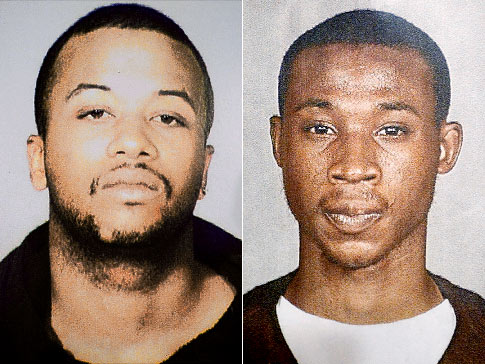
Keith Phoenix (l) and Hakim Scott (r) - NYPD mugshots
Brooklyn, NY – Testimony in Brooklyn’s Supreme Court corroborated Romel Sucuzhañay’s contention, that two young men attacked him and his brother, José Sucuzhañay, wielding a broken beer bottle and an aluminum base ball bat, screaming anti-Latino and anti-gay slurs. The assault left José with a broken skull. The Ecuadoran immigrant, 31 years old, living in the Bushwick section of Brooklyn, lingered in a coma for five days, dying just before his mother got to his bedside from Ecuador. Any reasonable person would call that a hate crime. Not the Brooklyn jury, however. They bought the defense line, that Hakim Scott, 26, was caught up in an unfortunate “escalating fight.” It did not seem to matter that a the prosecution established that Scott, who broke his beer bottle over José’s head before menacing Romel with the jagged glass, had dazed José to the point that his accomplice, Keith Phoenix, had an easy target as he lethally swung his bat. On May 6, the jury found Scott guilty, not of first or second degree murder and hate crime, but first degree manslaughter, allowing him to escape a life sentence for snuffing out an innocent man’s life. Scott and Phoenix didn’t like the Sucuzhañay brothers because they were Hispanic, and they appeared to be gay. While Scott will face a possible 40 years in prison for his manslaughter conviction when he is sentenced on June 9, it is hard not to say that there was a travesty of justice in this case. Now, because a juror refused to hear any more testimony in the Phoenix case, Judge Patricia Dimango has declared a mistrial, and the Sucuzhañay family and their supporters will have to wait further agonizing weeks to learn whether the 31-year-old ball bat perp will escape the full force of the law, too. Latinos, especially Ecuadorans, are outraged by the verdict. So are LGBT people. And justice has not been done for José Sucuzhañay. It seems that living at the intersection of two discriminations is very dangerous place to be in America.
Slain Ecuadoran’s Supporters Denounce One Brooklyn Verdict; Await Another
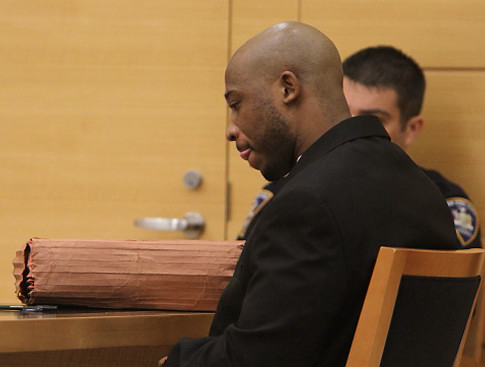
Hakim Scott listens to closing arguments in his trial for the murder of José Sucuzhañay (Ward photo for the Daily News)
Brooklyn, NY – Hakim Scott, 26, killer of Ecuadoran Immigrant José Sucuzhañay, escaped conviction for murder, but was convicted of manslaughter by a jury in Brooklyn Supreme Court on Thursday. No hate charge was sustained against Scott for the brutal slaying of the 31-year-old Sucuzhañay, who along with his brother Romel was mistaken as a gay man. The brothers were walking arm-in-arm against the cold early on December 7, 2008 in the Bushwick section of Brooklyn when Hakim and Keith Phoenix, hurling anti-gay and anti-hispanic epithets, attacked them with a beer bottle, their heavily shod feet, and an aluminum baseball bat. Family and friends of the victim swiftly denounced the verdict as soft and wrong-headed, according to several news sources. The New York Daily News reports that José’s brother Diego, vigorously maligned the verdict, saying, “There was testimony that these words of hate were used. We believe right now would have been a perfect time to send a message against hate, intolerism [sic] and racism.” On Friday, the Columbus, IN Republic interviewed Christine Quinn, speaker of the New York City Council, as she stood with Sucuzhañay’s three brothers outside the courthouse, “Look, two brothers were walking home. They weren’t bothering anybody. All of a sudden two guys jump out of a car and beat José and leave him for dead, calling him anti-gay and anti-immigrant names? That’s a hate crime,” she said. The Latin American Herald Tribune reported that Quinn further defined what kind of hate crime Sucuzhañay suffered: “Jose Sucuzhañay was murdered because Hakim Scott and Keith Phoenix did not like who he is and who they thought he was,” Quinn said. “And they attacked him, by all accounts, for no other reason than their hatred of the LGBT (lesbian-gay-bisexual-transgender) community and their hatred of Latinos and immigrants. That’s what killed Jose Sucuzhañay.” Quinn, Brooklyn Congresswoman Nydia Velazquez, and a number of other elected officials believe that the manslaughter verdict, which may entail a 25-year prison term for Scott, to be too lenient for such a savage killing. Diego, speaking for the Sucuzhañays on the courthouse steps during a Friday press conference, said, “The judicial system has failed to send a clear message. Our family still can’t understand how the jury has come to the conclusion that the attack on my brothers and the murder of José was not motivated by hate,” according to the LAHT. The trial of Keith Phoenix, who allegedly swung the bat so hard that it burst his victim’s skull, is still proceeding. The 30-year-old African American is being tried before a second jury seated in the same courtroom as the jury that convicted Scott of manslaughter. Phoenix is charged with murder and murder as a hate crime in the case. Members of the Scott jury who were willing to speak to the press speculated that Phoenix may likely be convicted of a hate crime for his part in the grisly bludgeoning of the Ecuadoran businessman. A verdict in his trial is expected sometime next week. As supporters await the Phoenix verdict, Walter Sinche, Director of the international Ecuadoran Alliance told a reporter for the Daily News, “Someday maybe we’ll get justice. Hopefully, these types of attacks will stop.”
About

If you are a first-time visitor to the Unfinished Lives Project website, we invite you to read A Welcome Message introducing you to our project. We are truly grateful for your visit.
The Unfinished Lives Project website is a place of public discourse which remembers and honors LGBTQ hate crime victims, while also revealing the reality of unseen violence perpetrated against people whose only “offense” is their sexual orientation, gender identity, or gender presentation. LGBTQ people in the United States are suffering a slow-rolling decimation of terror and murder all across the country. Every locale and demographic of society are affected: First Nations, Anglo, Black, Latino and Latina, South and Southeast Asian, Transgender, Bisexuals, Gay men, Lesbians, disabled, young, and mature. Homophobia has a long, crooked arm, and it is reaching out to snatch the life away from women and men whose tragic stories are under-reported to begin with, and whose memories are swiftly forgotten.
The horror of these killings transcends the shock and bereavement of loved ones and friends. These are not typical homicides; they are not killings for money or drugs, incidents of domestic strife, or crimes of passion. The vicious nature of hate crimes against LGBTQ persons is extremely brutal, grotesquely violent, and egregiously hateful.
Each murder serves the LGBTQ population as a sobering warning about the actual level of danger in our communities. The message these killings send is that freedom and open life for LGBTQ people is a cruel dream. Every time we remember one of these victims, however, the intentions of their killers are frustrated. To remember these women and men is to begin the process of changing the culture that killed them.
Our Project Director
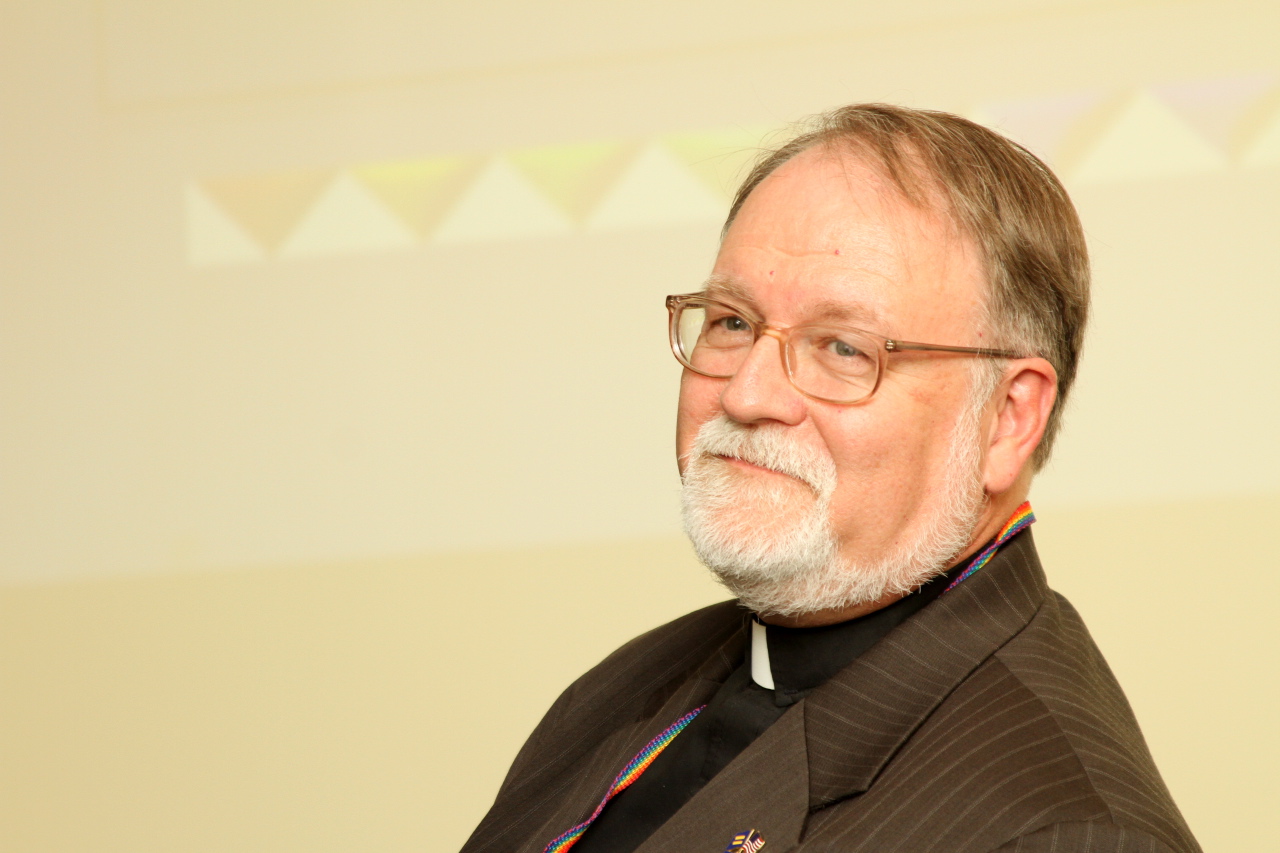
Dr. Stephen V. Sprinkle (Keith Tew photo).
Stephen V. Sprinkle is Director of Field Education and Supervised Ministry, and Professor of Practical Theology at Brite Divinity School, Fort Worth, Texas, a post he has held since 1994. An ordained Baptist minister, he is the first open and out Gay scholar in the history of the Divinity School, and the first open and out LGBTQ person to be tenured there. Read More…
Recent Social Justice Advocacy Activity By Dr. Sprinkle
 Summer 2009 – Dr. Sprinkle responded to the Fort Worth Police Department and Texas Alcoholic Beverage Commission Raid on the Rainbow Lounge, Fort Worth’s newest gay bar, on June 28, 2009, the exact 40th Anniversary of the Stonewall Rebellion. Dr. Sprinkle was invited to speak at three protest events sponsored by Queer LiberAction of Dallas. Here, he is keynoting the Rainbow Lounge Protest at the Tarrant County Courthouse on July 12, 2009. Read More…
Contact Us
Communicate with the Unfinished Lives project team:
info@unfinishedlivesblog.com


Schedule a Presentation
Dr. Sprinkle will gladly present his acclaimed presentation to your organization. To arrange an Unfinished Lives presentation for your organization or group, please contact us.
Dr. Sprinkle has given his Unfinished Lives presentation to these and other community groups and organizations. Read More…
-

Where are our readers?
Publisher: Steve Sprinkle (Project Director)
Steve Sprinkle
Unfinished Lives: Remembering LGBT Hate Crime VictimsBrite Divinity School/Texas Christian UniversityFort Worth TXprofessor, minister, author, blogger, LGBTQ advocate


Follow Unfinished Lives on Facebook
 Box Turtle Bulletin
- An error has occurred; the feed is probably down. Try again later.
- HRC Back Story
- Know About The Gender Identity Movement
- Why Is There A Need For Human Rights?
- Kinds Of Human Rights
- Human Rights Purposes And Violations
- Human Rights For Every Human Incident
- 8 Reasons Human Rights Are Important
- Everything About Human Rights
- Human Rights Issues Education & Law
- We Need To Stand Up For Our Rights And Those Of Others
- Coca-Cola Receives Perfect Score On Human Rights
- The Advocate: Daily News
- ACIP government vaccine panel meeting postponed after judge voids RFK Jr.’s appointments
- Judge hints at federal class action, orders DOJ evidence in trans military ban case
- Judge blocks RFK Jr.’s dangerous vaccine policy changes. Ex-CDC leader calls it ‘big news’
- Trans editor sues DreamWorks over harassment on ‘Bad Guys 2’
- Trump reveals GOP congressman’s ‘terminal’ medical diagnosis at Kennedy Center meeting
- Trans tech executive could become first out officeholder in western Tennessee
- White House press secretary ties voting bill to unrelated anti-trans Trump agenda in Fox News appearance
- Advocate newsletter 3/16/26
- How a teacher and her students are bringing queer equality to Wikipedia
- Trump says Iran throws gays off buildings after trying to deport same-sex couple there
- Dallas Voice: Instant Tea
- An error has occurred; the feed is probably down. Try again later.

 Unfinished Lives