Milwaukee Trans Woman “+” Brutally Shot to Death in the Street

Chanel Larkin, FORGE photo
Milwaukee, Wisconsin – A struggle for the assailant’s .357-caliber pistol ended savagely for a Milwaukee trans woman of color on May 7. Chanel Larkin (née Dana A. Larkin), 26, was shot three times in the head by a man who allegedly picked her up for sex, and offered her $20 to turn a trick. Authorities contend that Andrew Olacirequi, who was cruising the vicinity for a prostitute, shot Larkin three times in the head when Larkin revealed to him that she was biologically male, according to EDGE Boston. Larkin’s lifeless body was found on the sidewalk along North 23rd Street. Olacirequi was arrested later than night at the scene of the crime when he returned to find a lost cell phone. Law enforcement has charged him with first-degree reckless homicide and use of a deadly weapon. EDGE reports that he could face up to 65 years in prison for the crimes. As is so often the situation in transphobic murder cases, law enforcement and media follow the sensational and freakish imaginings of the general public rather than seeking to learn about the real lives lost and the human struggles that trans people face every day of their lives in biased communities. Michael Silverman, executive director of the Transgender Legal Defense and Education Fund, said to EDGE, “The media matters and phrases like ’cross-dressing prostitute’ are loaded terms playing to a victim-blaming stereotype or a ’transgender panic’ defense,” Silverman explained. “These types of stories play into the cultural stereotype of transgender people somehow committing fraud or trying to trick people, none of which is true.” Michael Munson, Executive Director of FORGE, (For Ourselves: Reworking Gender Expression), has worked tirelessly to express Chanel Larkin’s story to the media in a sensitive and meaningful way, pointing out that Ms. Larkin, who had identified as a woman since her mid-teens, was a vital young trans woman of color who never deserved to die at the hands of transphobic violence. Munson and FORGE decry the way some mainstream media have mis-characterized Ms. Larkin as “a man posing as a woman.” She was a trans+ person, according to FORGE standards of address. “People are much more complex than a set of words and labels,” the FORGE website points out. “‘+’ indicates an expansiveness that words cannot capture, recognizing and welcoming the beautiful diversity within our community.” Chanel Larkin was beloved of her family, especially her siblings and her grandmother. Over 200 people attended her funeral on May 14, and the trans+ community, as well as the African American, LGBT and entertainment communities are bereaved and deeply affected by her passing. Ms. Larkin’s story is all-to-familiar on the mean streets of America. She lived at the crossing point of oppressions: female, trans, black, and poor. At some point, she resorted to sex work to pay her bills and make a living in a down economy that set the background for the violence she had to risk every day of her too-short life. Speaking to EDGE, Brenda Coley, a staff member at Diverse and Resilient who knew Ms. Larkin, said, “We have to stand up as a [LGBT] community and speak out against this. I hope we’ll see how we’re all really connected and how the problems a person or group of people face are not walled off within that group but permeate through the whole society. None of us are free if some of us are not,” Coley added. “These are not throw-away members of our community. These are precious lives.” Chanel Larkin was not responsible for her death. She fought to live when her alleged assailant pulled his gun on her. She also fought to survive as an authentic person amidst an epidemic of anti-trans violence in a state that has never applied its hate crime statute to any LGBT person, according to activists in Milwaukee. Pressure from trans and LGBT advocates is mounting on the district attorney to designate her murder as a hate crime, and to prosecute her alleged murderer as a hate-killer under the law. But the ongoing struggle for justice in Milwaukee and around the country will continue to be against poverty, racism, sexism, and prejudice against trans people, whether it comes from the straight or the gay community. Chanel Larkin is beyond harm now. It remains for the living to struggle in her name against the fear and injustice that took her life and the lives of hundreds like her around the world.
Ball Bat Attackers Immune from Hate Crimes Charges?: Authorities Backpedal on Anti-Gay Violence

Big Stick Combat photo
Dallas, TX – What does a midnight assault on two Dallas gay men Friday have in common with a December 2008 fatal attack on two Latinos mistaken as gay in Brooklyn, New York? Two things: first, both attacks were carried out by homophobes yelling anti-gay slurs as they swung baseball bats at the heads of their victims; and second, police in both cases classified neither assault as an anti-hate crime. What gives? What does it take to get officers of the law to prosecute hate crimes under existing hate crime statutes? While Dallas and Brooklyn are 1370 miles distant from each other and worlds apart culturally, they both have law enforcement resistant to investigate crimes against gay men as bias-motivated. The 2008 Brooklyn murder of José Sucuzhañay serves as an eerily familiar backdrop to the current Dallas attack on Kyle Steven Wear and his friend Alex. Like Dallasites Kyle and Alex, the Ecuadoran immigrant brothers José and Romel were walking together down the street in the wee hours of the night. The Brooklyn crime was carried out by two assailants swinging a broken beer bottle and an aluminum baseball bat, yelling anti-gay and anti-hispanic epithets. Trials in the Sucuzhañay case are proceeding right now in Brooklyn, where Hakim Scott has just been convicted of first-degree manslaughter, and his accomplice, Keith Phoenix, awaits an new court date since the New York judge dismissed all hate crimes charges and declared a mistrial because of a juror in the first Phoenix trial who refused to participate any further. The Brooklyn ball bat attack left José lingering five days in a coma from a broken skull before he died. The consensus of the supporters of Sucuzhañay family, outraged city officials, and the metropolitan New York media is that this ugly, brutal attack took place because Scott and Phoenix targeted two Hispanic men whom they mistook for gay because they didn’t like the way they looked. Wear and his friend Alex (last name still unreleased) were much more fortunate. As they walked along in the southwestern part of the Cedar Springs gay entertainment district in Dallas, “the gayborhood,” headed for the bars, four assailants only identified as Latinos wearing white tee-shirts, blindsided the pair shouting “Faggots, give us your fucking wallets!” according to WFAA News. Wear told WFAA on camera that he was knocked unconscious and his jaw was broken by one of the attackers swinging a ball bat. His friend, Alex, reported that he feared for his life as the homophobes forced him to the ground. The Dallas Police are refusing to classify the case as a hate crime, contending instead that the motive was to rob the gay men. But Alex isn’t buying it. He told Jonathan Betz of WFAA, “I still feel like that was why we were targeted in the first place, because we are gay. It was like it was funny to them.” John Wright of the Dallas Voice is outraged that the authorities have resisted investigating the Dallas ball bat assault as an anti-gay bias crime. In a May 16 post for the Dallas Voice blog, Instant Tea, he writes, “Despite the fact that the suspects yelled anti-gay slurs as they beat the victims with baseball bats, Dallas police have not classified the incident as a hate crime, which is an outrage.” Wright points out that Jimmy Lee Dean was nearly beaten and stomped to death in the same general neighborhood by two homophobic attackers in July 2008. Wright then shows that regardless of the refusal of Dallas law authorities to enforce Texas hate crimes law, federal hate crimes protections should kick in. The James Byrd, Jr. and Matthew Shepard Hate Crimes Prevention Act of 2009 classifies a hate crime as motivated in whole or in part by anti-LGBT bias. One major determining criterion of an anti-gay hate crime for the FBI is the use of epithets as the perpetrators carried out the crime. Anti-LGBT hate crimes are like the rest of life: seldom pure and simple. Other motives often accompany hate violence against gays, lesbians, and transgender persons: robbery, drugs, racism and sexism, to name a few. But homophobia and heterosexism, like a sinister bass line in a libretto, thread throughout all anti-LGBT hate crimes cases, targeting people who are assumed to be inferior, impure, and abominable because of their perceived sexuality. In Dallas and in Brooklyn, it seems baseball bats and anti-gay epithets are not enough to launch hate crimes prosecutions. Are anti-gay sluggers simply immune in Texas and New York? Again we ask, What does it take to get officers of the law to prosecute hate crimes under existing hate crime statutes? It takes an outcry from LGBT people and their allies so that law enforcement will not be permitted to backpedal on hate crimes against members of the sexual minority without a stink being raised to high heaven. If police and prosecutors are unfamiliar with what LGBT bias crimes are, they are responsible to educate themselves. If they are being intentionally obstructionist, then the mayor and the city council need to replace them with officials who will carry out the law.
Hoosier Gay Man Beaten To Death
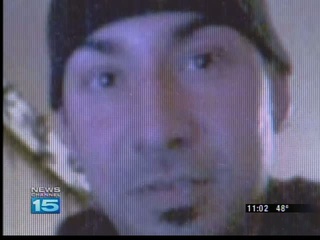 Fort Wayne, IN – A gay man described as “a kind and gentle soul” was kicked and beaten to death at a birthday party in Huntertown early on Sunday morning. Paul Michalik, 36, was found dead on the lawn of Brian Paul Brothers, 34, according to reports on Wane.com. The Allen County Coroner has ruled that a blow to Michalik’s head was the cause of death. Michalik, a popular and well liked employee at a local spa and salon, went to the party in the wee hours of Sunday morning at the Brothers’ home with a mutual friend, Jerry Lee Chambers. At some point in the party, Brothers ferociously attacked both Michalik and Chambers for causes that are still under investigation, and while law enforcement officials have not yet formally charged Brothers in the fatal incident, Chambers says that he attacked them because they were gay. In what Brothers told police was “an all out altercation,” he admitted hitting Michalik multiple times in the head, face, and body, and kicking him multiple times, as well. In his statement to police, Chambers said that he tried to get Michalik outside the house while Brothers rained punches at his head and face, and delivered blows to his body. Brothers allegedly turned on Chambers, too, so severely that Chambers had to “play dead” to avoid further injury. While he was on the floor playing dead, Chambers said that he could hear air expelling from Michalik’s body as Brothers kicked him repeatedly in the ribs. After Brothers’ rage finally exhausted, Chambers says that he and Brothers carried Michalik’s unresponsive body out on the lawn in the darkness. Brothers allegedly went back into his house, leaving the dying man on the grass without calling for medical help for either of his victims. At 4 a.m., police responded to a call from the Huntertown address, and found Chambers wounded and Michalik dead. Reflecting on the severity of the attack, Dr. Jeannie DeClementi, an assistant professor of psychology at IPFW, and a human rights advocate, told Wane.com, “That’s an enormous amount of rage behind that. That’s pretty incredible. When you put it together with the amount of rage and with the violence of the crime, and you add that up with the fact that the victim is gay, I think you have to consider that [the attack was a hate crime],” said DeClementi. A co-worker of Brothers who attended the party but refused to go on camera said to News 15 that the fight started because Chambers and Michalik kept making homosexual passes at guests, and refused to leave the house. This type of accusation, claiming that the victim of an anti-LGBT hate crime is somehow responsible for the violence visited on him, is called the “gay panic defense,” a tactic that is familiar in hate crimes cases across the nation, but has largely been discredited in courts of law. Indiana’s News Center has learned that Brothers will be formally charged on Thursday. He is currently being held without bond on a probation violation charge. Brien McElhatten and Scott Sarvay of the News Center report, “While Indiana has no specific hate crime legislation, President Obama signed a federal law into action in 2009 making criminal acts motivated by sexual orientation a federal crime. However, federal charges will not come into play, because the offender must cross state boundaries in the process of committing the crime, according to Huntington County Prosecutor Amy Richison.” The prosecutor will have to make the determination whether to charge Brothers with a hate crime.
Puerto Rican Teen Killer Pleads Guilty, Gets 99 Years for Hate Murder

Jorge Steven López Mercado
Caguas, Puerto Rico – In a stunning development, Juan José Martínez Matos, sole suspect in the “Silence of the Lambs style” butchery of gay teenager, Jorge Steven López Mercado, pled guilty to murder during a hearing today. Michael Lavers, news editor of EDGE Boston broke the story in the U.S. blogosphere. Though Martínez Matos was to stand trial for the grisly November 2009 murder on May 17, he entered the guilty plea to bring judicial proceedings to an end. Lavers reports, “Martínez told the court he understood the consequences of his actions, and Judge Miriam Camila Jusino immediately sentenced him to 99 years in prison.” Investigators believe that Martínez Matos stabbed the gender-non-conforming López Mercado to death before decapitating and dismembering the body which he then attempted to immolate on a lonely roadside near the mountain village of Cayey on November 12, 2009. News of the horrible murder swept the island, and shocked thousands on the U.S. mainland. Scores of vigils and demonstrations called upon Puerto Rican authorities to invoke a hate crimes statute never used to protect LGBT people, though it was written for that purpose in 2002. The blatant homophobia of the crime was confirmed by Martínez Matos when he confessed today that he hated gay people, but had offered to exchange cocaine for sex with the gay youth. According to the Associated Press, Attorney Celimar Gracia, representing Martínez Matos, told Primera Hora newspaper that prosecutors dropped several weapons-violation charges in exchange for the plea. In the best interests of his client, he said, this was the best way to bring this case to a close. LGBT human rights advocates feared that the religiously conservative Puerto Rican public would be swayed by the introduction of the “homosexual panic” defense by Martínez Matos. The suspect contended that he was “cruising for sex” in an area known for prostitution when he met the gay teen, whom Martínez Matos claimed he thought was a woman. 365gay reported in November that when López Mercado’s murderer learned the youth was actually gay, he “flashed back” to a homosexual rape he had reportedly suffered while in prison on an earlier charge, and killed the boy out of uncontrolled rage. When the “homosexual panic” strategy seemed not to catch hold sufficiently in the media, Martínez Matos’ defense team requested and got a psychological evaluation of their client to determine if he was mentally fit to stand trial. It was determined that he was indeed sane and able to stand trial for the slaying. The López Mercado murder is easily the most notorious anti-LGBT hate crime killing in Puerto Rico’s history, and supporters of the youth’s family did not want the murderer to escape justice by putting the blame upon Jorge Steven for his own death. The dramatic confession in Caguas today removed that possibility. Pedro Julio Serrano, representing the National Gay and Lesbian Task Force in Puerto Rico, a leading LGBT rights advocate, told the AP that there was not a dry eye in the courtroom when the guilty plea was entered. “Nothing is going to bring Jorge Steven back, but today, a bit of justice was done,” Serrano said. Primera Hora, according to Lavers of the EDGE, reported that the slain gay teen’s parents, Miriam Mercado and Juan López, reached out to their son’s murder with words of faith. Full of emotion, López Mercado said, “I want to send a message to Juan (Casper) and tell him there is hope in Christ. The Lord has forgiveness for him, irregardless of what has happened. God has a plan for him if he opens his heart to Christ. God will forgive him also.” Speaking to the EDGE, Pedro Julio Serrano commented on the confession today, saying, “The [López Mercado] family is sending a powerful message to the world of the love that conquers hate. It was very emotional and it brings some closure, but those wounds will never heal.” In his official statement as spokesperson for the National Gay and Lesbian Task Force, and Founder of the human rights organization Puerto Rico Para Tod@s, Serrano summed up the importance of the Martínez Matos confession, its impact on the family and friends of the slain gay youth, and the task remaining for people who struggle against homophobia and transphobia in the U.S. Territory: “This was a brutal crime, and today’s developments have been very emotional for Jorge Steven’s family and friends, as well as to the entire lesbian, gay, bisexual and transgender community in Puerto Rico. While the guilty plea and sentencing bring some closure, these wounds will never heal for those who knew and loved Jorge Steven. Yet, despite how heart-wrenching this has all been, Jorge Steven’s family has been so loving and strong; they have been and continue to be a symbol of love conquering hate. This has inspired me and so many others in our work to keep this from happening again.”
Slain Ecuadoran’s Supporters Denounce One Brooklyn Verdict; Await Another
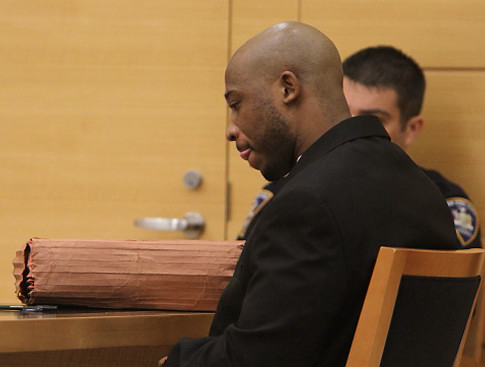
Hakim Scott listens to closing arguments in his trial for the murder of José Sucuzhañay (Ward photo for the Daily News)
Brooklyn, NY – Hakim Scott, 26, killer of Ecuadoran Immigrant José Sucuzhañay, escaped conviction for murder, but was convicted of manslaughter by a jury in Brooklyn Supreme Court on Thursday. No hate charge was sustained against Scott for the brutal slaying of the 31-year-old Sucuzhañay, who along with his brother Romel was mistaken as a gay man. The brothers were walking arm-in-arm against the cold early on December 7, 2008 in the Bushwick section of Brooklyn when Hakim and Keith Phoenix, hurling anti-gay and anti-hispanic epithets, attacked them with a beer bottle, their heavily shod feet, and an aluminum baseball bat. Family and friends of the victim swiftly denounced the verdict as soft and wrong-headed, according to several news sources. The New York Daily News reports that José’s brother Diego, vigorously maligned the verdict, saying, “There was testimony that these words of hate were used. We believe right now would have been a perfect time to send a message against hate, intolerism [sic] and racism.” On Friday, the Columbus, IN Republic interviewed Christine Quinn, speaker of the New York City Council, as she stood with Sucuzhañay’s three brothers outside the courthouse, “Look, two brothers were walking home. They weren’t bothering anybody. All of a sudden two guys jump out of a car and beat José and leave him for dead, calling him anti-gay and anti-immigrant names? That’s a hate crime,” she said. The Latin American Herald Tribune reported that Quinn further defined what kind of hate crime Sucuzhañay suffered: “Jose Sucuzhañay was murdered because Hakim Scott and Keith Phoenix did not like who he is and who they thought he was,” Quinn said. “And they attacked him, by all accounts, for no other reason than their hatred of the LGBT (lesbian-gay-bisexual-transgender) community and their hatred of Latinos and immigrants. That’s what killed Jose Sucuzhañay.” Quinn, Brooklyn Congresswoman Nydia Velazquez, and a number of other elected officials believe that the manslaughter verdict, which may entail a 25-year prison term for Scott, to be too lenient for such a savage killing. Diego, speaking for the Sucuzhañays on the courthouse steps during a Friday press conference, said, “The judicial system has failed to send a clear message. Our family still can’t understand how the jury has come to the conclusion that the attack on my brothers and the murder of José was not motivated by hate,” according to the LAHT. The trial of Keith Phoenix, who allegedly swung the bat so hard that it burst his victim’s skull, is still proceeding. The 30-year-old African American is being tried before a second jury seated in the same courtroom as the jury that convicted Scott of manslaughter. Phoenix is charged with murder and murder as a hate crime in the case. Members of the Scott jury who were willing to speak to the press speculated that Phoenix may likely be convicted of a hate crime for his part in the grisly bludgeoning of the Ecuadoran businessman. A verdict in his trial is expected sometime next week. As supporters await the Phoenix verdict, Walter Sinche, Director of the international Ecuadoran Alliance told a reporter for the Daily News, “Someday maybe we’ll get justice. Hopefully, these types of attacks will stop.”
Remembering the Mothers of Our Dead: A Special Comment

Pat Mulder at her son Ryan's graveside (photo credit unknown)
Mother’s Day is just around the corner. For the women who have lost children to the unreasoning hatred of LGBT hate crimes, this may be the most trying holiday of the year. Perhaps it is because I have met so many of them in the course of my travels and research, but I feel a particular debt of gratitude for the courage and loving tenacity of such great women, everyday, of course, but on this day of the year most of all. I cannot tell you how much I admire these mothers, and the other women related by blood ties and choice to the women and men who died because of hatred. All of them: the ones who kept their griefs private and out of the public eye, as well as those who found their voices to speak out for justice and against hate. But is especially for those mothers and grandmothers, aunts and sisters who have become advocates for us that I feel a keener debt of gratitude. None of these remarkable women dreamed they would ever become advocates for LGBT rights. Outrageous fortune and the deeds of malevolent ignorance forced them to face the worst prospect a mother could possibly face: the loss of a child to hate crime violence. All they wanted to do was grow old loving the children they brought into the world. But the long, crooked arm of homophobia and transphobia reached into their family circles and broke those circles apart. One by one, these brave women have found their voices, raised them in courtrooms, on the steps of city halls, in PFLAG meetings, at Pride events and vigils, before the glare of television klieg lights, and in the halls of Congress. These are the redoubtable women who refuse to let us forget their children, and refuse to let themselves or us rest until justice for everybody’s child finally comes to pass in this nation. They are the staunchest allies the LGBT community has, becoming the mothers of queer kids everywhere. Since they come from out of every class, religious tradition, ethnic background, status cohort, racial group, and region of the country, no single woman can possibly sum up them all. But when Elke Kennedy speaks out in South Carolina for her son, Sean, when Pauline Mitchell appeals to us not to forget her two spirit boy, F.C. in her Navajo gentleness, when Billy Jack Gaither’s sister Kathy Jo pushes her scooter chair toward the podium in Montgomery, Alabama, and when Pat Kuteles refuses to let the U.S. Army get off lightly for the death of her dear Barry, somehow all the women united by such pain gather with them and stand beside them. When Sylvia Guerrero, mother of transwoman Gwen Araujo, spoke in October 2009 on what would have been her daughter’s 25th birthday, she called upon us to honor our LGBT dead by reaching out to bring about a better world, “Light a candle, release a balloon, or do a good deed for someone less fortunate than yourself. Thank you for keeping [Gwen’s] memory alive after 7 years” (Examiner.com). The least that we can do is to honor the witness of these remarkable women by joining the struggle of justice and remembrance ourselves…and then one thing more. We can reach out to these women with our love, as a Psychology Today article suggests we do: “People get so uncomfortable and often feel the need to ‘error on the side of caution’ so as to not upset the person they care so much about. This, however, often leaves the mom simply feeling forgotten. A card, a phone call – even an email – wishing her a happy Mother’s Day can go farther than you could ever know. While she’s on her own path of redefining where she now “fits” on this day, you are helping her to know. She fits where every other mother fits – in the spotlight. She’s still a mom, and she still needs to know that she is viewed this way by everyone else.”
Pat Mulder, Ryan Skipper’s mom, once told me that for a grieving mother who buried her slain child, “there is no closure.” She and her husband, Lynn, soldier on, turning their sorrow into advocacy, wrapping their arms around gay and lesbian kids wherever they go to let them know everyone deserves to be remembered and loved. On this Mother’s Day, reach out to the women (and men} who have borne so much, and remind them with acts of loving kindness that like their children, they, too, are not forgotten. ~ Stephen Sprinkle, Director of the Unfinished Lives Project
Transphobic Attacker Slashes “IT” into Chest of Victim
 Long Beach, CA – A Cal State Long Beach graduate student who identifies as a transgender man was forced into a campus toilet stall on April 15 and had the word “IT” carved into his chest with a sharp instrument. The mystery attacker, depicted to the left in a police composite sketch, approached his mark in a men’s toilet on the west side of the campus at around 9:30 pm. He somehow knew his victim’s name, asking if his name was “Colle.” When Colle Carpenter, a 27-year-old F to M graduate student, said yes, the attacker pushed his target into the stall, forcing him against the stall door. He grabbed Carpenter by the T-shirt, yanking it up over his head and exposing his bare chest, as reported by the Long Beach Press-Telegram. After slashing Carpenter, the assailant rushed form the scene, leaving his victim bleeding, shaken, and terrorized. The suspect, described as a 5-foot-10-inch, thin white male with light complexion and dark hair, has neither been identified nor apprehended as of this writing. He was wearing a dark hooded sweatshirt and dark khaki shorts, according to Rick Gloady, a spokesperson for CSULB. As the investigation has proceeded, some community organizations have criticized the university for not immediately releasing information about the attack to the press. Carpenter, however, defended the school’s actions to the L.A.Times blog, L.A.Now, “I’m aware the university has come under some criticisms regarding communications and response, in general,” he said. “But again, I feel that the administration’s response has been focused on the investigation and my wellbeing.” Scores of concerned students and townspeople gathered in support of Carpenter and all victims of transphobia on campus this past Thursday for a “Take Back the Night” march and rally. Carpenter, still recovering from his injuries and leaning on a cane, told the crowd that his attacker was motivated by hatred. The word carved into the flesh of his chest was chosen to demean him as a human being, trying to make him feel “less than human.” But his foe ultimately failed. “I am not less than human,” he told his supporters, “I am not more than or less than anyone standing here today.” Carpenter went on to say, “I know this did not just happen to me. This happened to every member of the community. Those of us who are visibly queer are scared. I have been terrified to come back to campus.” He concluded his remarks, “Thank you for helping me get through this.” Campus officials said that the slashing attack was a one-of-a-kind incident, and do not expect there to be another like it. Meanwhile, the manhunt continues for the transphobic suspect who signs his bigotry in the flesh and blood of his victims.
Grief and Outrage Over Transgender Murder in Puerto Rico

Ashley Santiago's family learns of her murder; Israel González photo for Prima Hora
Corozal, Puerto Rico – The Washington Post reports that scores of sobbing mourners wearing tee shirts emblazoned with the likeness of Ashley Santiago Ocasio attended her funeral Friday in the central mountain town of Corozal. Her mother, Carmen Ocasio, told reporters from Prima Hora that her 31-year-old transgender daughter had no enemies she was aware of, no one she could imagine taking her life. “I lost my daughter,” she said. “I’m in shock. Why would someone kill Ashley, why?” Authorities are still searching for a lead in the case, but as the LGBT community in Puerto Rico has come to expect, authorities have not invoked the 2002 hate crime statute that would send a convicted killer to prison for life. Though the drumbeat of pressure is mounting for prosecutors to apply the unused hate crimes law to LGBT victims, prospects for doing so in this case do not look promising. Pedro Julio Serrano, spokesperson for the National Gay and Lesbian Task Force in Puerto Rico, points out that five recent crimes should have been designated terror-attacks against not only the victims, but the entire LGBT population. Hate crimes against members of the sexual minority are “message-crimes,” meant to drive the LGBT community into fear and hiding. As Serrano notes, one of the five recent cases was the November 2009 decapitation, dismemberment, and immolation of gay teen Jorge Steven López Mercado in Caguas. A charge of first-degree murder has been filed against the youth’s alleged killer, but the hate crime statute has not been invoked even in a slaughter so gruesome as this. In the Santiago case, police are speculating that robbery may have been a motive in the slaying of the popular, attractive beauty salon owner. Two evidentiary aspects of the investigation so far seem to argue against a robbery motive alone, however. First, Ms. Santiago’s home showed no signs of breaking and entering. Someone she knew probably carried out the murder. Even though her automobile was taken from the scene, as Pedro Serrano observed to the Post, “The law is very clear and we’re asking authorities to investigate without prejudice. Even if Ashley’s death was also a robbery, there could be the angle of hate. We need that to be investigated,” Serrano emphasized to the Post. The chief investigator has promised to used the Puerto Rican hate crimes law “if the evidence warrants it.” The second aspect of the murder that suggests Serrano is right, that hate against Ms. Santiago was probably a factor is the extreme nature of the crime scene. There was so much blood, so widely pooled and spattered, that police believed from the beginning of the investigation that the victim had been stabbed multiple times, hardly likely for a robbery alone. The overkill typical of anti-LGBT crimes is clearly present in the Santiago slaying. The community of Corozal is stunned in the wake of their most notorious murder. Ms. Santiago was well-liked in town, confident that her transition was the fulfillment of herself as a person. She had commenced hormone therapy, and had undergone breast surgery, according to Serrano. The usually neglected Transgender Community on the Caribbean island paradise is waiting for a break in the case, and firmly demanding justice for their sister Ashley.
Brutal Stabbing Death of Puerto Rican Transwoman Possible Hate Murder
 Corozal, Puerto Rico – Ashley Santiago’s mother pressed police to investigate why she had not heard from her daughter since Sunday, April 18. When law enforcement entered Santiago’s home on April 19 in Corozal, a municipality just 25 miles southwest of San Juan, they found her naked body in a large pool of blood collapsed on the kitchen floor. She had been stabbed 14 times, according to the report of authorities to El Nuevo Día. Police also reported that they could not find Santiago’s 2009 Toyota Corolla parked outside her home. EDGE Boston picked up the story overnight, and has flashed it across the United States’ LGBT blogosphere. Santiago, 31, was a popular hair stylist at a local salon. Echoes of the savage dismemberment-killing of gay teen Jorge Steven López Mercado in November 2009 still reverberate around the island. His alleged murderer, Juan A. Martínez Matos, has yet to stand trial for the beheading, butchery, and attempted immolation of his victim. After several postponements, Martínez Matos is docketed to stand trial for the murder of López Mercado in Caguas on May 3. While law enforcement officials have not yet designated Santiago’s murder as a hate crime due to the perceived sexual orientation or gender identity and expression of the victim, LGBT activists across the region are calling on police to invoke Puerto Rico’s seldom-used hate crimes statute which covers anti-LGBT hate crimes. Pedro Julio Serrano, noted San Juan activist who represents the National Gay and Lesbian Task Force in Puerto Rico, told EDGE, “The authorities have a legal obligation to investigate this hate angle. We urge the police and the prosecutor to appropriately investigate this murder; to determine whether it was motivated by prejudice and if there is enough evidence to classify it as a hate crime at this moment.” As Transrespect Versus Transphobia, a TVT monitoring agency in Europe reports, a transperson’s murder is reported every third day throughout the world, on average. for the last year and a half. Authorities acknowledge, however, the deep under-reporting of the actual number of transphobic murders.
About
If you are a first-time visitor to the Unfinished Lives Project website, we invite you to read A Welcome Message introducing you to our project. We are truly grateful for your visit.
The Unfinished Lives Project website is a place of public discourse which remembers and honors LGBTQ hate crime victims, while also revealing the reality of unseen violence perpetrated against people whose only “offense” is their sexual orientation, gender identity, or gender presentation. LGBTQ people in the United States are suffering a slow-rolling decimation of terror and murder all across the country. Every locale and demographic of society are affected: First Nations, Anglo, Black, Latino and Latina, South and Southeast Asian, Transgender, Bisexuals, Gay men, Lesbians, disabled, young, and mature. Homophobia has a long, crooked arm, and it is reaching out to snatch the life away from women and men whose tragic stories are under-reported to begin with, and whose memories are swiftly forgotten.
The horror of these killings transcends the shock and bereavement of loved ones and friends. These are not typical homicides; they are not killings for money or drugs, incidents of domestic strife, or crimes of passion. The vicious nature of hate crimes against LGBTQ persons is extremely brutal, grotesquely violent, and egregiously hateful.
Each murder serves the LGBTQ population as a sobering warning about the actual level of danger in our communities. The message these killings send is that freedom and open life for LGBTQ people is a cruel dream. Every time we remember one of these victims, however, the intentions of their killers are frustrated. To remember these women and men is to begin the process of changing the culture that killed them.
Our Project Director
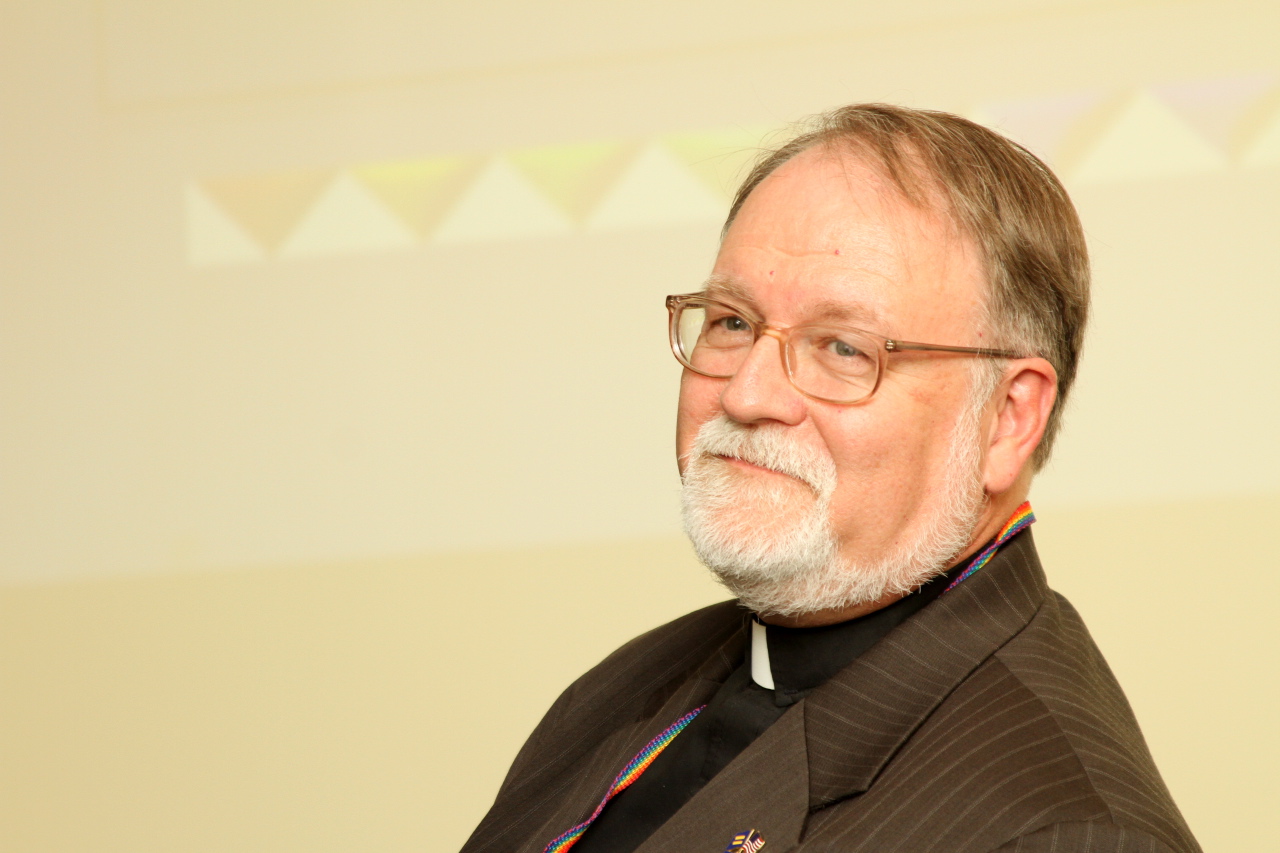
Dr. Stephen V. Sprinkle (Keith Tew photo).
Stephen V. Sprinkle is Director of Field Education and Supervised Ministry, and Professor of Practical Theology at Brite Divinity School, Fort Worth, Texas, a post he has held since 1994. An ordained Baptist minister, he is the first open and out Gay scholar in the history of the Divinity School, and the first open and out LGBTQ person to be tenured there. Read More…
Recent Social Justice Advocacy Activity By Dr. Sprinkle
 Summer 2009 – Dr. Sprinkle responded to the Fort Worth Police Department and Texas Alcoholic Beverage Commission Raid on the Rainbow Lounge, Fort Worth’s newest gay bar, on June 28, 2009, the exact 40th Anniversary of the Stonewall Rebellion. Dr. Sprinkle was invited to speak at three protest events sponsored by Queer LiberAction of Dallas. Here, he is keynoting the Rainbow Lounge Protest at the Tarrant County Courthouse on July 12, 2009. Read More…
Contact Us
Communicate with the Unfinished Lives project team:
info@unfinishedlivesblog.com


Schedule a Presentation
Dr. Sprinkle will gladly present his acclaimed presentation to your organization. To arrange an Unfinished Lives presentation for your organization or group, please contact us.
Dr. Sprinkle has given his Unfinished Lives presentation to these and other community groups and organizations. Read More…
-

Where are our readers?
Publisher: Steve Sprinkle (Project Director)
Steve Sprinkle
Unfinished Lives: Remembering LGBT Hate Crime VictimsBrite Divinity School/Texas Christian UniversityFort Worth TXprofessor, minister, author, blogger, LGBTQ advocate


Follow Unfinished Lives on Facebook
 Box Turtle Bulletin
- An error has occurred; the feed is probably down. Try again later.
- HRC Back Story
- Know About The Gender Identity Movement
- Why Is There A Need For Human Rights?
- Kinds Of Human Rights
- Human Rights Purposes And Violations
- Human Rights For Every Human Incident
- 8 Reasons Human Rights Are Important
- Everything About Human Rights
- Human Rights Issues Education & Law
- We Need To Stand Up For Our Rights And Those Of Others
- Coca-Cola Receives Perfect Score On Human Rights
- The Advocate: Daily News
- Eric Swalwell responds to sexual assault allegations in a to-camera video
- Eric Swalwell’s governor bid is collapsing as top Democrats turn on him
- What Melania Trump’s bizarre Jeffrey Epstein press event reveals about a White House in chaos
- New Bryon Noem bombshell puts Kristi Noem’s anti-trans politics under harsher spotlight
- Former Biden HHS leaders hail syphilis breakthrough as Trump dismantles the system behind it
- Advocate breaking news 4/10/26
- Pete Buttigieg hints at 2028 presidential run: ‘Save me a seat’
- Could Minneapolis welcome bathhouses back for the first time since the late 1980s?
- Donald Trump posts gruesome murder video to Truth Social
- Melania Trump blindsides White House aides with unexpected leap into Epstein scandal
- Dallas Voice: Instant Tea
- An error has occurred; the feed is probably down. Try again later.

 Unfinished Lives
Harvey Milk, Slain Gay Rights Pioneer, Honored Across the USA
Share this:
May 21, 2010 Posted by unfinishedlives | anti-LGBT hate crime murder, California, Harvey Milk Day, Politics, Popular Culture, Remembrances, Social Justice Advocacy, Special Comments, Uncategorized | anti-LGBT hate crime murder, California, Harvey Milk Day, Politics, Remembrances, Social Justice Advocacy | 1 Comment