Waymaking Gay Rights Pioneer, Frank Kameny, is Dead at 86.
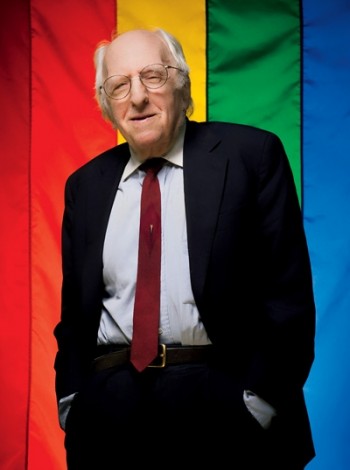 Washington, D.C. – Frank Kameny, pioneering gay rights advocate, is dead of natural causes at 86 years of age. The Dallas Voice and the Washington Blade reported the details of Kameny’s passing, and began the assessment of his leadership to the LGBTQ rights movement in the United States. A full decade before the Stonewall Uprising of 1969, Kameny was strategically planning and leading the nascent gay rights movement, along with a handful of other brave women and men. He co-founded the Washington, D.C. chapter of the Mattachine Society, the first gay rights organization in the nation’s capitol.
Kameny was a combat soldier in World War II, and used the G.I. Bill to earn a doctorate in astronomy from Harvard University after the war. He worked for the U.S. Army Map Service in the 1950s until his superiors learned he was gay, and fired him for it. Kameny contested the firing, taking his case all the way to the U.S. Supreme Court–making him the first person to bring a gay-related issue to the high court. The Supremes held in favor of the lower court, setting aside Kameny’s suit, but his experience before the court confirmed him as a lifelong gay rights activist. He launched the first gay rights demonstrations at the White House in 1965, and was the first gay person named to the D.C. Human Rights Commission.
Joe Solmonese, head of the Human Rights Campaign, said of him, “From his early days fighting institutionalized discrimination in the federal workforce, Dr. Kameny taught us all that ‘Gay is Good.’ As we say goodbye to this trailblazer on National Coming Out Day, we remember the remarkable power we all have to change the world by living our lives like Frank — openly, honestly and authentically.”
In later years, Kameny fell on hard times, running short of money for food and housing. Friends and activists spearheaded an effort to raise funds to make his later years more secure and worry-free. As the movement for LGBTQ rights evolved, Kameny became something of an artifact–honored for his role in the past, but paid less attention than he deserved, in the opinion of many. Recognition, however, came to him beyond any of the neglectfulness he suffered. A younger generation of activists discovered him, and celebrated him. Official notoriety came to him, as well. As the Washington Blade reported in another article detailing the response of the LGBTQ community to his passing: “In 2007, the Smithsonian Institution’s National Museum of American History included his picket signs from the White House demonstration. Papers documenting his life were added to the Library of Congress in 2006. In 2009, Kameny received the Theodore Roosevelt Award.”
I met Kameny at a 2009 wreath laying for Sgt. Leonard Matlovich at the Old Congressional Cemetery in Washington City. He spoke to the hundred or so in attendance on a beautiful October day, just prior to the National Equality March. He beamed with pride, recounting his days as a soldier in the U.S. Army, as an astronomer, and then as a fighter for our rights. Sitting with Rev. Troy Perry, the Founder of the MCC Church, Kameny was no museum piece. He was strong and determined to win 21st century freedoms for his people. In death, his influence and inspiration have every prospect of increasing with the passage of time.
So, Frank Kameny, student of the stars, passed quietly from this life at his home. Before him, there was no way. Thanks to him and his colleagues in the equality movement, a way was made out of no way. Rest in peace, Frank. We will not forget you. ~ Stephen V. Sprinkle, Founder and Director of the Unfinished Lives Project
Matthew Wayne Shepard: Honor and Educate in His Memory
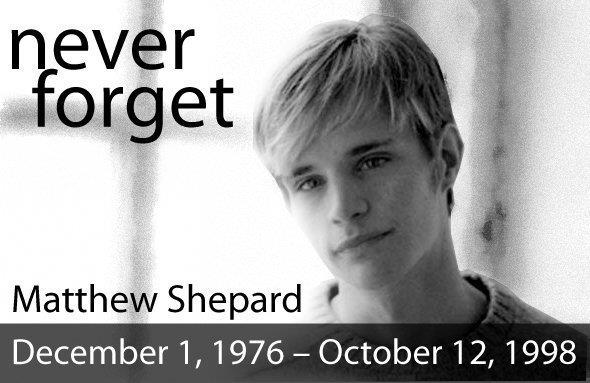
Thank you to the Sacramento Gay and Lesbian Center. Never forget!
Laramie, Wyoming – Wednesday, October 12 will be the thirteenth anniversary of America’s archetypal gay hate crimes victim. Matthew Shepard was brutally attacked and beaten into a coma by two locals who targeted him for abduction, robbery, and murder at the Fireside Lounge on the night of October 7, 1998. They left him trussed to the base of a buck fence, exposed to the freezing cold after stealing his shoes. When Matt was discovered the next day by a passing mountain biker, he was so brutally disfigured that his discoverer at first assumed what he was looking at was a broken down scarecrow that had been put out for Hallowe’en. Matt’s injuries were too severe to be treated at the local hospital emergency room, so he was transported to Fort Collins in neighboring Colorado where a state of the art trauma center fought to save his life. For five agonizing days, Matt lay close to death with an injured brain stem–a terrible wound from which he could never recover. His family, mother Judy, father Dennis, and younger brother Logan stood vigil beside him while the life force ebbed.
For thirteen years, Matt’s memory has been honored, invoked, and ridiculed by a nation wrestling with heterosexism, homophobia, and transphobia–a culture of anti-LGBTQ violence that has claimed the lives of over 13,000 queer folk whom we know about (and God knows how many others whose murders have never been reported to anyone keeping records). Nothing will ever bring any of them back to us. They are gone, but to memory.
Those of us who labor for the better angels of our national character to emerge have a responsibility to remember Matt and all the rest, to honor them by never forgetting the cost of being sexually different in these United States, and to take up the mission of educating the LGBTQ community and the general public that difference of any kind is no warrant for ignorance,prejudice, and violence, but rather is an occasion for understanding and neighborly solidarity. The anniversary of Matt’s untimely death is a good time to erase hatred from the American psyche.
In that spirit, I offer this short excerpt from “The Second Death of Matthew Shepard,” Chapter One of my recently published book, Unfinished Lives: Reviving the Memories of LGBTQ Hate Crimes Victims:
“Matt Shepard died in a Fort Collins, Colorado hospital in the wee hours of October 12, 1998 with his parents by his side. Ironically, it was the day after America’s observance of National Coming Out Day. His team of doctors and nurses, professional as they were, could not undo what hate had done to Matt. He never woke up from his coma. His heart gave out. The ventilator switched off, and Matt was gone. Our memory of him,however, cannot rest in peace. Not yet” (page 3).
Our memory of all the dead whose “unfinished lives” calls out to us to do the work of justice. May Matt and the 13,000 rest in peace. God being our strength, we must not. Grace and peace to all on this National Coming Out Day 2011. ~ Stephen V. Sprinkle
Larry King’s Killer to be Retried in California; Hate Charges Dropped

Brandon McInerney to be retried for the murder of gay classmate, Larry King
Ventura County, California – Prosecutors announced on Wednesday they would retry teen Brandon McInerney for the execution-style murder of his gay classmate, Lawrence Fobes “Larry” King in adult court. This time, however, all hate crimes charges are being dropped. Maeve Fox, chief prosecutor in the case, said that the trial would begin on November 21 in Ventura County Superior Court. KABC in Los Angeles reports that defense attorneys for McInterney hope the case will be settled by plea bargain before the trial begins.
A mistrial was declared on September 2 when the nine-woman, three man jury in Chatsworth could not agree on a verdict. Some jurors have contended that McInerney, who was 14 at the time of the shooting, should never have been tried as an adult. They also have said they were not convinced by the prosecution that white supremacist, anti-gay prejudice led McInerney to kill his gender variant classmate, whom McInerney knew as “the little fag.” The defense successfully used a version of the outworn “gay panic defense” to switch sympathies of the jury and the public in the case, putting Larry King’s dress and habits on trial at least as much as the criminal act of their client, the brutal in-class shooting. Defense has consistently denied using the gay panic defense, and just has consistently employed it to insinuate that their client’s actions were mitigated by the intimidation he felt coming from a smaller, bullied gay teen.
In order to get a conviction, the prosecution has deleted all hate crimes charges, raising the ire of LGBTQ rights advocates around the nation. Once again, a courtroom in Southern California will be the arena for the validity of the gay panic defense in the most notorious anti-gay hate crime since the murder of Matthew Shepard in 1998.
Church-Led Gay Bashing in Tennessee: WWJD?

Jerry Pittman Jr. and Dustin Lee (L to R), attacked by church members in West Tennessee
Humbolt, Tennessee – In the quiet outskirts of rural Humbolt, Tennessee, a church with a Fruitland address was the scene for a violent attack on two young gay men simply for arriving at Wednesday evening services. What Would Jesus Do (WWJD) about Church-and-Pastor instigated gay bashing? On September 28, Jerry Pittman Jr. and his boyfriend, Dustin Lee, arrived at Grace Fellowship Church where his father, Jerry Pittman Sr., is the pastor. Just before the gay couple got out of their car, Jerry Jr. heard his father cry, “Sic ’em!,” as a hunter would address a pack of dogs. Two deacons from the church, and Jerry Jr.’s uncle who is also a deacon, attacked the pair while they were still trying to get out of the parked vehicle. WBBJ Eyewitness News interviewed Jerry Jr. soon after the church gay bashed the couple: “My uncle and two other deacons came over to the car per my dad’s request,” young Jerry said. “My uncle smashed me in the door as the other deacon knocked my boyfriend back so he couldn’t help me, punching him in his face and his chest. The other deacon came and hit me through my car window in my back.” The men kept yelling homophobic insults and slurs at the couple even after a Gibson County Deputy Sheriff arrived on the scene. The couple attempted to press charges with the officer, who refused to allow them to do so, implying that they were the cause of the attack themselves. Gibson County Sheriff Chuck Arnold defended the actions of his deputy to the press, saying, “I haven’t talk to him but that would be out of character for my deputy to say unless they were causing a problem themselves.” Media attention has caused the sheriff to temper his remarks in subsequent interviews.
Pittman and Lee did press charges the following Friday against Deacons Billy Sims and Eugene McCoy, as well as Rev. Jerry Pittman Sr. and Deacon Patrick Flatt, the younger Pittman’s uncle. When WBBJ reporters contacted the pastor, he refused comment and demanded that the station not try to communicate with him again.
Evan Hurst of Truth Wins Out gives the latest details on this story that has shocked Christians and non-Christians alike, awakening them to the presence of virulent, anti-gay prejudice in America’s pulpits and pews. Hurst spoke to Jerry Jr. by phone on October 5, who said, “The church acted as four people, instead of as a congregation.” Pittman explained that he and his boyfriend had attended the church before, though they knew the condemning stance of the elder Pittman, who preached anti-gay sermons “when the couple wasn’t there.” Lee had even been invited to sing at Grace Fellowship once when he attended services alone. But marital trouble broke out between Pittman Sr. and Jerry Jr.’s stepmother, and, in Hurst’s words, “the floodgates opened and the church no longer felt the need to stay silent about Jerry, Jr. and his boyfriend.” The charges and counter charges in this case are still being sorted out. All parties are remanded to court on November 22. Meanwhile, Jerry Pittman Jr. and Dustin Lee are left to pick up the pieces of their lives and shattered faith. Jerry Jr. has already lost his job because of the days he has spent pursuing justice for himself and his boyfriend.
West Tennessee is a tough place to be gay or lesbian, much less transgender. Hurst relates a “man-on-the-street” interview in Jackson, in which the reporter asked a passer-by about what he would do if his son brought a boyfriend to church with him. The man candidly said he would shoot them. The culture of hatred, religious intolerance of LGBTQ people, and church-sanctioned violence remains undisturbed in America’s heartland, no matter if there is a federal Matthew Shepard Act to offer some protection legally to marginalized gay people.
Would Jesus condone anti-gay violence? If not, then why is such prejudice overtly and covertly incubated in the nation’s communities of faith, like Grace Fellowship? While it may be simple for many Christians to dismiss the Grace Fellowship hate crime as an aberration in an embarrassing, Pentecostal byway, the silence from every other church in the surrounding area is deafening. The Unfinished Lives Project has shown the link between religious intolerance, religious hate speech, and deadly anti-gay violence. Nine out of ten fatal hate crimes perpetrated against LGBTQ people in the United States were sparked, by admission of the killers, by Bible or Church teaching. If churches cannot speak out against an attack against a young gay couple simply for arriving at a church for services, what will they remain silent about next? WWJD about Christians and Churches who gay bash or stand by silently while others do? Read John 11:35: “Jesus wept.”
Gender, Sexuality, and Justice Initiative Launched in the Southwest

Rev. Dr. Joretta Marshall, Director of the Carpenter Initiative at Brite Divinity School
Fort Worth, Texas – Brite Divinity School, on the campus of Texas Christian University, launched a ground-breaking program set on changing the role of theological higher education in the human rights struggle in the Southwestern United States. At Chapel on Tuesday, Rev. Dr. Joretta Marshall, Professor of Pastoral Theology and Pastoral Counseling, preached to inaugurate the Carpenter Initiative on Gender, Sexuality, and Justice, made possible by a grant of $250,000 over five years by The E. Rhodes and Leona B. Carpenter Foundation. Dr. Marshall headed the effort to gain the grant from the Carpenter Foundation, which is the leading grantor of funding for sexuality, gender, and justice concerns in the nation. She has been named the Director of the Carpenter Initiative in addition to her professorial duties.
The Rev. Ann B. Day, daughter of the originators of the Carpenter Foundation and an ordained minister of the United Church of Christ, was instrumental in reviewing Brite’s proposal, and advising the foundation to make the grant. The Disciples News Service reported that “the Carpenter Initiative will not only help cover the salary costs of the faculty member who directs the program, but will also support courses at Brite that address these issues, and fund programmatic initiatives in the wider community.” These programmatic initiatives will engage matters of human rights, articulation of a public theology of full inclusion in the faith community of those marginalized because of gender, gender variance, and sexual orientation, and the development of resources local congregations and denominational offices need to move their membership toward long-lasting acceptance of gay, lesbian, bisexual and transgender people.
Dr. Stephen Sprinkle, a member of the Brite faculty and Director of the Unfinished Lives Project, said, “This initiative is the next vital step in Brite’s ‘coming out’ process as a center for the full inclusion of all God’s children, especially those who have formerly been shunned by churches, synagogues, and mosques because of their actual or perceived sexual difference.” Over the course of several years, Dr. Marshall and Dr. Sprinkle, together with allies in the faculty, staff, board of trustees, and alumni of the school, have worked for the full inclusion of the LGBTQ community, along with the commitments Brite has also made to Black Church studies, Asian/Korean Church studies, and Latina/o Church studies. By vote of the Board of Trustees, Brite has officially acted to welcome students, faculty and staff regardless of sexual orientation, gender identity, and/or gender expression, making it unique in the Southwestern United States. The roots of Brite’s shift toward this progressive stance reach back at least to 1992, when administration opened married student housing on the campus to partnered same-sex couples, and to the hiring of the first openly gay faculty member in 1994.
At a community conversation held immediately after the inauguration service, members of the Brite community voiced a whole bevy of vibrant ideas about the directions the Carpenter Initiative could take, including an institution-wide process to become Open and Affirming, a center for civil discourse on issues of human rights in North Texas, resources on homosexuality and the Bible, a history project to record and preserve the story of the LGBTQ movement on both the Brite and TCU campuses, and a think-tank to delve into the sources of violence and fear in American religious life. Brite’s Office of Advancement is actively seeking support for the expansion of Brite’s developing leadership in public theology and social justice.
Anti-Gay Rapist Sought by New York City Police

Suspect Julius "Stinky" Wright (NYPD photo)
Brooklyn, New York – “Stinky” is as “Stinky” does (allegedly, at least). The New York Police Department is searching for suspected hate crime perpetrator, Julius “Stinky” Wright, 21, for a sexual assault in the Bedford-Stuyvesant district on a 24-year-old Hispanic male. The Advocate reports that Wright confronted the Hispanic around 3 a.m. on September 5 with a fake firearm, and demanded to know his sexual orientation. Wright then allegedly cursed the Hispanic with homophobic slurs, and berated him for being weak. Social justice advocates report that the assailant then brutally sodomized his victim. The New York Daily News posted that the suspect stole his victim’s cell phone, and ran from the scene. The victim was transported to Woodhull Medical Center where he was treated for his injuries, and was later released.
City Council Member Al Vann who represents the district where the crime occurred was joined in a statement by Brooklyn Borough President Marty Markowitz, and New York City Council Speaker Christine Quinn: “We are disgusted and horrified to hear about this incident. Hate crimes hurt everyone, and any act of violence against one member of the LGBT community is an act of violence against us all. Too often we hear about acts of violence committed against LGBT people in our city. We must put an end to the intolerance that breeds this hatred. New York City prides itself on diversity and acceptance of all its residents and this act goes against the very fiber of what our city stands for.”
The NYPD is asking anyone with information about the whereabouts of Wright to contact them immediately at 1-800-577-TIPS.
Harass Gays at Your Own Peril in New Jersey

Douglas Brown (Essex County Prosecutor's Office photo)
Newark, New Jersey – A 36-year-old harasser in Essex County found out the hard way that attacking gay people is costly–to himself! Douglas Brown started harassing his former gay neighbors in the Ironbound section of Newark back in May–chanting slurs and epithets, spewing hate speech. Unsatisfied with the results, Brown escalated his aggression against the couple, pouring oil on their home, destroying their property, and eventually slashing their car tires. Brown was arrested on Thursday, and faces harassment, bias intimidation, and criminal mischief charges, according to reports by the Associated Press, The Advocate, and NBC New York. Brown obviously never counted the cost of his bias against his next door neighbors, acting on it with abandon until his arrest. He is being held under $25,000 bond at the Essex County Correctional Facility. Acting Essex County Prosecutor Carolyn Murray is preparing to prosecute Brown for anti-gay hate crime. There is no information yet about who Brown’s attorney will be. In the Brick City, once notorious for the 2003 hate murder of lesbian teen Sakia LaTona Gunn, the times appear to be a-changing. Attacking gay people in Newark will now get you prosecuted to the full extent of the law.
Heartbroken 14-year-old Gay Youth Tormented to Death
 Amherst, New York – Jamey Rodenmeyer wrote Lady Gaga lyrics on his Facebook page the weekend before he took his own life: “Don’t forget me when I come crying to heaven’s door.” The quotation is from “The Queen,” a song included on Lady Gaga’s hit album, “Born This Way.” The 14-year-old Williamsville North High student suffered unrelenting taunting and cyberbullying for being gay. Though he was in counseling with a therapist and a social worker, and was supported by his parents and a host of fans around the country due to his YouTube video for the “It Gets Better” project, the cumulative effect of psychic trauma and fear of violence broke down young Rodenmeyer’s defenses. His parents, who found Jamey’s body outside their home on September 19, told WGRZ Buffalo that they are certain he killed himself because of the bullying. Rodenmeyer’s suicide immediately rekindled nationwide concern and anger over the culture of violence elementary, middle, and secondary school LGBTQ students face in and out of classrooms every day. Lady Gaga called for a campaign to make bullycide a hate crime by law (no bullying laws exist in New York State). An outspoken advocate for the gay and lesbian community, Gaga tweeted her fans: “Jamey Rodemeyer, 14 yrs old, took his life because of bullying. Bullying must become be illegal. It is a hate crime.” She then committed herself to approach President Obama. “I am meeting with our President,” she posted. “I will not stop fighting. This must end. Our generation has the power to end it. Trend it #MakeALawForJamey.” Dan Savage, the co-originator of the “It Gets Better” project for which Rodemeyer made a video last May, said that he broke down and cried when he heard about the youth’s suicide. Savage wrote on his blog, “The point of the ‘It Gets Better’ project is to give kids like Jamey Rodemeyer hope for their futures. But sometimes hope isn’t enough. Sometimes the damage done by hate and by haters is simply too great. Sometimes the future seems too remote. And those are the times our hearts break.”
The insults, rumors, and ridicule became too much for Jamey to bear. On a Formspring site he opened to chat with friends online, he was targeted by irrational hate. The Washington Post reports two representative instances of hate speech that would have unsettled anyone, no matter how well grounded: “JAMIE IS STUPID, GAY, FAT ANND UGLY. HE MUST DIE!” an anonymous detractor wrote. Another went straight for his heart: “I wouldn’t care if you died. No one would. So just do it 🙂 It would make everyone WAY more happier!” Even though there were expressions of support among the posts to his site, the loudness of the hate drowned out the love. In hindsight, Jamey’s cries for help are all too obvious. On September 9, he wrote on Facebook, “I always say how bullied I am, but no one listens. … What do I have to do so people will listen to me? No one in my school cares about preventing suicide, while you’re the ones calling me [gay slur] and tearing me down.” But the face he let his parents see was calm and relatively upbeat. Just days before he took his own life, the family went on a camping trip.
Amherst Police are investigating whether charges may be brought against youths who continually dogged Rodenmeyer with taunts and slurs. Buffalo News reports that the Special Victims Unit has been assigned to investigate whether crimes were committed against Jamey. Cyberbullying, especially if it was centered on Rodenmeyer’s sexual orientation, could carry charges against his tormentors. Police spokesmen have said that they are focusing their probe on one to three young harassers who targeted Rodenmeyer ever since he was a student at Heim Middle School. “We’re looking into it to see if he was the victim of any crimes, and that’s the bottom line,” Amherst Chief of Police John C. Askey told reporters. “We’re going to be speaking to school officials and students and anyone with direct information about crimes that may have been committed against this individual.”
Nearly 5,000 youths commit suicide each year, according the Centers for Disease Control, making teen suicide, especially teen LGBTQ suicide, a national health issue. But the statistics cannot adequately count the cost of bullying in American society. Criminal harassment, ridicule, and threats strike real boys and girls one-by-one, like Jamey Rodenmeyer, and rip away their futures. In the last communication of his short life, Jamey tweeted Lady Gaga, “@ladygaga bye mother monster thank you for all you have done, paws up forever.” In a tribute to Gaga, Jamey’s parents buried him Saturday wearing his “Born This Way” tee shirt.
Don’t Ask, Don’t Tell is History: We Must Not Forget Its Cost
 Washington, D.C. – Today marks the advent of full repeal of Don’t Ask, Don’t Tell, the 1993 law making gay and lesbian servicemembers liable for discharge if they admitted their sexual orientation. While there will be celebrations and night watch parties throughout the nation marking this historic day in the struggle for LGBTQ equality, we cannot afford to forget the terrible cost anti-gay discrimination has wrought in the Armed Forces of the United States. So, today, we lift up the lives and patriotic service of four gay men who died because of the ignorance and bigotry of other servicemembers, and the systemic bigotry of the services themselves which at best permitted these murders, and at worst encouraged them.
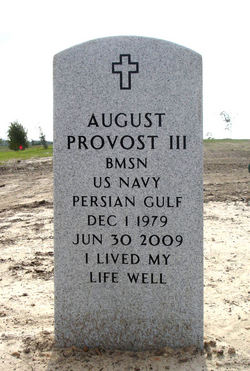
Seaman August Provost of Houston, Texas, was shot to death on duty in a Camp Pendleton guard shack, and his remains were burned to erase the evidence of the deed on June 30, 2009 in San Diego, California. He had recently complained to his family that a fellow servicemember was harassing him because of his sexual orientation. He feared speaking with his superiors about the harassment because of the threat of discharge due to DADT. His partner in life, Kaether Cordero of Houston, said, “People who he was friends with, I knew that they knew. He didn’t care that they knew. He trusted them.” Seaman Provost joined the Navy in 2008 to gain benefits to finish school, where he was studying to become an architectural engineer.
Private First Class Michael Scott Goucher, a veteran of the Iraq War, was murdered near his home in East Stroudsburg, Pennsylvania, on February 4, 2009 by an assailant who stabbed him at least twenty times. Known locally as “Mike on a Bike” by neighbors and friends, Goucher was an assistant organist for a congregation of the United Church of Christ, and Captain of the neighborhood Crime Watch. He also was a selectively closeted gay man, hiding his sexual orientation from his community. Goucher survived deployment in Iraq, only to meet death at the hands of homophobes back home.
Private First Class Barry Winchell of Kansas City, Missouri, was bludgeoned to death with a baseball bat as he slept in his barracks by a member of his unit at Fort Campbell, Kentucky on July 6, 1999. Winchell had fallen in love with a transgender woman, Calpurnia Adams, who lived in Nashville, Tennessee. In the fallout from his murder, President Bill Clinton ordered a review of DADT, which resulted in the addition of a “Don’t Harass” amendment to the policy, but little else. The Servicemembers Legal Defense Network, who represented Winchell’s parents in litigation with the U.S. Army, demanded to know who in the upper ranks of Fort Campbell knew of the murder and its subsequent cover up. The commandant of the fort was promoted over the objections of many human rights advocates. Winchell’s story has been immortalized by the 2003 film, “Soldier’s Girl.”
Petty Officer Third Class Allen R. Schindler Jr. of Chicago Heights, Illinois was murdered on October 27, 1992 in a public toilet on base in Sasebo, Nagasaki Prefecture, Japan. His killer was a shipmate who despised Schindler for being gay. He had been outed while on board the U.S.S. Belleau Wood, and was supposedly under the protection of his superiors until he could be separated from the service. Schindler had called his mother to tell her to expect him home by Christmas. Instead, the Navy shipped his savaged remains home to Chicago Heights before Thanksgiving. The only way family members could identify his remains was by a tattoo of the U.S.S. Midway on his forearm. Otherwise, he was beaten so brutally that his uncle, sister, and mother could not tell he was their boy. Schindler’s murder was presented as a reason DADT should never have been enacted, but authorities in Washington brushed his story aside and enacted the ban against gays in the military anyway. Schindler’s story is told at length in Unfinished Lives: Reviving the Memories of LGBTQ Hate Crimes Victims, authored by the founder of the Unfinished Lives Project, Dr. Stephen Sprinkle.
We at Unfinished Lives celebrate the repeal of DADT tonight with thanksgiving for the courage of lesbian and gay servicemembers who chose to serve their country in the military though their country chose not to honor them. More than 13,500 women and men were drummed out of the service under DADT. But in addition to the thousands who faced discharge and shame, we cannot forget, we must not forget, the brave souls who died at the hands of irrational hatred and ignorance–the outworking of a blatantly discriminatory policy that never should have blighted the annals of American history. The four lives we remember here are representative of hundreds, perhaps thousands more, whose stories demonstrate the lengths to which institutions and governments will go to preserve homophobia and heterosexism. We will remember with thanksgiving our gay and lesbian dead, for to forget them would be to contribute to the ills wrought by DADT.
About

If you are a first-time visitor to the Unfinished Lives Project website, we invite you to read A Welcome Message introducing you to our project. We are truly grateful for your visit.
The Unfinished Lives Project website is a place of public discourse which remembers and honors LGBTQ hate crime victims, while also revealing the reality of unseen violence perpetrated against people whose only “offense” is their sexual orientation, gender identity, or gender presentation. LGBTQ people in the United States are suffering a slow-rolling decimation of terror and murder all across the country. Every locale and demographic of society are affected: First Nations, Anglo, Black, Latino and Latina, South and Southeast Asian, Transgender, Bisexuals, Gay men, Lesbians, disabled, young, and mature. Homophobia has a long, crooked arm, and it is reaching out to snatch the life away from women and men whose tragic stories are under-reported to begin with, and whose memories are swiftly forgotten.
The horror of these killings transcends the shock and bereavement of loved ones and friends. These are not typical homicides; they are not killings for money or drugs, incidents of domestic strife, or crimes of passion. The vicious nature of hate crimes against LGBTQ persons is extremely brutal, grotesquely violent, and egregiously hateful.
Each murder serves the LGBTQ population as a sobering warning about the actual level of danger in our communities. The message these killings send is that freedom and open life for LGBTQ people is a cruel dream. Every time we remember one of these victims, however, the intentions of their killers are frustrated. To remember these women and men is to begin the process of changing the culture that killed them.
Our Project Director
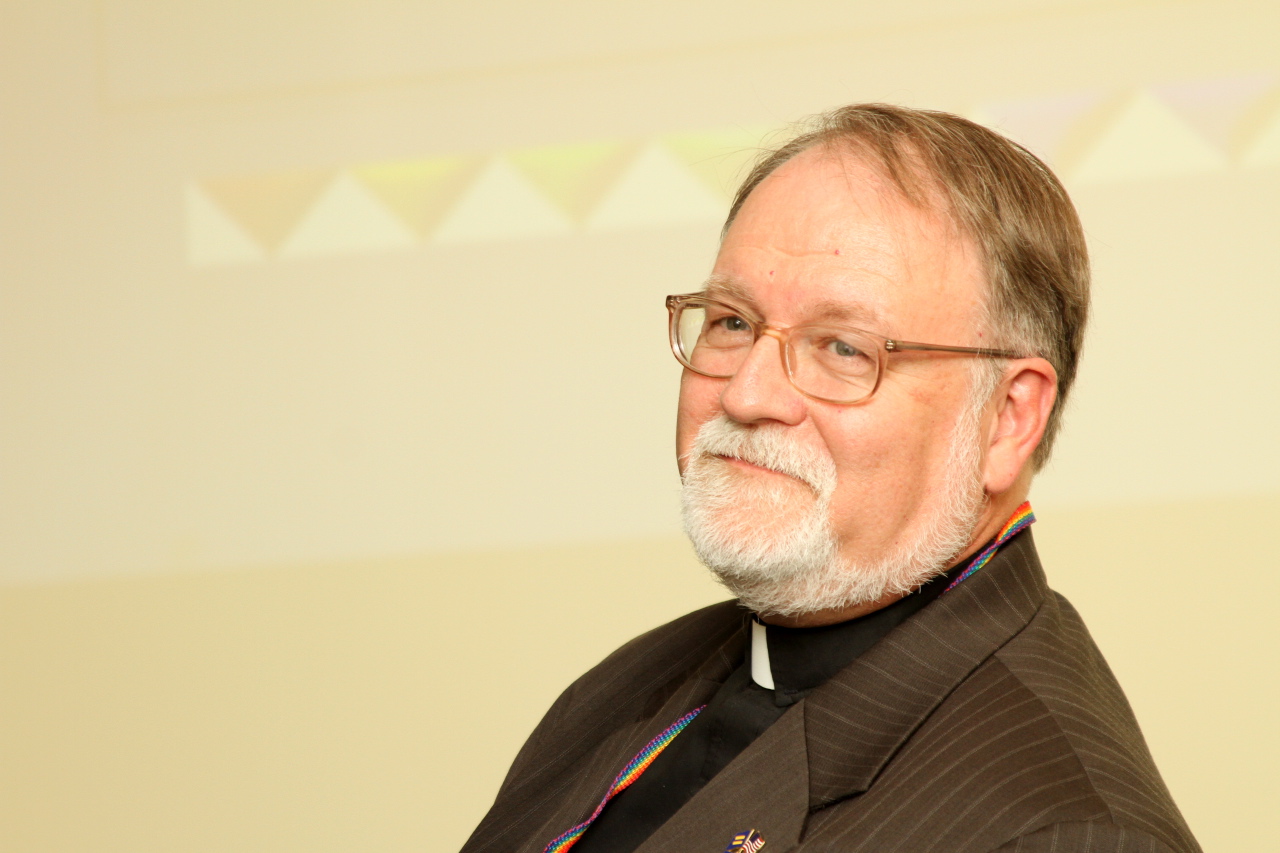
Dr. Stephen V. Sprinkle (Keith Tew photo).
Stephen V. Sprinkle is Director of Field Education and Supervised Ministry, and Professor of Practical Theology at Brite Divinity School, Fort Worth, Texas, a post he has held since 1994. An ordained Baptist minister, he is the first open and out Gay scholar in the history of the Divinity School, and the first open and out LGBTQ person to be tenured there. Read More…
Recent Social Justice Advocacy Activity By Dr. Sprinkle
 Summer 2009 – Dr. Sprinkle responded to the Fort Worth Police Department and Texas Alcoholic Beverage Commission Raid on the Rainbow Lounge, Fort Worth’s newest gay bar, on June 28, 2009, the exact 40th Anniversary of the Stonewall Rebellion. Dr. Sprinkle was invited to speak at three protest events sponsored by Queer LiberAction of Dallas. Here, he is keynoting the Rainbow Lounge Protest at the Tarrant County Courthouse on July 12, 2009. Read More…
Contact Us
Communicate with the Unfinished Lives project team:
info@unfinishedlivesblog.com


Schedule a Presentation
Dr. Sprinkle will gladly present his acclaimed presentation to your organization. To arrange an Unfinished Lives presentation for your organization or group, please contact us.
Dr. Sprinkle has given his Unfinished Lives presentation to these and other community groups and organizations. Read More…
-

Where are our readers?
Publisher: Steve Sprinkle (Project Director)
Steve Sprinkle
Unfinished Lives: Remembering LGBT Hate Crime VictimsBrite Divinity School/Texas Christian UniversityFort Worth TXprofessor, minister, author, blogger, LGBTQ advocate


Follow Unfinished Lives on Facebook
 Box Turtle Bulletin
- An error has occurred; the feed is probably down. Try again later.
- HRC Back Story
- Know About The Gender Identity Movement
- Why Is There A Need For Human Rights?
- Kinds Of Human Rights
- Human Rights Purposes And Violations
- Human Rights For Every Human Incident
- 8 Reasons Human Rights Are Important
- Everything About Human Rights
- Human Rights Issues Education & Law
- We Need To Stand Up For Our Rights And Those Of Others
- Coca-Cola Receives Perfect Score On Human Rights
- The Advocate: Daily News
- Calpernia Addams ‘shocked’ by Drag Race’s mention of boyfriend’s 1999 murder
- Campus is not a closet: Why removing Pride flags from Boston University is not 'neutral'
- Feminist magazine tours campuses with talks on race and gender, taking a page from Turning Point USA
- Arrested for repainting erased Dallas Pride crosswalks, Texas man says he’d do it again
- Kentucky city pays photographer $800,000 in same-sex wedding case
- IN PICTURES: ACT UP New York’s march and die-in outside Palantir
- Idaho’s bathroom bill leaves transgender men like me with an impossible choice: jail or violence
- Idaho Republicans advance bill to impose hefty fines on cities flying Pride flags
- He witnessed the Stonewall riots. Now he's a lifelong ally
- Advocate newsletter 3/25/26
- Dallas Voice: Instant Tea
- An error has occurred; the feed is probably down. Try again later.

 Unfinished Lives
Hate Crimes and Capital Punishment: A Special Comment
Lawrence Russell Brewer, on the day he was booked for the murder of James Byrd Jr.
Huntsville, Texas – On September 21 at 6:11 p.m., before witnesses whom included his hate crime victim’s family and his own, Lawrence Russell Brewer, 44, was injected with lethal drugs in the execution chamber of Huntsville Prison. Ten minutes later, he was pronounced dead. Sentenced to death for the 1998 dragging murder of James Byrd Jr., there was no doubt about the convict’s guilt. Brewer and two accomplices, John William King and Shawn Allen Berry, abducted Byrd, a 49-year-old African American, in Jasper, Texas, beat him, bound him with a log chain attached to the backend of a pickup truck, and dragged him three miles down a rough East Texas road until his head was detached from his body when it hit a culvert. The racially-motivated murder made the nation shudder–and marked a decisive moment in the hate crime justice movement for LGBTQ people as well as for African Americans. But the justice of capital punishment for hate crime murders is still up for serious question, even after the execution of a bigoted man who displayed no remorse for his crime. Brewer had even urinated on Byrd before dragging him to his death.
In Texas, the racist murder of James Byrd Jr. was quickly equated with the anti-gay murder of young Matthew Wayne Shepard in Laramie, Wyoming, that occurred barely four months later. After abortive attempts to get a state hate crimes statute naming gays and lesbians as a protected class, the Byrd family agreed to sign on with Shepard’s family to achieve a landmark Texas law including African Americans and LGB persons as protected classes from prejudicial murder. Governor Rick Perry, who today is the notably anti-gay Republican front runner for President, signed the James Byrd Jr. Hate Crimes Act into law back in May 2001, inclusive of “sexual preference” as a protected category. It took the federal government eight more years to enact a comprehensive hate crimes law inclusive of LGBT people in the United States. The James Byrd Jr. and Matthew Shepard Hate Crimes Prevention Act, also known as the Matthew Shepard Act, was signed into law by President Obama in October 2009. The families of Matthew Shepard and James Byrd Jr. were honored guests at the presidential signing ceremony in the White House.
Can state-sanctioned execution remedy anti-gay or racially motivated hate crime murders? Brewer’s death by lethal injection, in the same week as the hotly contested execution of Troy Davis in Georgia, brought that issue to a head for the national media, human and civil rights activists, moral theologians, and the families of victims alike. Lawrence O’Donnell, MSNBC anchor of “The Last Word,” opined that the only way to prevent the execution of putatively innocent death row inmates like Davis is to outlaw the execution of even the most unrepentant of guilty killers like Brewer. Dick Gregory, the fabled comedian and human rights activist, was present in Huntsville protesting the execution of James Byrd Jr.’s murderer for just that reason. The Houston Chronicle quotes Gregory as saying, “Any state killing is wrong. If Adolph Hitler were to be executed,” he said, “I would be here to protest . . . I believe life in prison is punishment. Execution is revenge.”
Ross Byrd, James Byrd’s son, who is now 32, spoke out to Reuters the night before Brewer’s execution for the murder of his father. “You can’t fight murder with murder,” Byrd said, representing his family. “Life in prison would have been fine. I know he can’t hurt my daddy anymore. I wish the state would take in mind that this isn’t what we want.” The Reuters article concludes by presenting Ross Byrd’s position that for the state to execute Brewer is no more that a continuation of the cycle of violence that destroyed his father’s life on that lonely road in the dead of night in 1998. Byrd believes that all people, the government included, should decide not to perpetuate that cycle of death. “Everybody’s in that position,” he said. “And I hope they will stand back and look at it before they go down that road of hate. Like Ghandi said, an eye for an eye, and the whole world will go blind.”
Dennis Shepard, Matthew Shepard’s father, took a similar position on the day his son’s second killer was sentenced to two consecutive life terms in prison. Speaking to Aaron James McKinney, the roofer who beat Matt into a fatal coma with a pistol, Shepard said that Matt was not opposed to the death penalty. As a matter of fact, at a family meeting, Matt had said that heinous murders like the dragging death of James Byrd Jr. deserved capital punishment. “Mr. McKinney,” Shepard said, “I, too, believe in the death penalty. I would like nothing better than to see you die, Mr. McKinney. However, this is the time to begin the healing process. To show mercy to someone who refused to show any mercy. To use this as the first step in my own closure about losing Matt. Mr. McKinney, I am not doing this because of your family. I am definitely not doing this because of the crass and unwarranted pressures put on by the religious community. If anything, that hardens my resolve to see you die. Mr. McKinney, I’m going to grant you life, as hard as that is for me to do, because of Matthew.” Shepard concluded, “Mr. McKinney, I give you life in the memory of one who no longer lives. May you have a long life, and may you thank Matthew every day for it.”
Admittedly, all other hate crimes victims’ families do not necessarily agree with Mr. Byrd and Mr. Shepard. Some support capital punishment as justice for the heinous nature of the crimes committed against their loved ones. But Lawrence Russell Brewer’s Texas execution is not so cut and dried as the most ardent supporters of capital punishment would like to believe. The world is far grayer than any black-and-white wishes for closure can achieve in a culture where bigotry kills innocent people everyday, and where the state can and does execute anyone it deems legal to terminate. What is right and what is wrong about capital punishment for hate crimes murder perpetrators? What is just for the victims and their families, and for the society the killers have also grievously wounded by their deeds of hatred? We at the Unfinished Lives Project do not claim to have the final truth about these monumental issues. But we do agree with Ross Byrd and Dennis Shepard. Until our fallible knowledge is replaced by the divine in some other world than this and some other time than ours, we will err on the side of mercy. Honor the dead. Break the cycle. Stop the killing.
Share this:
September 27, 2011 Posted by unfinishedlives | African Americans, Anglo Americans, anti-LGBT hate crime murder, Bisexual persons, capital punishment, Dragging murders, Execution, gay bashing, gay men, Georgia, GLBTQ, gun violence, Hate Crimes, hate crimes prevention, Heterosexism and homophobia, Law and Order, Legislation, Lesbian women, LGBTQ, Matthew Shepard Act, Perpetrators of Hate Crime, President Barack Obama, Racism, Social Justice Advocacy, Special Comments, Texas, transgender persons, Wyoming | African Americans, Anglo Americans, anti-LGBT hate crime murder, Bisexual people, capital punishment, Dick Gregory, Dragging murders, execution, gay bashing, gay men, GLBTQ, gun violence, Hate Crimes, hate crimes legislation, Heterosexism and homophobia, James Byrd Jr., James Byrd Jr. and Matthew Shepard Hate Crimes Prevention Act, Law and Order, Lesbians, LGBTQ, Matthew Shepard Act, perpetrators, racism, Social Justice Advocacy, Texas, transgender persons, transphobia, Washington D.C., Wyoming | Comments Off on Hate Crimes and Capital Punishment: A Special Comment